The US has assembled its largest military presence in the Middle East since 2003, including two aircraft carriers and F-22 stealth fighters. Indirect talks in Geneva between US envoys (Steve Witkoff and Jared Kushner) and Iranian officials ended Thursday without a breakthrough. The Trump administration has warned of "drastic consequences" if Iran does not make significant nuclear concessions.
Israel has opened bomb shelters and warned Lebanon that its infrastructure will be targeted if Hezbollah intervenes in a US-Iran conflict. The State Department has authorized the departure of non-emergency personnel and families from the US Embassy in Israel as of today, February 27. Similar orders were issued for the embassy in Beirut, Lebanon, on February 23. Reports also indicate the US 5th Fleet in Bahrain has been reduced to fewer than 100 mission-critical personnel.
China has urged its citizens to leave Iran immediately. South Korea issued a "Level 3" red alert, ordering its nationals to depart Iran. Australia has offered voluntary departure for diplomatic dependents in the UAE, Qatar, and Jordan, citing a "deteriorating security situation." Several European nations, including Finland, Sweden, and Serbia, have also advised their citizens to evacuate Iran.
Commercial airlines, including KLM, have begun suspending flights to the region. Many foreign governments are advising their citizens to leave while commercial corridors remain open, as these may close abruptly if military operations begin.
So will the US and Israel attack Iran imminently? Maybe, though the State Department said today that US Secretary of State Marco Rubio will visit Israel on Monday and Tuesday. MS Now reported Friday that Omani Foreign Minister Badr Al Busaidi will meet Friday with Vice President JD Vance and other American officials in Washington for "previously unreported talks in an effort to stave off war with Iran."
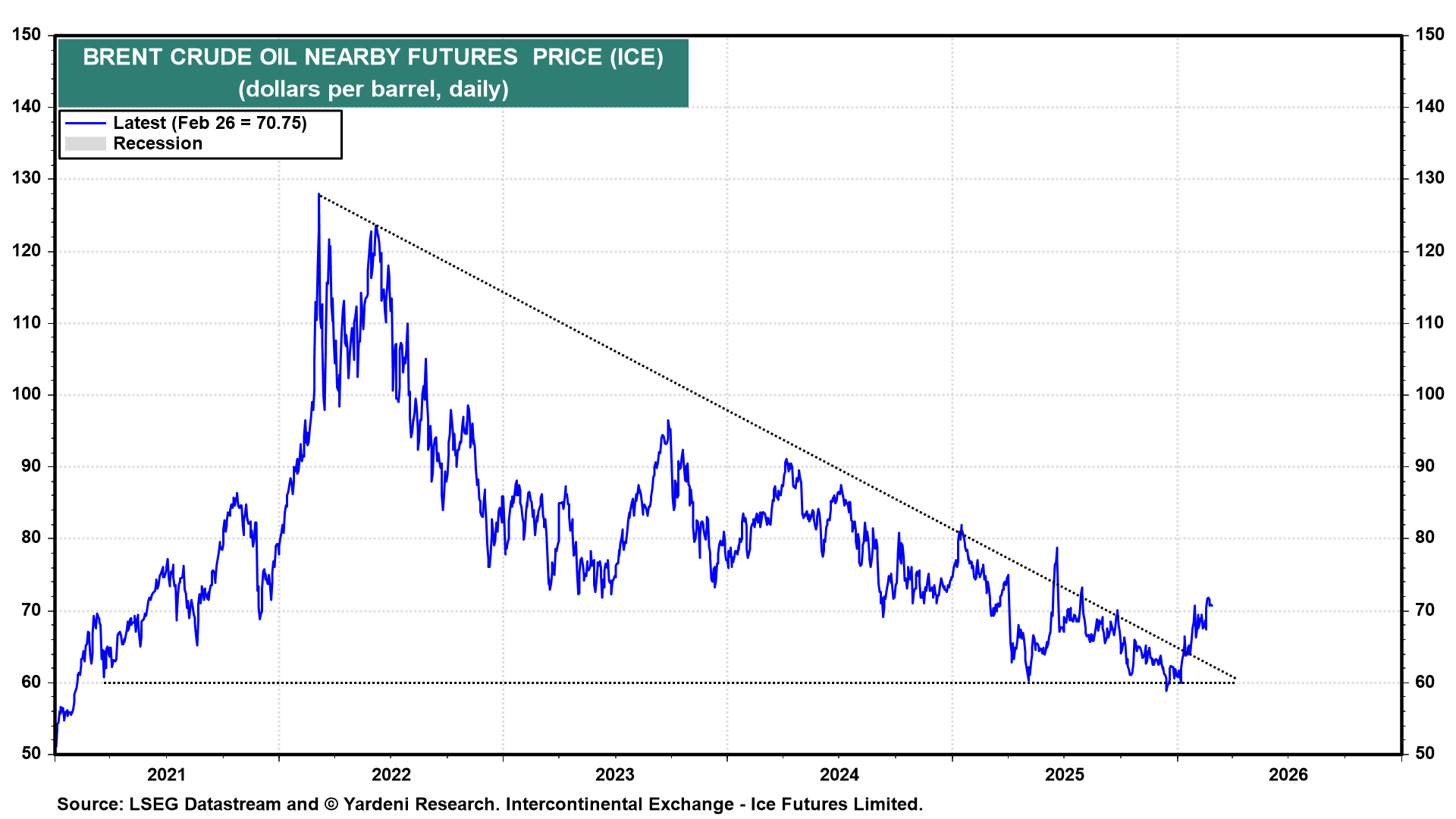
Oil prices are finishing February on a high note, with the month's final trading week posting a $1-per-barrel gain as US-Iran tensions mount (chart). Indirect talks between Washington and Tehran this week in Geneva yielded no results, and Trump's 10- to 15-day deadline will soon be running out. Amidst all this, media attention to the upcoming OPEC+ summit is surprisingly tepid, potentially tempting Saudi Arabia to announce yet another OPEC+ production increase for April.
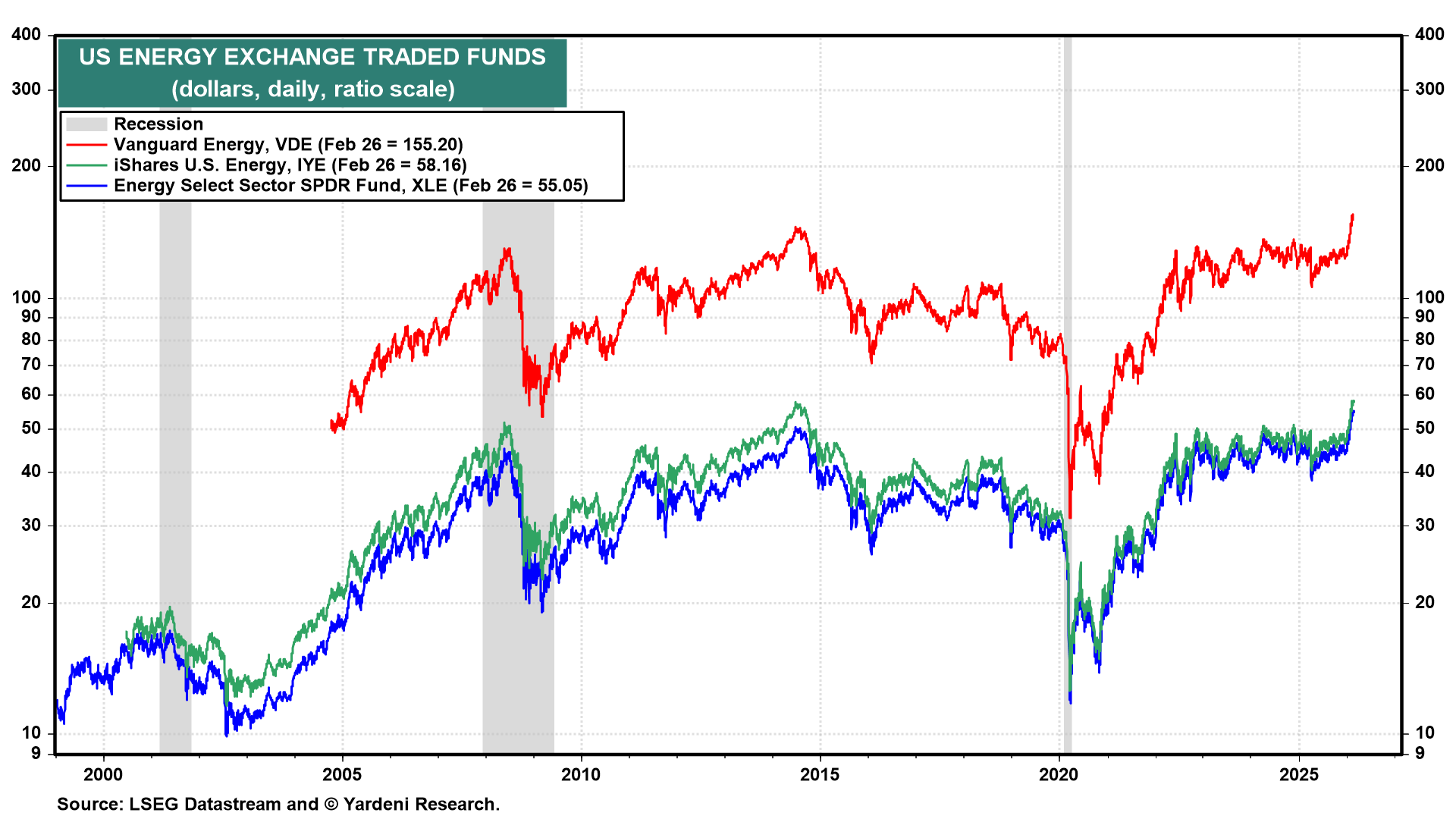
The rebound in oil prices, along with the rebalancing of global equity portfolios, gave a big price boost to US energy ETFs recently (chart). Today's relatively small $1.50 increase in the price of a barrel of crude oil suggests that the market has either discounted a rapid war or isn't convinced it will happen. The Saudis might also announce an increase in their production, though much of it would have to go through the Strait of Hormuz, which Iran has threatened to block.
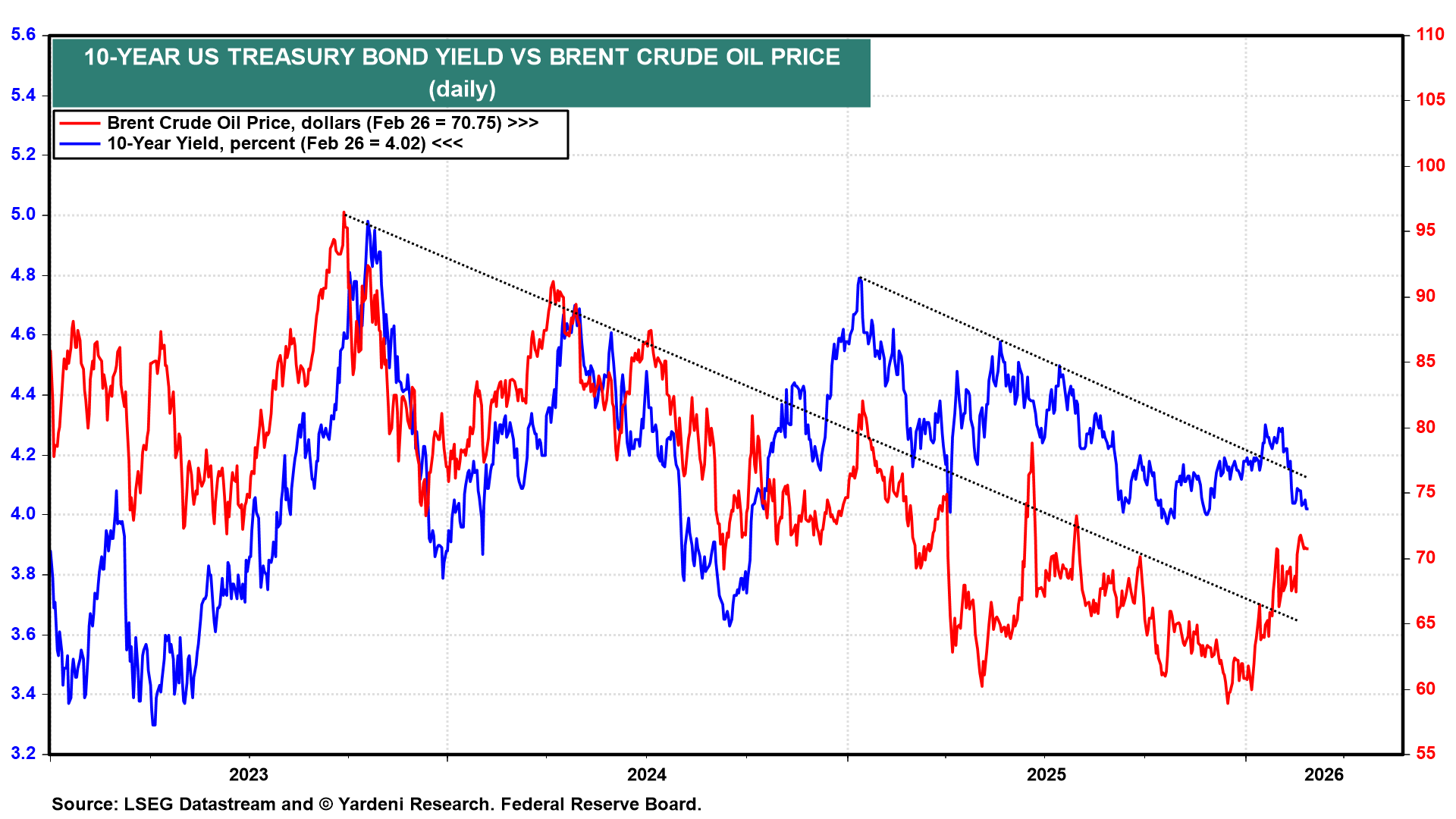
From 2023 through 2025, there was a good correlation between the 10-year US Treasury bond yield and the price of a barrel of Brent crude oil (chart). In recent weeks, the bond yield has dropped despite the rise in the oil price. Bonds may be attracting safe-haven buyers who fear that another war in the Middle East could lead to more geopolitical chaos.
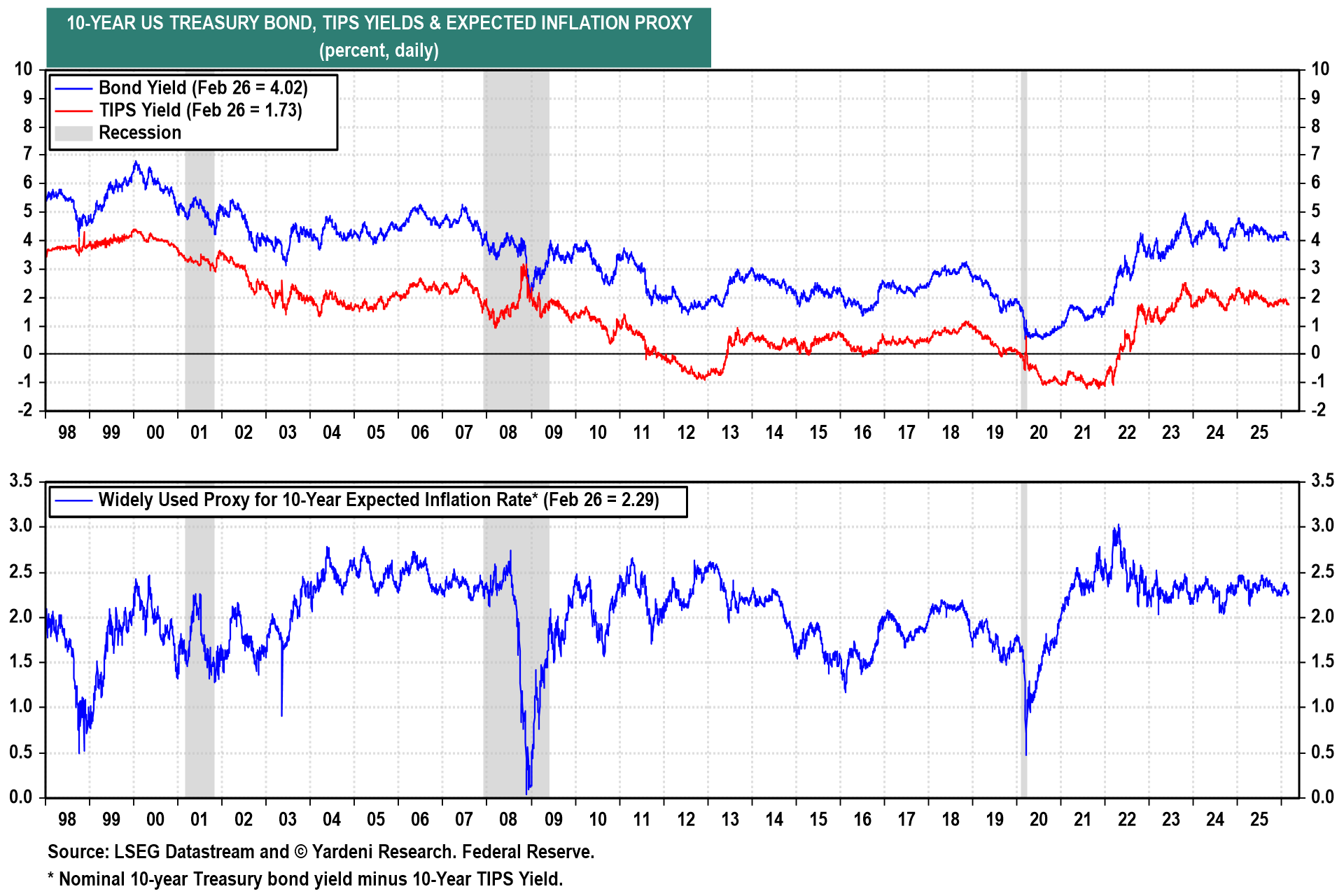
It was surprising to see the bond yield fall below 4.00% today despite a hotter-than-expected PPI inflation reading. In any event, both the nominal and real 10-year bond yields have been relatively flat since 2023 (chart). We think the trend will remain flat through the end of this year.