


The United States of America has thrived for 250 years. There have been setbacks along the way. But they were overcome. The Declaration of Independence on July 4, 1776 set the stage for Americans to prosper by declaring: "We hold these truths to be self-evident, that all men are created equal, that they are endowed by their Creator with certain unalienable Rights, that among these are Life, Liberty and the pursuit of Happiness. That to secure these rights, Governments are instituted among Men, deriving their just powers from the consent of the governed."
The Constitution of the United States, signed September 17, 1787, was based on these principles. It established the rule of law for Americans and provided a system of checks and balances designed to reduce the chances that any faction could gain enough power to rule over the governed without their consent. Its preamble states: "We the People of the United States, in Order to form a more perfect Union, establish Justice, insure domestic Tranquility, provide for the common defense, promote the general Welfare, and secure the Blessings of Liberty to ourselves and our Posterity, do ordain and establish this Constitution for the United States of America."
The rule of law thus established protected life, liberty, and property with a justice system overseen by the Supreme Court, which had the final say on the constitutionality of any law passed by Congress or any executive order issued by the president. The system was designed to protect the rights of minority factions from the tyranny of the majority. Most Americans accept that the right to pursue happiness does not come with a government guarantee to provide happiness.
The American constitutional system has been and will continue to be challenged. The factions will continue to complain that it is prone to gridlock. That's true because it was designed that way. Hopefully, our constitutional system of checks and balances will survive the next 250 years of our nation's future.
Here are some of the macroeconomic achievements of the United States:
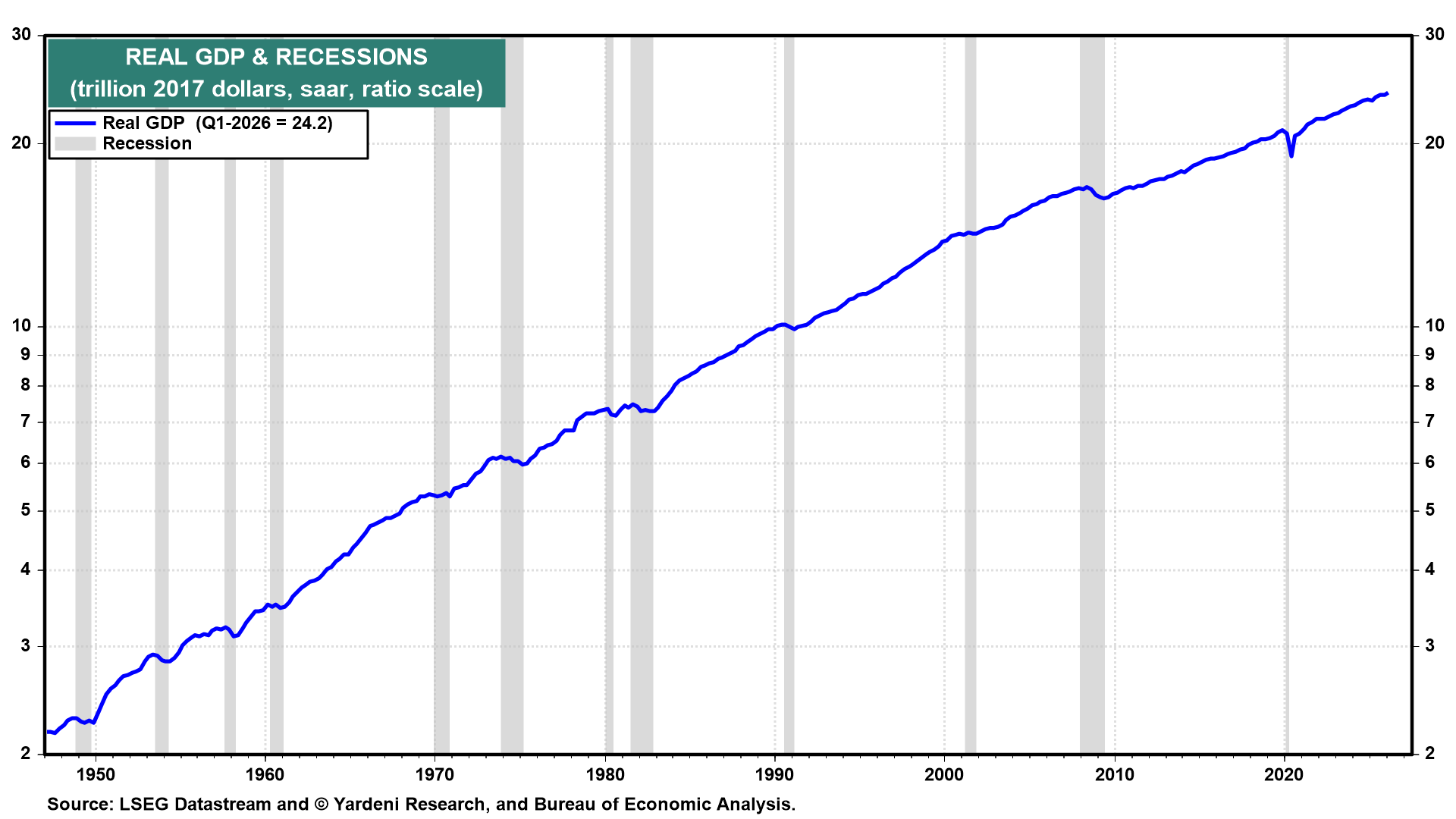
(1) GDP & Consumers. Real GDP is on track to hit another record high this year (chart). Recessions have been less frequent in recent years than in the past. The current expansion has lasted since 2009, with the exception of the two-month lockdown in early 2020. During the current decade, the economy passed several stress tests, including the pandemic and the lockdowns, supply-chain disruptions, soaring inflation, the tightening of monetary policy, higher tariffs, and Gulf War III.
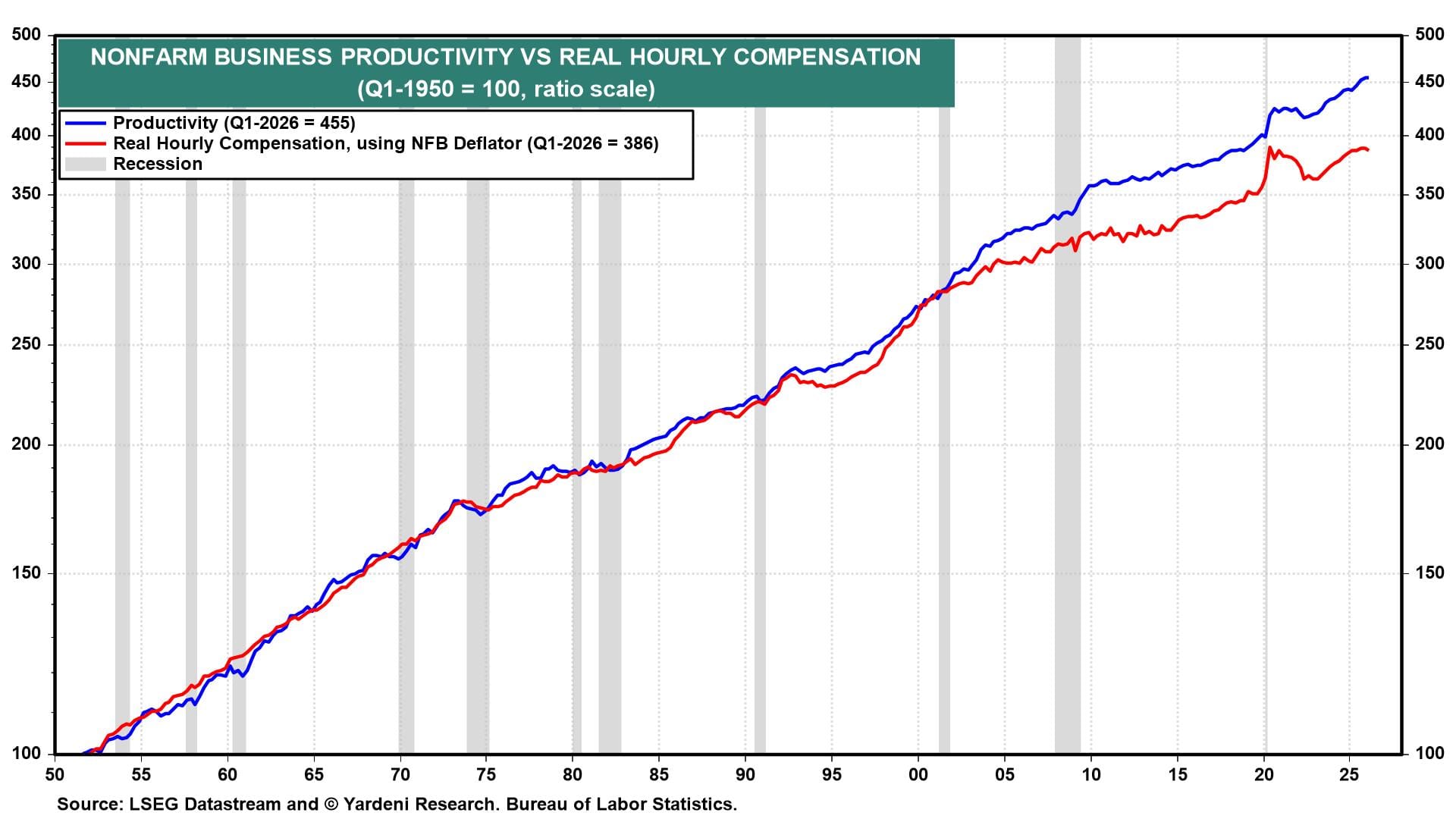
Productivity growth has been a key driver of real GDP growth in the United States. Productivity is the main driver of the standard of living, measured by inflation-adjusted hourly compensation (chart). Both are at record highs.
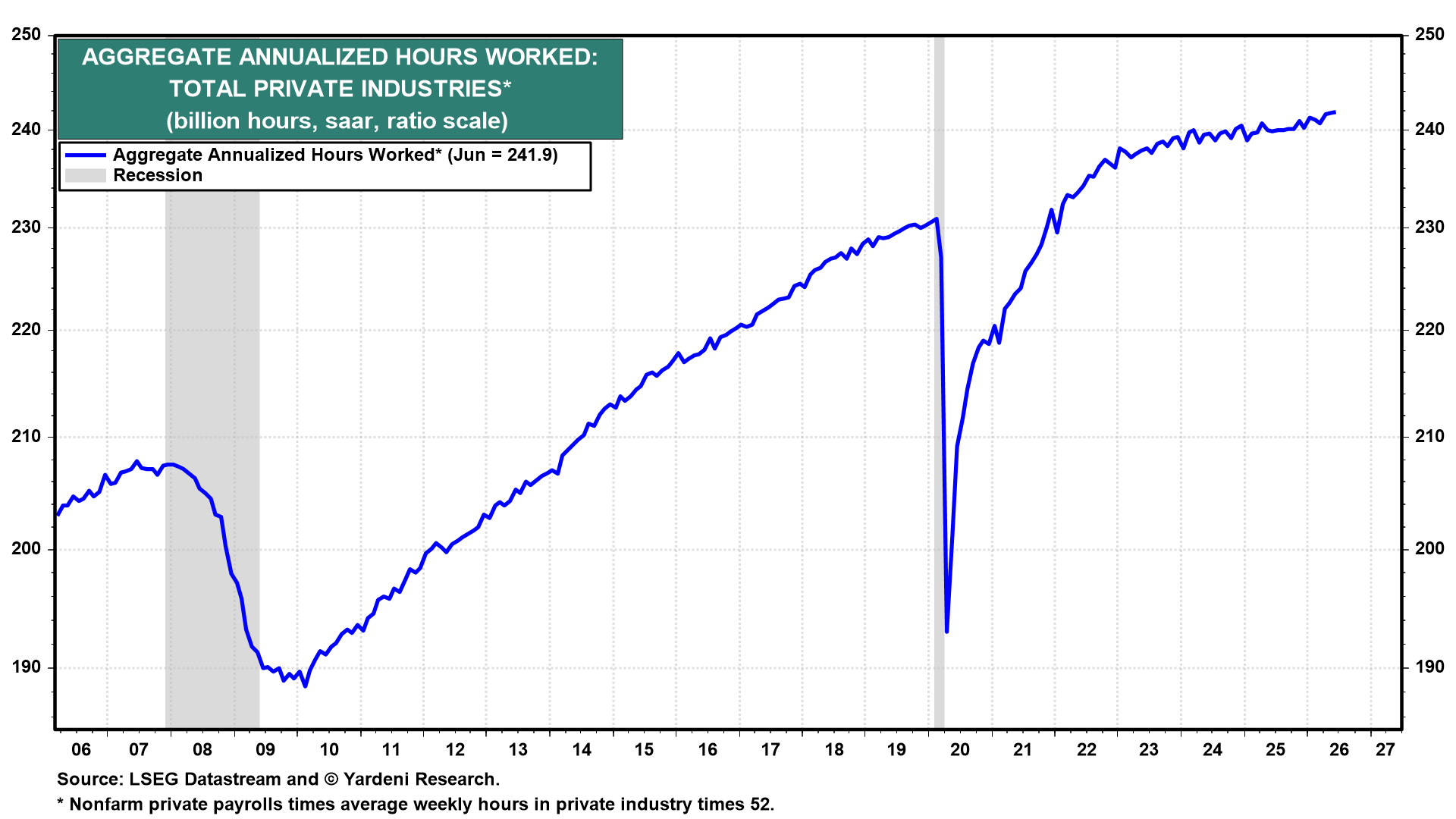
The number of hours worked by Americans is at an all-time high (chart).
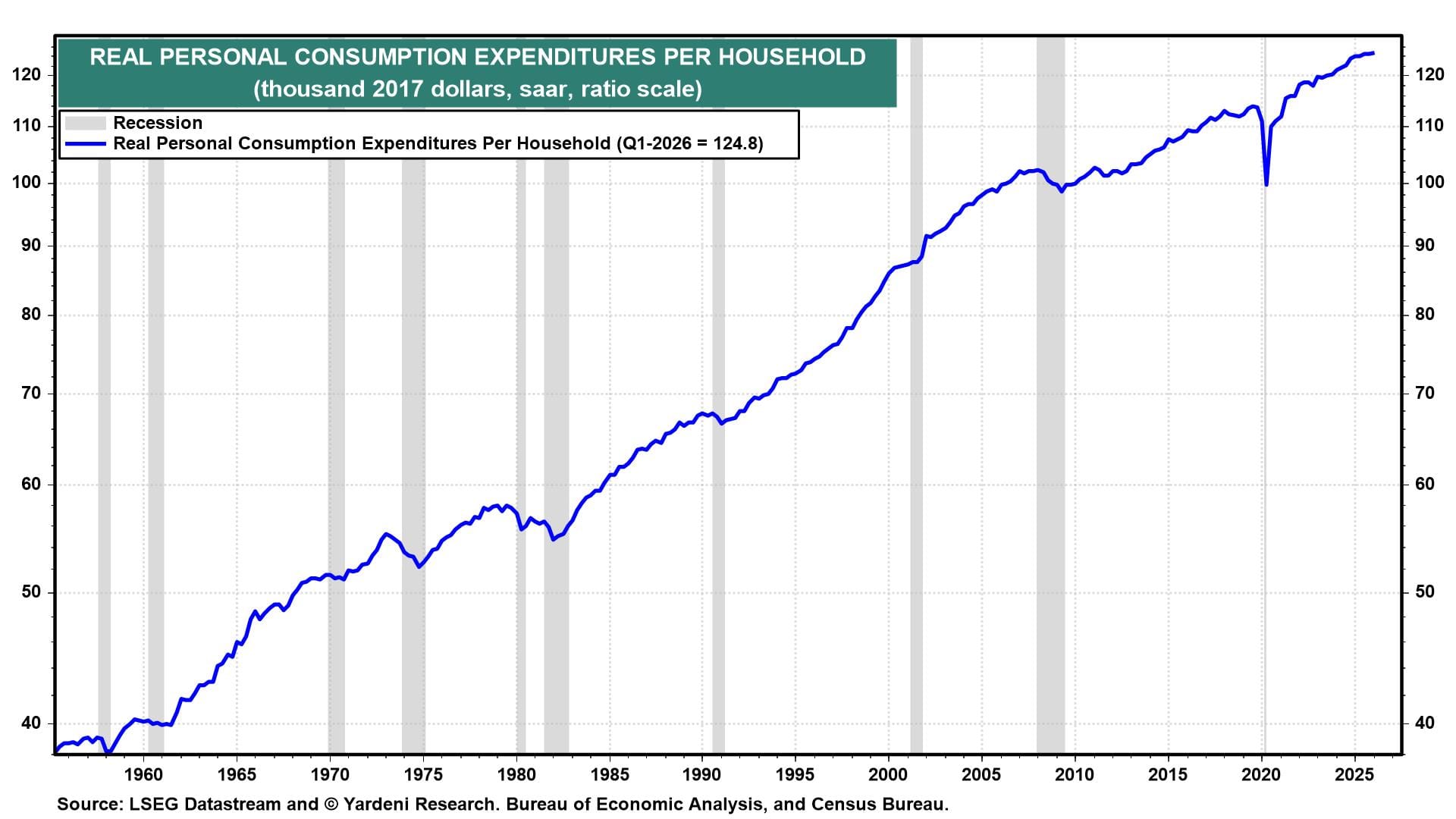
Inflation-adjusted household consumption, another measure of the standard of living, is also at a record high (chart).
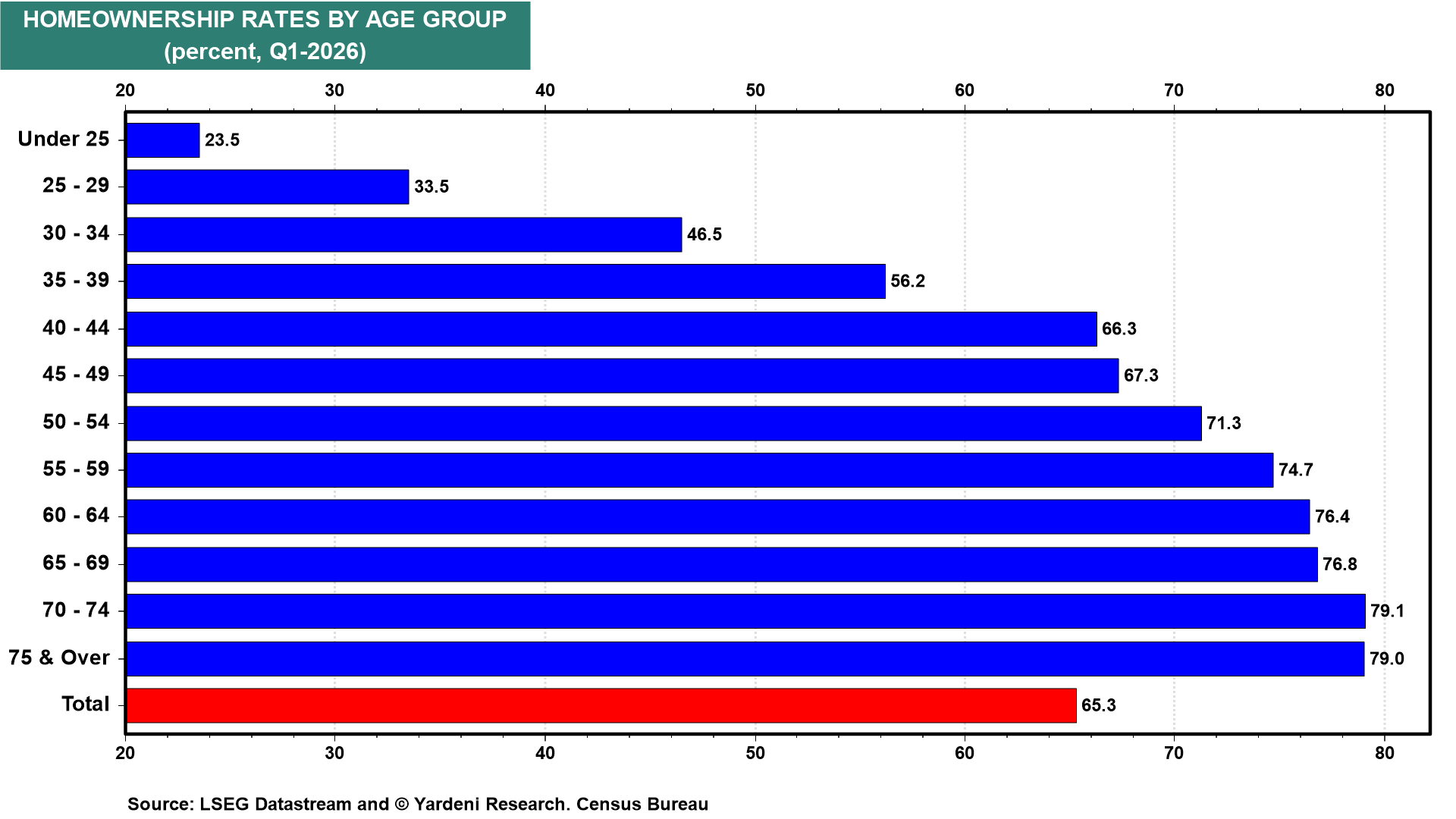
(2) Housing. The "American Dream" of owning a home is attainable, contrary to popular belief. During Q1-2026, 65.3% of all households owned their homes (chart).
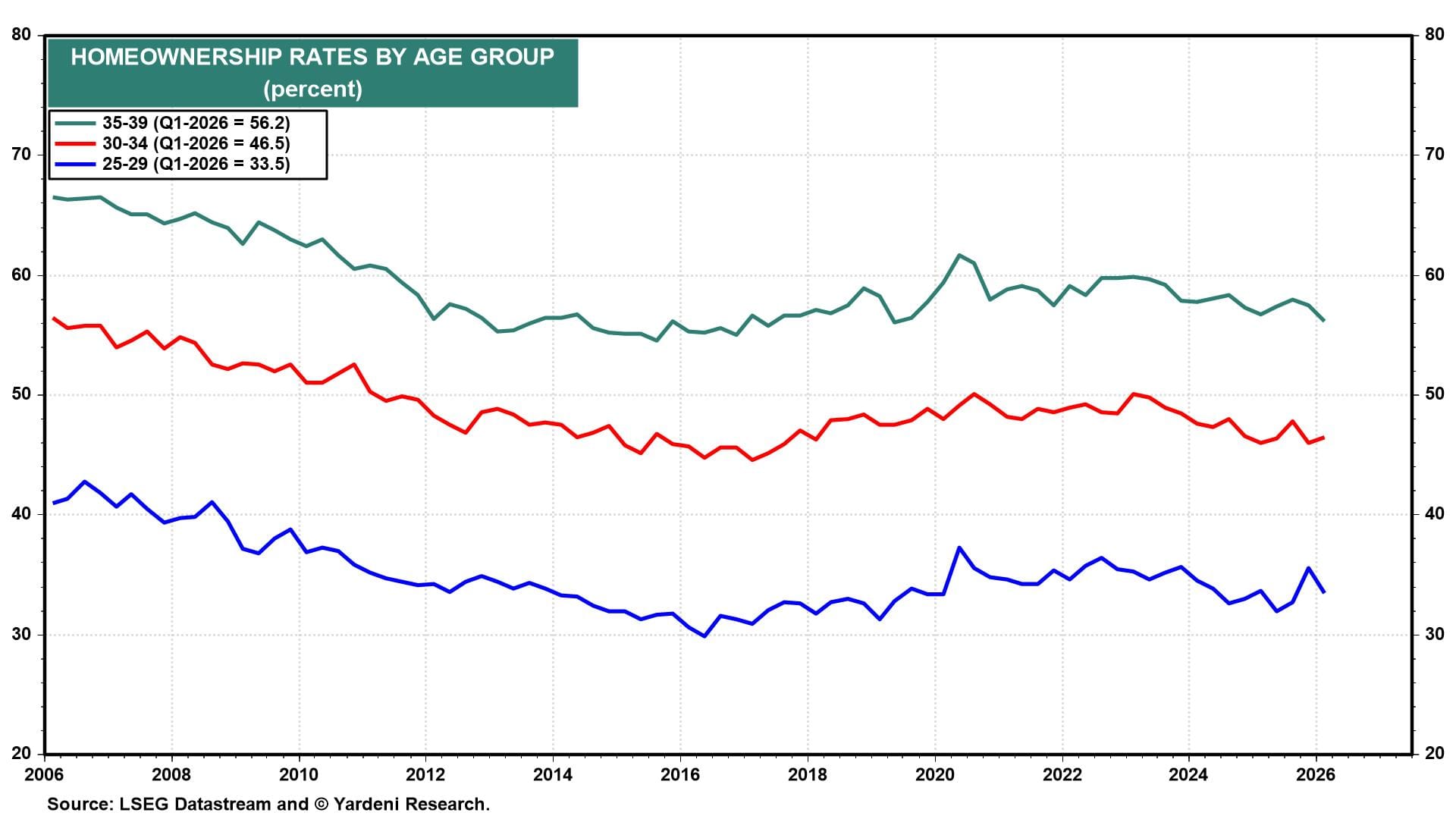
Homeownership rates for young adults fell in the years following the 2008 Great Financial Crisis (GFC) but have been relatively stable since roughly 2015 (chart). Of course, in the years just before the GFC, a speculative bubble in the housing market had boosted homeownership.
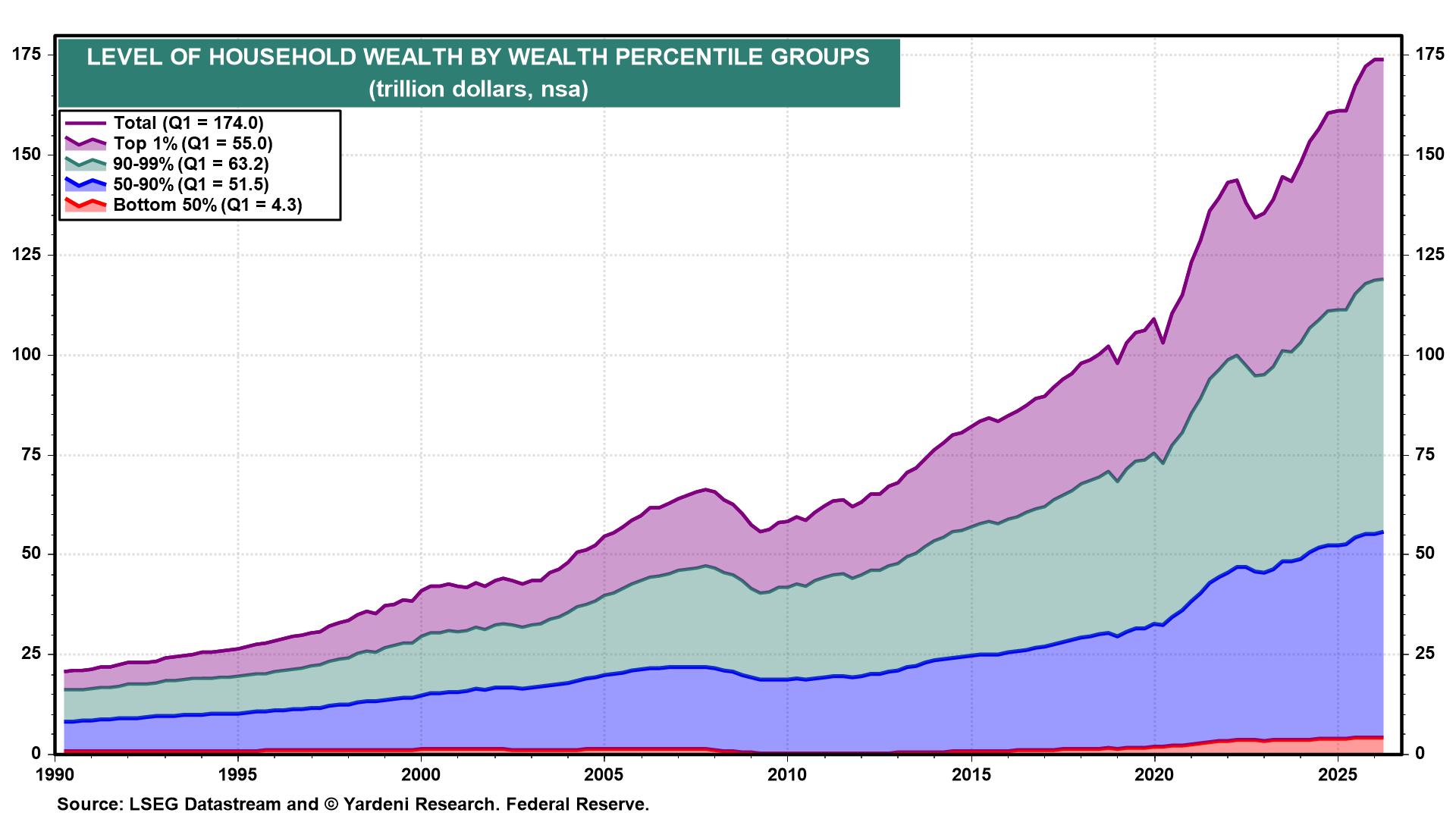
(3) Household Net Worth. Household net worth rose to a record $174.0 trillion during Q1-2026 (chart). The top 50 percentile group held almost all of it. The apparent wealth inequality is mostly attributable to older people having higher net worth than younger ones!
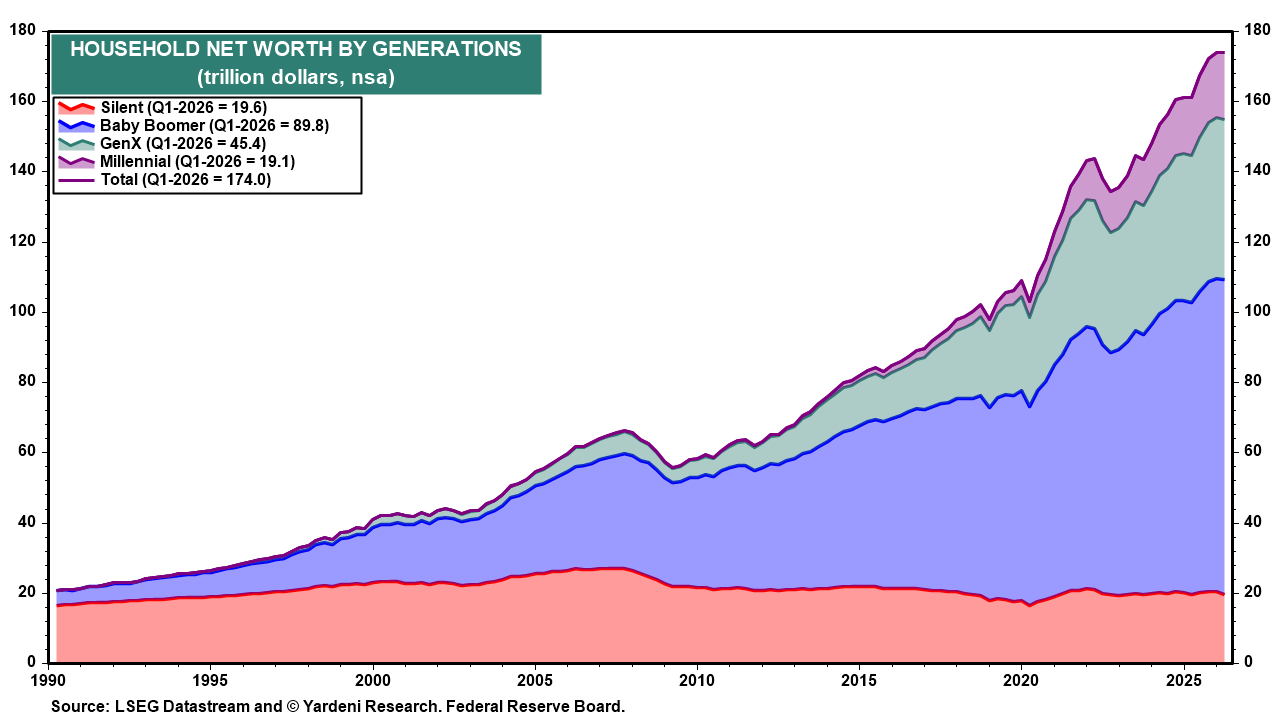
Baby Boomers and the Silent Generation have a combined net worth of $109.4 trillion (chart). They are the largest and wealthiest cohort of seniors in history.
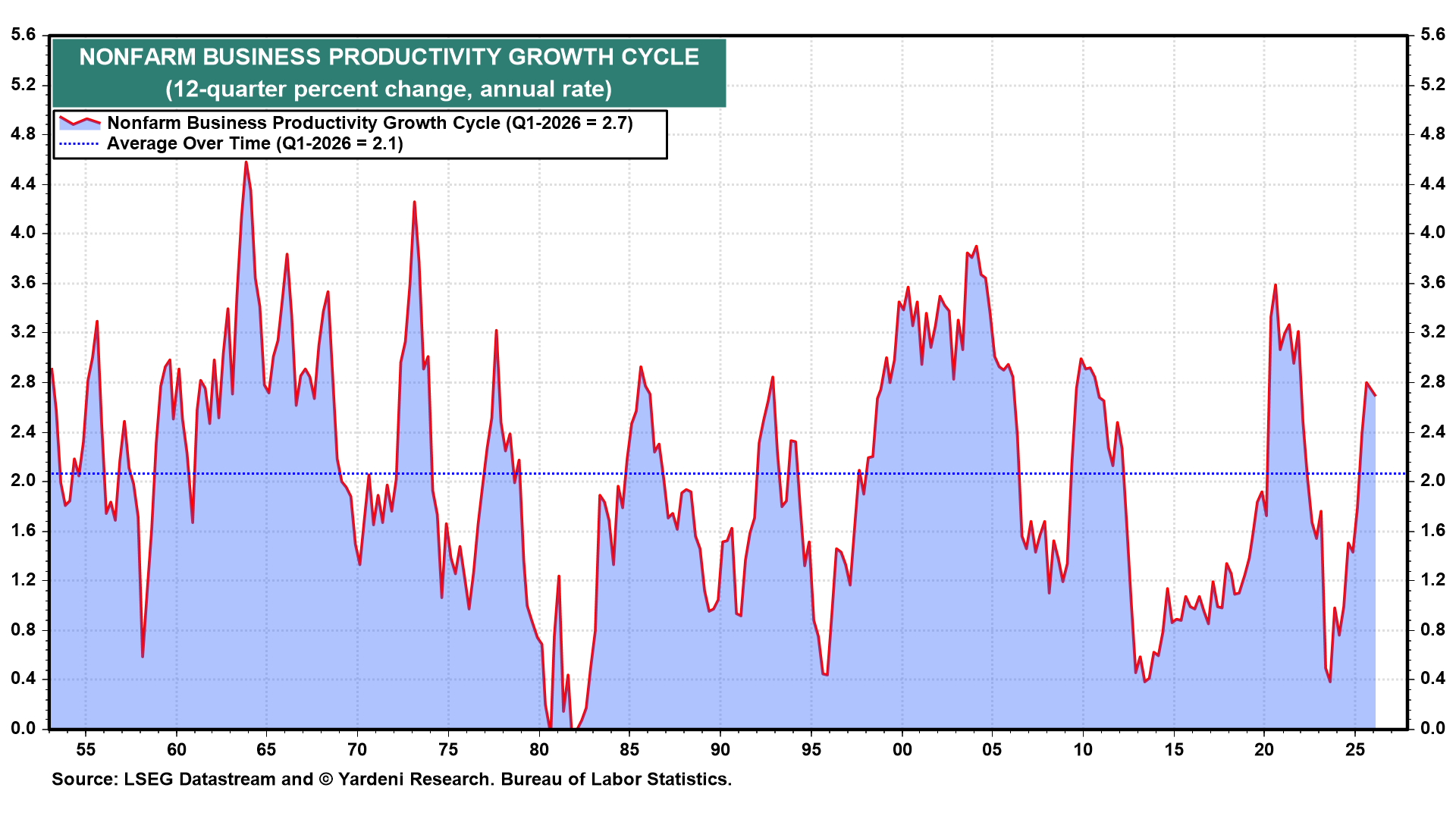
(4) Productivity and Capital Spending. America is probably on the verge of a major productivity growth boom. A labor shortage combined with a skills mismatch is forcing businesses to invest in productivity-enhancing technologies. Over the past 12 quarters through Q1-2026, productivity has risen at a 2.7% annual rate (chart).
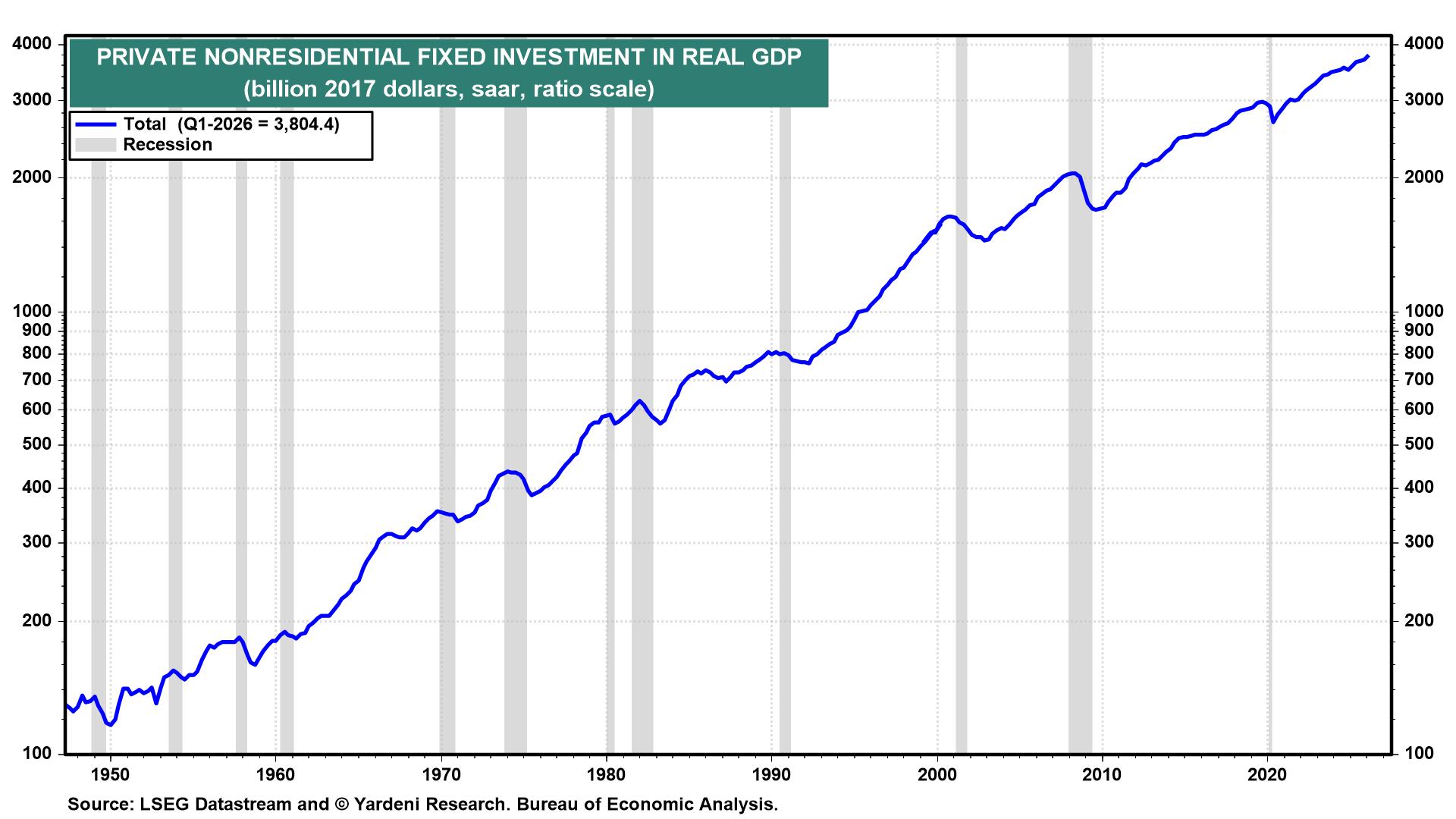
The demand for productivity-enhancing technologies, along with onshoring in manufacturing, is boosting capital spending dramatically (chart).
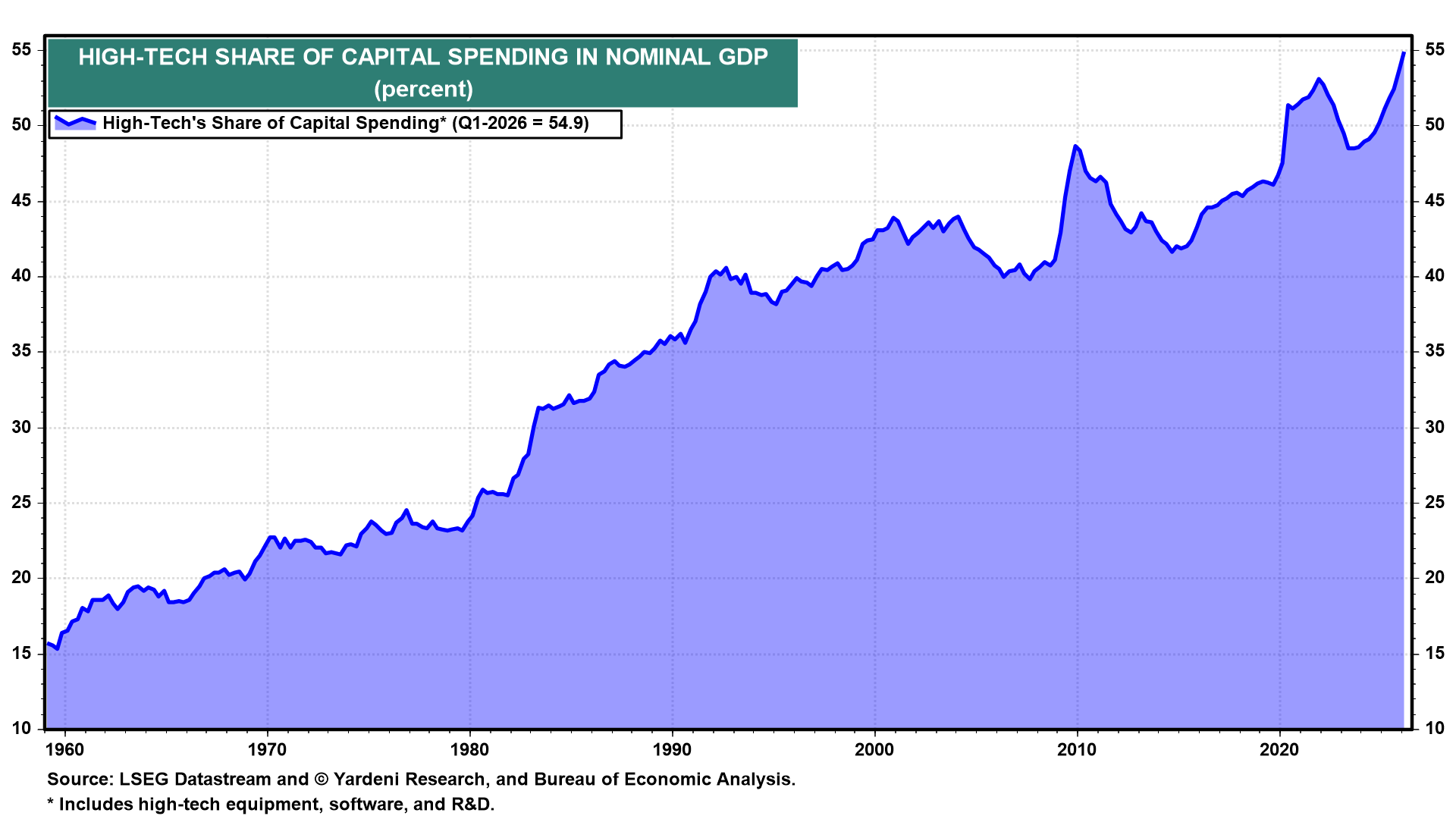
High-tech currently accounts for a record 54.9% of current-dollar capital spending in the US (chart).
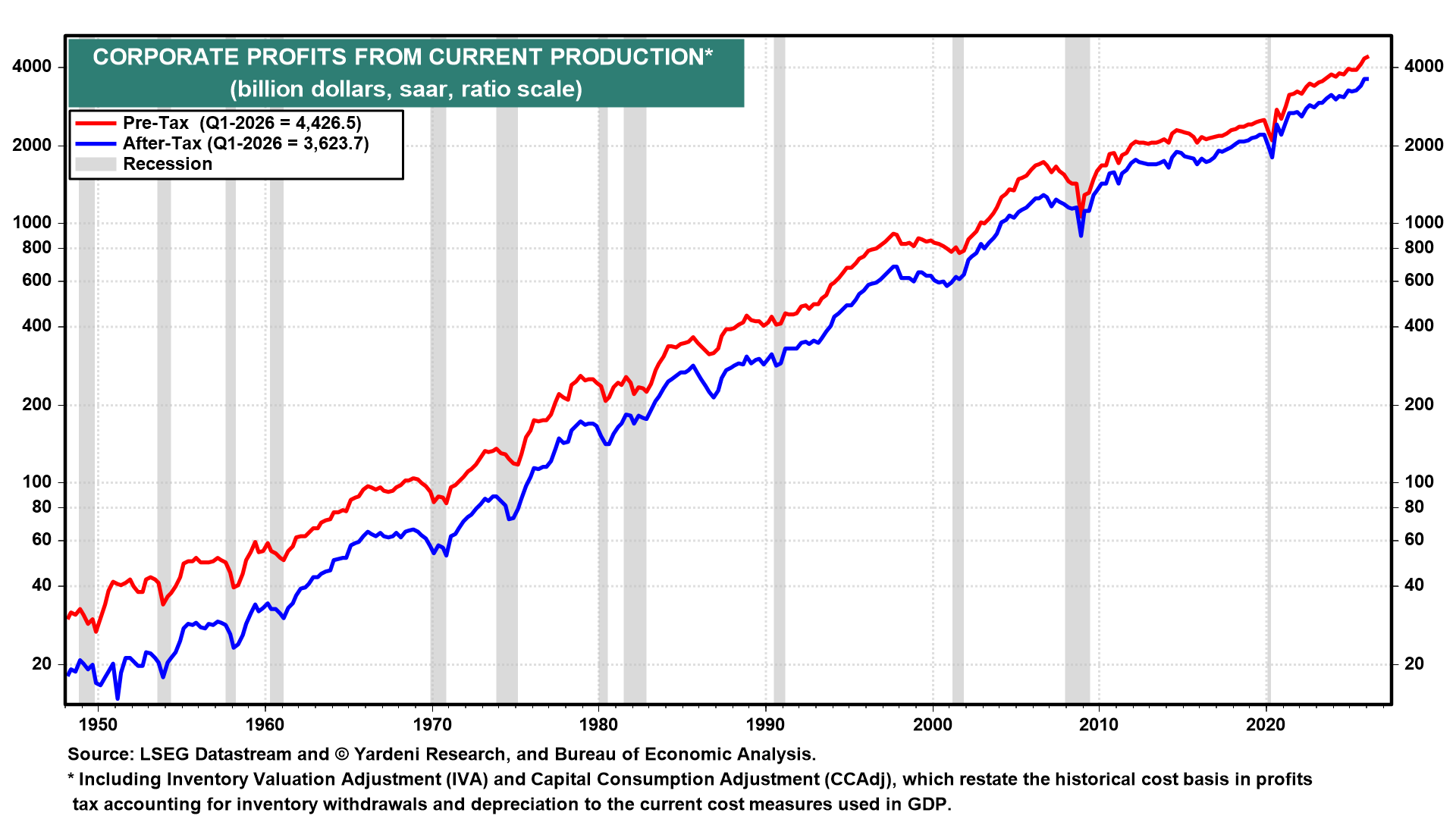
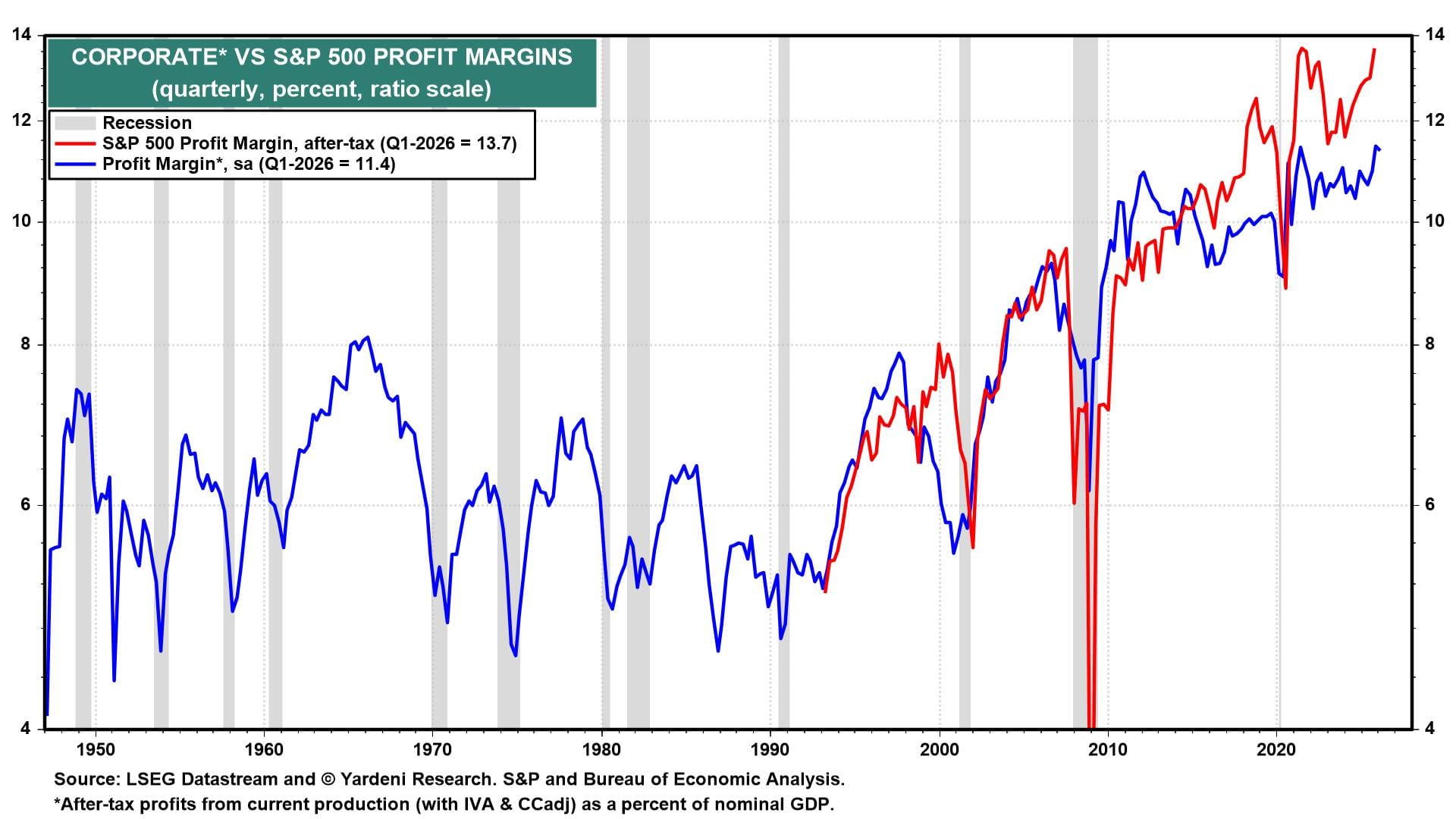
(5) Profits. Corporate profits and cash flow rose to record highs during Q1-2026 (chart).
Corporate profit margins are matching recent record highs (chart).
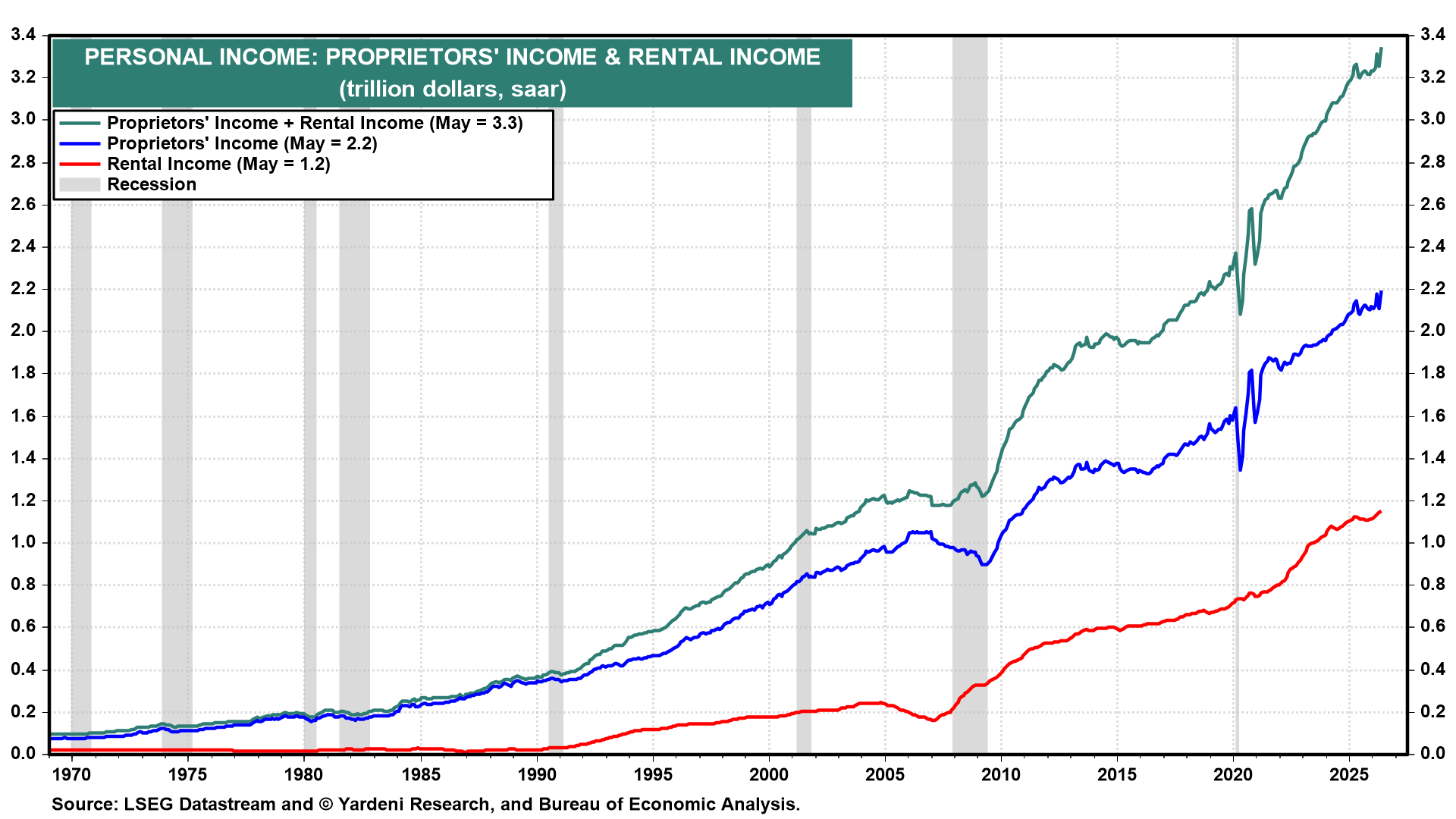
Proprietors' income and rental income are also at record highs (chart). Combined, they totaled a record $3.3 trillion during May 2026.
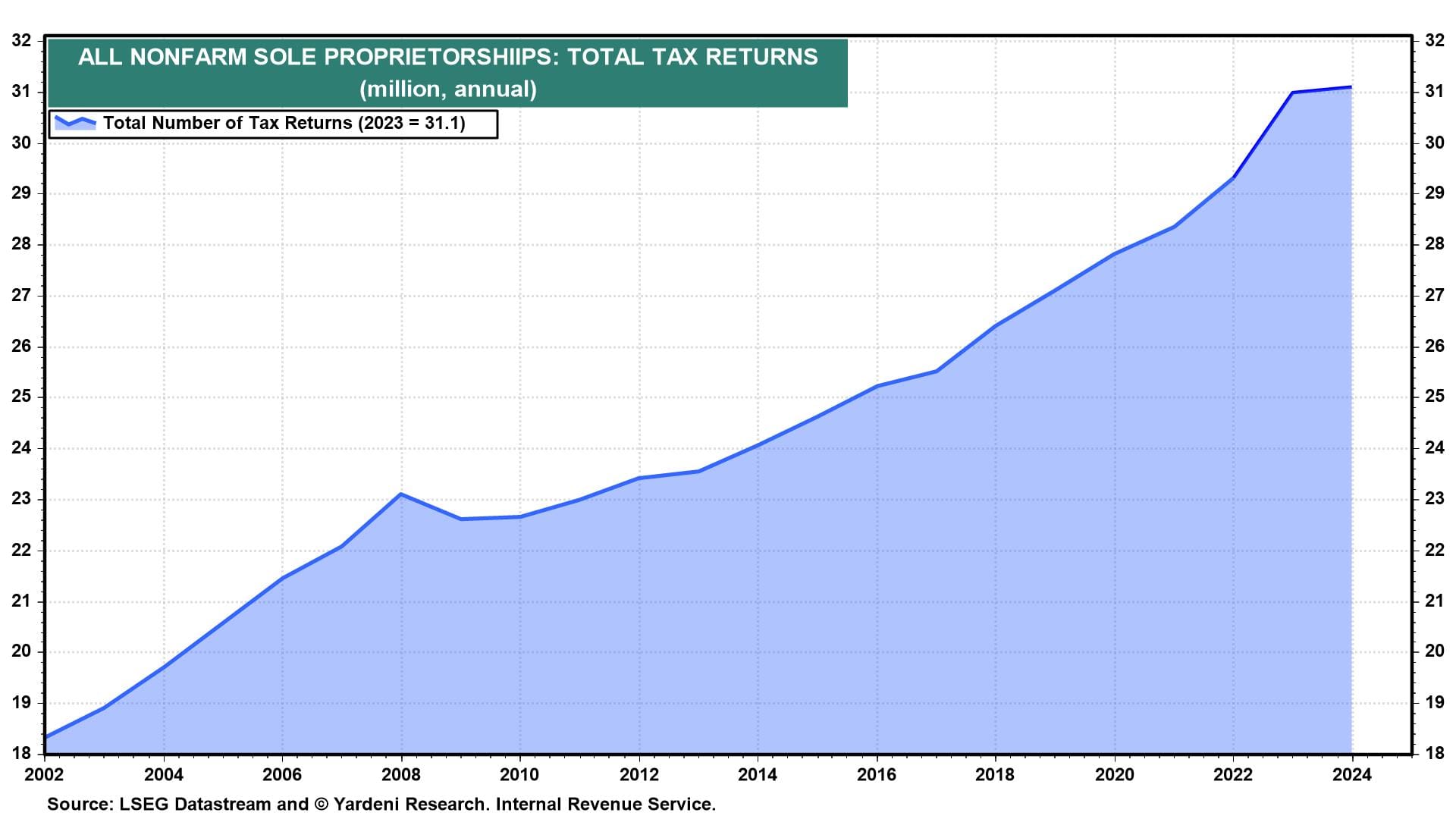
(6) Entrepreneurs. America is a great country for sole proprietors and entrepreneurs to pursue their happiness. What makes them happy is growing their businesses by providing their customers with the best goods and services available on the market. They prosper when their customers are happy with what they are offering.
There were a record 31.1 million sole proprietorships in America during 2023 (chart).
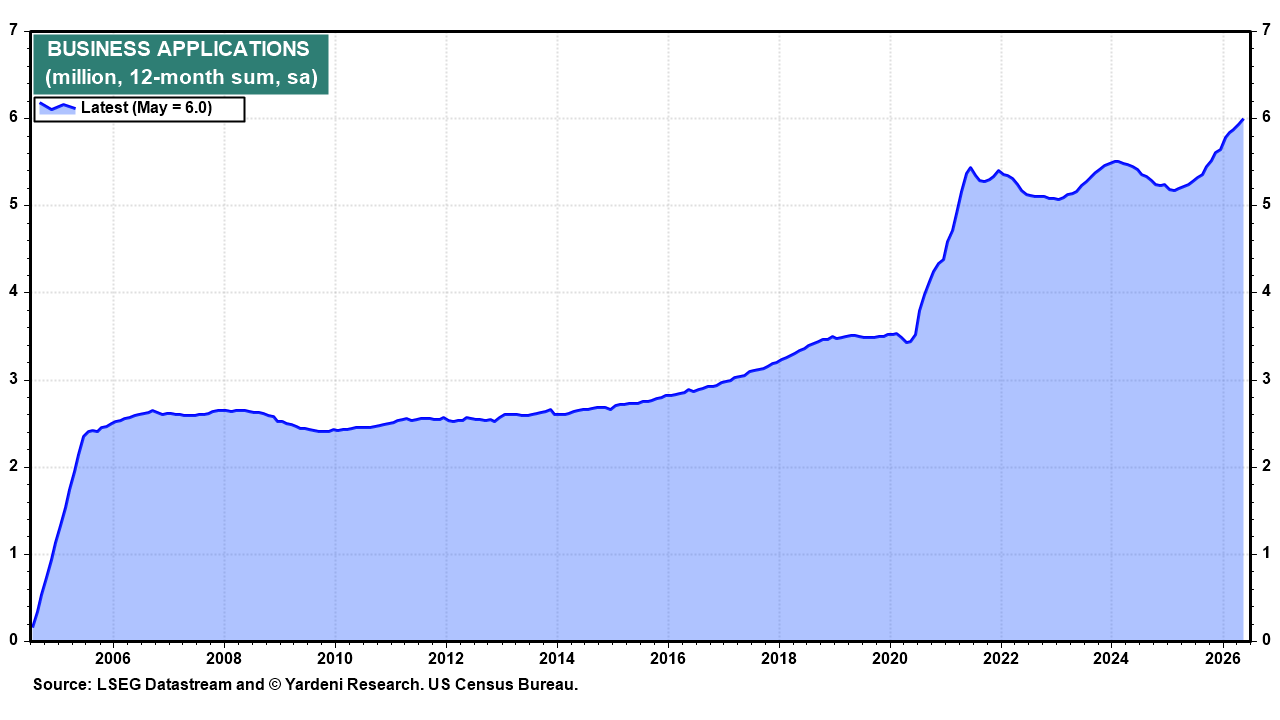
Business applications rose to a record 6.0 million during the 12 months through May 2026 (chart).
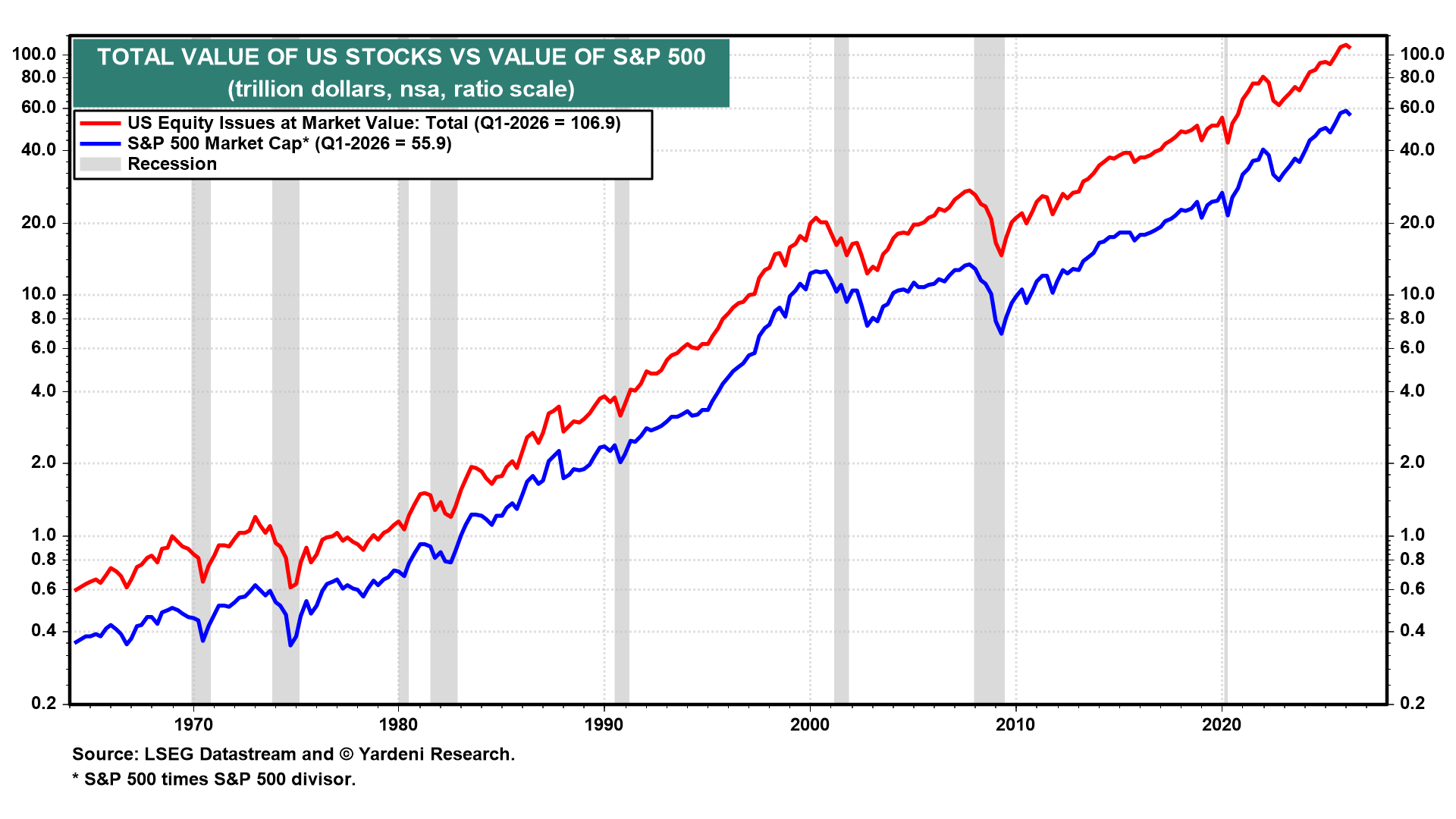
(7) Capital Markets. The US has the largest capital markets in the world. The US equity market totaled $106.9 trillion during Q1-2026 (chart).
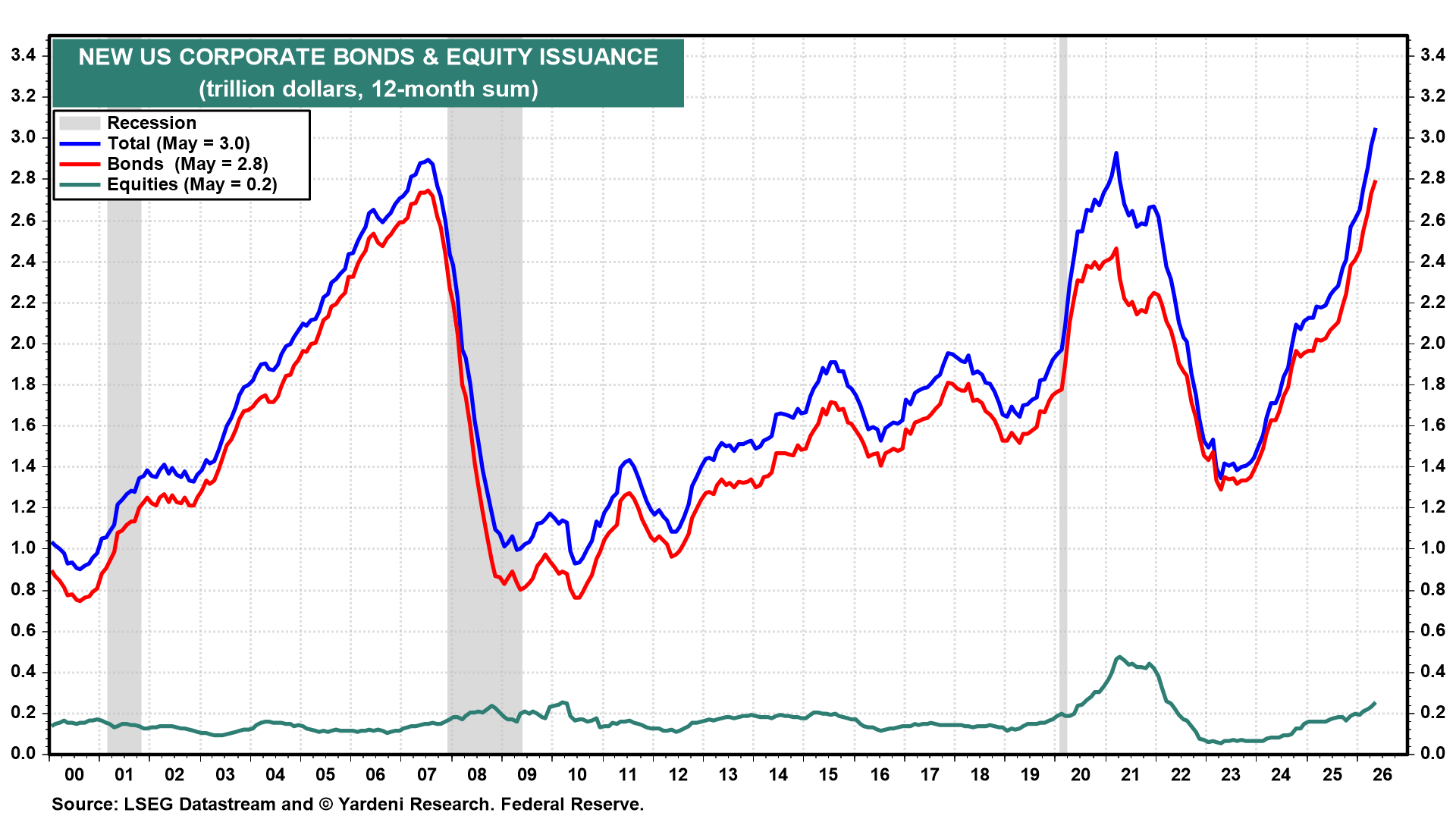
New issuance of bonds and stocks totaled a record $3.0 trillion over the 12 months through May (chart).
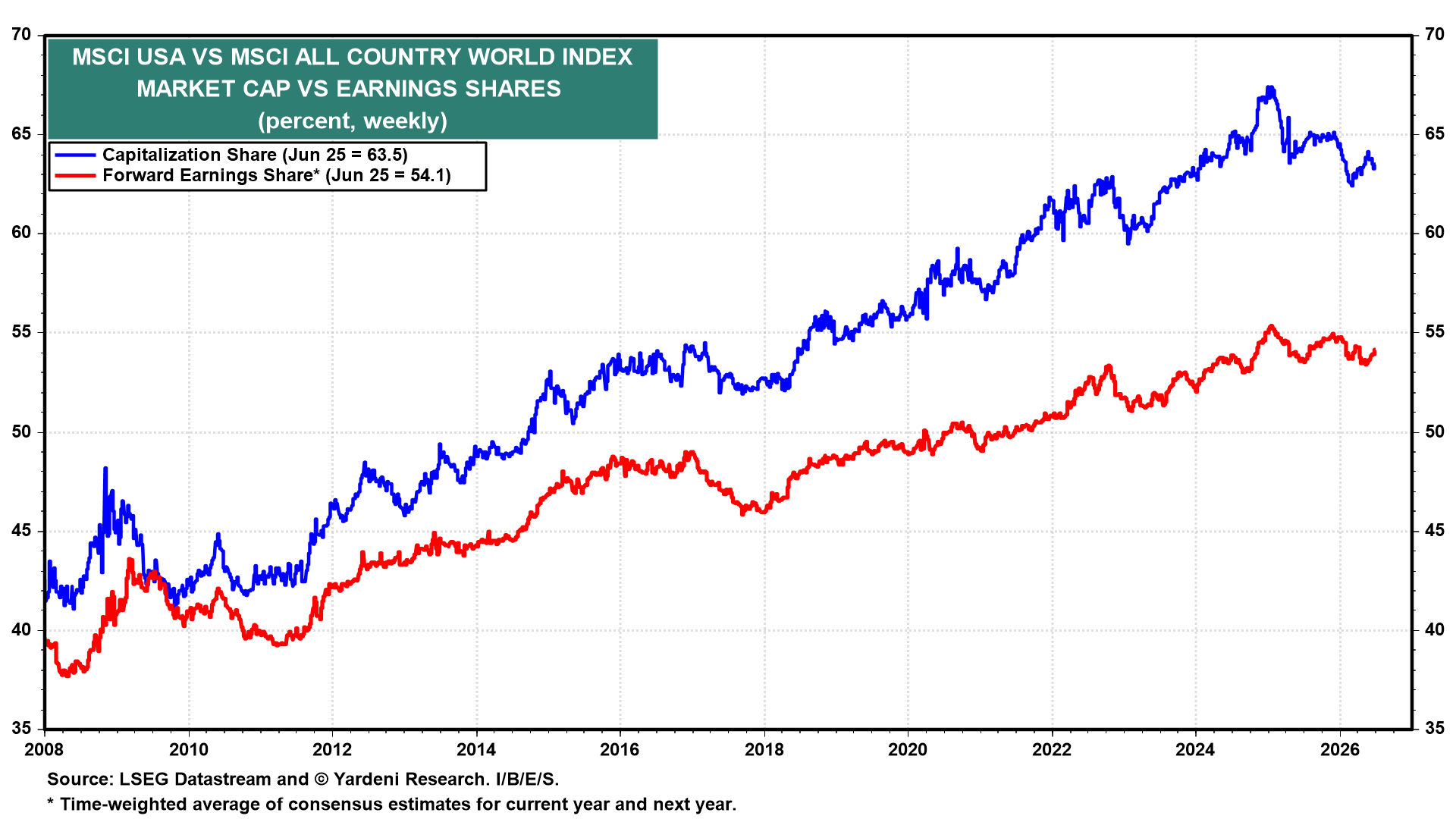
At the end of June, the US MSCI accounted for 63.5% of the market capitalization of the All Country World MSCI (chart). Its earnings share was 54.1%.
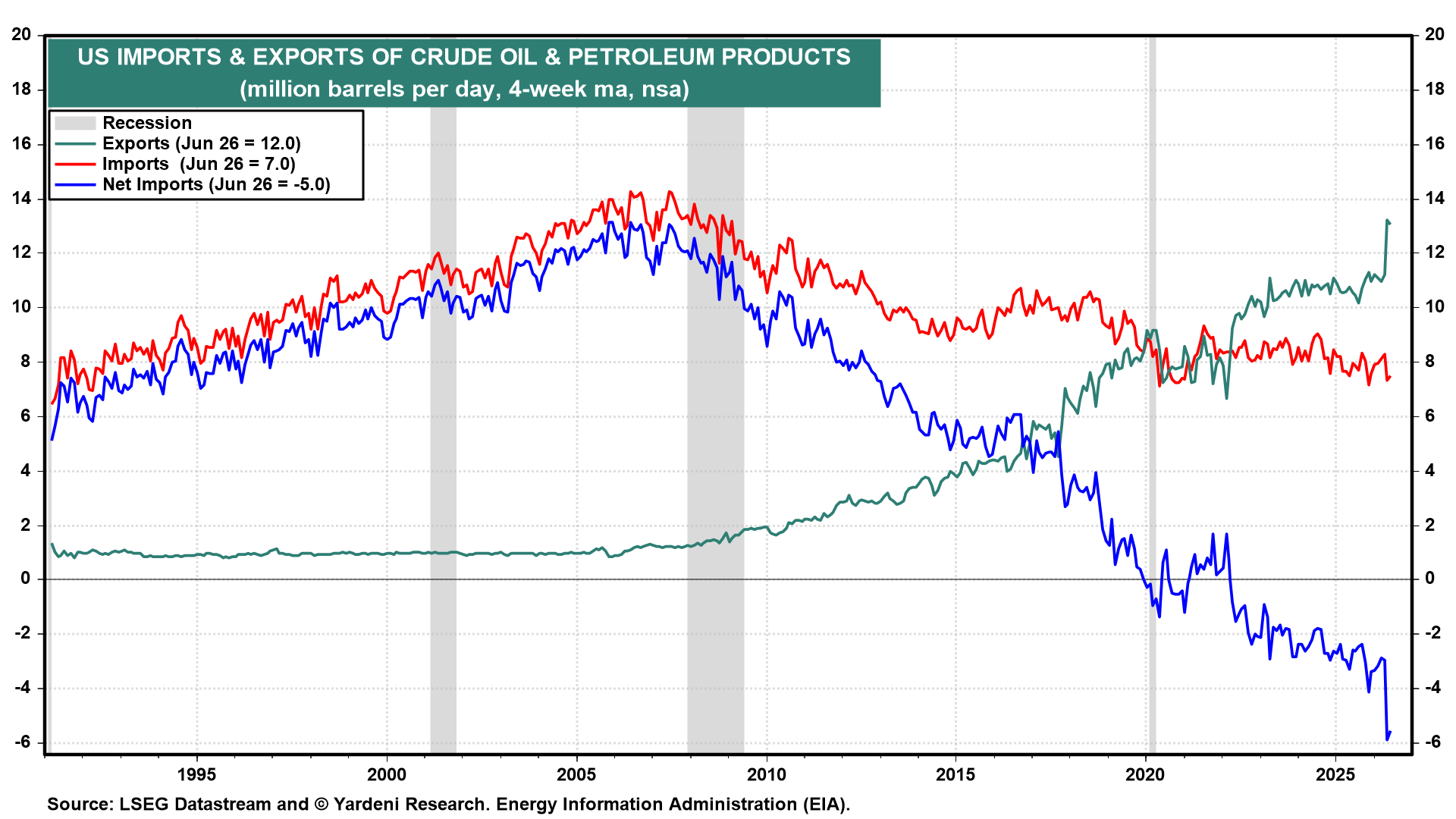
(8) Energy. The US turned into a net exporter of crude oil & petroleum products at the beginning of the current decade (chart).
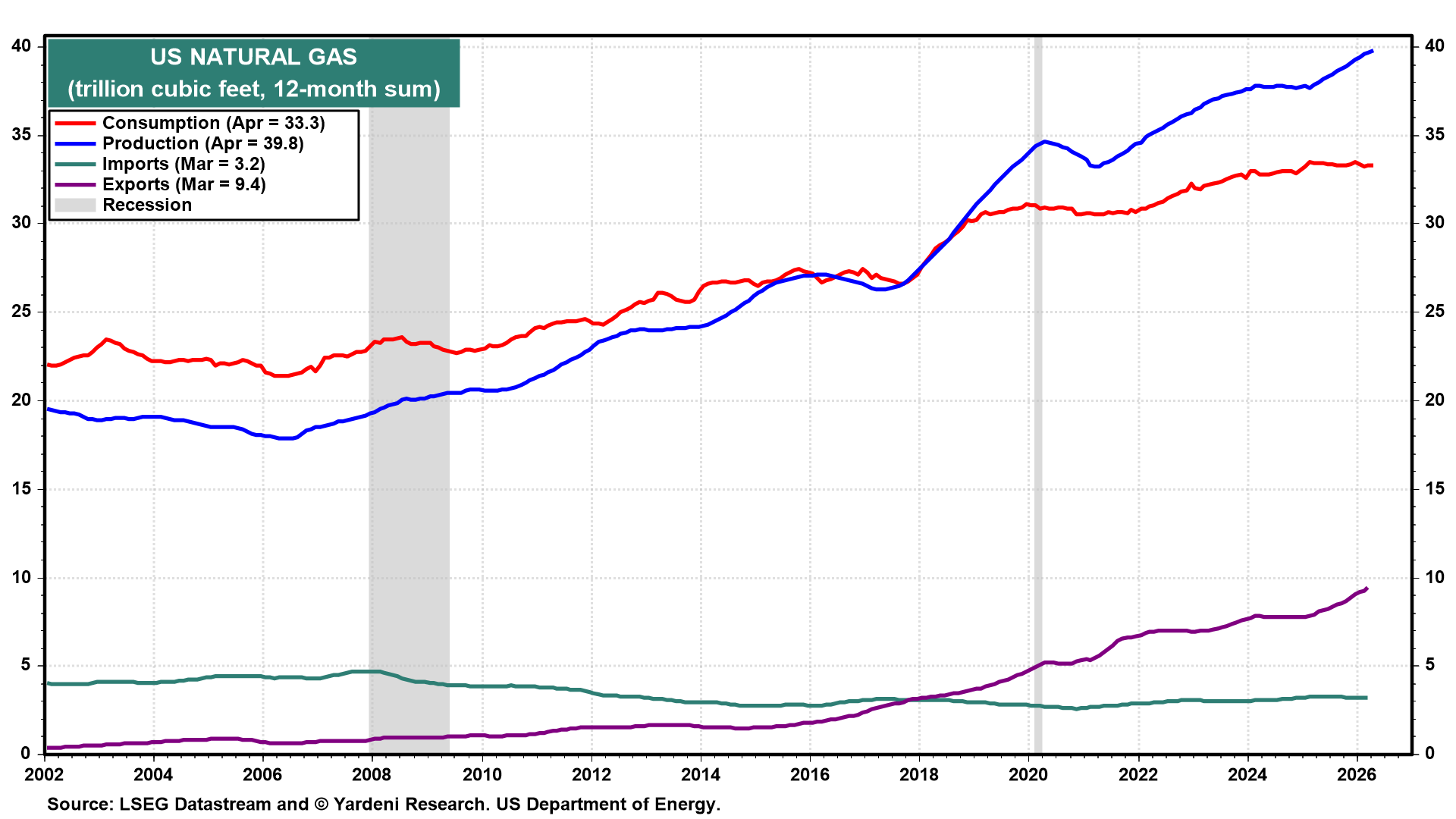
The US turned into a net exporter of natural gas at the end of the previous decade (chart).
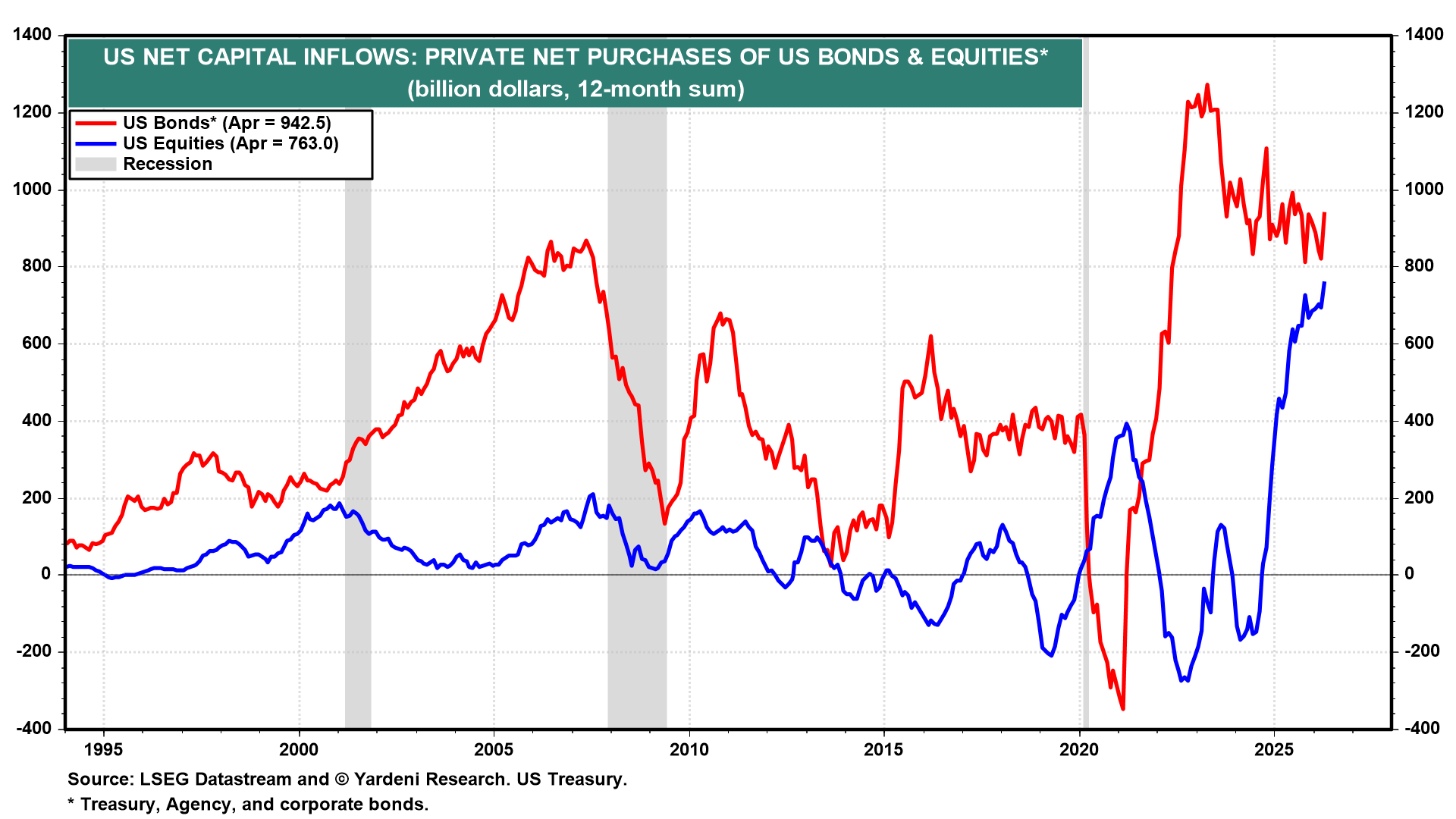
(9) Foreign Investors. Contrary to popular opinion, foreign investors remain major net buyers of US fixed-income and equity securities (chart). Over the past 12 months through April, they purchased a record $763.0 billion in US equities.
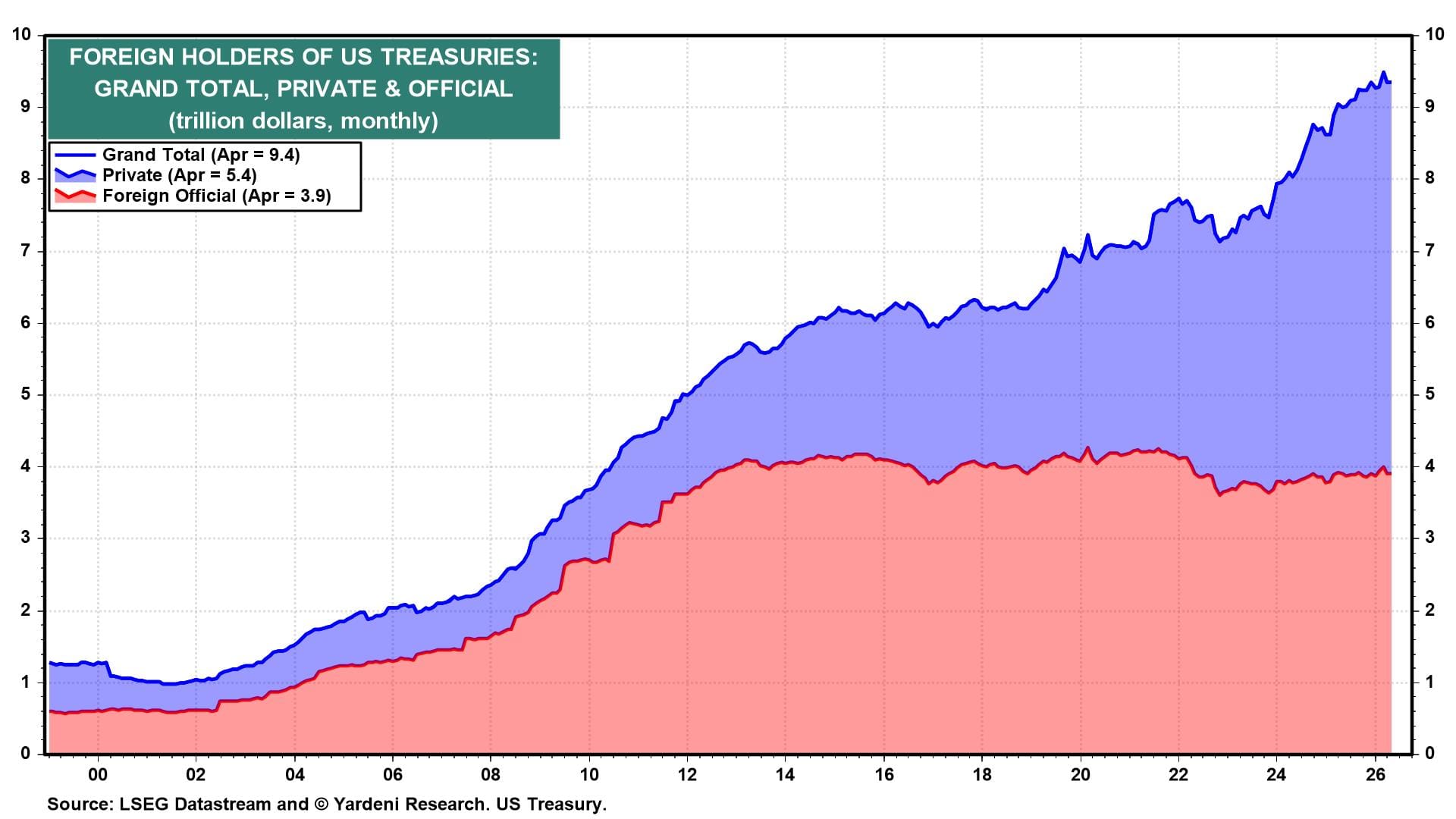
Foreign investors hold a record $9.4 trillion in US Treasuries (chart).
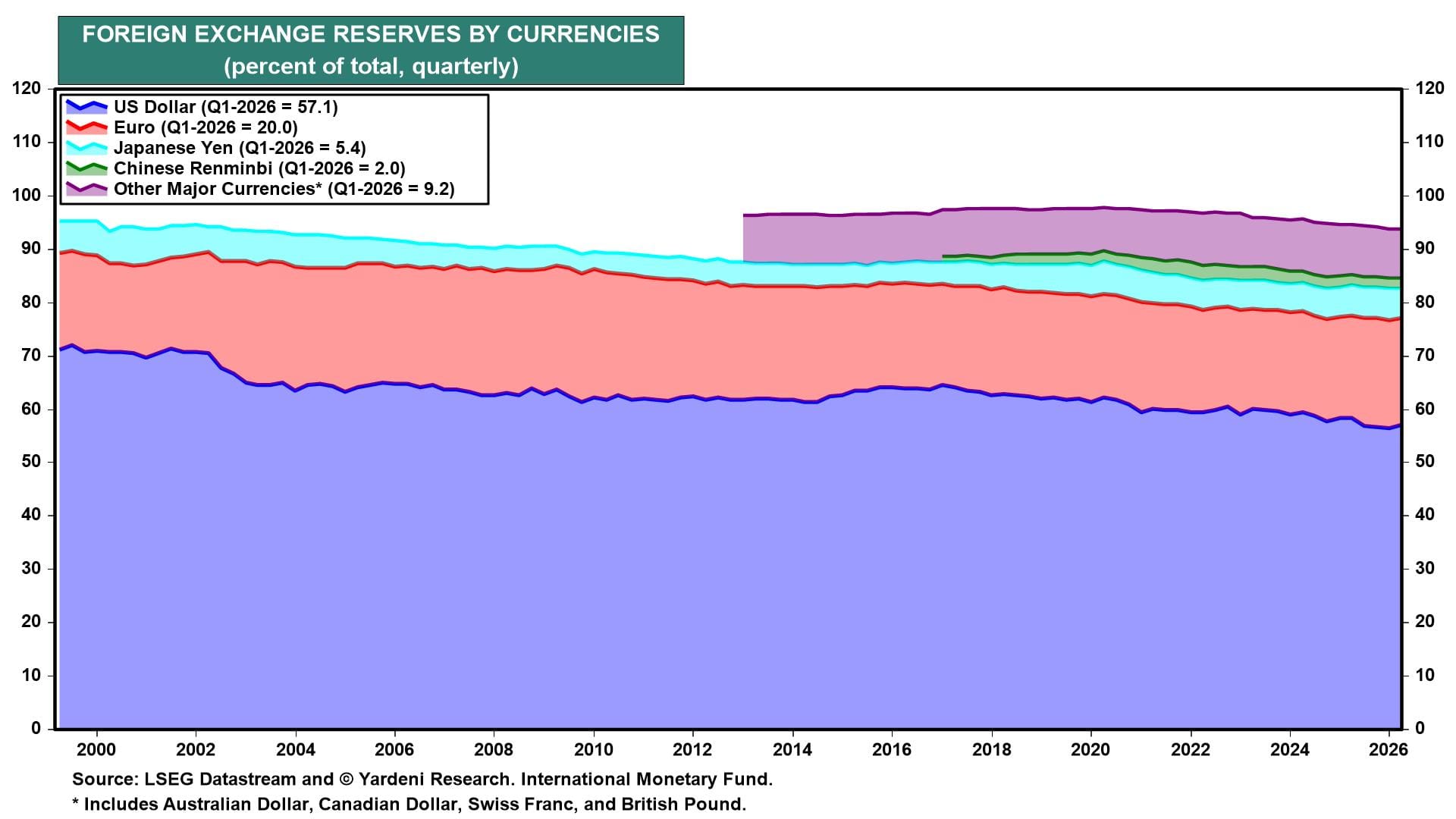
The US dollar accounts for more than half (57.1%) of foreign currency exchange reserves (chart).
Happy 250th birthday, America! Godspeed!
