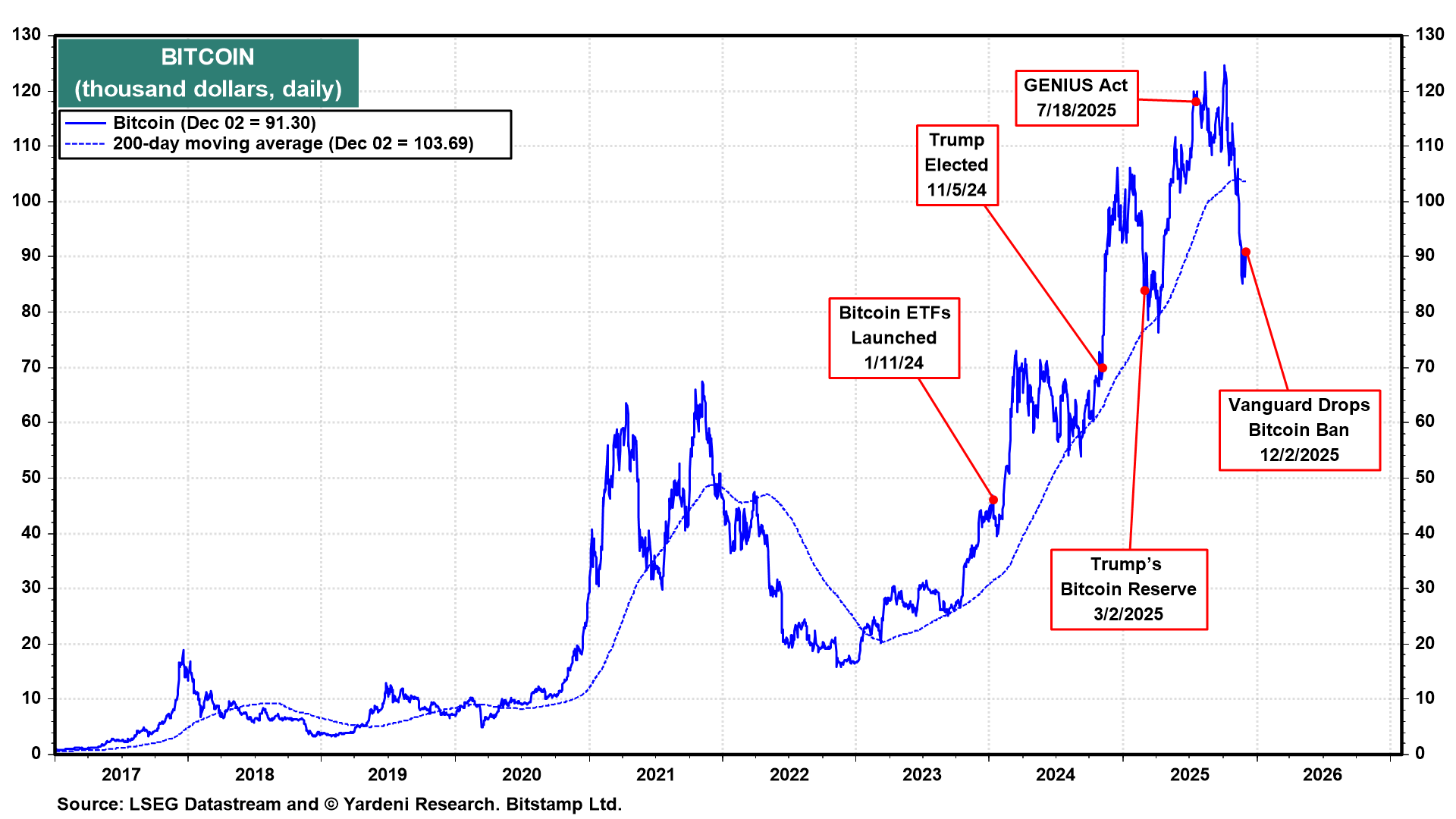
We do not have an opinion on bitcoin because we don't have any way to value it. It has been widely called "digital gold." We've previously described bitcoin as "digital tulips." That makes us sound bearish since the famous Tulip Bulb Bubble burst in Amsterdam several centuries ago, once it was realized that the small Dutch market had run out of buyers willing to pay higher and higher prices. When the selling pressure started, it quickly fed on itself, resulting in a crash.
Bitcoin is different because it trades 24 hours a day, worldwide. That also makes it more volatile, though possibly crash-proof. That's because when it dives, there are likely plenty of new buyers around the globe who see the drop as a buying opportunity. In addition, bitcoin is receiving strong support from Wall Street, enabling the public to play the game through ETFs and futures. It must be comforting for many individual investors to receive a monthly statement from their brokers showing the value of their bitcoin ETF holdings, rather than having to keep a digital key and worry that their blockchain account might be hacked by quantum computers one day.
So ARK’s CEO Cathie Wood could be right. She is forecasting that bitcoin will be worth $1.2 million per coin by 2030. She recently lowered her forecast from $1.5 million to reflect the rapid rise of stablecoins (cryptocurrencies pegged to the US dollar), which she noted are "usurping" some of the utility she initially expected bitcoin to capture in emerging markets.
President Donald Trump signed the GENIUS Act in July. It established a regulatory framework for the issuance of stablecoins, which must be backed by liquid, safe assets such as US Treasury bills. We identified the act as an explanation for bitcoin's sharp price decline since it was enacted, as stablecoins reduce demand for bitcoin transactions (chart).