


I. Investors Should Be Thankful
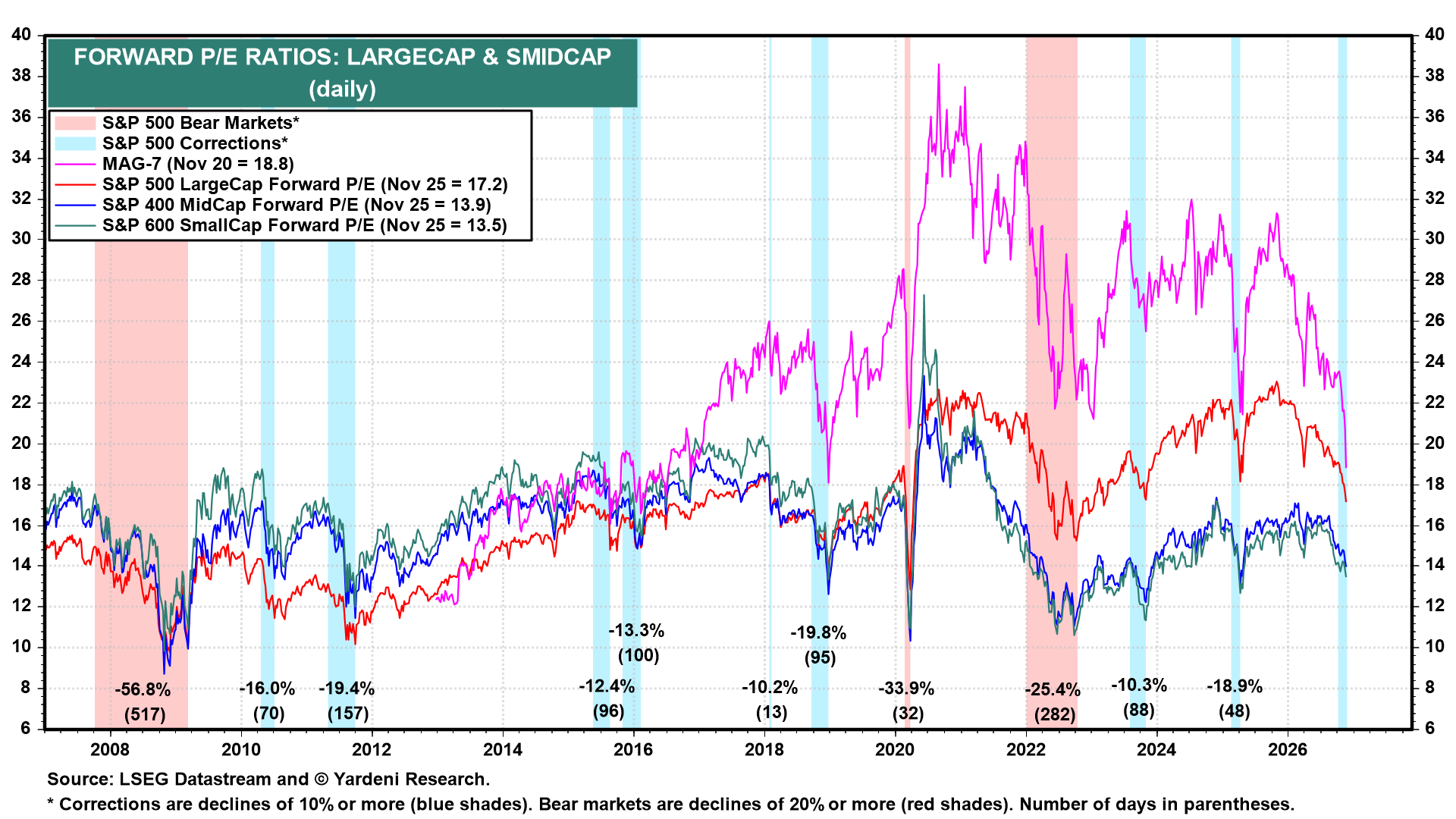
Ahead of Thanksgiving, investors should have been thankful that corporate earnings are so strong. They should be feasting on industry analysts' expectations that earnings will remain strong over the next two years. Instead, investors have lost their appetite for such optimism. That's plain to see in the plunging forward P/Es of the major stock market indexes in recent weeks (chart). They are clearly worried that analysts' consensus earnings expectations are irrationally exuberant. With valuation multiples now as low as during the bear market of 2020 and the significant correction of 2018, they seem to be anticipating that the AI buildout, which has been boosting the economy, will now push it into a recession.
That's a plausible concern. In the past, falling valuation multiples (determined by investors) have often anticipated recessions, while consensus earnings estimates (determined by analysts) have lagged behind. However, investors were wrong in 2018 and in 2020. Both times, the widely anticipated recession didn't materialize. We expect a similar outcome this time, and that the current correction won't turn into a bear market. So it should be the post-midterms buying opportunity we first anticipated on September 15.
A relatively short correction scenario is supported by how quickly pessimistic sentiment has hit the tape. The Investors Intelligence Bull/Bear Ratio recently peaked during the week of August 17 at 3.88 (chart). It plunged to 1.13 this past week. From a contrarian perspective, that's a very bullish reading. However, it has fallen below 1.00 and stayed there for a few weeks during bear markets and long corrections.
