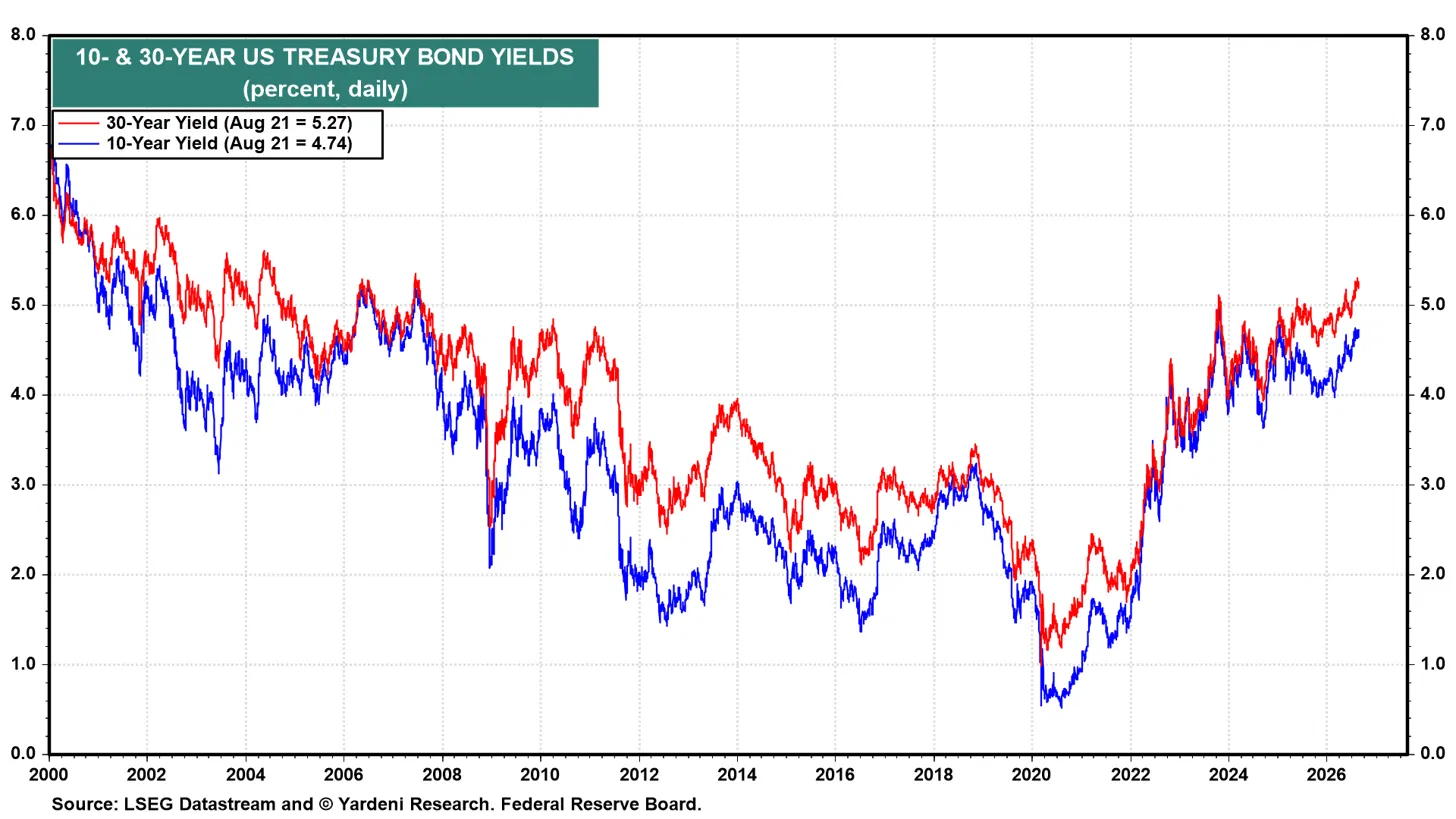
Global bond markets stole the spotlight last week. The US 10-year yield closed at 4.74% and the 30-year at 5.27%, up 6bps and 2bps, respectively, for the week (chart). Treasury Secretary Scott Bessent surprised the markets on Wednesday by announcing that the US Treasury would double its long-term debt purchases to at least $4 billion per operation; that was the same day that the US national debt crossed above $40 trillion. He appeared on CNBC Thursday to defend the move and signaled that even larger buybacks are possible, but yields rebounded anyway, erasing most of Wednesday's relief rally.
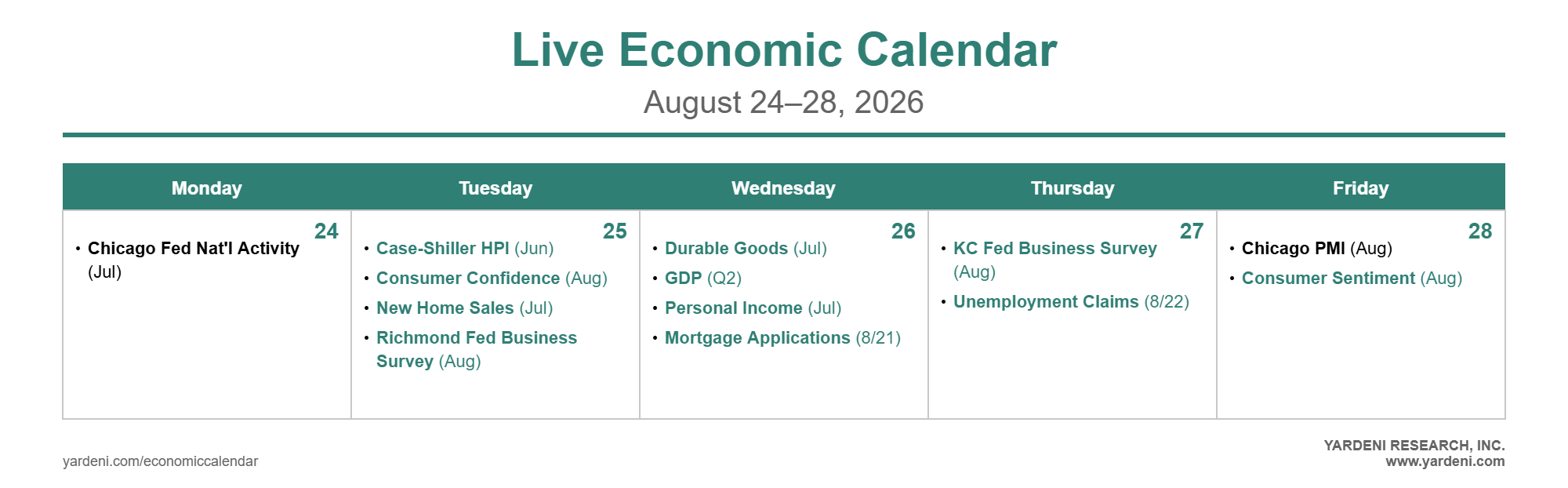
The episode underscores how contested the yield move remains heading into Friday's Jackson Hole remarks from Fed Chair Kevin Warsh. We will also see earnings reports from Nvidia and Marvell this week. Regional business surveys and Thursday's jobless claims round out the week's domestic calendar. Here's more:
(1) Fed policy and Jackson Hole. Last week's FOMC minutes revealed a Committee split between hawks who favor another rate hike in September and owls who want more evidence on inflation's persistence before deciding. Hammack, Kashkari, and Logan dissented in favor of an immediate July hike. No one on the Committee is arguing for rate cuts.
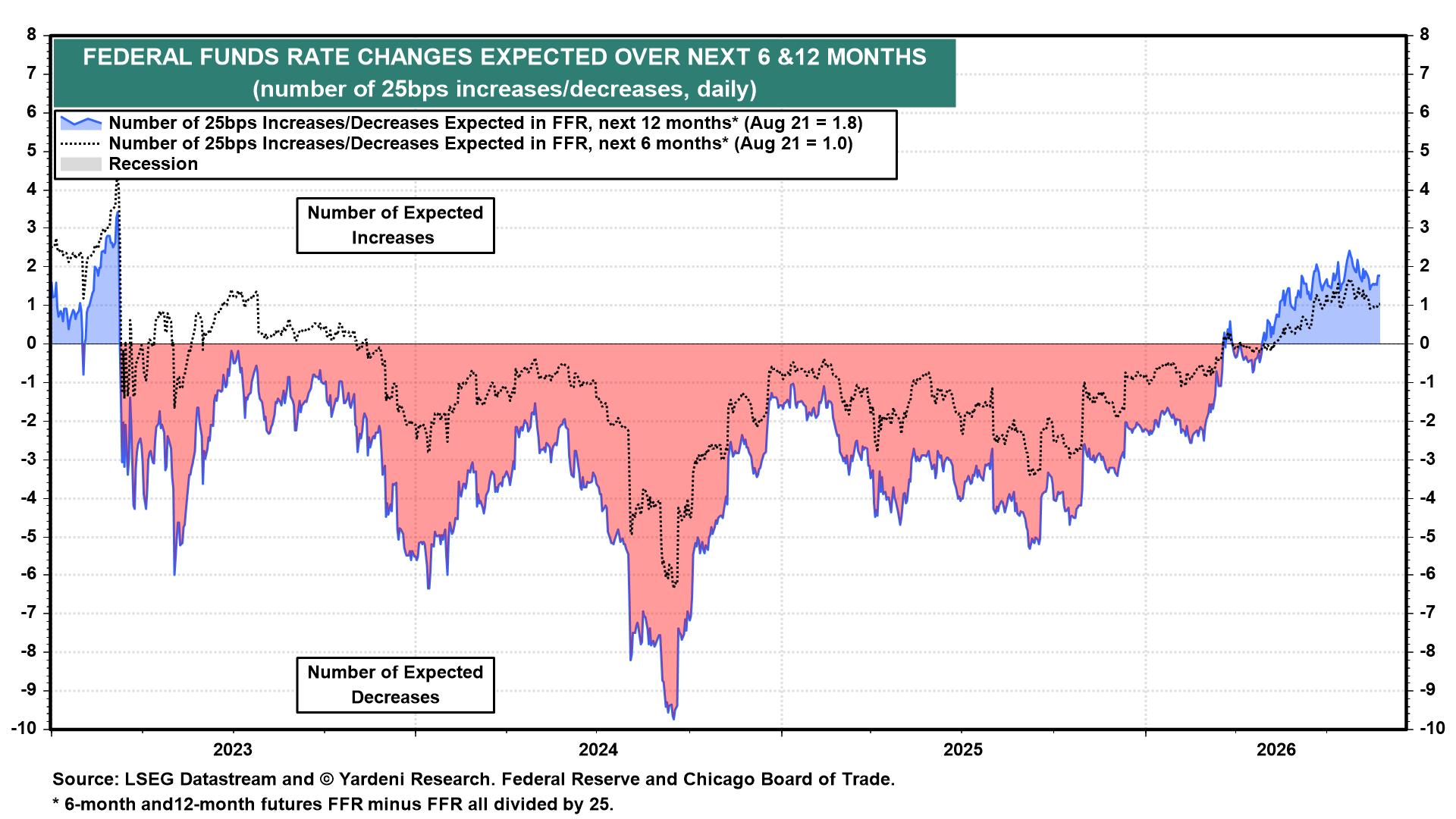
Warsh headlines Friday's Jackson Hole Symposium, giving him a venue to weigh in now that July's CPI and PPI prints both are in hand. Federal funds rate futures implied 1.8 rate hikes over the next 12 months, up from 1.5 a week earlier (chart). We aren't expecting much new information from Warsh's speech, which we expect will be short.
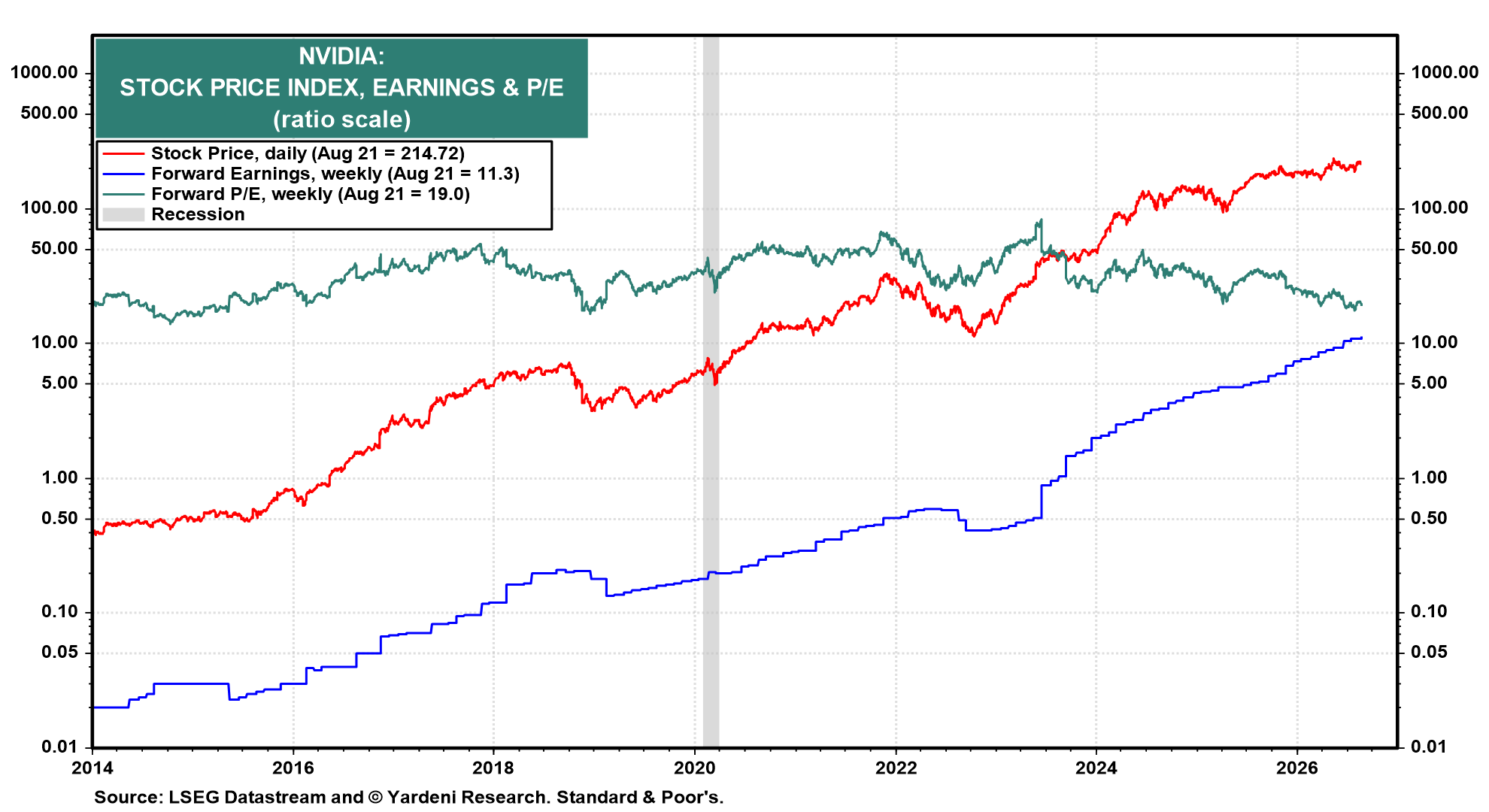
(2) Earnings. Nvidia reports earnings Wednesday, and Marvell reports Thursday, as Q2 earnings season nears its close. Nvidia is expected to report revenue upwards of $90 billion, up from $46.7 billion in Q2 last year. The stock's forward P/E is down to 19.0 from a peak of 84.3 during the week of June 14, 2025 (chart). We aren't expecting a big reaction to Nvidia's earnings report.
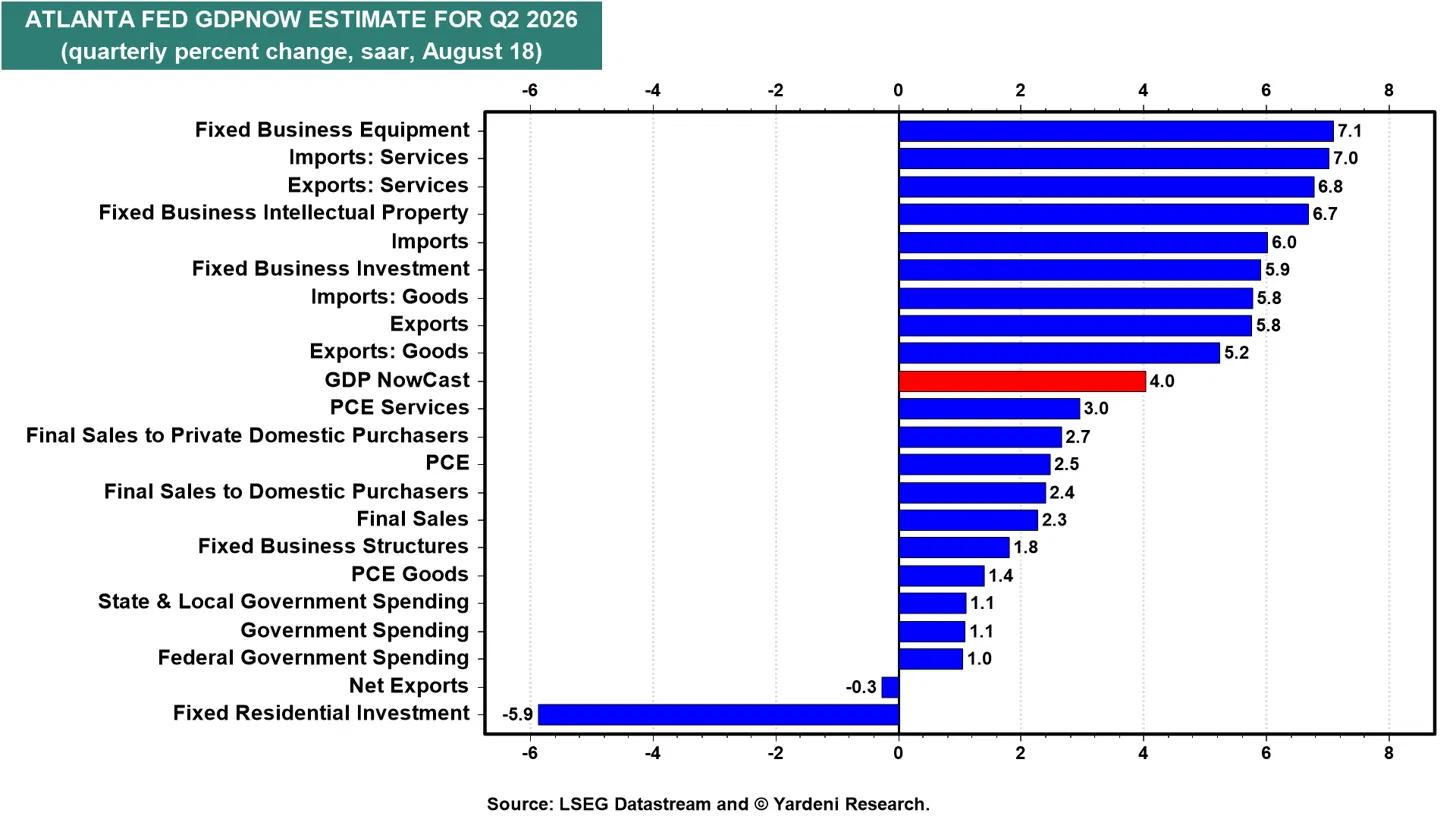
(3) GDP. The second estimate of Q2 GDP (Wed) follows a final Q1 reading of 2.1% saar. The Atlanta Fed's GDPNow model estimated Q2 growth at 4.0% as of August 18, with business investment leading the way (chart).
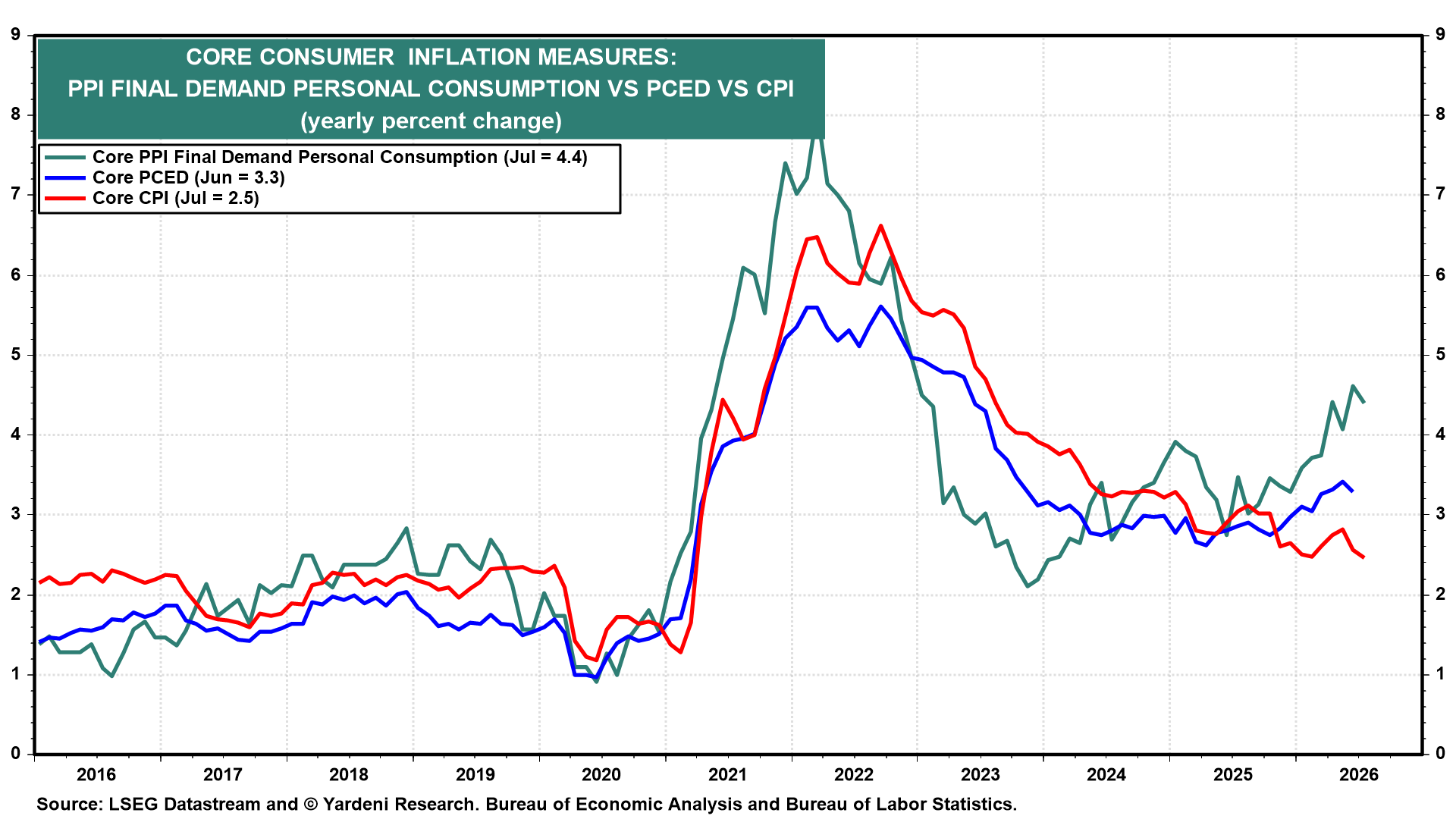
(4) PCED. July's core PCED (Wed) follows June's 3.3% y/y, well below the 4.4% pace for core PPI final demand for personal consumption in July (chart). Last week's CPI showed a similar gap, with core CPI cooling to 2.5% y/y even as the core PPI for consumption ran much hotter. The Cleveland Fed's Inflation Nowcasting model projects July's comparable PCED inflation rates at 3.65% headline and 3.29% core y/y. (The m/m rates are 0.34% and 0.27%.)
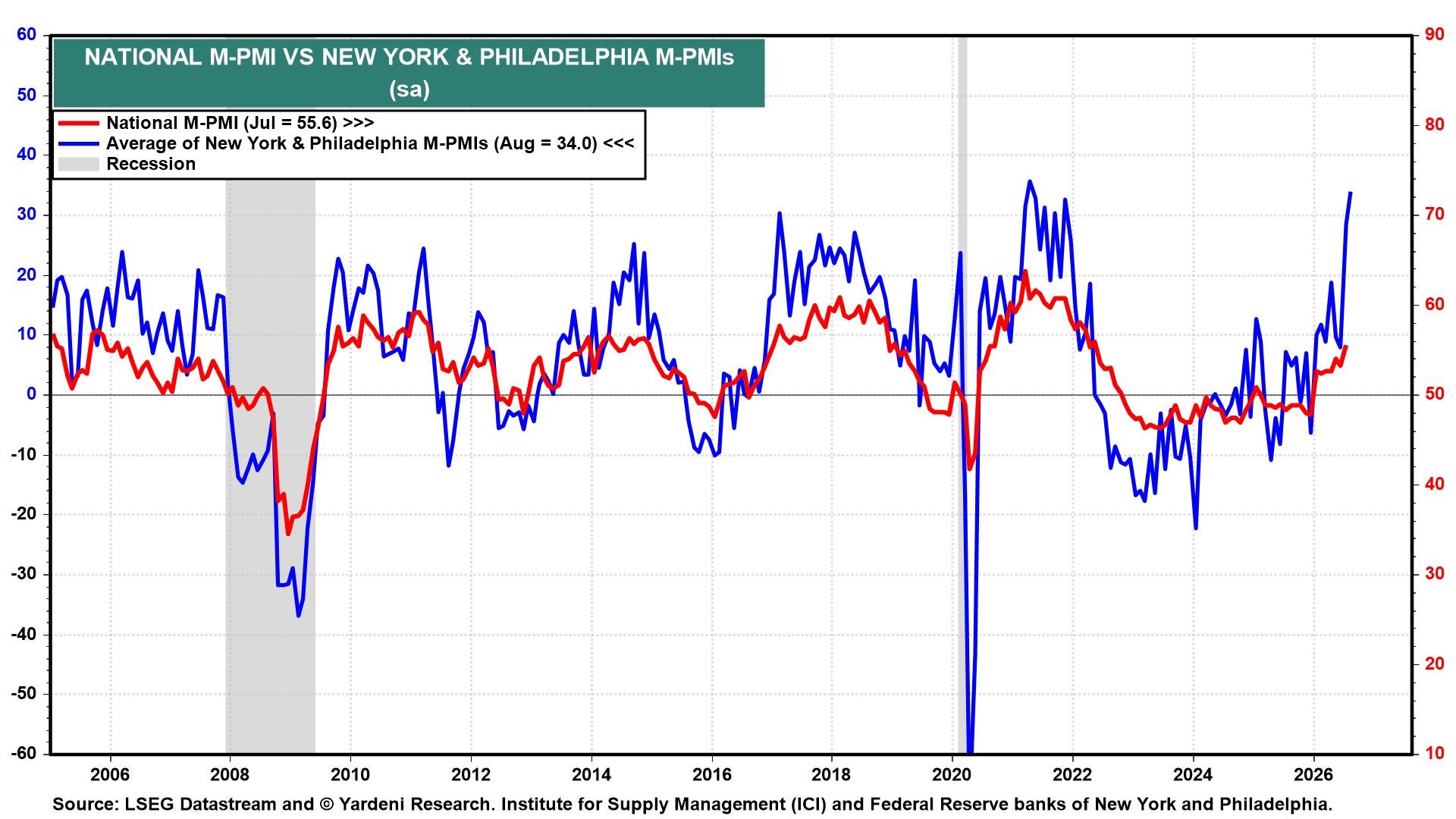
(5) Business surveys. Richmond's manufacturing index (Tue) follows an improving regional outlook in August, a sharp pickup from July. The NY and Philadelphia Fed surveys, good barometers for the other regional banks, jumped to an average of 34.0 in August, their strongest reading since 2021, with Philly's own six-month business conditions outlook jumping to its highest level since August 1983 (chart). The Chicago PMI (Fri) will round out the month's regional reads, offering additional context on Midwest business activity.
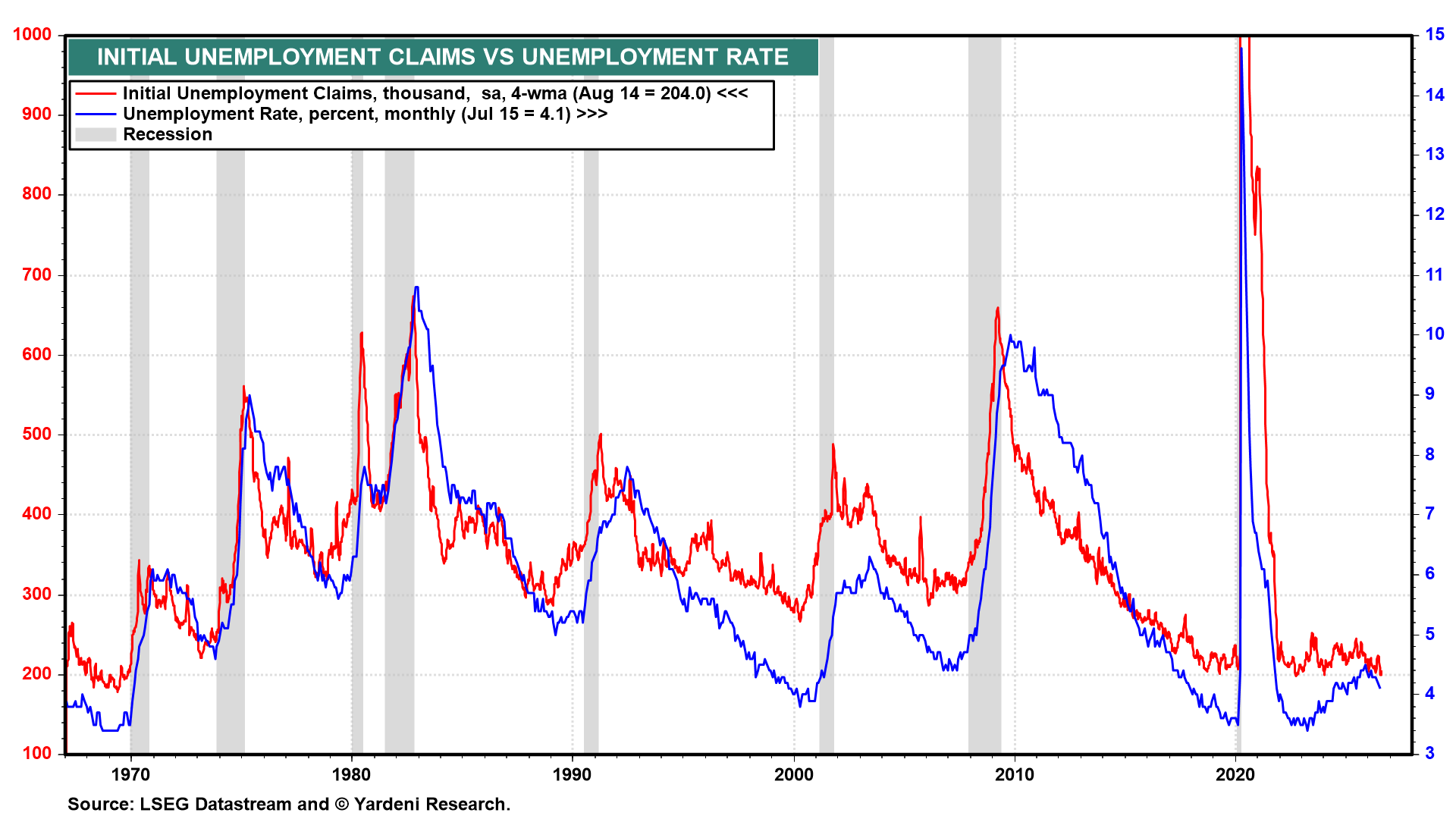
(6) Unemployment claims. Initial jobless claims stood at 206,000 for the week ended August 14, with the four-week average rising back above 200,000 (chart). The unemployment rate held at 4.1% in July, and jobless claims suggest that it probably remained there in August.