Fed Chair Kevin Warsh's speech at Jackson Hole on Friday was hawkish. He declined to offer forward guidance, saying he's "committed to a discipline, not a decision." He said this summer's better-than-expected inflation prints don't yet show that underlying trends have meaningfully improved, and that he'd be "hard pressed to describe broad financial conditions as 'restrictive.'"
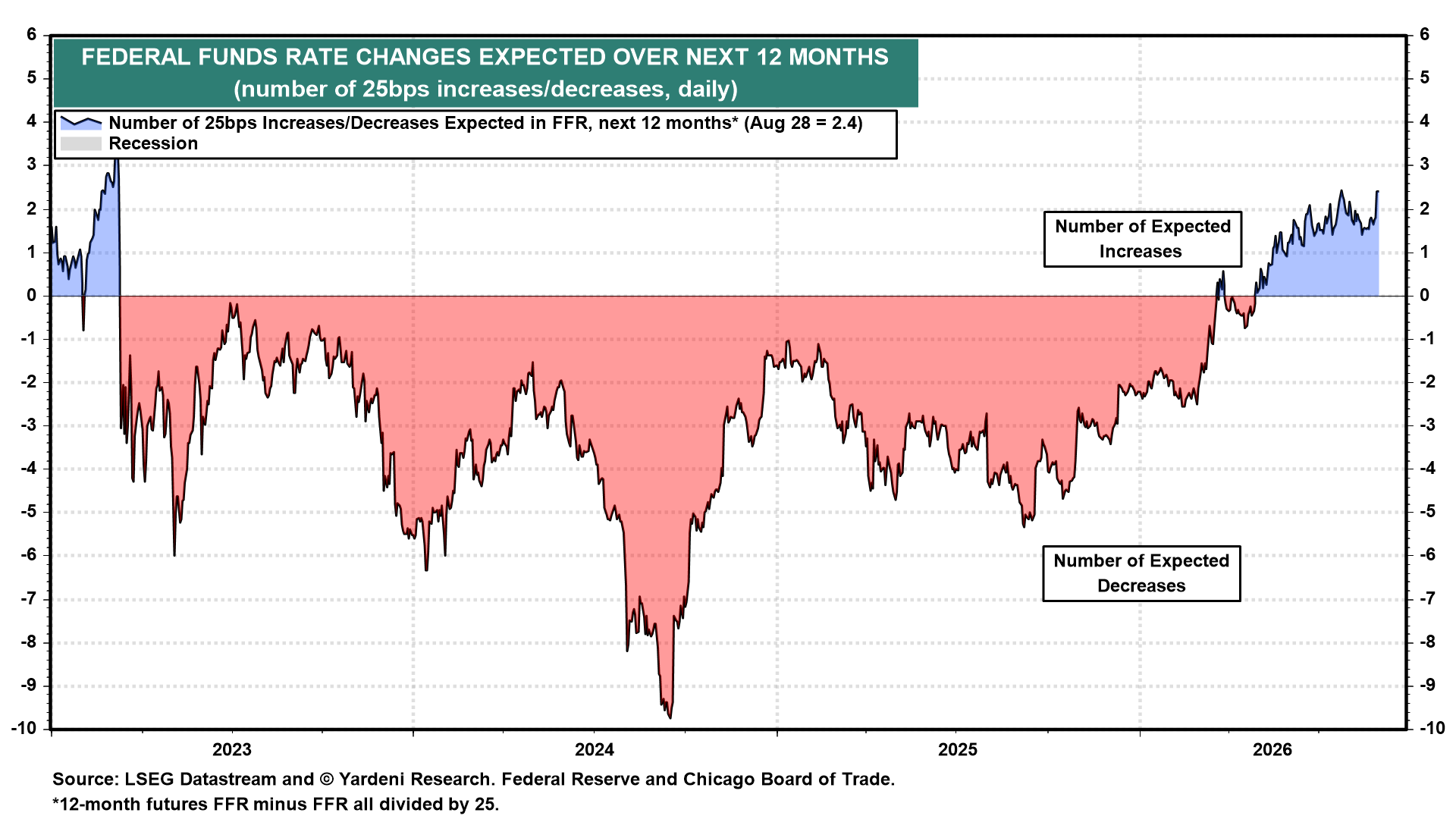
Federal funds rate futures now imply 2.4 rate increases over the next 12 months, up from 1.8 a week earlier, with odds of a September hike rising to about 60% from 35% (chart). Fedspeak continues this week, with Governor Barr (Tue) and Governor Waller (Thu) likely to weigh in on the issues discussed by Warsh.
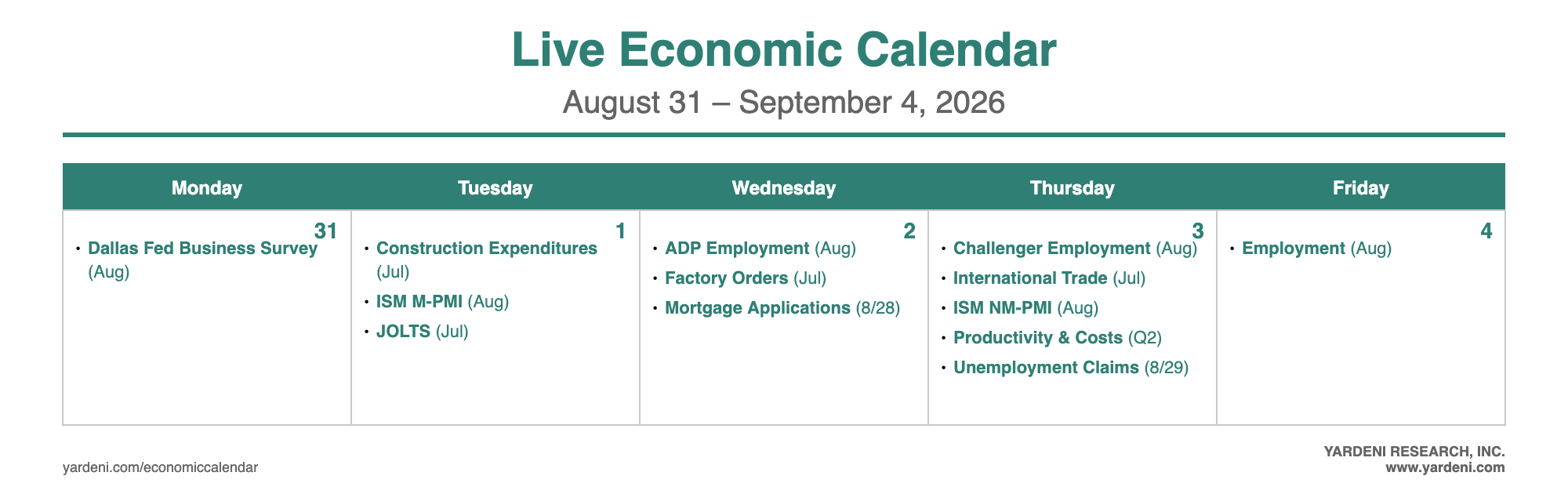
This week's economic calendar is jam-packed with labor market data, capped off by August's employment report (Fri), along with ISM's manufacturing and services PMIs, revised Q2 productivity, and the Fed's Beige Book. The Bank of Canada meets Wednesday and is expected to hold. Palo Alto Networks, Broadcom, MongoDB, Credo, and Snowflake report earnings this week, following the strong reception given to Nvidia, Salesforce, and CrowdStrike last week.
Here's more:
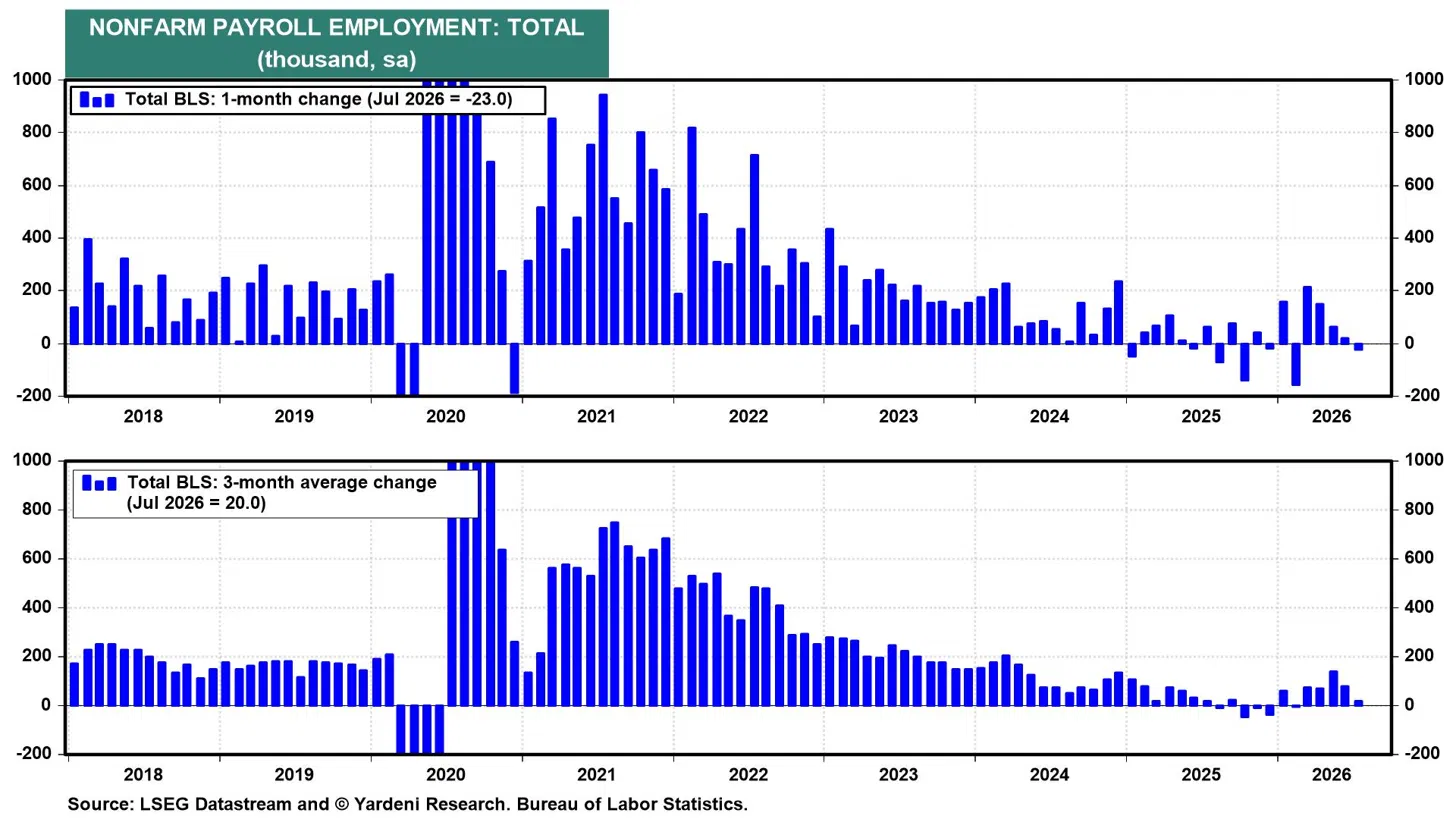
(1) Employment. July's nonfarm payrolls fell 23,000, dragging the three-month average down to 20,000 (chart). We expect a figure above 50,000 for August, which would be a solid outcome and a clear sign of firming after July's weak print. Last month's odd declines in leisure & hospitality and local education likely were reversed this month.
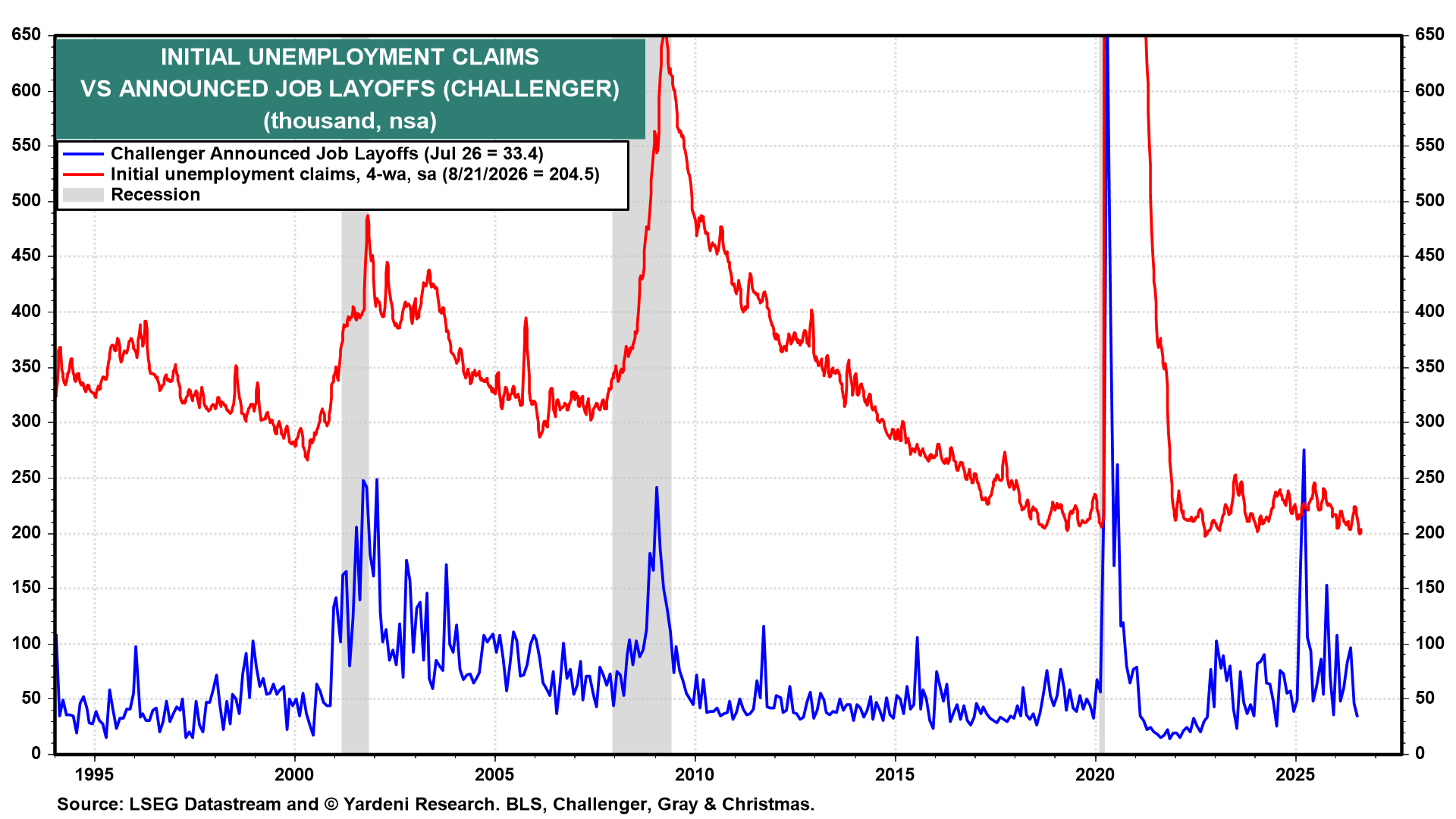
Challenger's July layoff announcements totaled 33,400, still low by historical standards (chart). Layoffs probably remained light last month, according to initial unemployment claims, which held at a four-week average of 204,500. Fed Chair Kevin Warsh noted at Jackson Hole that claims are near their lowest level in decades, calling them "an empirically robust real-time indicator."
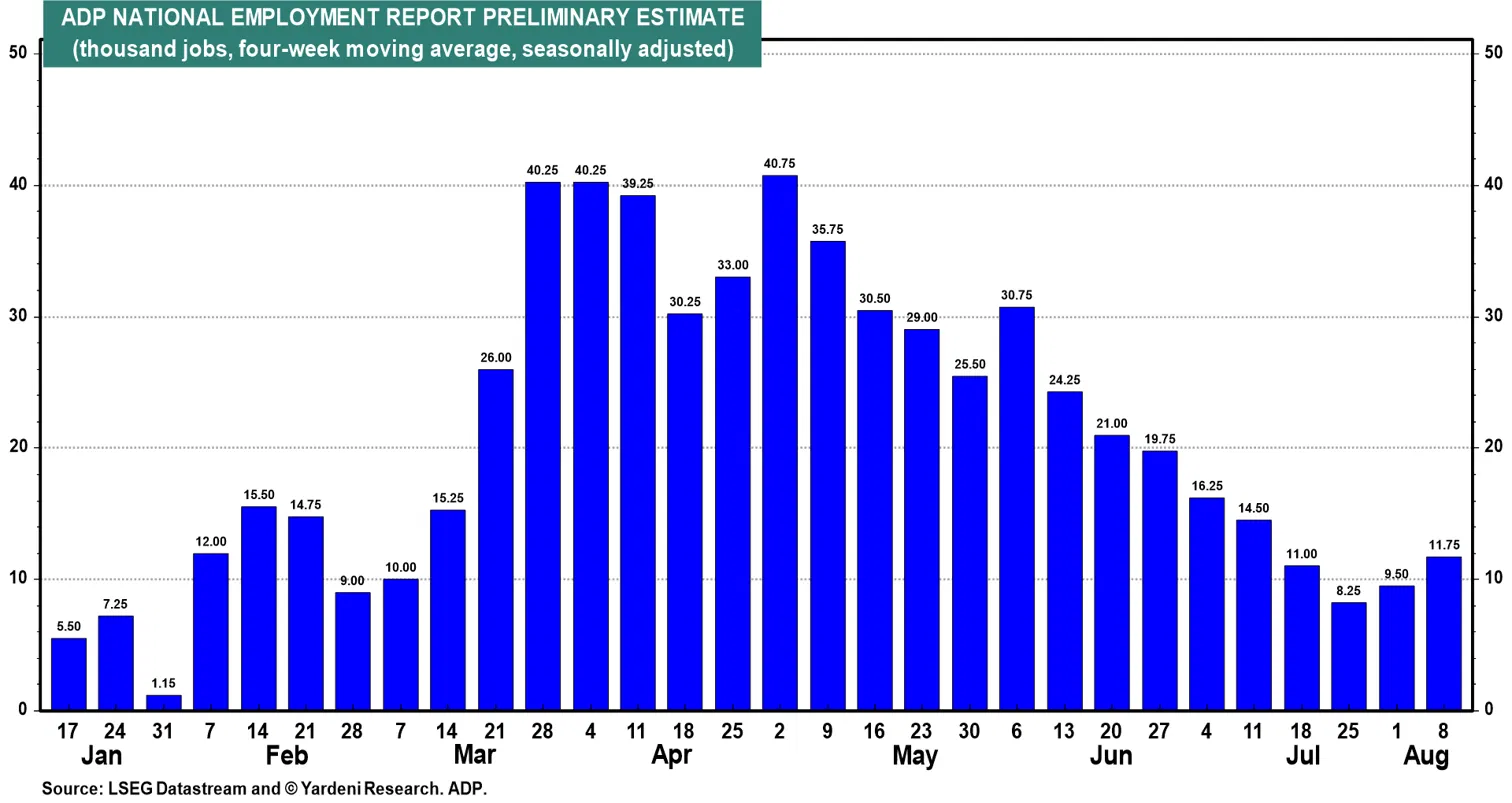
July's ADP private payrolls rose 44,000, down sharply from June's 98,000. August's ADP report (Wed) may show some stabilization, with ADP's weekly readings picking up for the past two weeks to a four-week average of 11,750 by August 8, up from a mid-July bottom of 8,250 (chart).
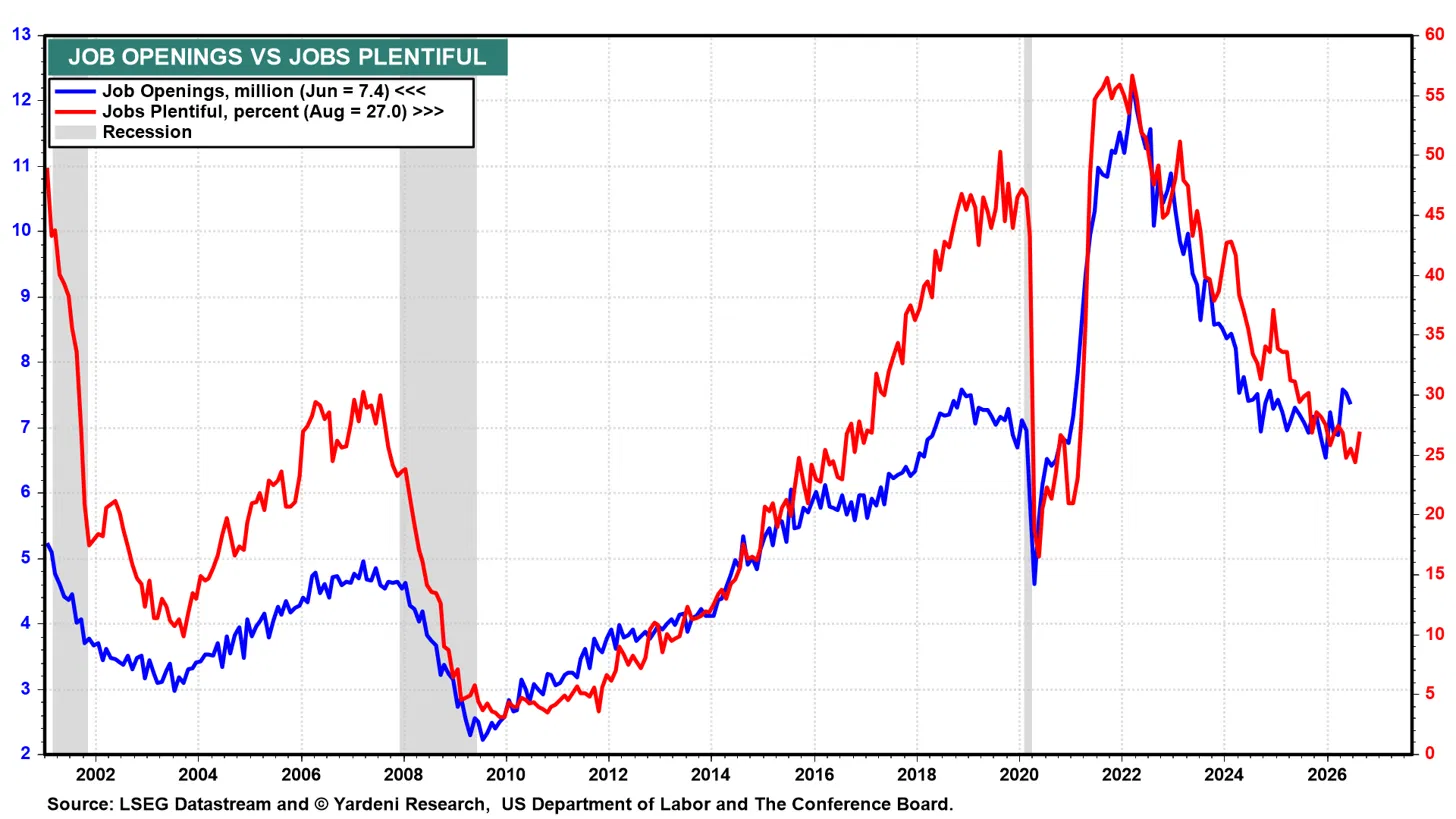
June JOLTS data showed job openings at 7.4 million, with the "jobs plentiful" share of consumers at 27.0% in August, both consistent with a stable labor market (chart). We expect more of the same in July's JOLTS report (Tue).
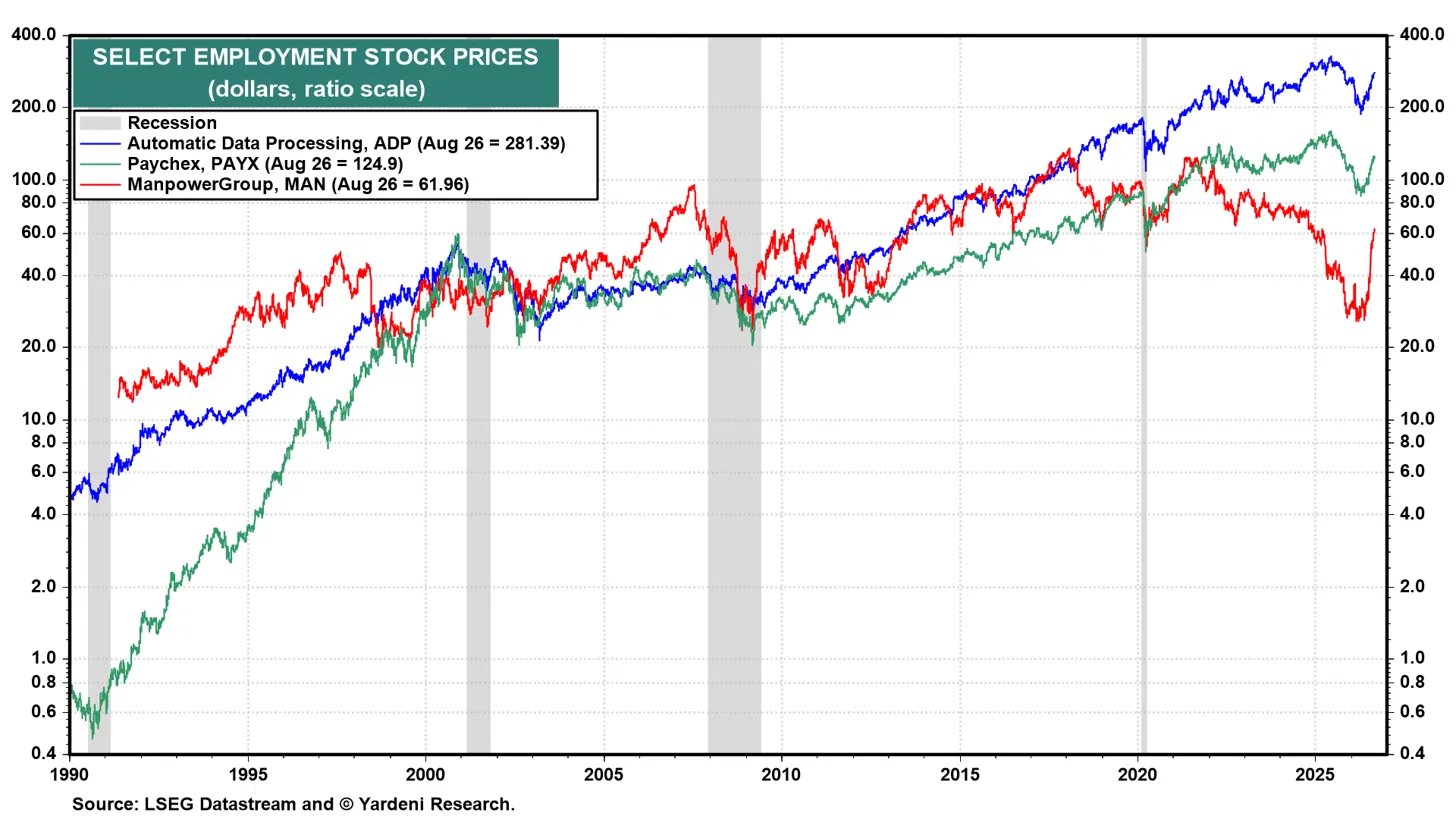
Employment-related stocks (ADP, Paychex, ManpowerGroup) have all rebounded from their yearly lows in spring, each up more than 45%, suggesting that the labor market is improving (chart).
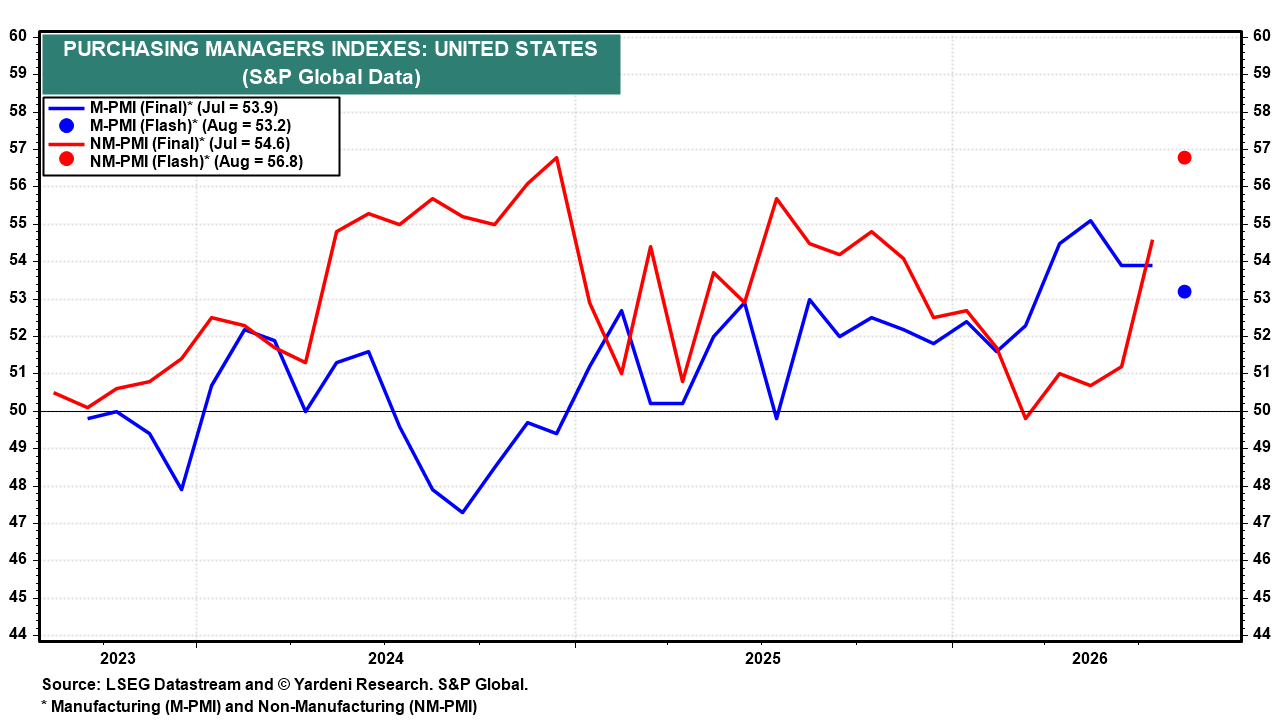
(2) Purchasing managers' indexes. S&P Global's flash PMIs for August suggest that the comparable ISM indexes remained strong that month for manufacturing and especially for services (chart).
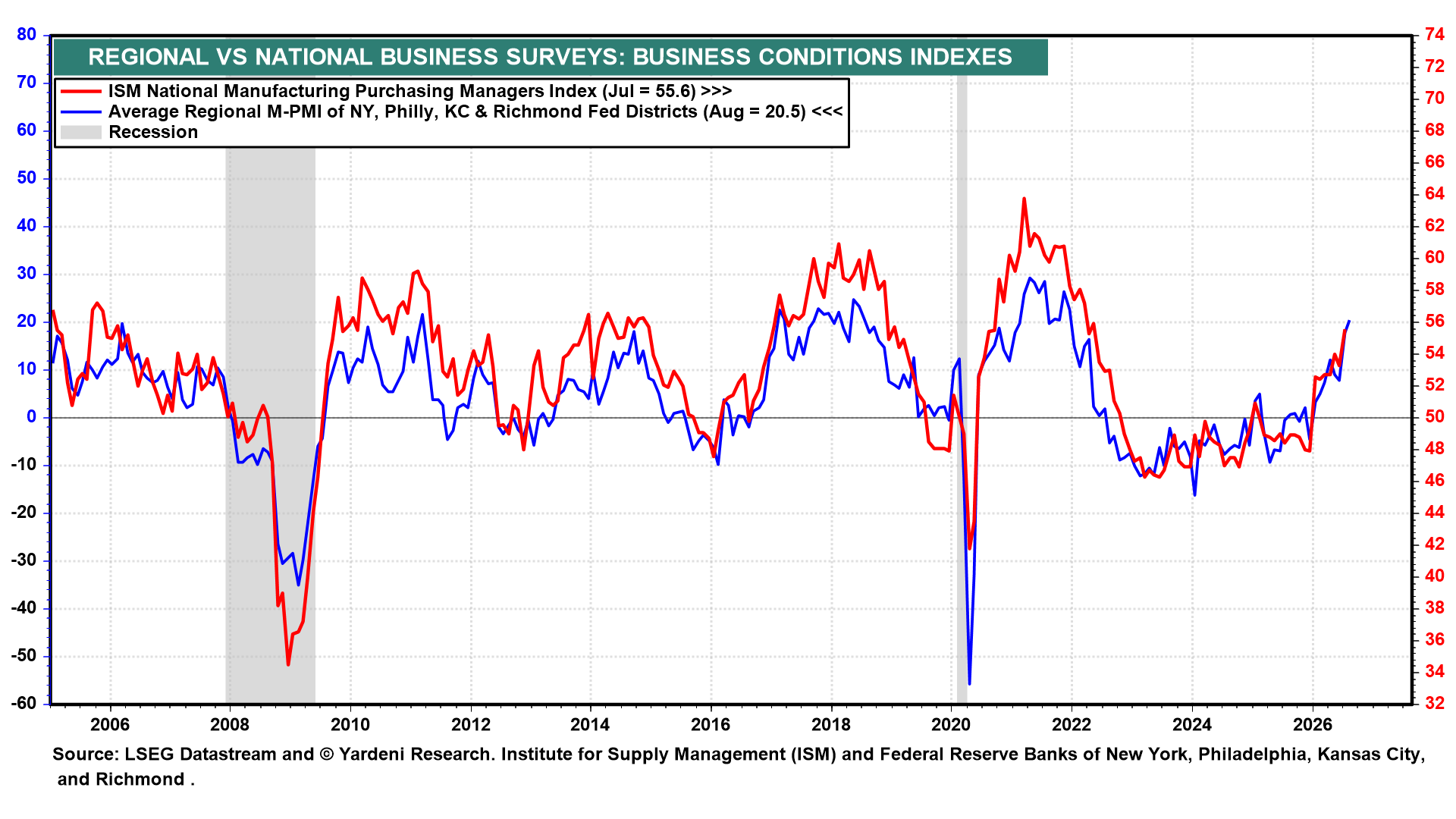
August's four available regional manufacturing surveys show more strength in this sector than shown by the S&P Global flash estimate (chart).
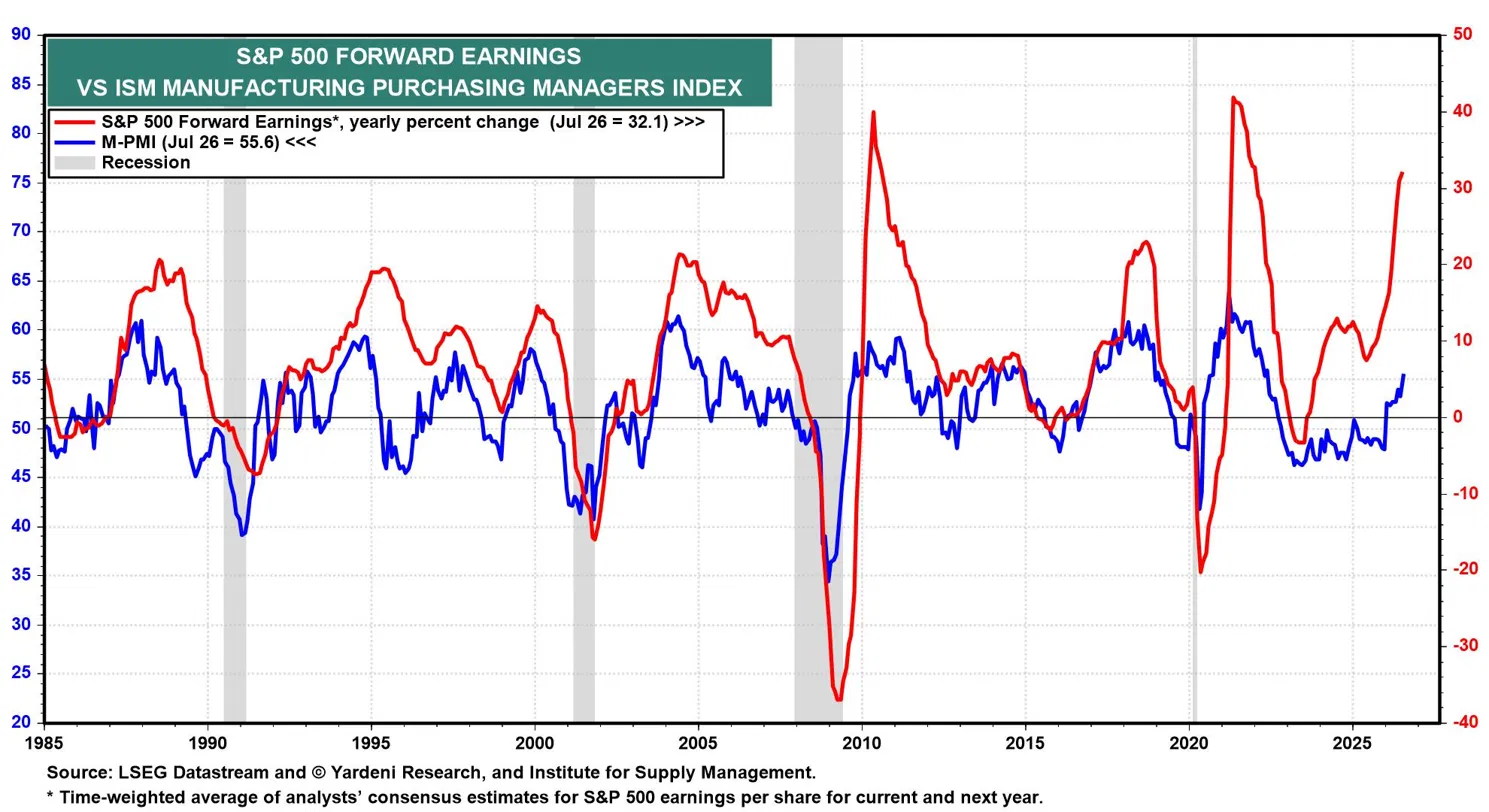
S&P 500 forward earnings rose 32.1% y/y during July, suggesting more upside in the ISM's M-PMI (chart).
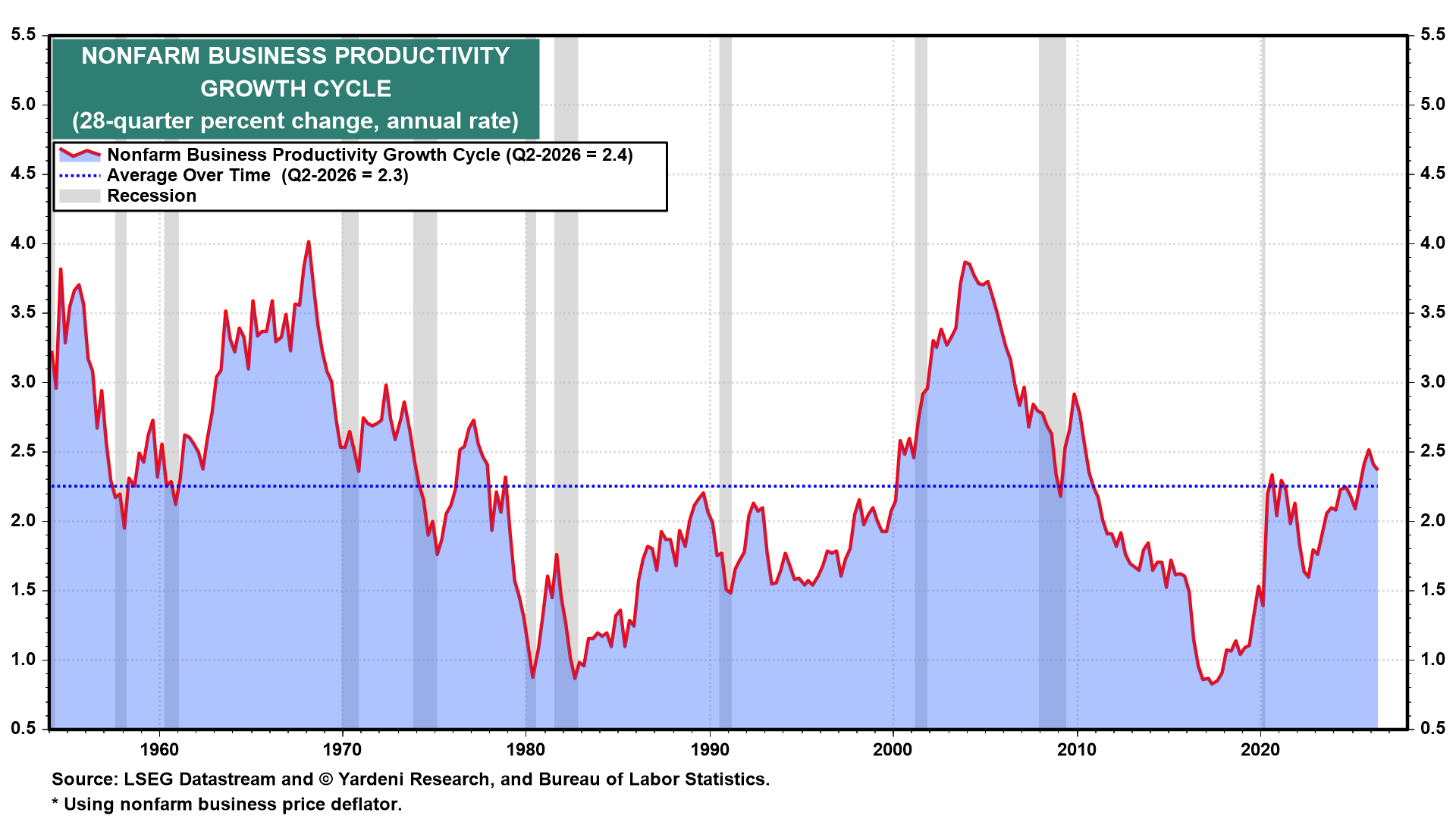
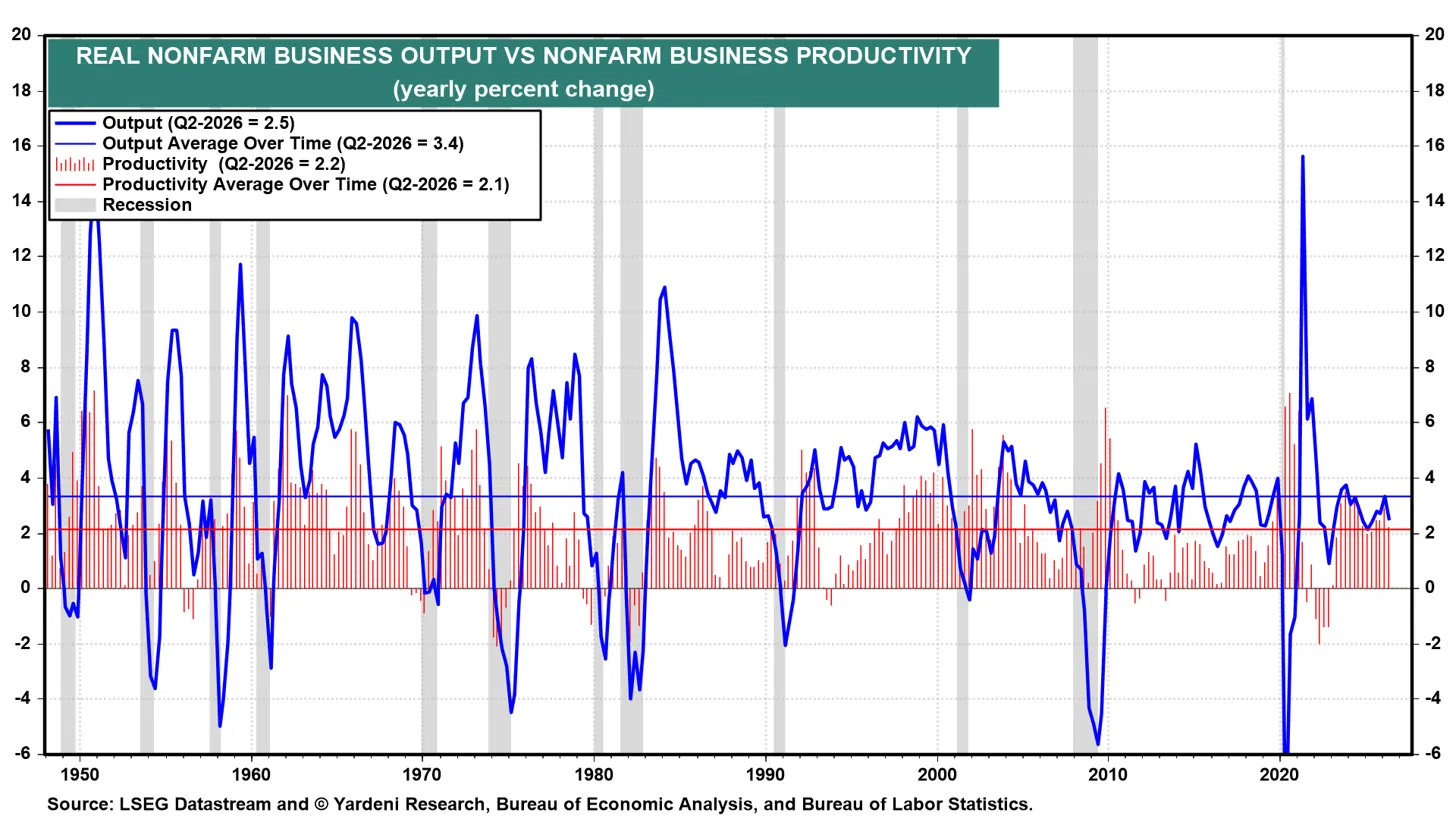
(3) Productivity. Q2's revised nonfarm business productivity (Thu) is likely to match the preliminary increase of 2.2% y/y (chart), in line with its long-run average of 2.1%; output rose 2.5%, below its 3.4% average.
On a seven-year annualized basis, we expect that the current productivity rebound will turn into a productivity boom over the remainder of the Roaring 2020s and through the Roaring 2030s (chart).