Last week was relatively quiet on the economic data front, but the indicators released pointed to continued economic strength. ADP weekly payroll gains increased for the fifth consecutive week, reaching a three-month high, while jobless claims fell to multi-year lows. The ISM NM-PMI remained solid at 54.9 in September, though its prices paid component jumped to 74.0, the highest since July 2022. Redbook same-store sales rose 8.3% y/y during the week of October 2, signaling continued strength in consumer spending, while the New York Fed's consumer survey showed expected spending growth and one-year-ahead inflation expectations both reaching three-year highs.
The data suggest that the Fed has good reason to be hawkish. Accordingly, September's FOMC meeting minutes showed that most policymakers favored another rate hike by year-end, with several judging monetary policy to be barely restrictive, if at all. We agree that further tightening is warranted. However, recent comments by New York Fed President John Williams, Fed Vice Chair Philip Jefferson, and Governor Christopher Waller suggest flexibility on the timing. The markets assign a 17.2% probability to an October hike and a 71.6% probability of a December hike.
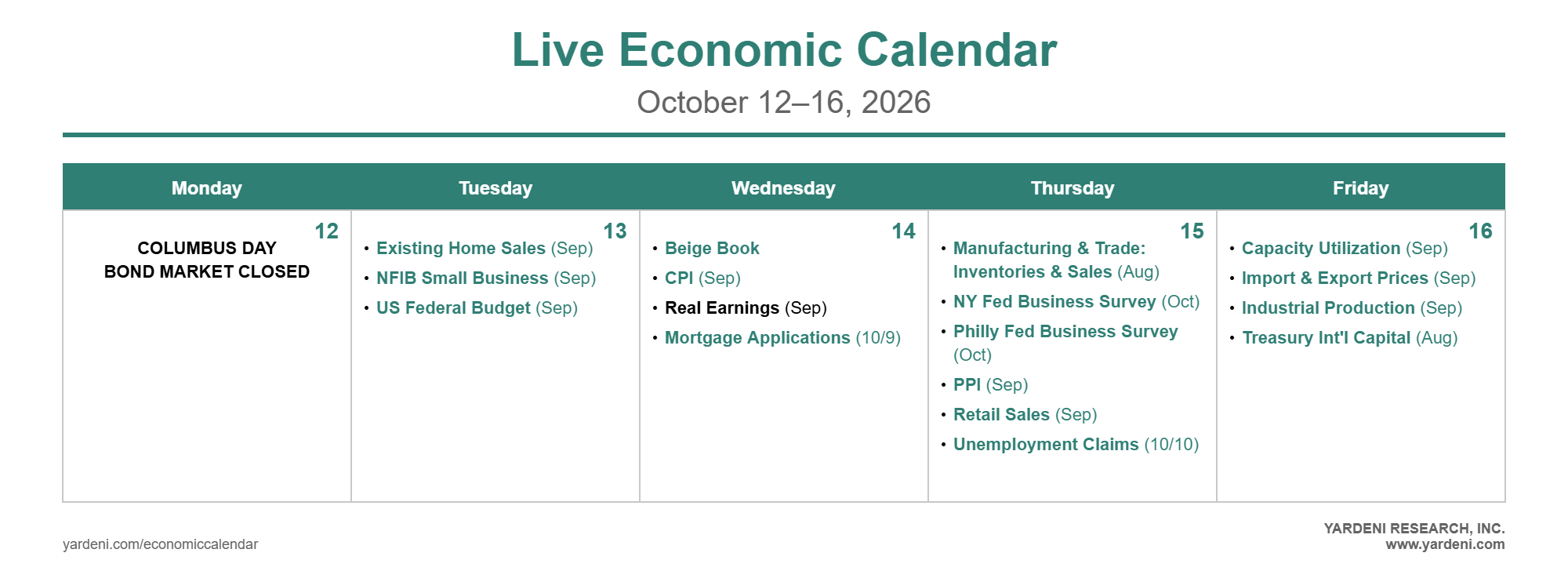
This week's inflation reports could change those odds. A hotter-than-expected CPI reading on Wednesday could prompt the markets to price in an October hike, pressuring the Fed after September's unanimous 25bps increase, which Fed Chair Kevin Warsh described as removing "a dose of accommodation." An in-line or cooler CPI reading would support patience. Warsh speaks Thursday evening at the IMF and World Bank annual meetings in Bangkok.
Here's more:
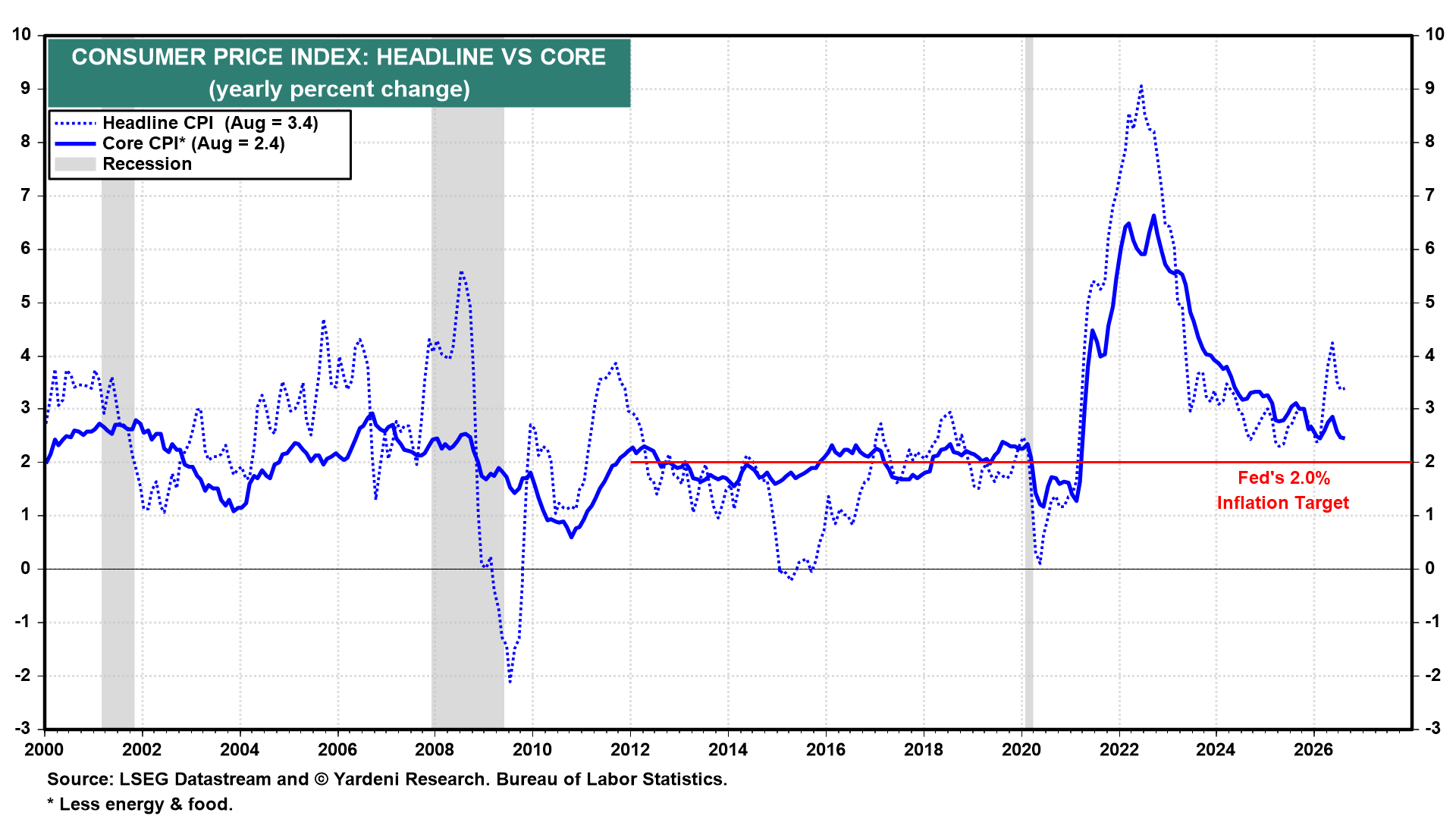
(1) Inflation. The September CPI and PPI reports will be released on Wednesday and Thursday, respectively. The Cleveland Fed’s Inflation Nowcast model projects a hot 0.53% m/m increase in headline CPI, while core CPI is expected to rise a more modest 0.2%. That would put headline and core CPI inflation at 3.6% and 2.4% y/y, respectively. September is expected to mark the 67th consecutive month of CPI inflation exceeding 2.0% y/y, underscoring the persistence of inflationary pressures (chart).
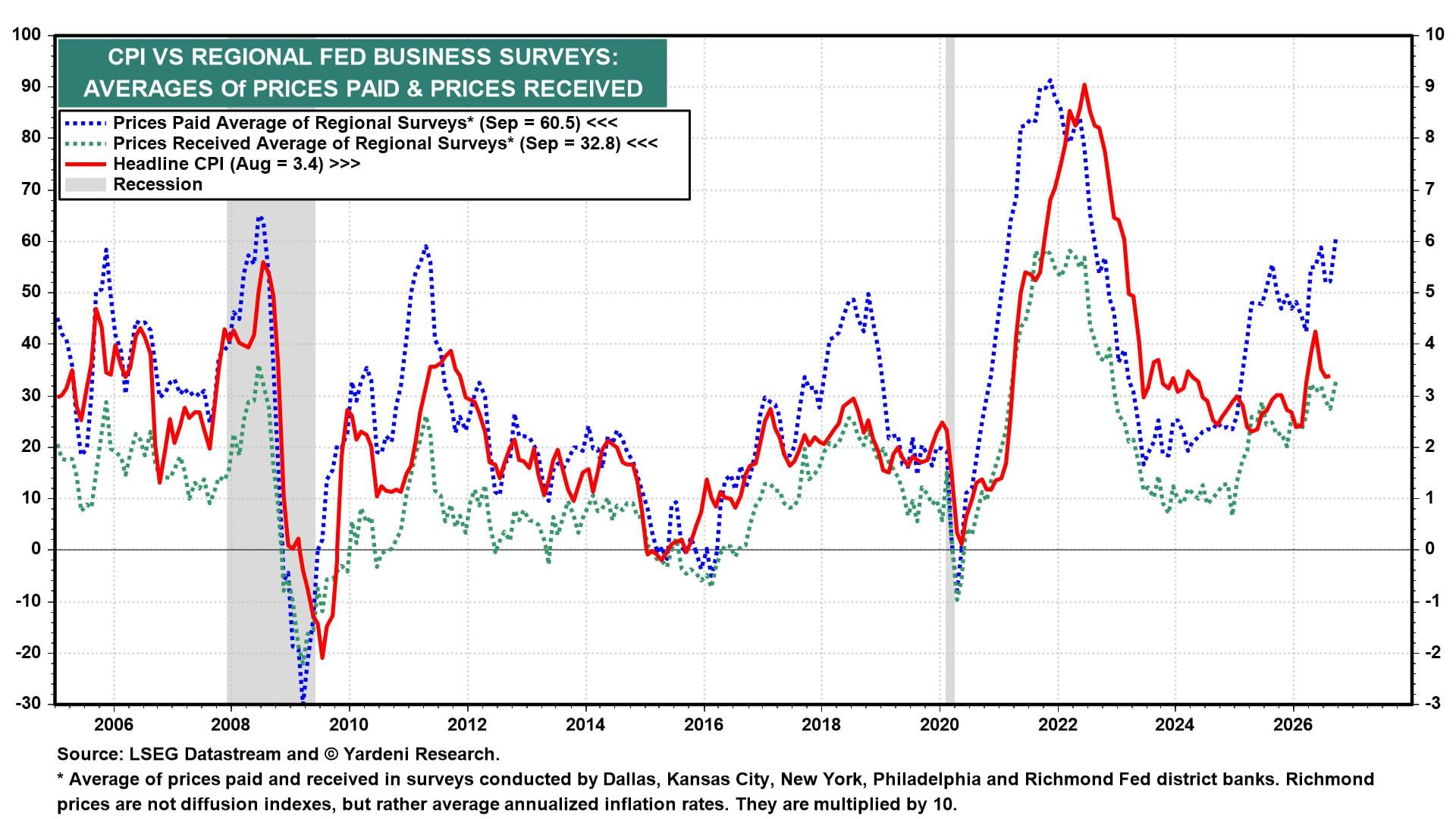
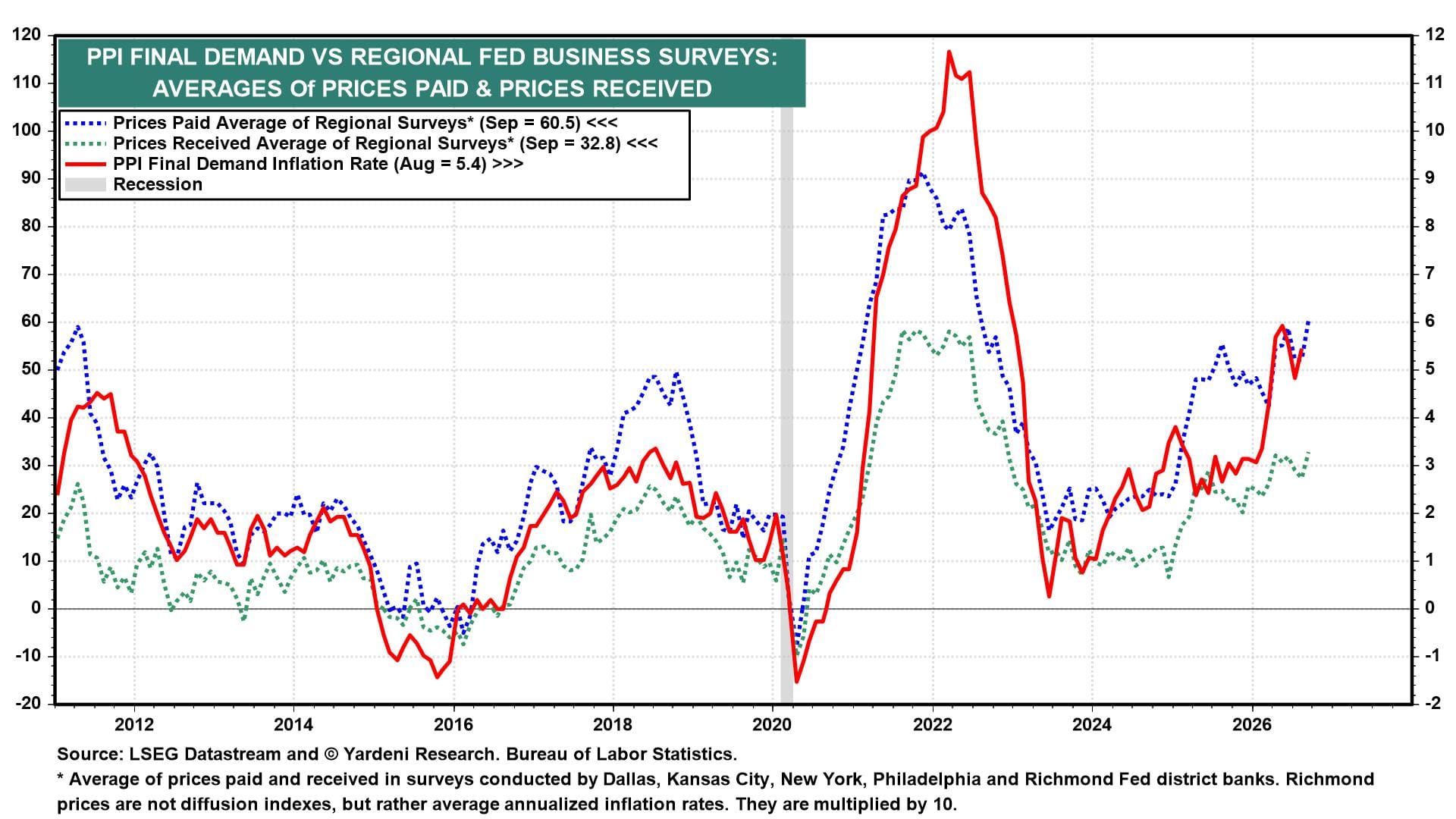
Adding to inflation concerns, the averages of the prices-paid and prices-received indexes of five regional Fed banks’ business surveys rose to their highest levels since 2022 in September (chart). Both have historically tracked headline CPI inflation closely.
The same indicators have also closely tracked PPI final demand inflation, which was already running hot at 5.4% y/y in August (chart).
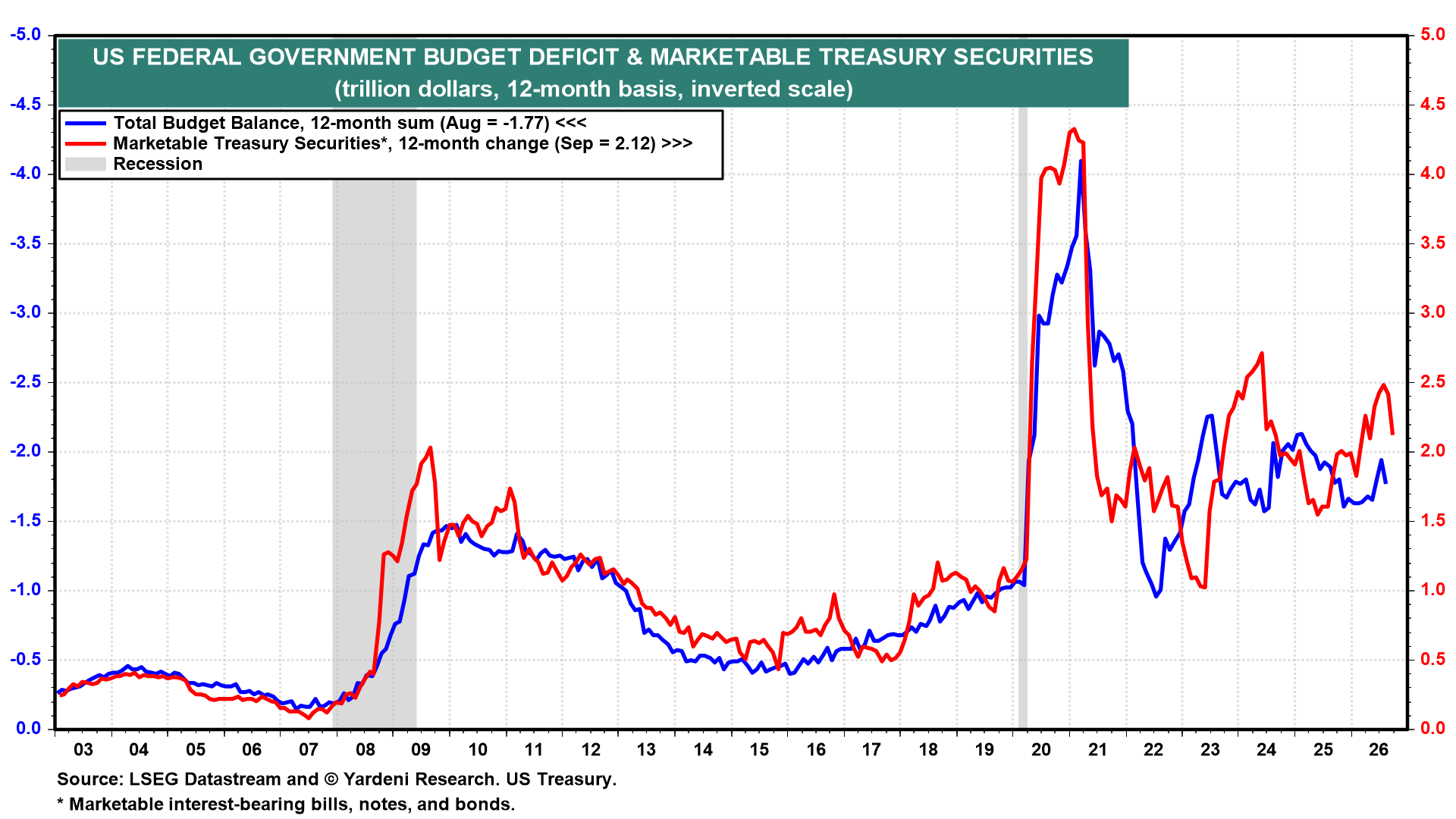
(2) Monthly Treasury statement. The federal budget deficit totaled $1.77 trillion over the 12 months through August, while outstanding marketable Treasury securities increased by $2.12 trillion over the 12 months through September (chart). The recent slowdown in Treasury borrowing suggests that the deficit may have narrowed somewhat. Tuesday's report will reveal the final budget deficit for fiscal 2026, which ended on September 30.
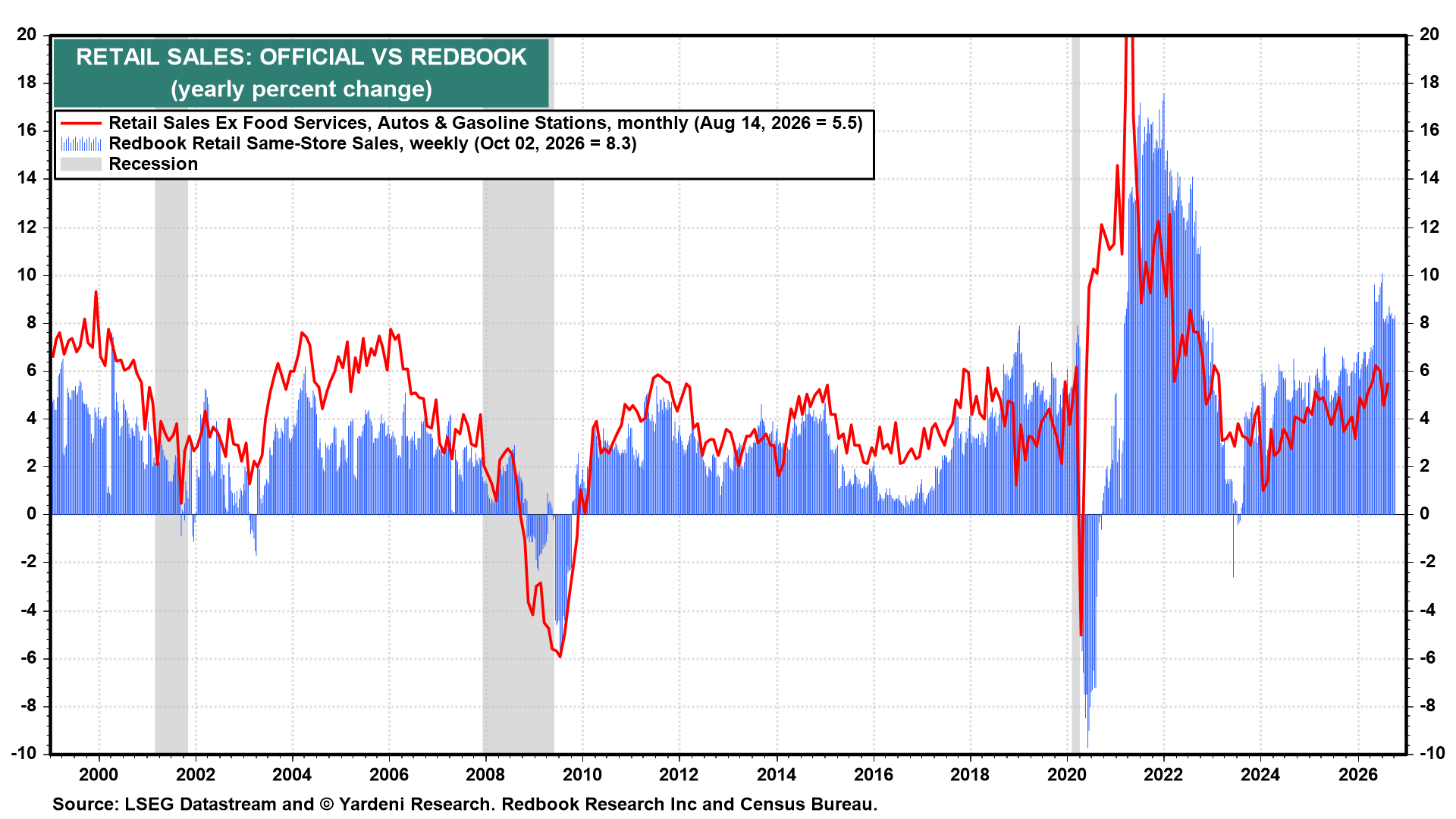
(3) Consumer spending. Thursday's September retail sales report will provide the first official reading on consumer spending for the month. We expect another solid increase, as Redbook same-store sales rose 8.3% y/y in September, well above the 2025 average of 5.8%. Redbook sales historically have tracked official retail sales closely, suggesting that consumer spending maintained strong momentum through the end of Q3 (chart).
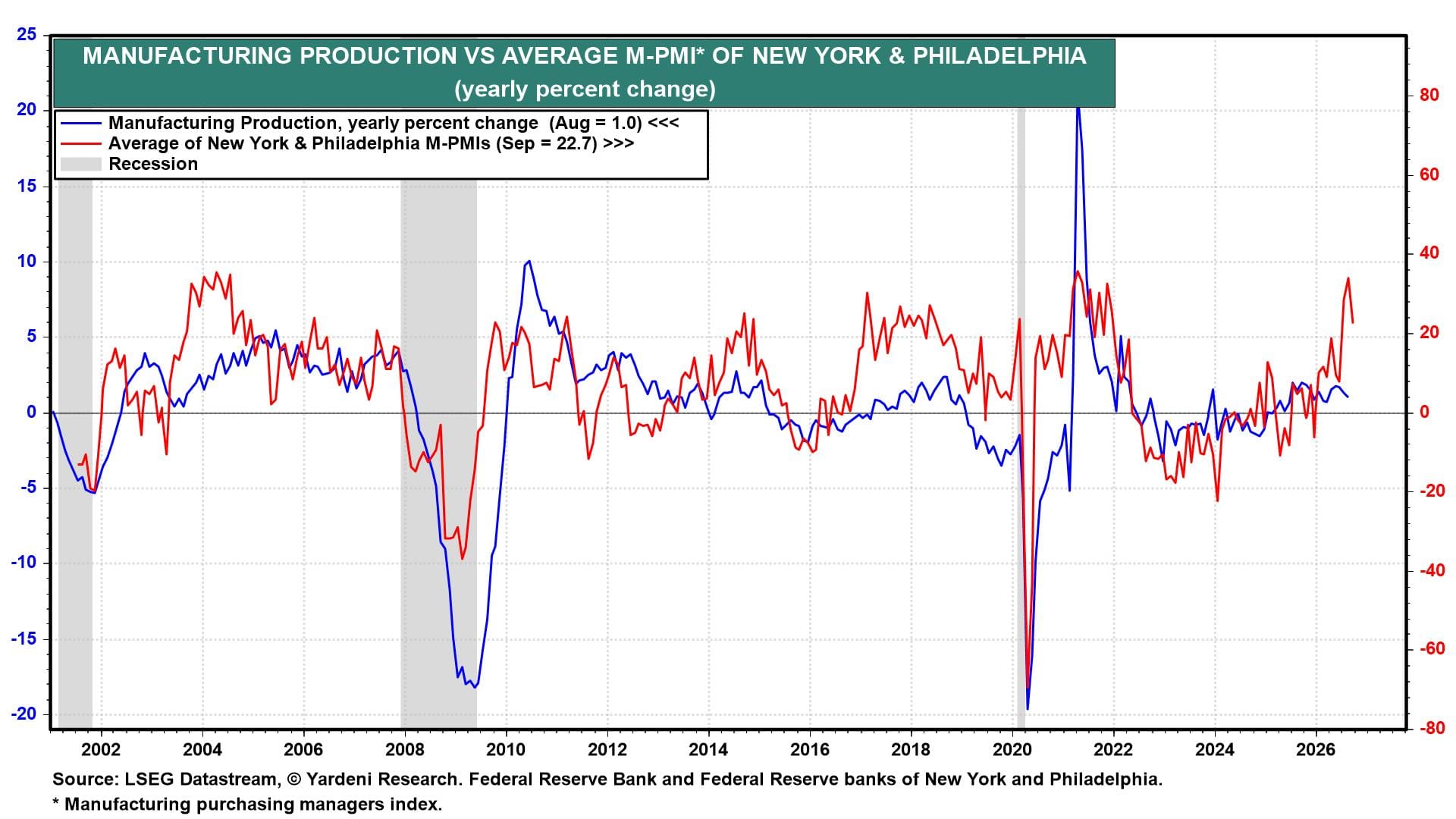
(4) Manufacturing. The week will also provide important insights into the manufacturing sector, with the October New York and Philadelphia Fed banks’ business surveys due Thursday, followed by September's industrial production and capacity utilization reports on Friday.
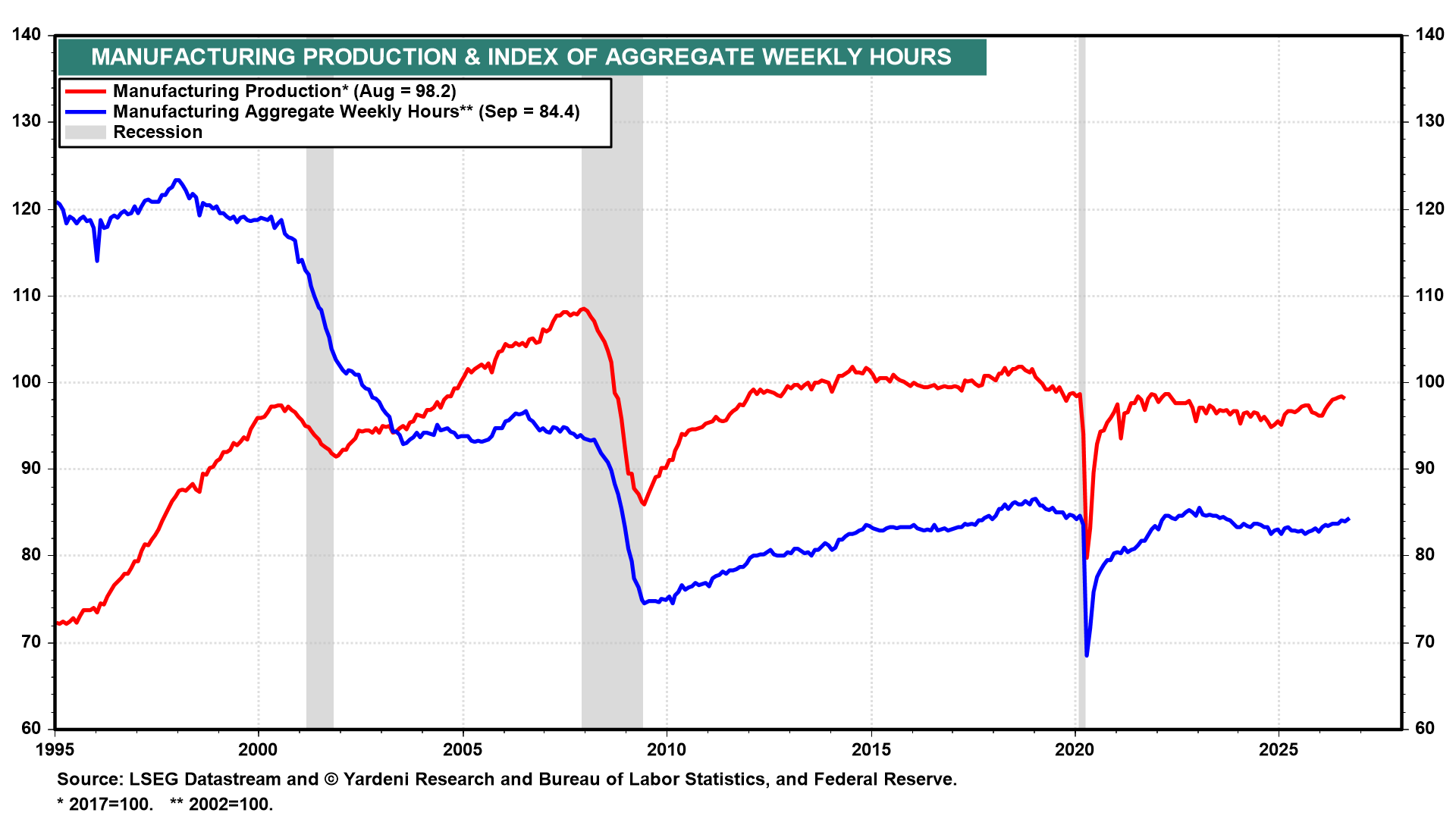
Manufacturing aggregate weekly hours rose to 84.4 in September, the highest since August 2023, continuing their recent upward trend (chart). Immediate expensing under the OBBBA, reshoring, and the AI buildout are helping to reinvigorate manufacturing activity. With skilled labor in short supply, manufacturers appear to be meeting stronger demand partly by increasing the hours worked by existing employees. The rise in aggregate hours worked suggests that manufacturing production expanded at a healthy pace in September.
The New York and Philadelphia Fed manufacturing surveys provide another reason for optimism. Their average manufacturing PMI rose to 22.7 in September, the highest since 2021 (chart). Historically, the average has closely tracked manufacturing production growth, suggesting that factory output could accelerate further in the months ahead.