


I. Lowering S&P 500 Target
On Saturday, we lowered the subjective odds of our Roaring 2020s base-case scenario from 80% to 70%. We raised the odds of a bearish outcome from 20% to 30%. Today, we are moving our S&P 500 target of 8,400 for year-end to mid-2027. Our new target for the end of 2026 is 7,900. Our end-of-decade target remains at 10,000.
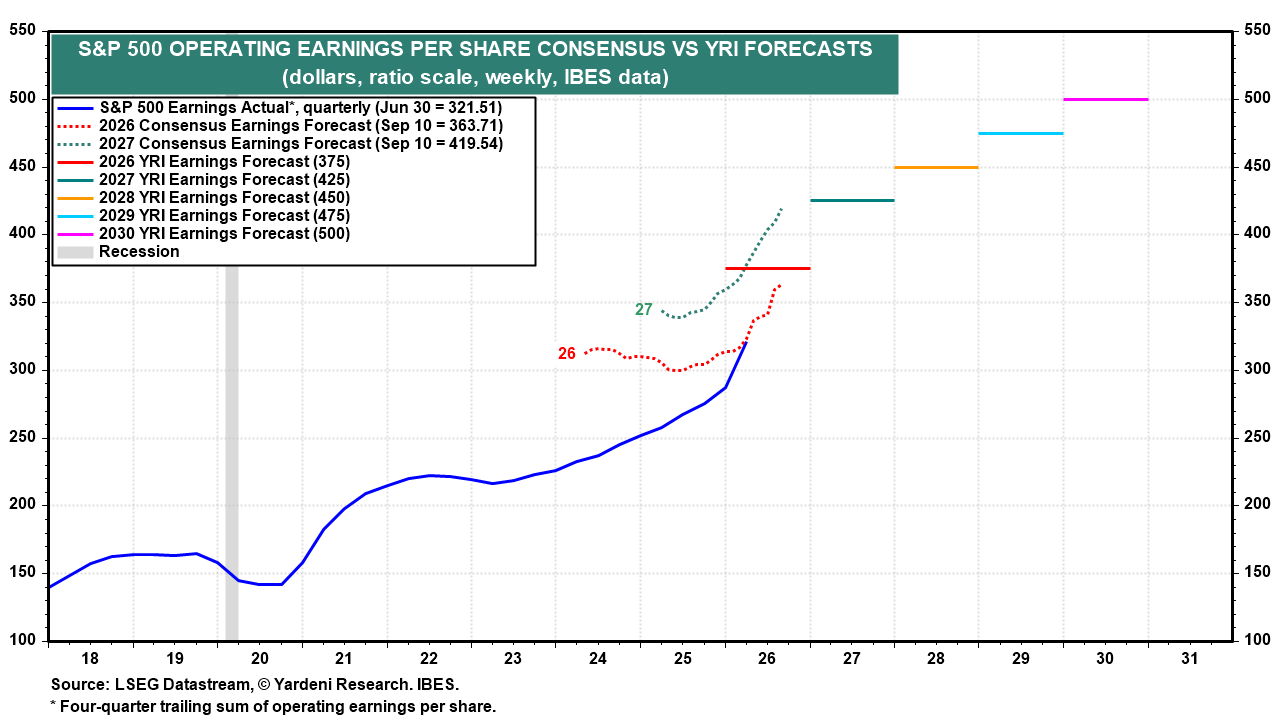
We still anticipate that the economy will grow without a recession through the end of the decade. But the risks of a downturn have increased over the next three to six months, as reflected in the higher odds we assign to a bearish scenario. We are not changing our optimistic 2027 EPS target of $425. Industry analysts are currently projecting $419.53, which should rise to match our forecast by year-end (chart).
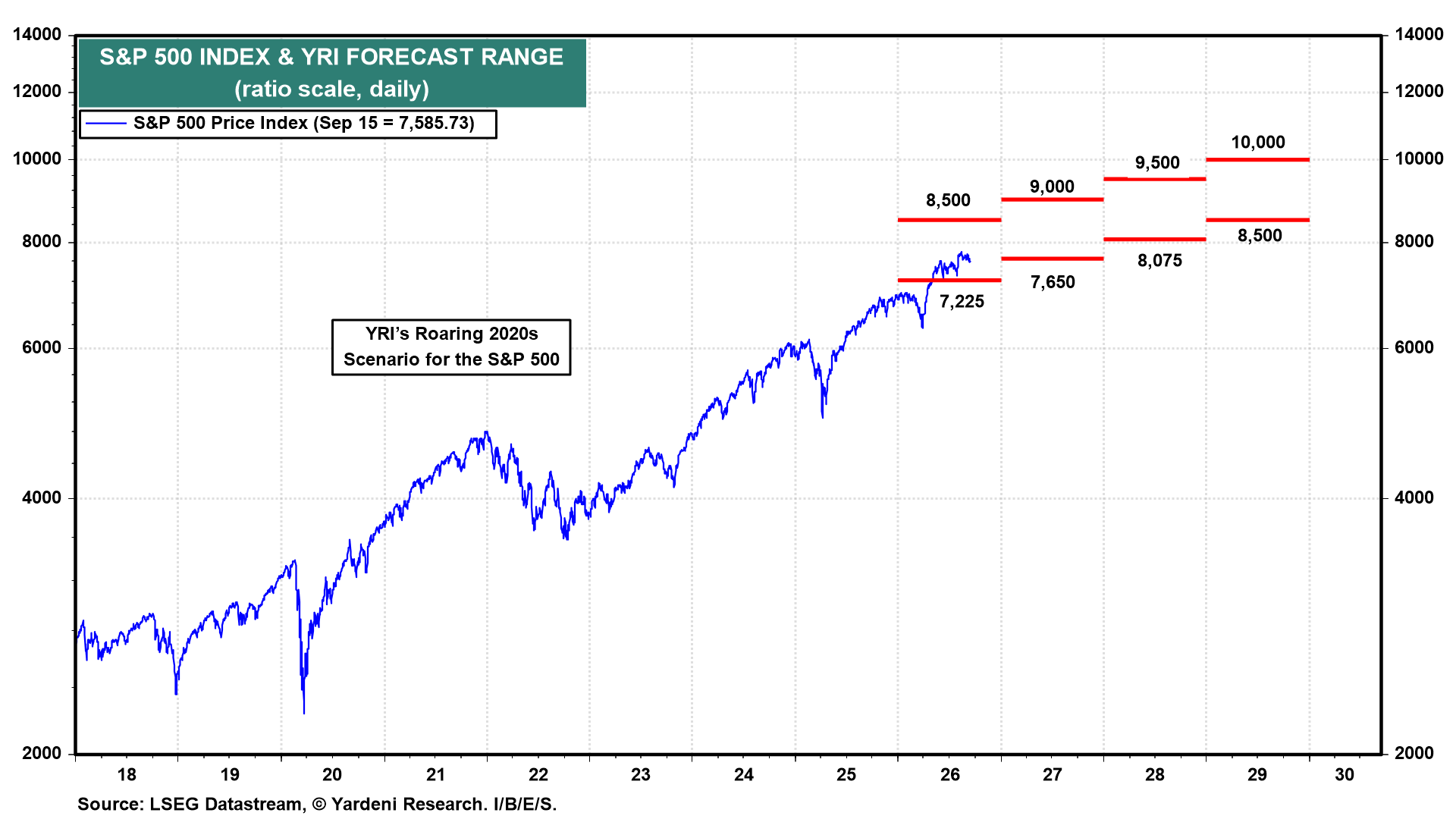
Given the recent backup in bond yields, we are lowering our estimate for the forward P/E of the S&P 500 at year-end from 19.8 to 18.6, which lowers our year-end target from 8,400 to 7,900. That’s still within this year’s target range of 7,225 to 8,500 based on 2027 EPS of $425 multiplied by forward P/Es of 17.0 and 20.0 (chart). (For more, see our YRI Earnings Outlook.)
II. Bonds Breaking Bad
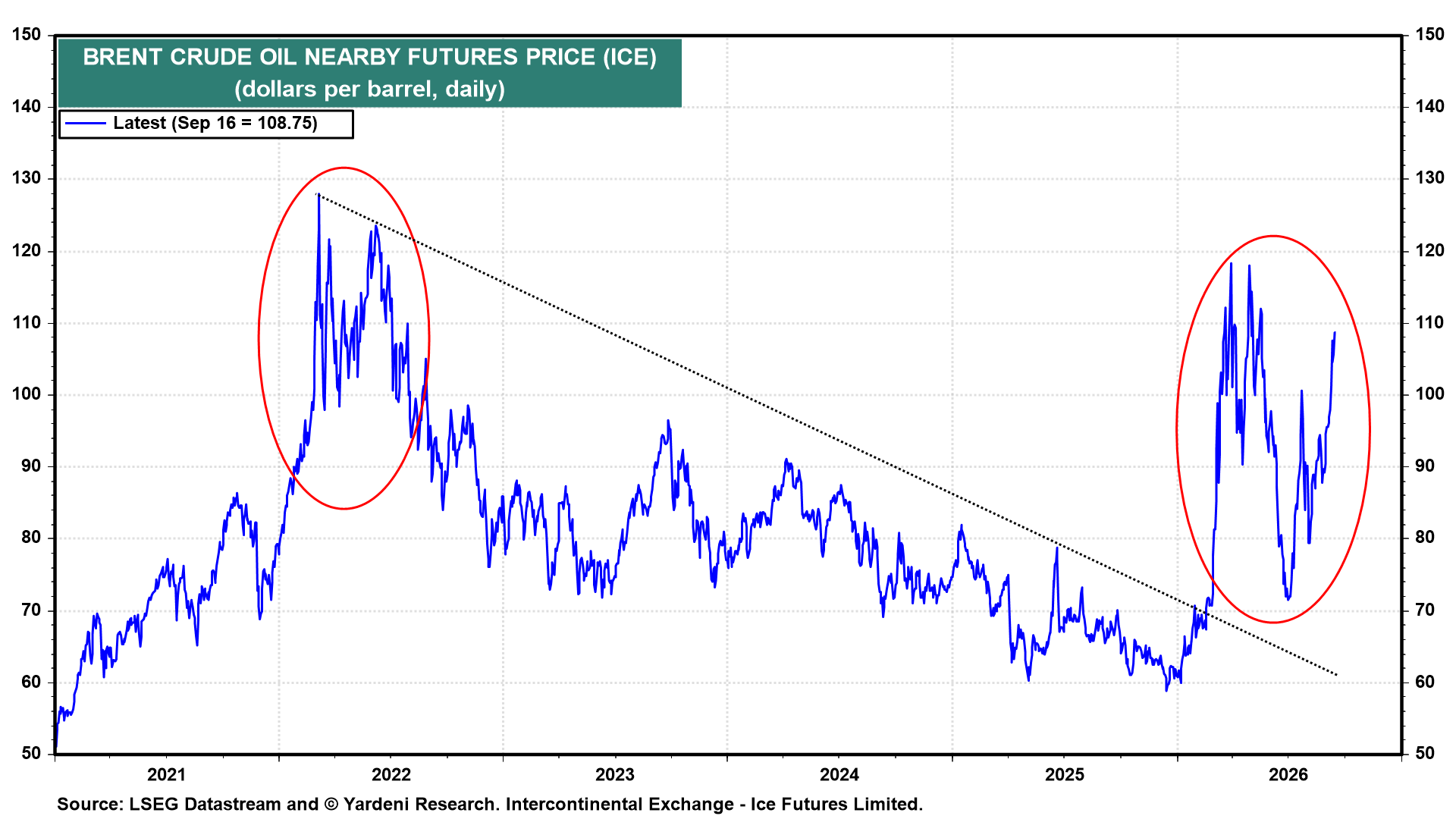
The re-escalation of the war in the Middle East has pushed oil prices back above $100 a barrel (chart). The Islamic Revolutionary Guard Corps (IRGC) remains in control of Iran and continues to fight. The IRGC also continues to coordinate the attacks of its proxies on the US and US allies in the Middle East. The IRGC is aiming to push oil prices higher before the US midterm elections by attacking critical oil facilities in the region. Its goal is to cause Republicans to lose their majorities in Congress and weaken the Trump administration.
The risk is that higher-for-longer oil prices continue to push bond yields higher. Elevated oil prices would also imply that a federal funds rate (FFR) hike tomorrow won't be a one-and-done event, but rather the beginning of a rate-hiking cycle. The longer oil prices remain elevated, the greater the risk that inflation becomes entrenched, especially given the economy's resilience.
We had previously argued that a Fed rate hike in July would have pushed the 10-year yield lower by bolstering the Fed's inflation-fighting credibility. That is still possible in response to tomorrow's expected rate hike. But much will depend on the Summary of Economic Projections (especially the Dot Plot), the number of dissenters, and how Fed Chair Kevin Warsh communicates the latest policy decision during his press conference tomorrow.
We've said it before, and will say it again: We will worry about a debt crisis when the bond market worries about a debt crisis. We are starting to worry now that the 10-year US Treasury bond yield may be on the verge of breaking out above 5.00% (chart). We've argued that the "normal" range for this yield should be 4.00% to 5.00%. North of this range reflects a recent combination of "abnormal" developments, including the attack on the Saudi east-west oil pipeline, the Houthi advances toward the Bab al-Mandab Strait, the Treasury's recent lame attempts to tamp down yields, and the Trump administration's deficit-bloating fiscal policies (including $5,000 for every adult US citizen if the Republicans hold onto both their congressional majorities).
