


I. Adding It Up
The bond market had a good day today: It was closed for Columbus Day. We think that yields have risen high enough to attract buyers. If so, then yields should stabilize around current levels. Plenty could still go wrong, making bond yields even more attractive. The war in the Middle East is likely to heat up again after the midterm elections, sending oil prices higher. On the other hand, this week's core CPI is likely to rise just 0.2%, which would likely postpone a Fed rate hike from later this month to early December.
For now, let's focus on the supply of debt in the US, which is a longer-term concern for the bond market.
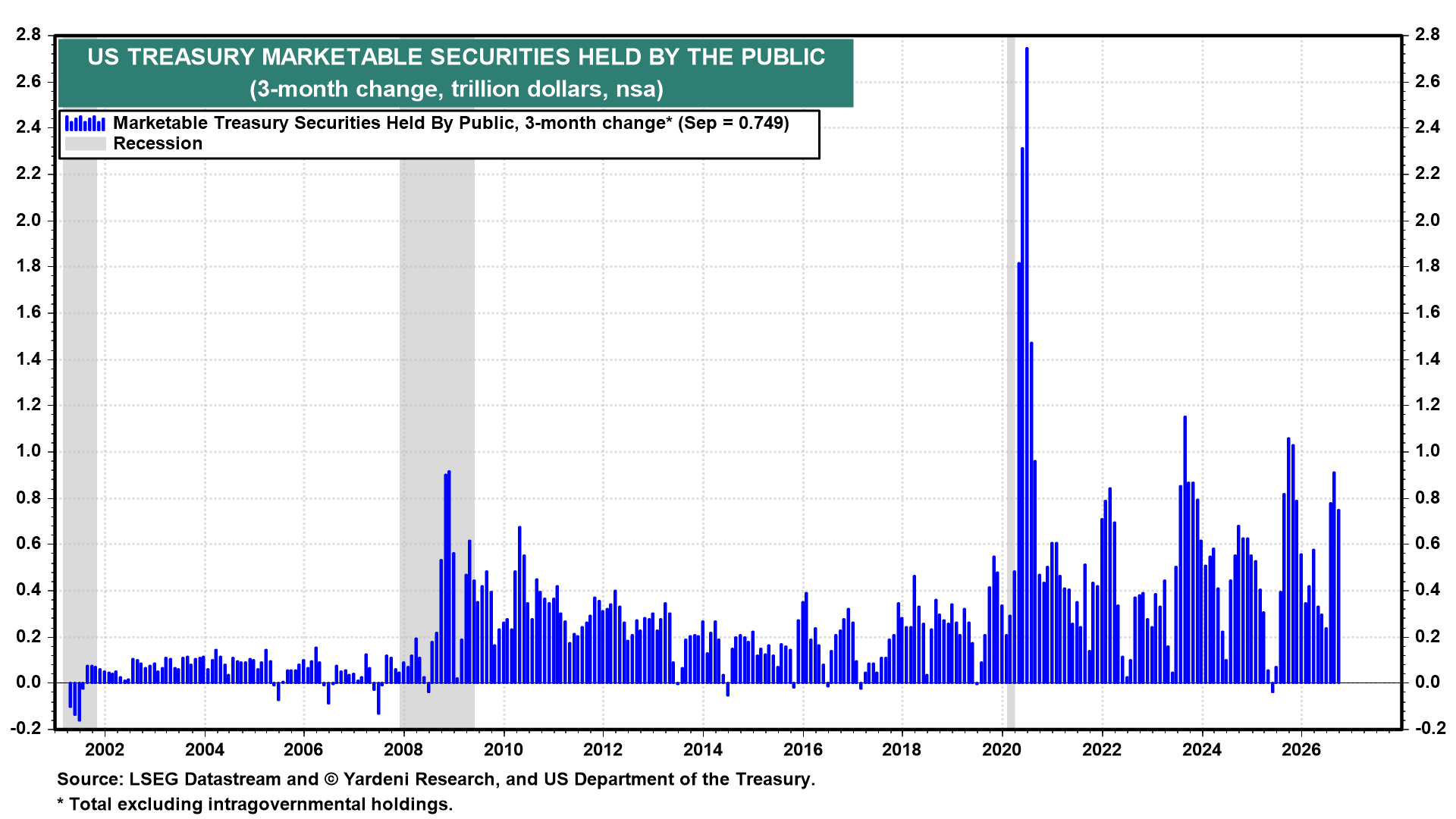
The US Treasury borrowed $749 billion during the three months through September (chart). That's the change in marketable securities held by the public over the three months. The 10-year Treasury bond yield rose from roughly 4.50% to 5.25% over that period. In the past, the supply of government securities rarely seemed to drive bond yields. The key drivers were expected and actual inflation and the Fed's reaction to both.
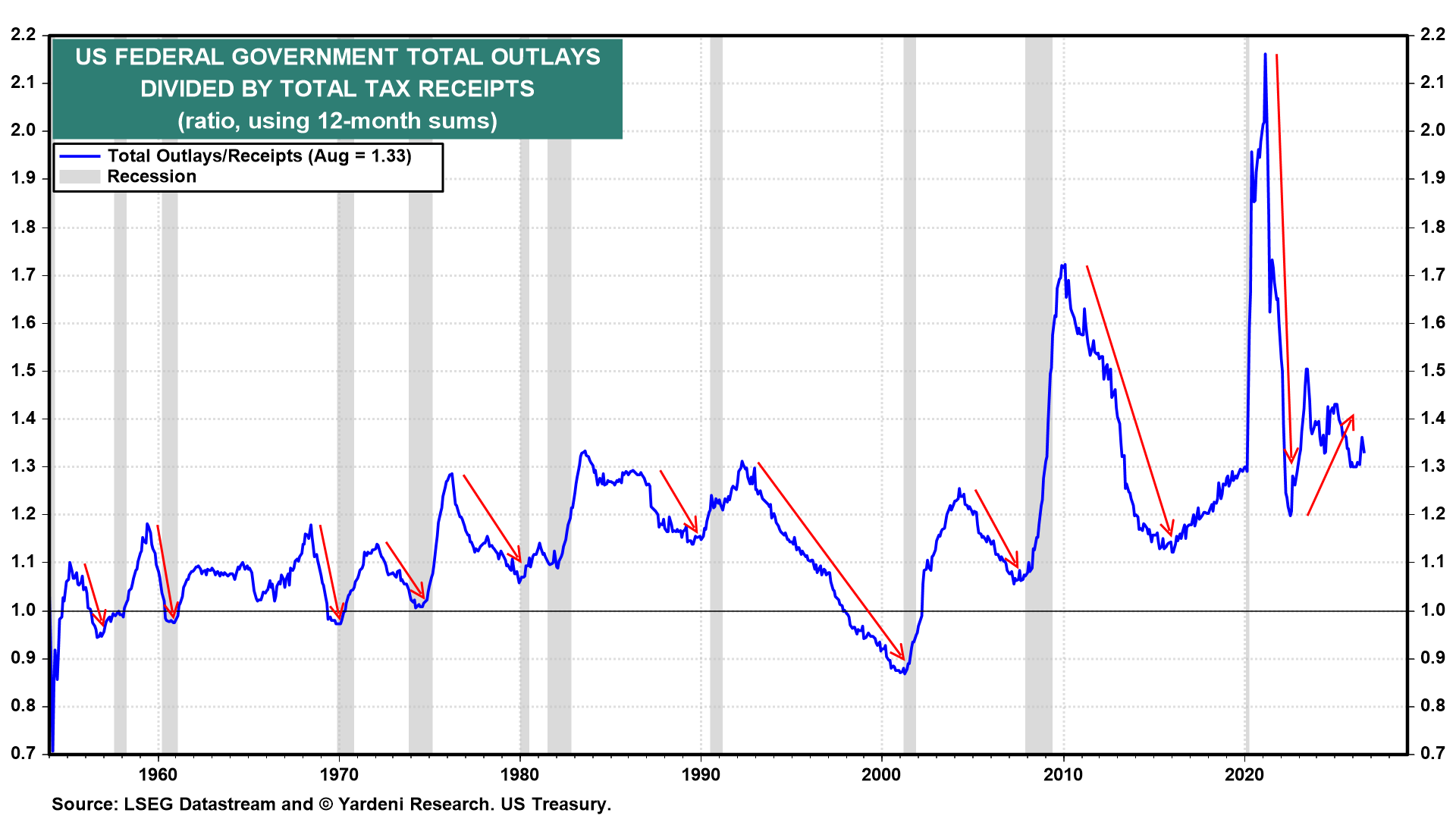
In the past, federal budget deficits tended to widen the most during recessions, when tax revenues fell faster than the government’s outlays (chart). The supply of Treasury securities would be increased as the Fed lowered interest rates to revive economic growth. The deficits would narrow during economic expansions, as revenues rose faster than outlays.
Over the past three years, the economy has been booming, but the government’s budget deficit remains very wide. It hasn't narrowed because outlays are growing faster than receipts. Allowing that to happen is fiscal recklessness. That’s because it requires increasing the supply of government debt during an economic boom, when private credit demands are surging, which necessarily puts upward pressure on interest rates. If rates get high enough to cause a credit crunch and a recession, attempts to revive the economy with deficit-bloating fiscal stimulus could backfire by pushing bond yields higher. If deficits are this large during good times, what happens when the bad times arrive?
For now, we believe the backup in US bond yields is driven more by better-than-expected US economic growth than by the government's deficit. In our view, bond yields are back to their "old normal," i.e., consistent with robust economic growth. In other words, the US isn't on the edge of a debt crisis. In the Roaring 2020s scenario we expect, productivity-led economic growth boosts government revenues and lowers America's deficit and debt ratios relative to nominal GDP. Both Treasury Secretary Scott Bessent and Fed Chair Kevin Warsh believe this will happen. The question is whether the Bond Vigilantes will patiently wait for this outcome. We're not so sure.
For perspective, let's add up US debt and compare it to public and private debt in other countries:
(1) Total US debt reached a record $118.9 trillion in Q2, including $83.8 trillion in nonfinancial debt and $27.7 trillion in financial debt (chart).
