Our Roaring 2020s thesis holds that the demand side of real GDP remains supported by resilient consumer spending and robust business investment. On the supply side, tech-led productivity is boosting real GDP, while keeping a lid on inflation. Now that the economy has proven its mettle over the first seven years of the decade, it should continue to do so over the remaining three years of the Roaring 2020s.
While our Roaring 2020s thesis has been a contrarian view for much of this decade, it is increasingly accepted. We are in good company. Both US Treasury Secretary Scott Bessent and Fed Chair Kevin Warsh are vocal proponents of the productivity-led economy story. Investors have been increasingly betting on it, as evidenced by record-high stock prices and stable bond yields.
We are comfortable with the financial markets embracing the Roaring 2020s narrative. However, as optimism becomes consensus, rising complacency can leave markets vulnerable if overlooked risks become more visible.
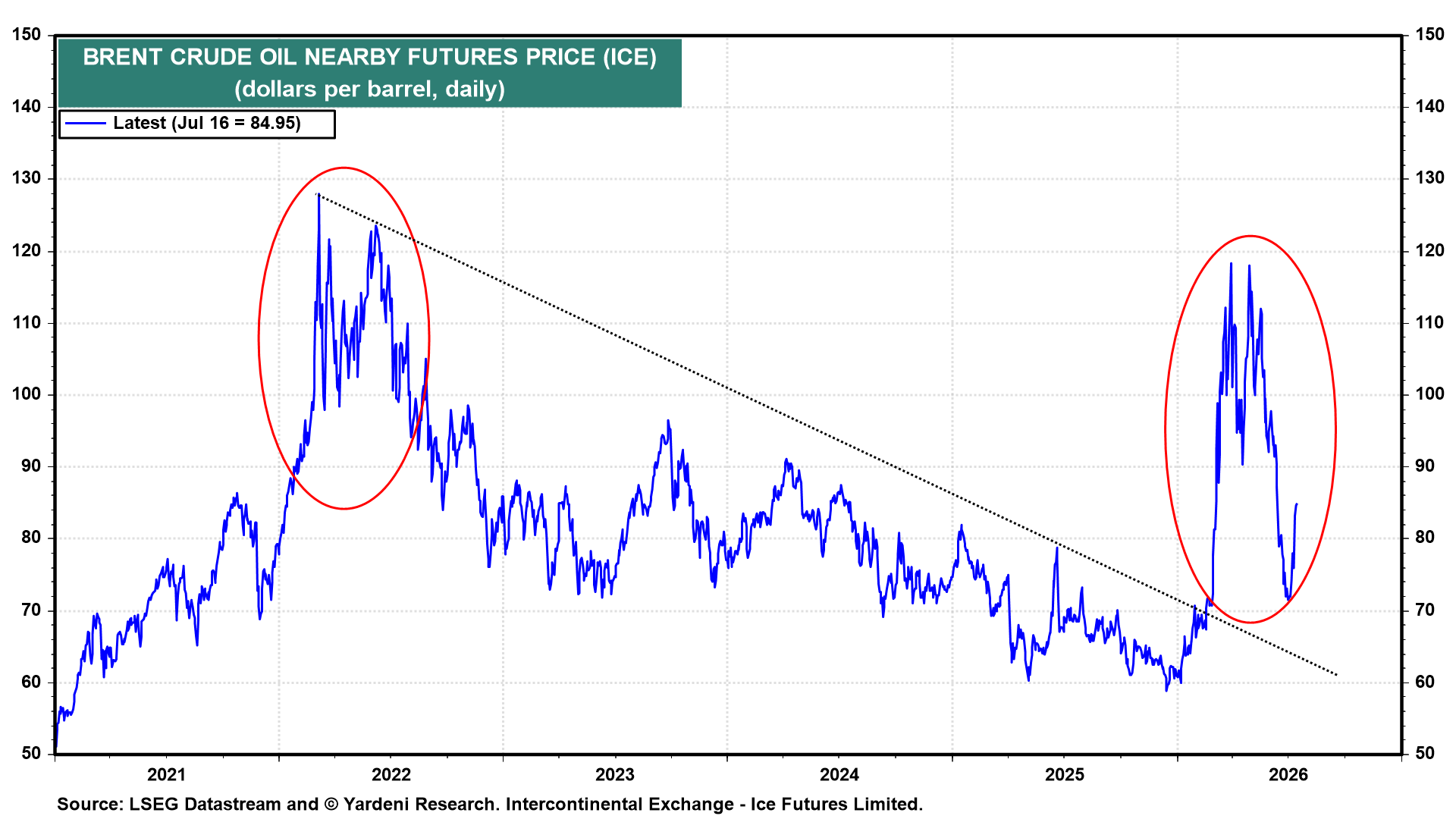
One example of such complacency may be in the crude oil market. Despite renewed attacks on shipping by Iran and the resumption of the shooting war between the US and Iran, the price of a barrel of Brent crude remains relatively subdued at around $85 currently (chart). Alternative routes for exporting oil that avoid the Strait of Hormuz have helped keep prices relatively contained. So has weak Chinese demand. However, the oil market may be underestimating the risk of a prolonged war, especially if it continues into the winter months with depleted oil inventories.