I. Stock Market Performance
Happy Halloween! Kids are enjoying the spooky cultural holiday today. The celebration evolved from ancient Celtic harvest festivals tied to All Hallows' Eve into the secular traditions of costumes, parties, and trick-or-treating that we know today.
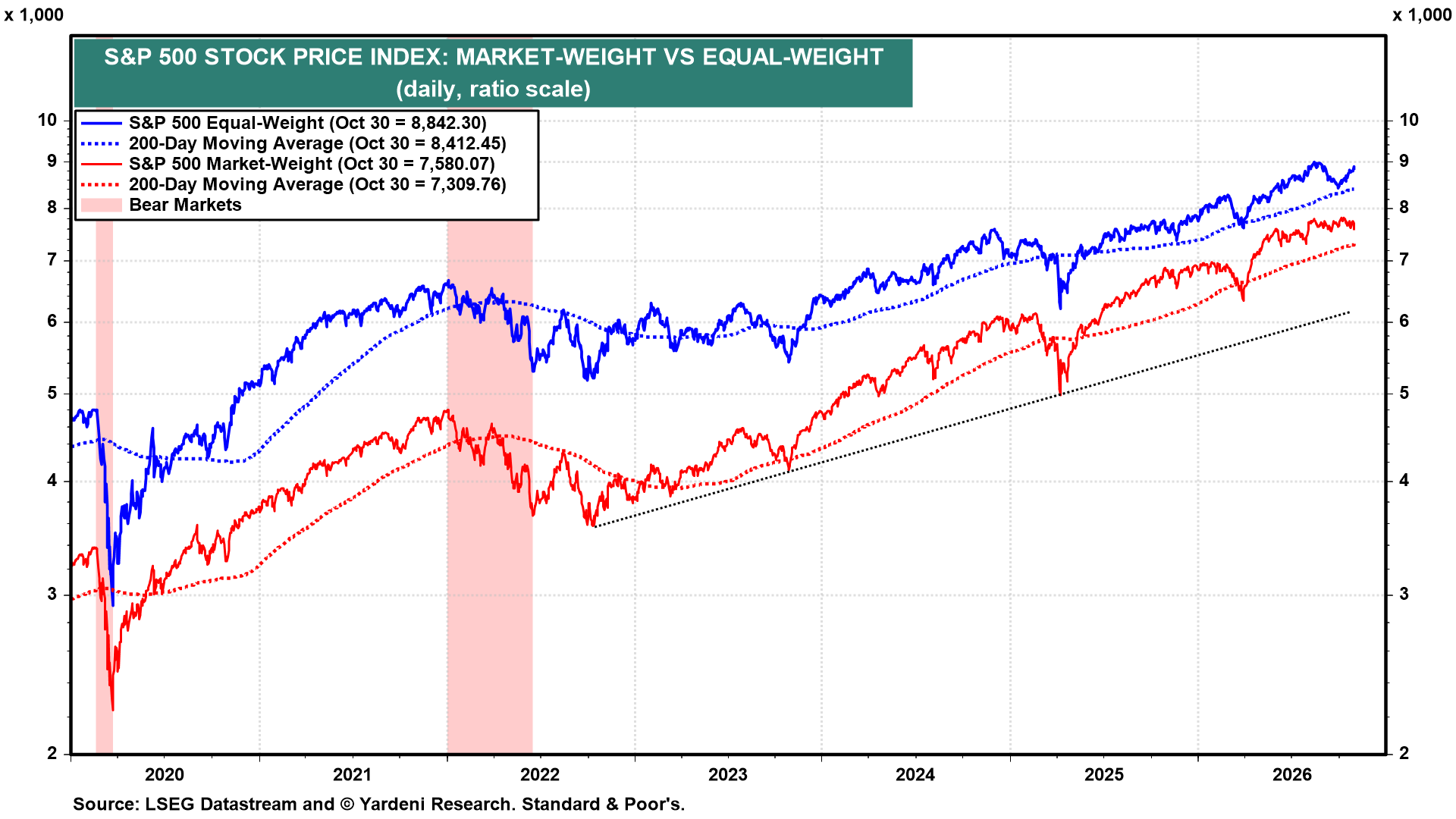
Investors have been spooked about the AI trade since the S&P 500 peaked at a record high of 7818.93 on October 6 (chart). The index is down 3.1% since then. We can blame the big-cap AI-related stocks for that decline because the equal-weight S&P 500—which doesn’t reflect those stocks’ performance more than any other’s—is up 4.9% since September 30. That's not very scary. Before that, the equal-weight index had fallen fell 6.5% from its record high on August 13 through September 30.
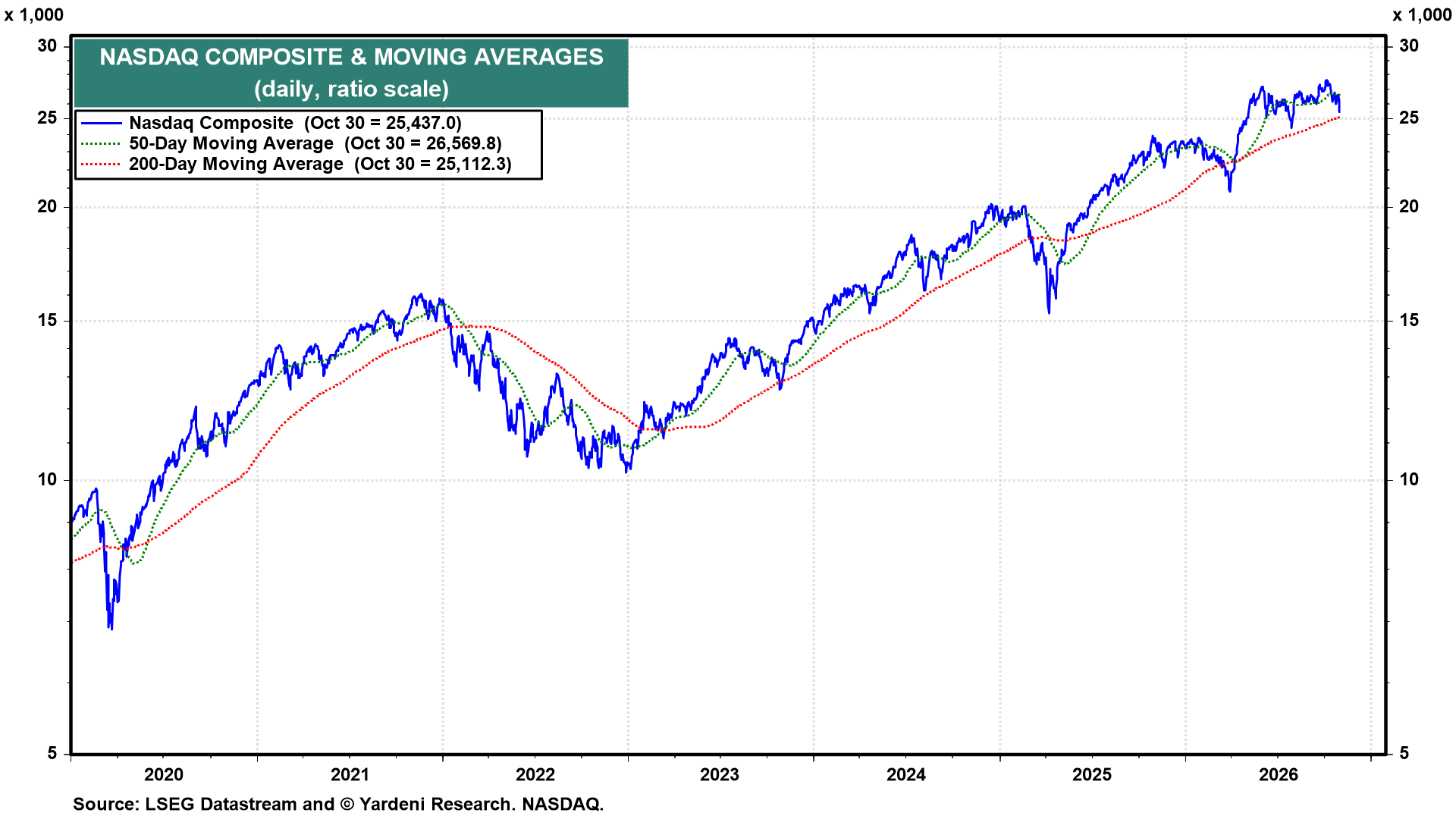
The Nasdaq is down 7.8% since it peaked at a record high on October 6 (chart). That's not a very frightful decline for this relatively volatile index.
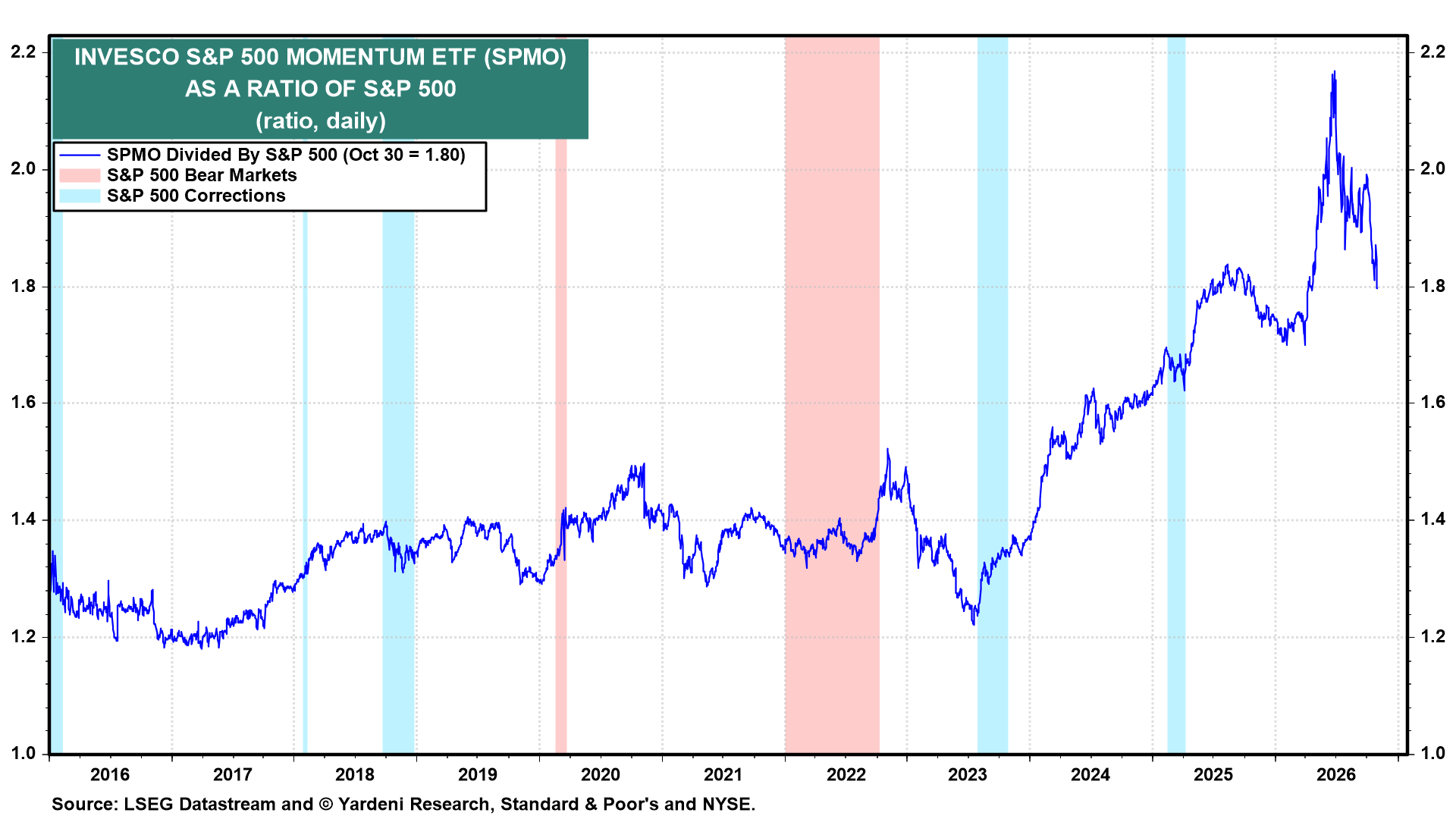
Somewhat more frightening has been the sharp drop in the momentum trade relative to the S&P 500 since June 25 (chart). The former is a proxy for the AI trade.
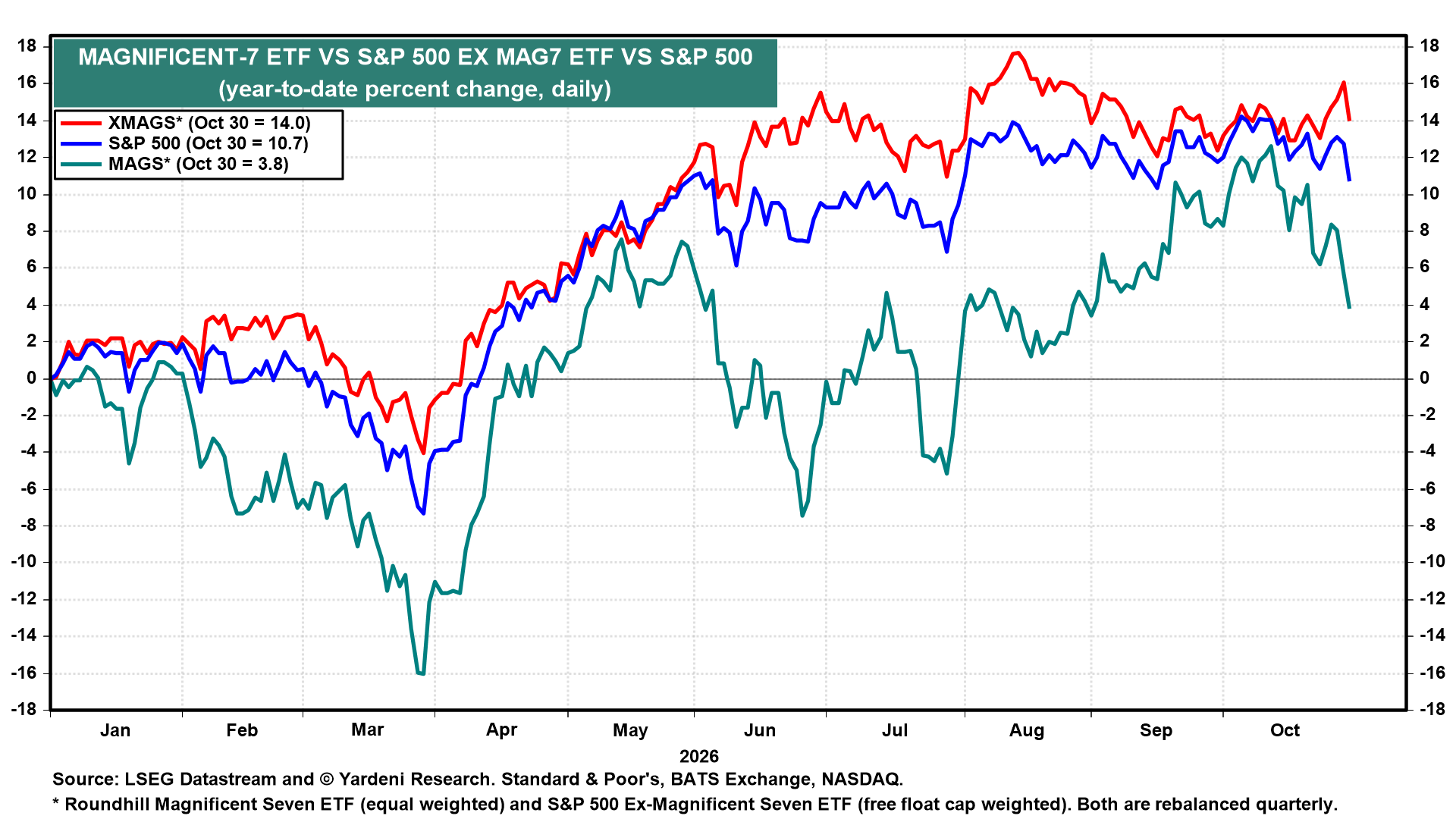
On a ytd basis, it has been mostly a walk past the graveyard for most stock investors. For many, it has been a walk in the park. The S&P 500 is up 10.7% since the end of 2025, with the XMAGS up 14.0%, while the MAGS has lagged with a 3.8% gain so far this year (chart). So, despite the frightening warnings about concentration of leadership, the S&P 500's rally has broadened beyond the Magnificent-7.
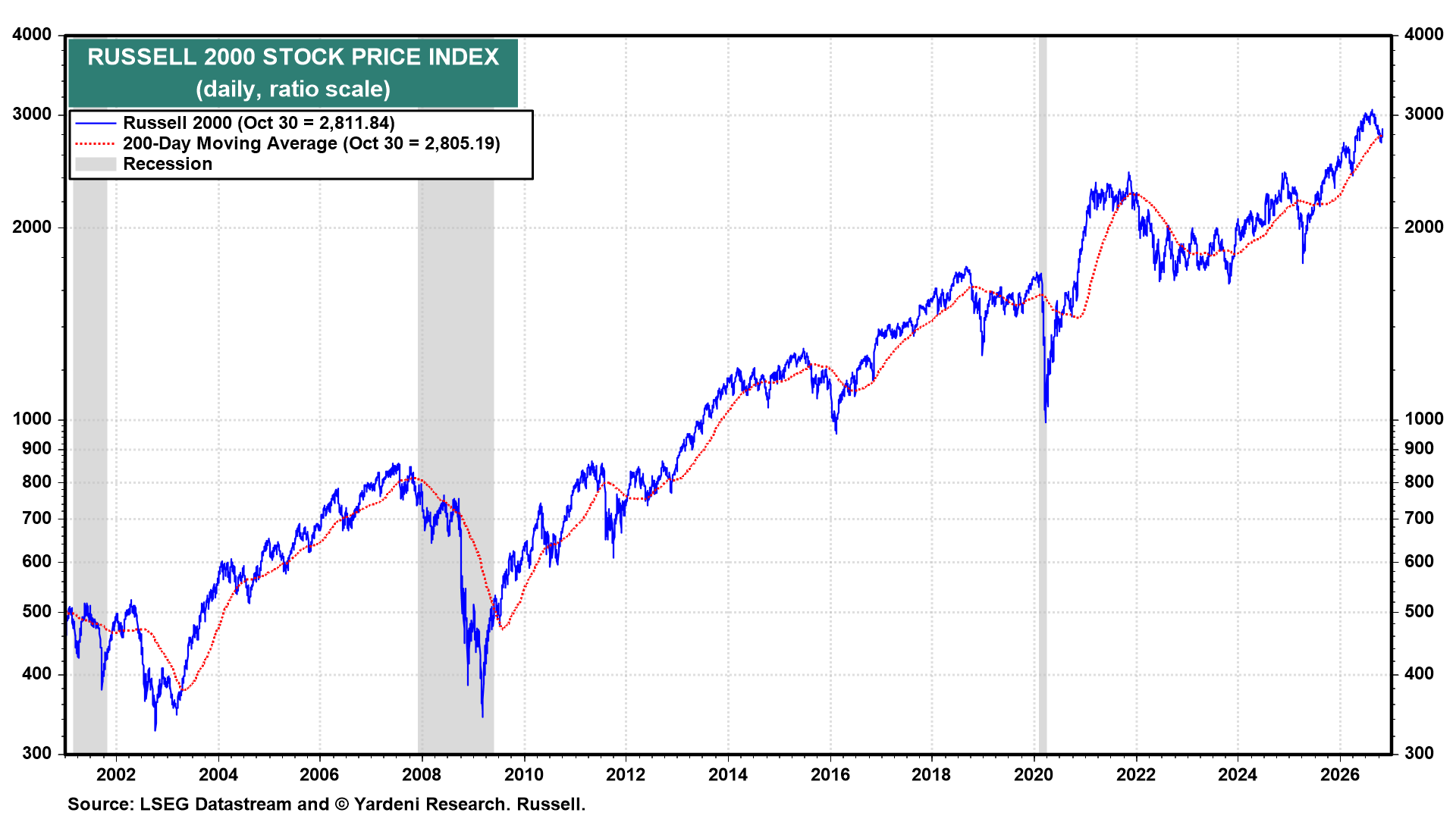
Furthermore, the Russell 2000 has been on an uptrend since early 2025, rising to a record high on August 14 (chart). It dropped 3.2% since then through October 16, mostly on a scare from the bond market, which seems to be over.
II. Stock Market Earnings
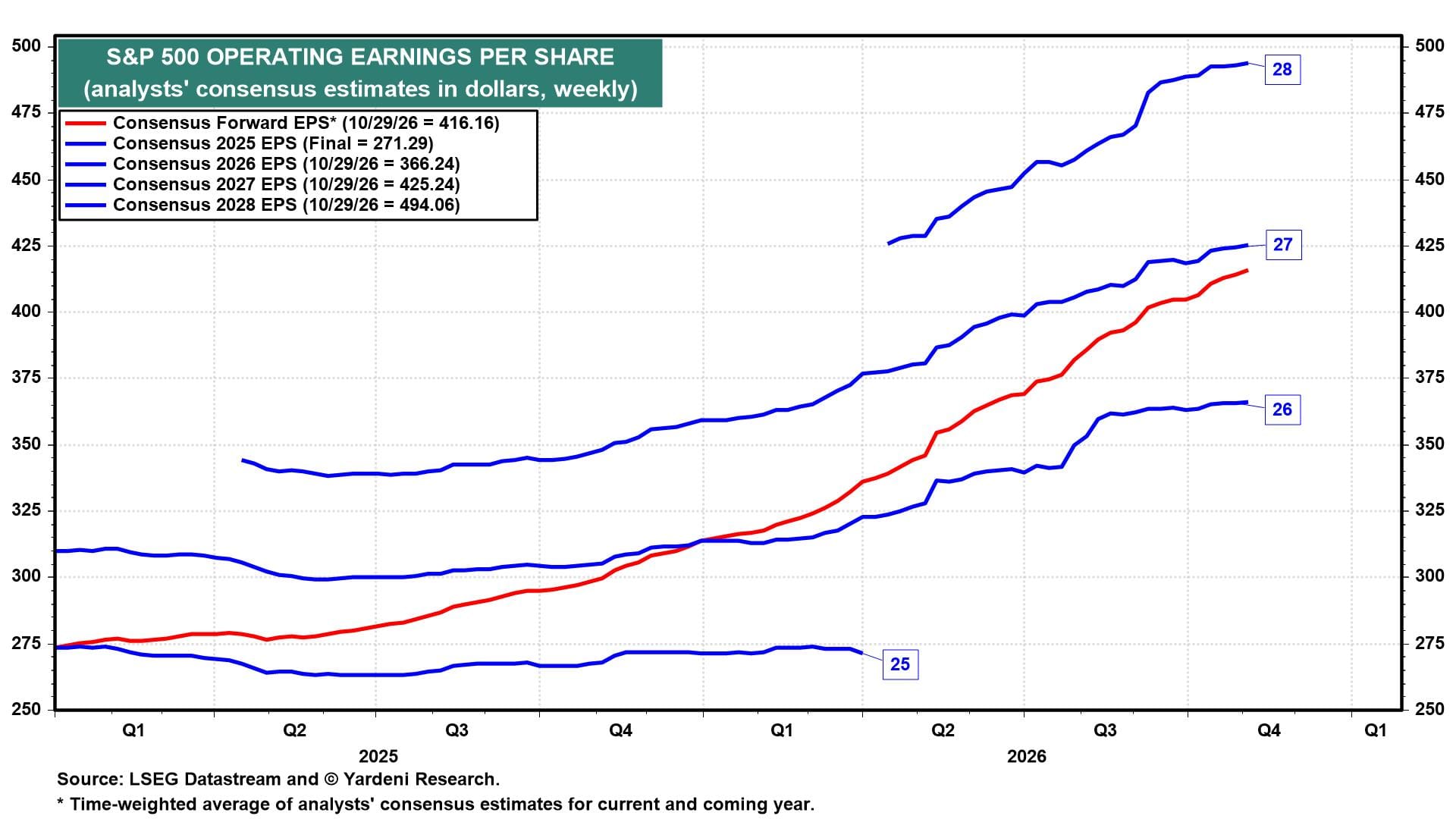
Meanwhile, industry analysts' consensus earnings expectations for the S&P 500 show nothing to fear but fear itself. The real concern is that they are not only fearless but also too optimistic. They currently expect that EPS will increase 16.1% next year to $425 and 16.2% in 2028 to $494 (chart).
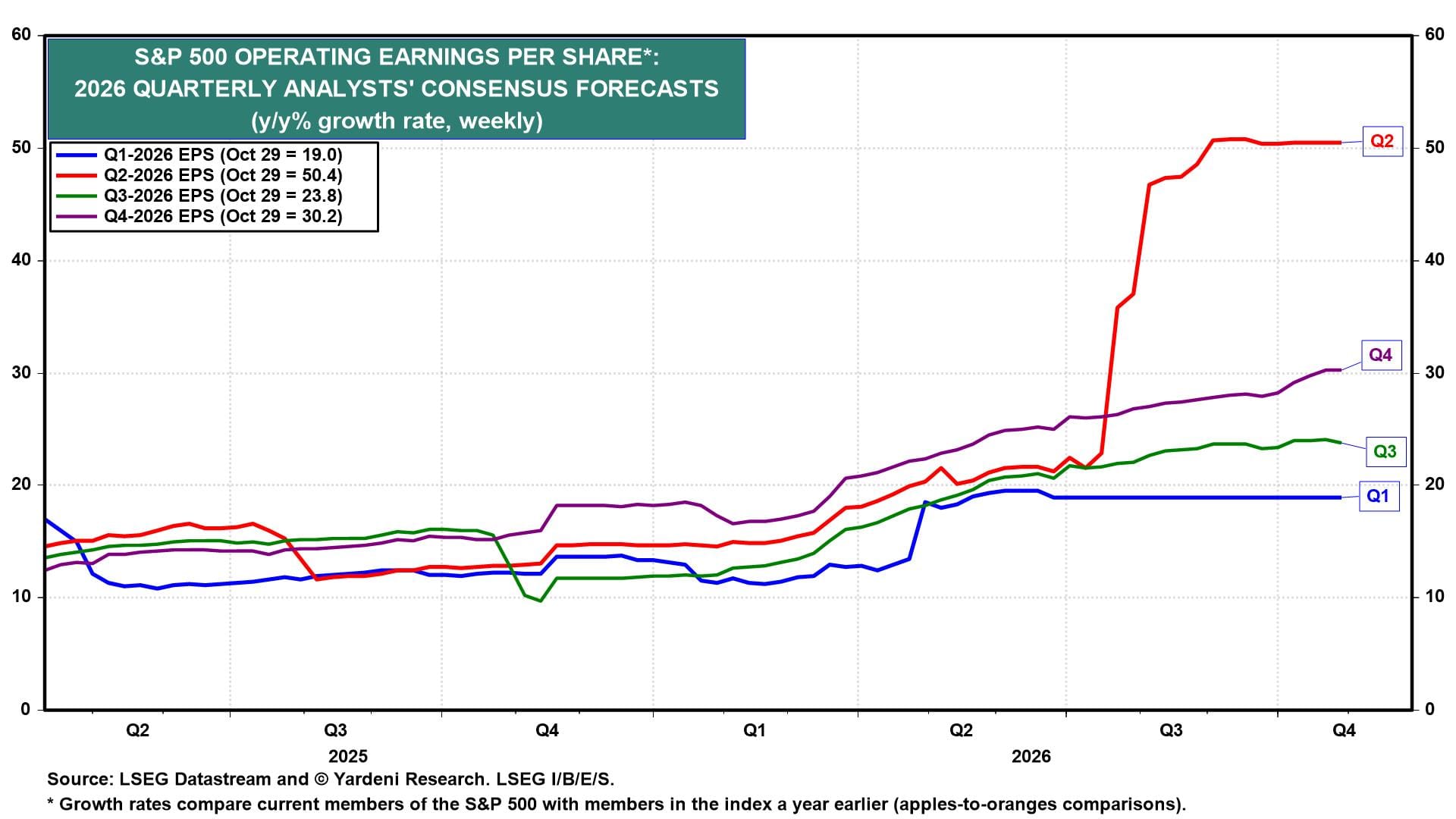
Occasionally, reality bites, and last week's Q3 earnings misses by Alphabet and Intel modestly reduced the quarter's expected EPS growth rate to 23.8%, but Q4's estimate remained exceptionally strong at 30.2% (chart).
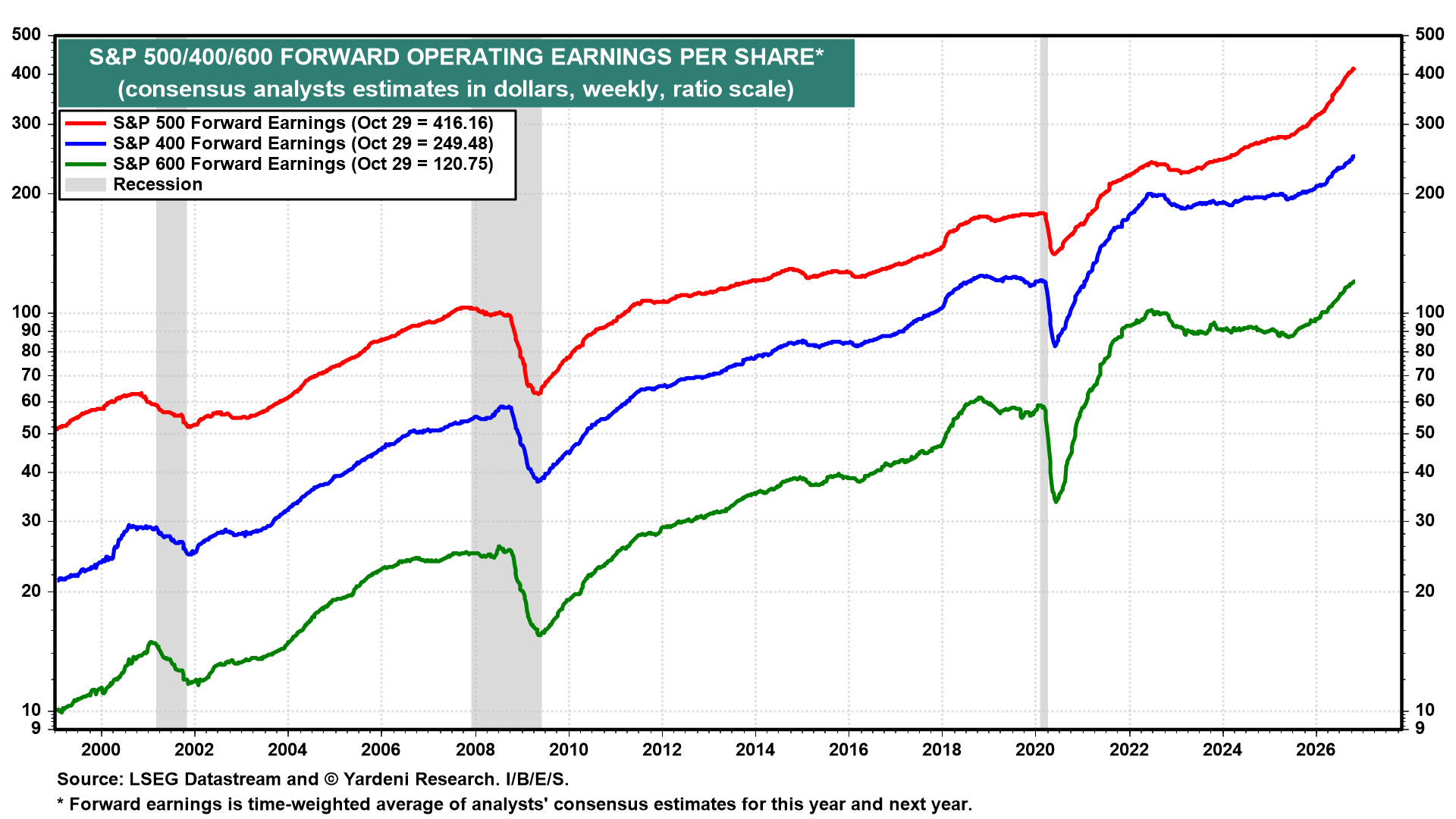
Forward earnings for the S&P 500, S&P 400, and S&P 600 all rose to record highs again last week (chart).
III. Valuation
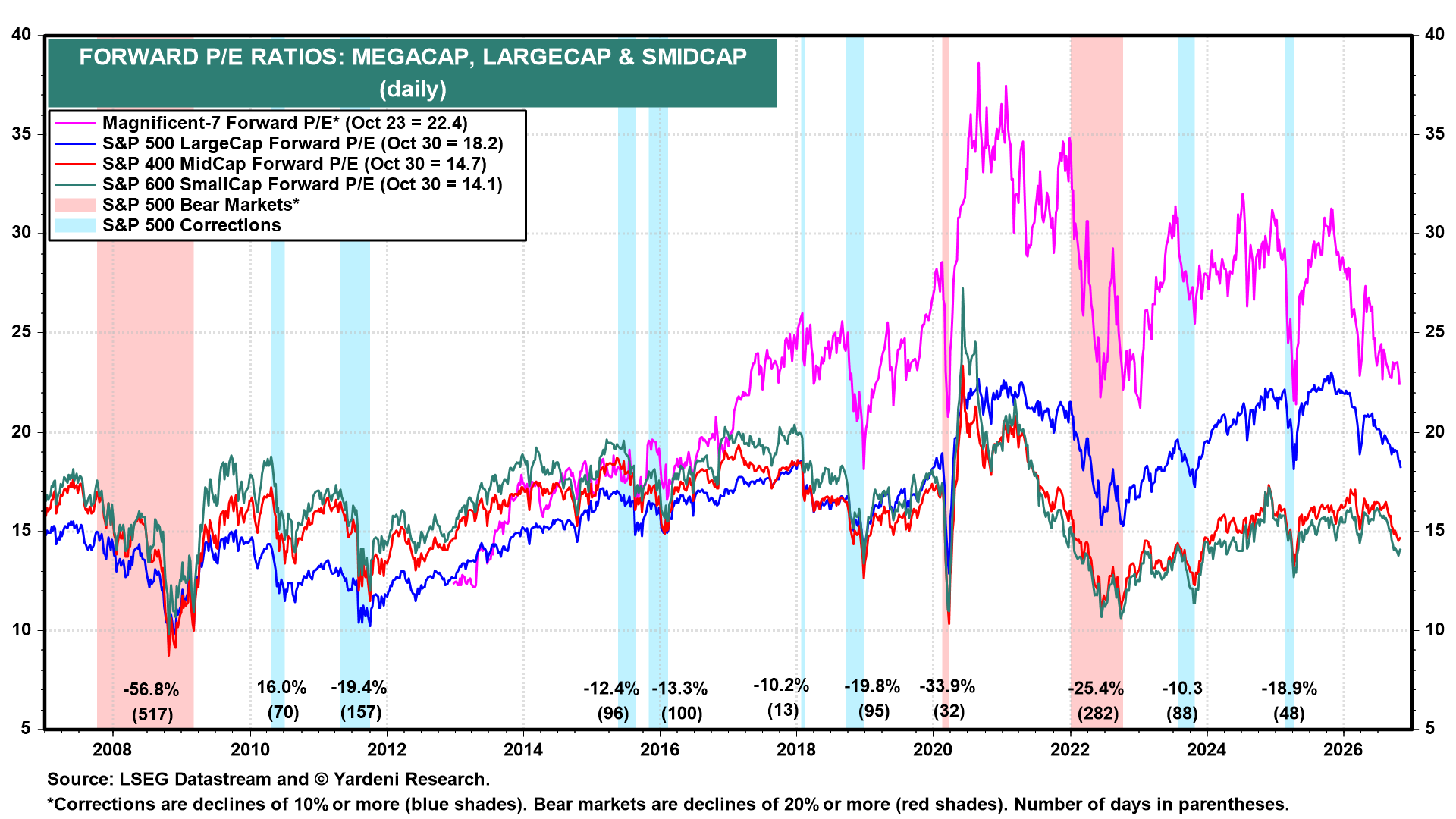
Investors do seem to be fretting that industry analysts’ earnings outlooks reflect irrational exuberance. As a result, the S&P 500 forward P/E is down to 18.2, its lowest reading since the April 2025 Liberation Day low (chart). Forward earnings is up 49.1% since then! (The stock market rally since then is all attributable to fabulous earnings momentum, or FEMO, because FOMO, or the fear of losing out that drives up the “P” of “P/E,” isn’t a factor.)
We still counsel investors to proceed with caution in the coming days. Let's see how the midterm elections play out on November 3 and whether the war in the Middle East heats up again soon after. Now that the FOMC blackout period is over, Fed officials are likely to signal a bigger rate hike in December than expected, say 50bps rather than 25bps. AI jitters are likely to continue after Halloween. Nevertheless, we are sticking with our 7,900 year-end target for the S&P 500. Santa is coming.
IV. Sentiment
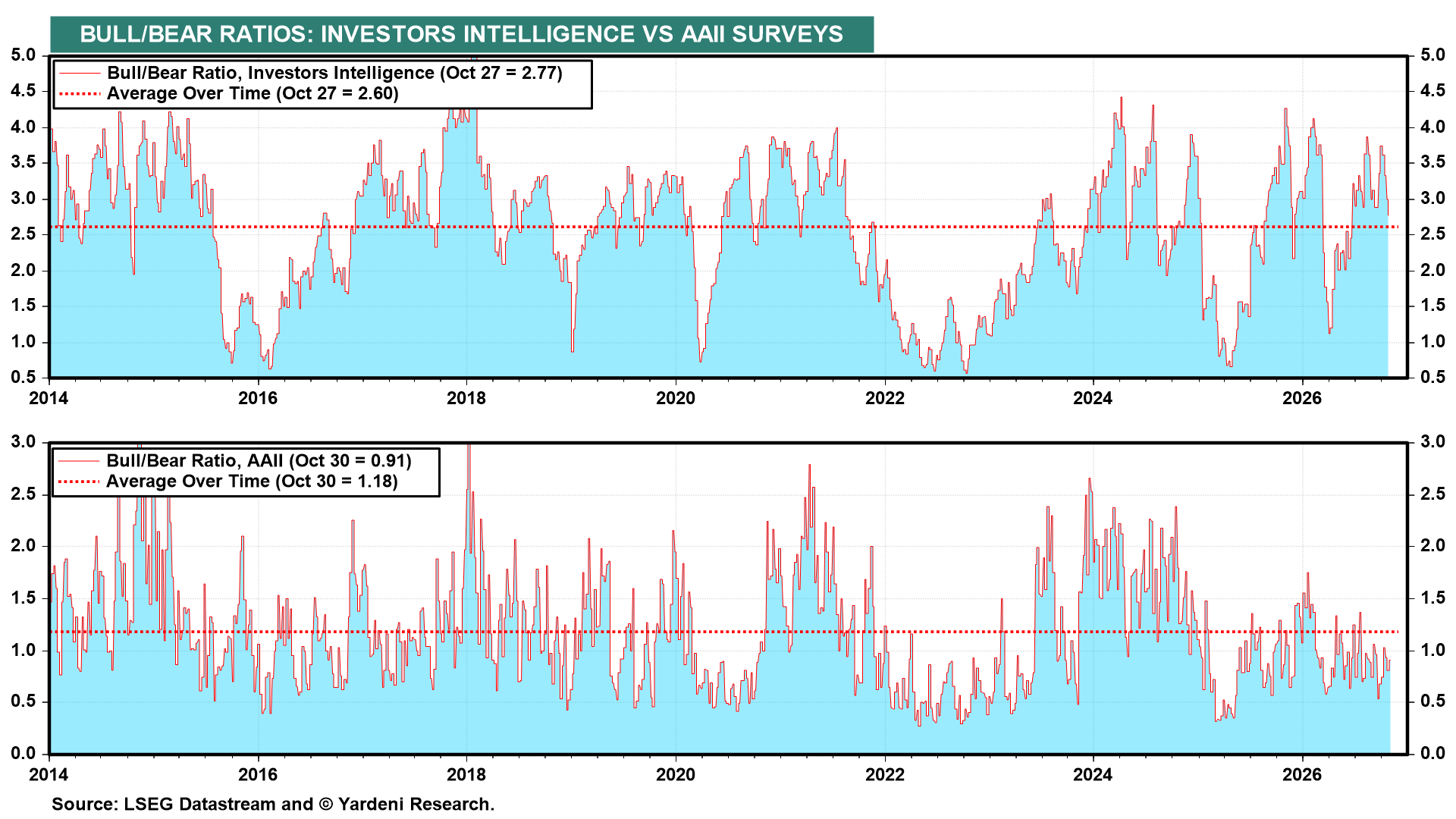
Odds are that Friday's drop in the S&P 500 weighed on the bull/bear ratios (BBR) we track (chart). We hope so. From a contrarian perspective, bearish BBR readings are bullish.
V. Credit
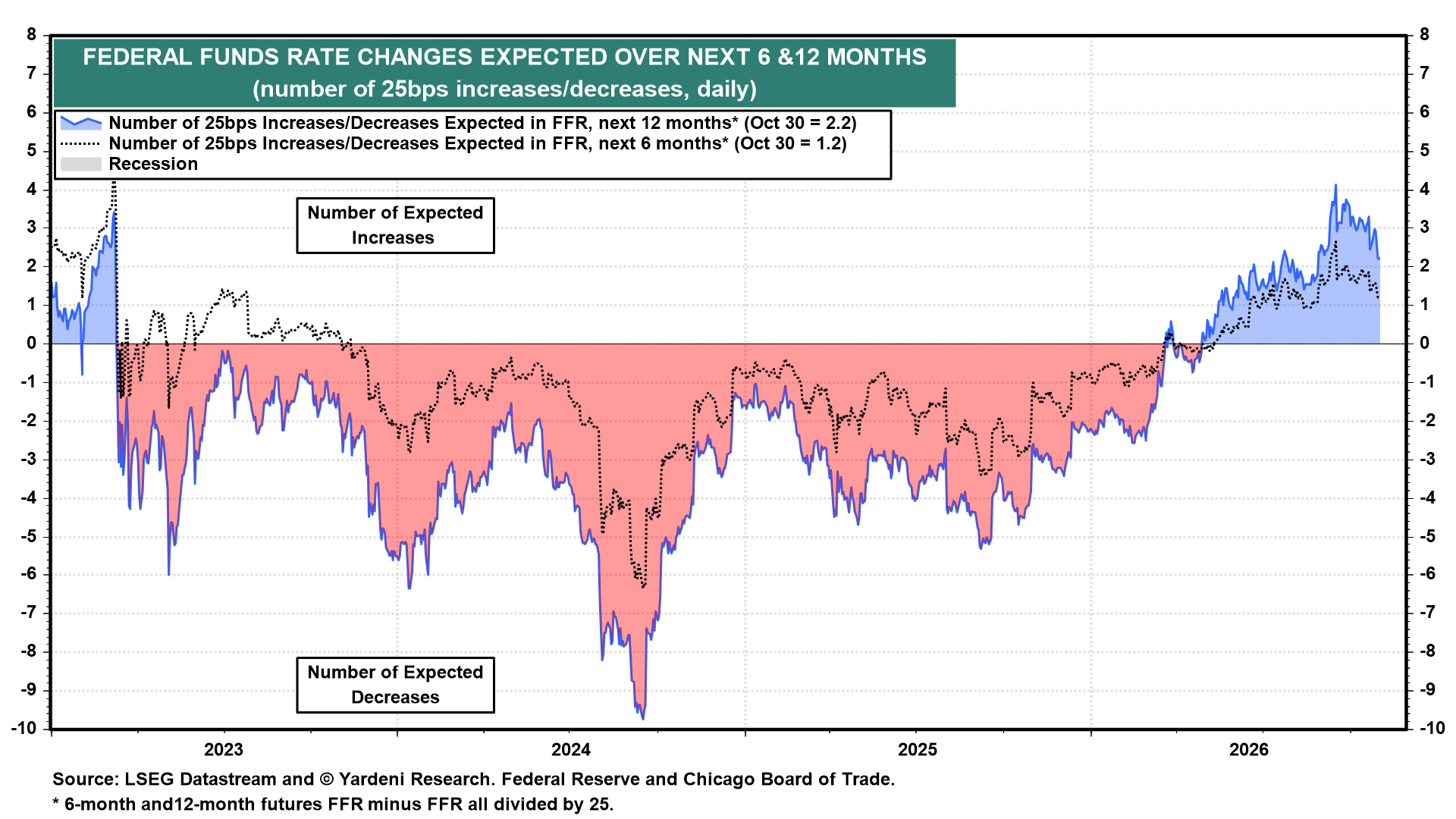
Alphabet and Intel stock prices dropped sharply after they reported weaker-than-expected earnings last week. As a result, investors pulled back from the AI trade on mounting fears that the AI infrastructure buildout is at risk of a significant slowdown. That notion spread to fixed-income securities. In recent weeks, the federal funds futures market's forecast of the number of Fed rate cuts over the next 12 months fell from three or more to two (chart).
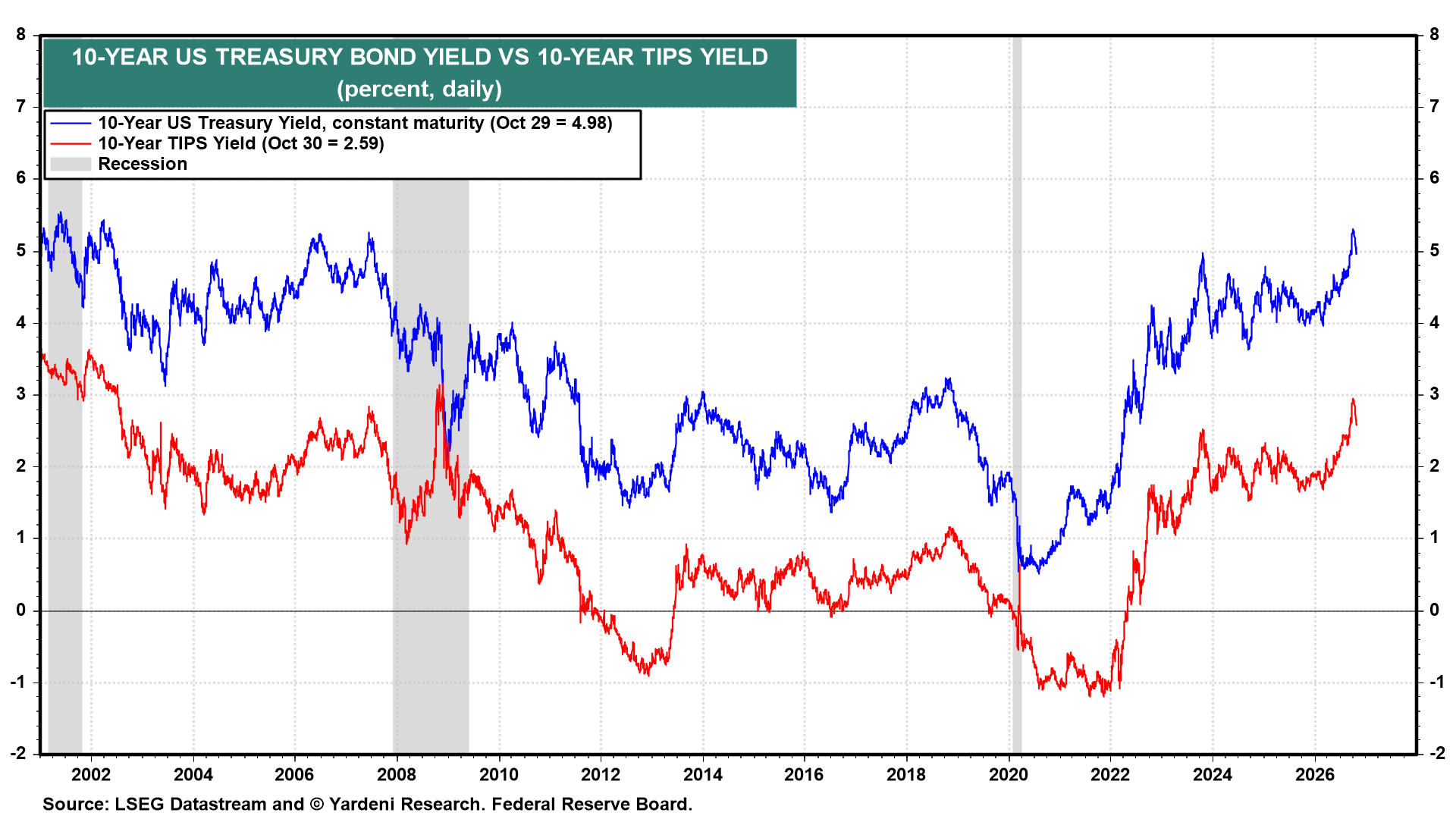
The 10-year Treasury bond yield dropped by more than 30bps this month, led by a similar drop in the comparable TIPS yield (chart). We think that the 10-year yield might remain around 5.00% through the end of this year and for most of next year.
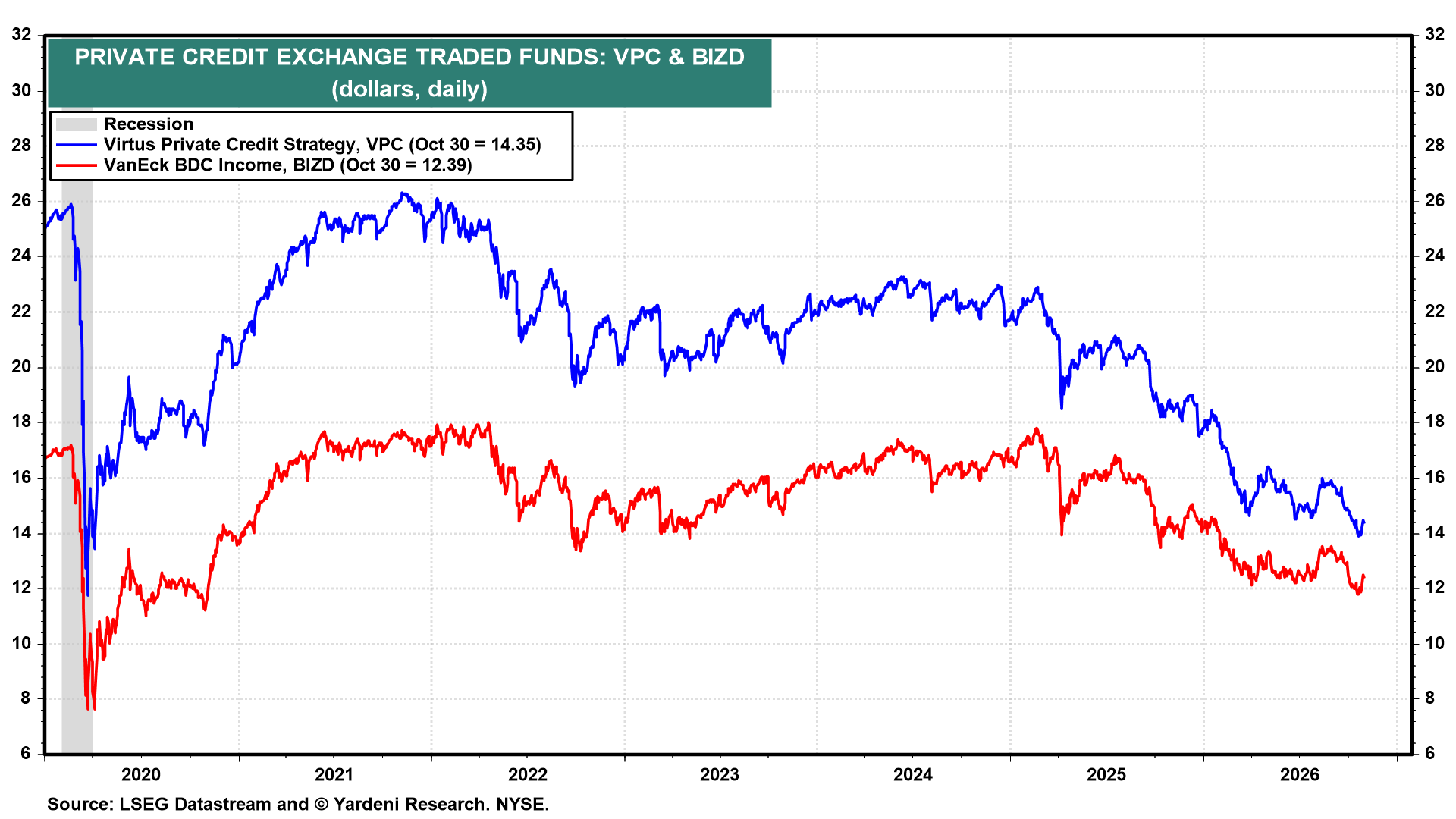
While credit-quality spreads have widened for AI-related bonds, the private credit market remains relatively calm (chart).