


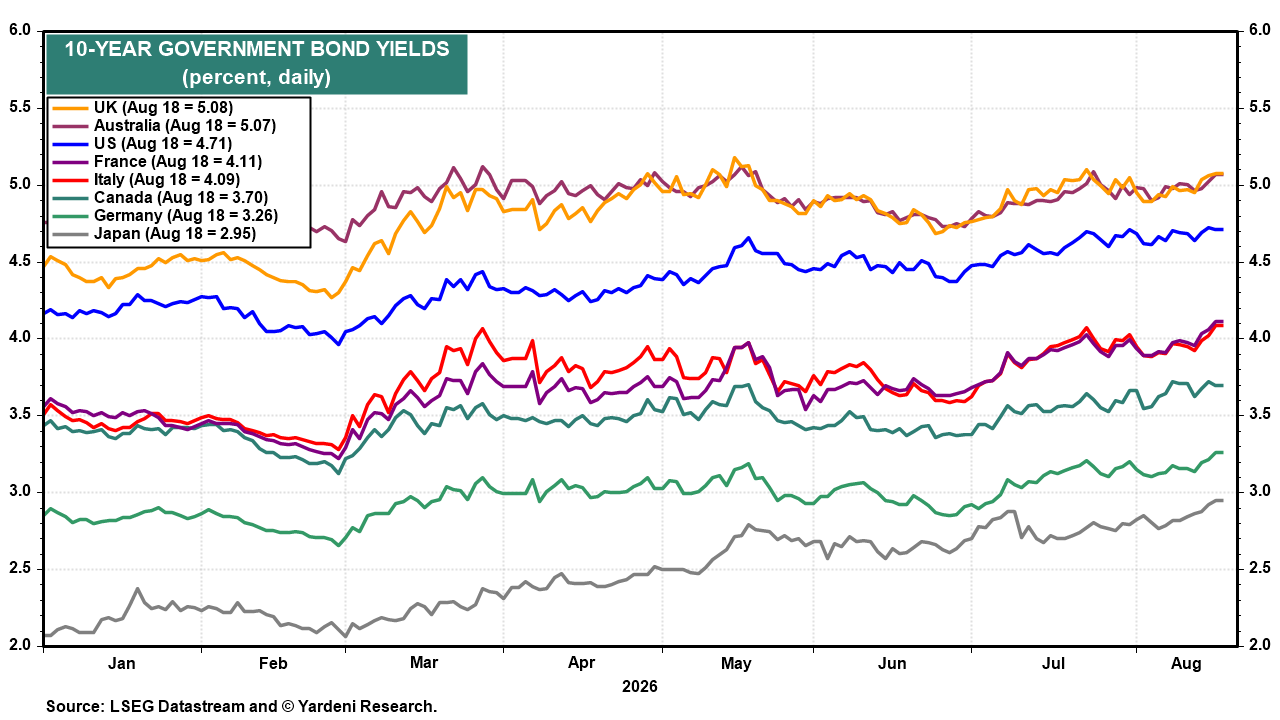
Several factors are driving bond yields higher worldwide (chart). The war in the Middle East in March boosted yields amid concerns that soaring oil prices would revive inflation. The war, along with other geopolitical crises, is bound to increase defense spending and widen already bloated government deficits.
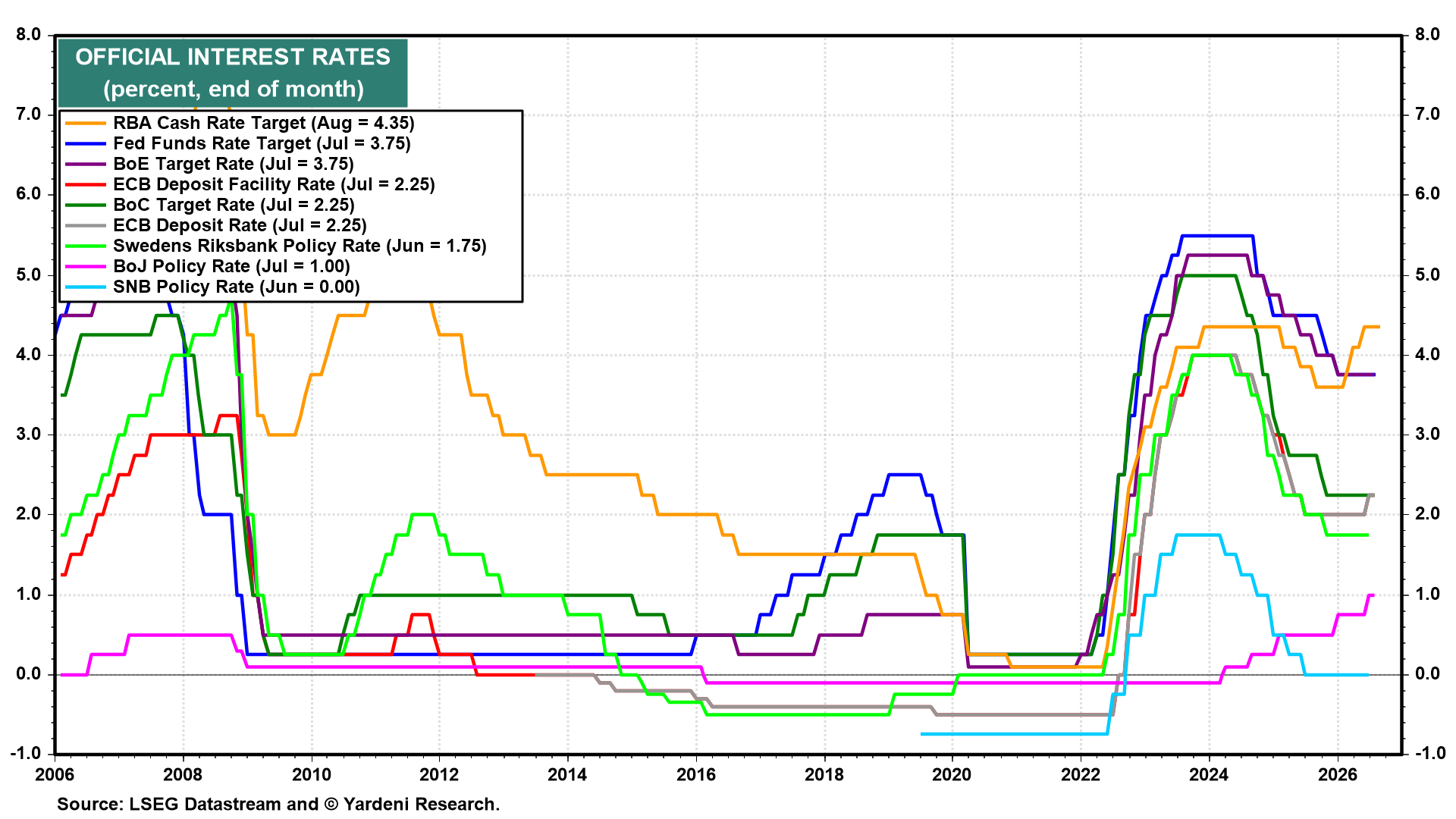
Central banks are increasingly pivoting from easing to tightening their monetary policies (chart).
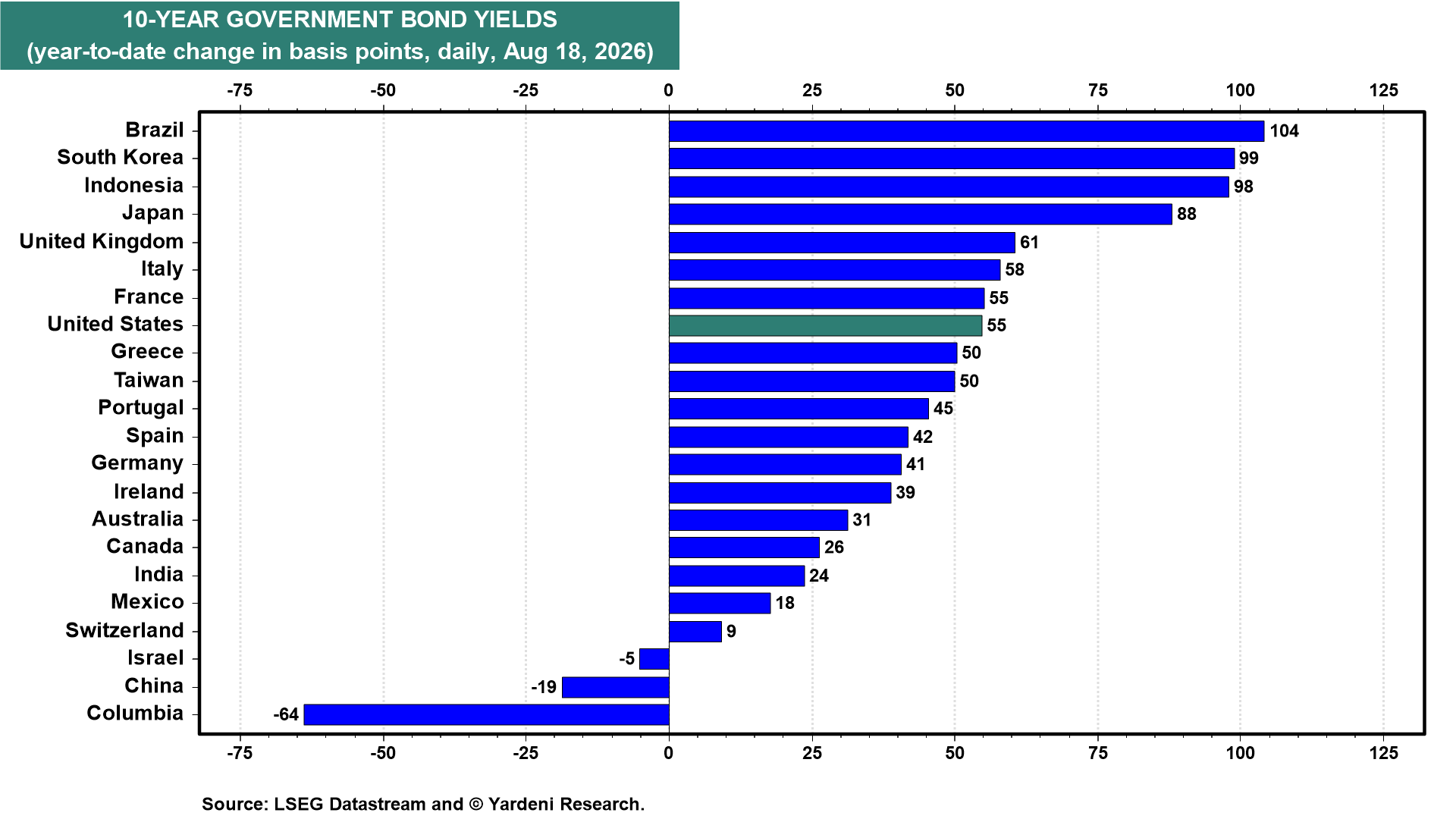
As a result, 10-year government bond yields have increased almost everywhere since the start of this year (chart). Japan's bond yield has risen the fastest among developed economies, as the Bank of Japan has raised its official interest rate to stop a free-falling yen from boosting inflation. This is forcing carry traders to cover long bond positions worldwide, which they financed with cheap credit raised in Japan. Some fear that this could be the start of a major global financial crisis. We doubt it, but we aren't ignoring this possibility.
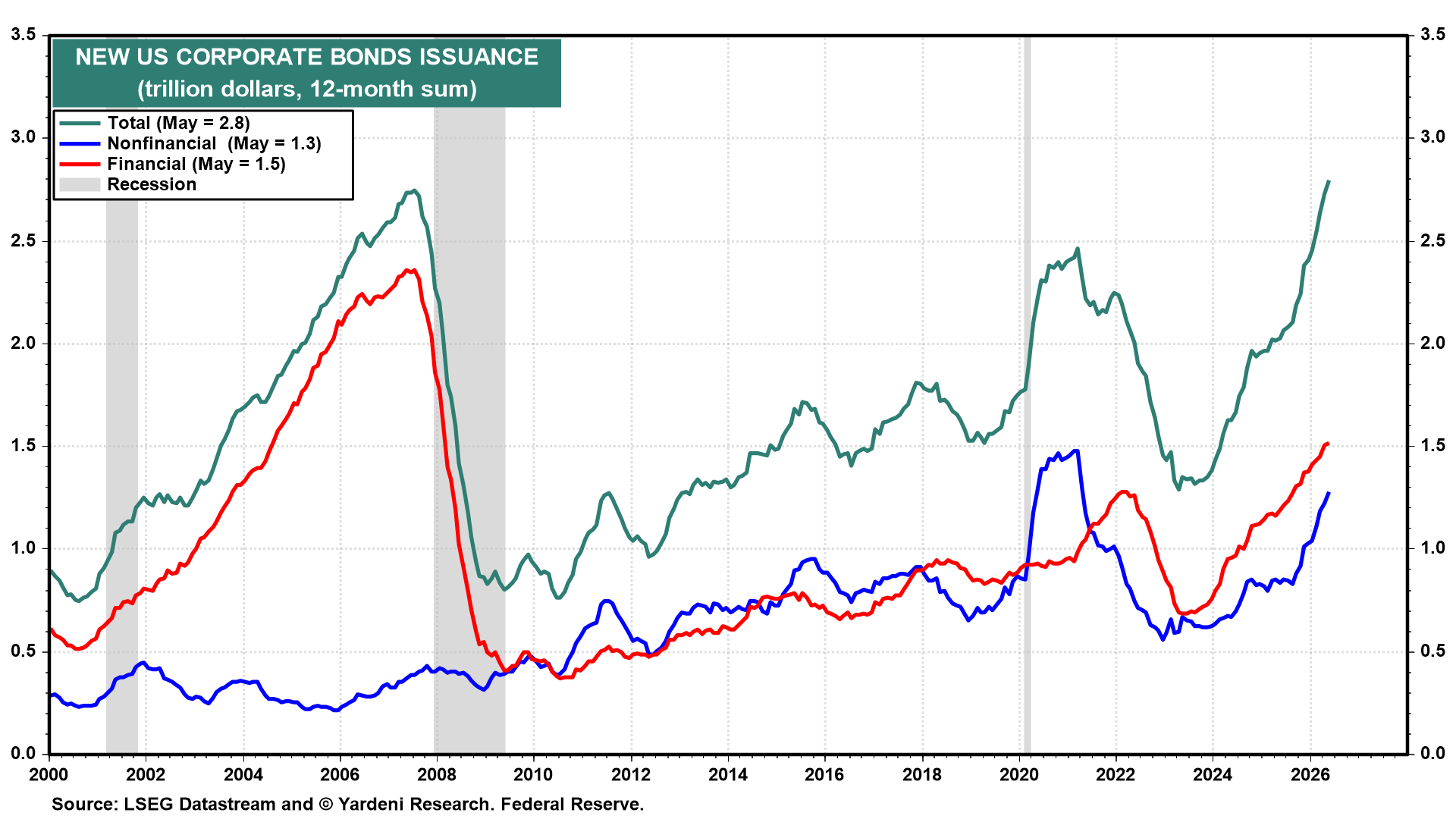
In the US, new corporate bond issuance rose to a record high of $2.8 trillion over the past 12 months through May (chart). US investment-grade bond issuance reached a record $1.7 trillion over the past 12 months through July, as hyperscalers tapped debt markets to finance the AI buildout. At the same time, governments continue to run large fiscal deficits, with the IMF projecting global public debt will reach 100% of GDP by 2029. The result is growing competition for capital.
In our view, some of the recent rise in US bond yields reflects the economy's strength. We are sticking with our view that the 10-year US Treasury yield should range between 4.00% and 5.00%, which is, in effect, a vote of confidence in the US economy! We reject the popular notion that interest rates will stay "higher for longer." We think they will remain "normal for longer." Current interest rates reflect a healthy economy.
Now consider the following related developments:
