


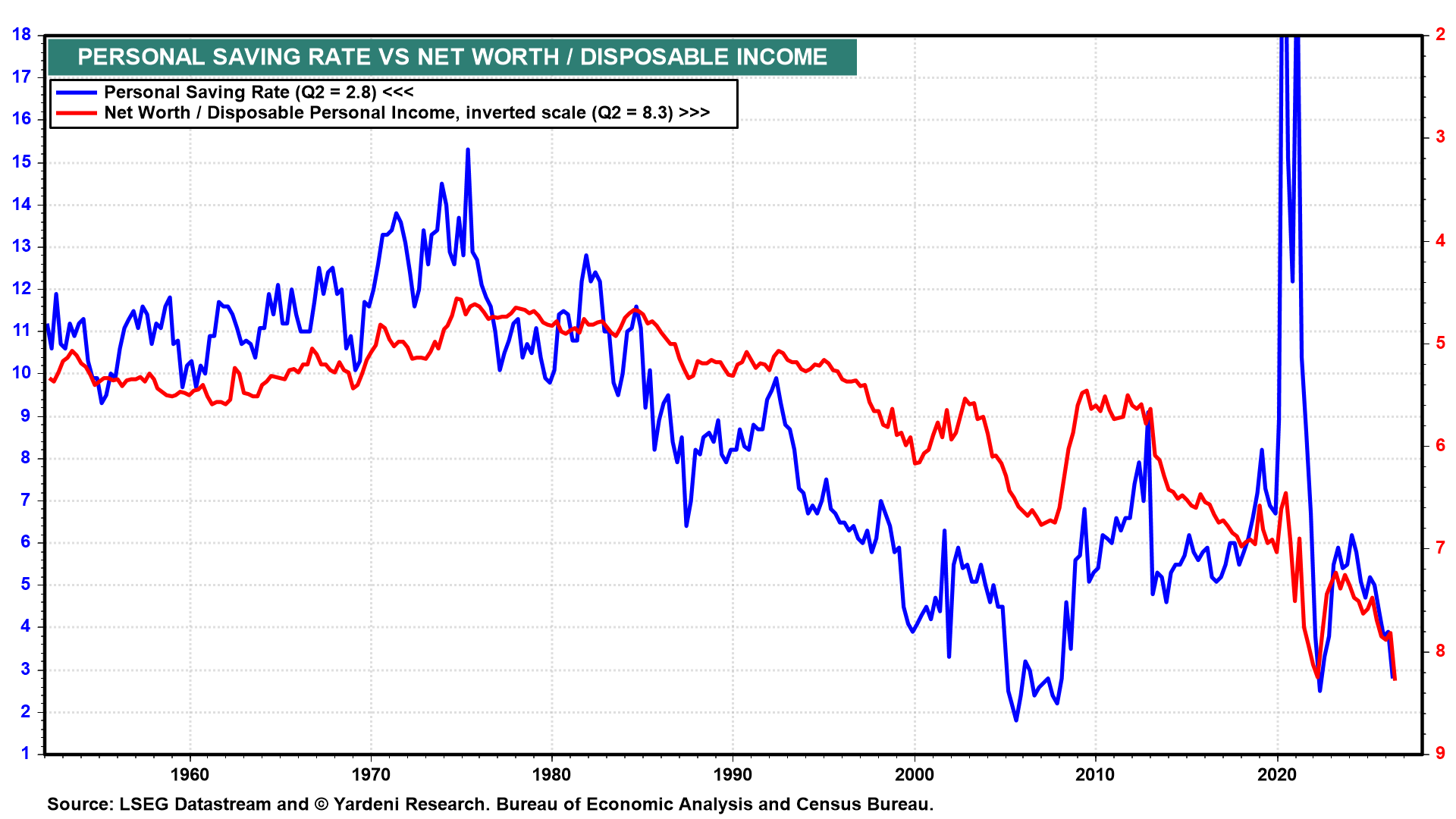
Consumer spending resilience increasingly has become a balance-sheet story rather than an income-statement story. The personal saving rate has been falling since January 2024 as consumer outlays have outpaced disposable personal income (chart). Many economists believe that this is unsustainable. Not us.
We think that the saving rate will turn negative by the end of the decade as retiring Baby Boomers finance their spending with their sizeable net worth. Indeed, there is a clear inverse correlation between the personal saving rate and the ratio of household net worth to disposable personal income (DPI). As household net worth increases relative to DPI, consumers tend to save less of their DPI.
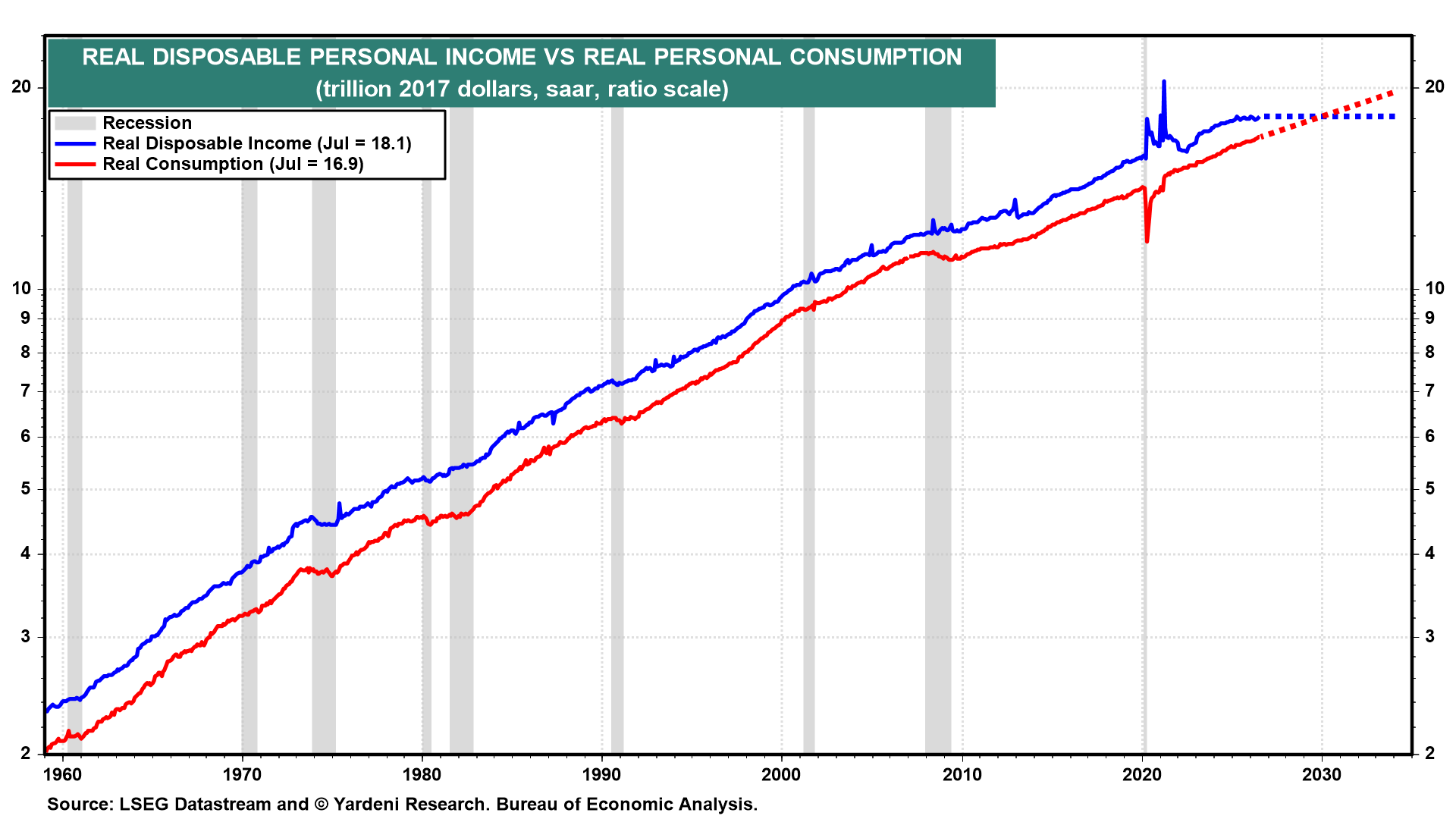
Inflation-adjusted consumer spending rose at a 3.2% annualized rate in Q2, the strongest pace since Q3-2025, even as real disposable personal income fell at a 1.5% annualized rate, the largest decline since Q2-2022. On a monthly basis, the former has been rising.
If current trends continue, inflation-adjusted consumer spending will exceed total disposable income by 2030 (chart). In this scenario, the personal saving rate would turn negative. This prospect is already prompting the economy’s naysayers to say a negative personal saving rate isn’t sustainable. They conclude that diminishing savings will force consumers to retrench.
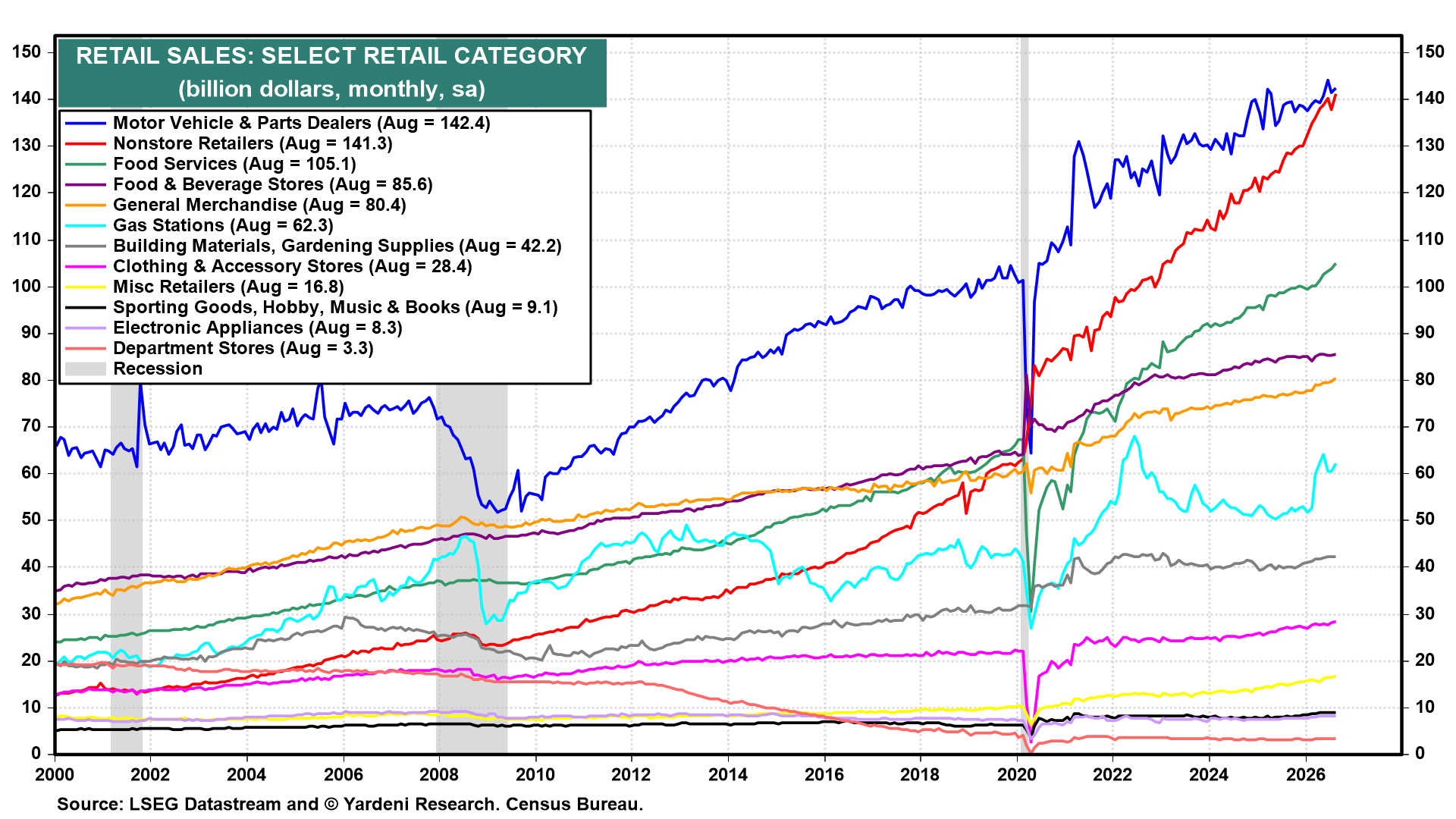
However, there are no compelling signs yet that America’s shoppers are about to slow down. August's retail sales report showed a strong rebound in consumer spending, beating consensus expectations and erasing July's pullback. Many of the major components of retail sales rose to record highs in August (chart).
So what helps explain consumers' ongoing strength? A closer look at Baby Boomers' balance sheets provides the answer. Consider the following:
