


I. Credit
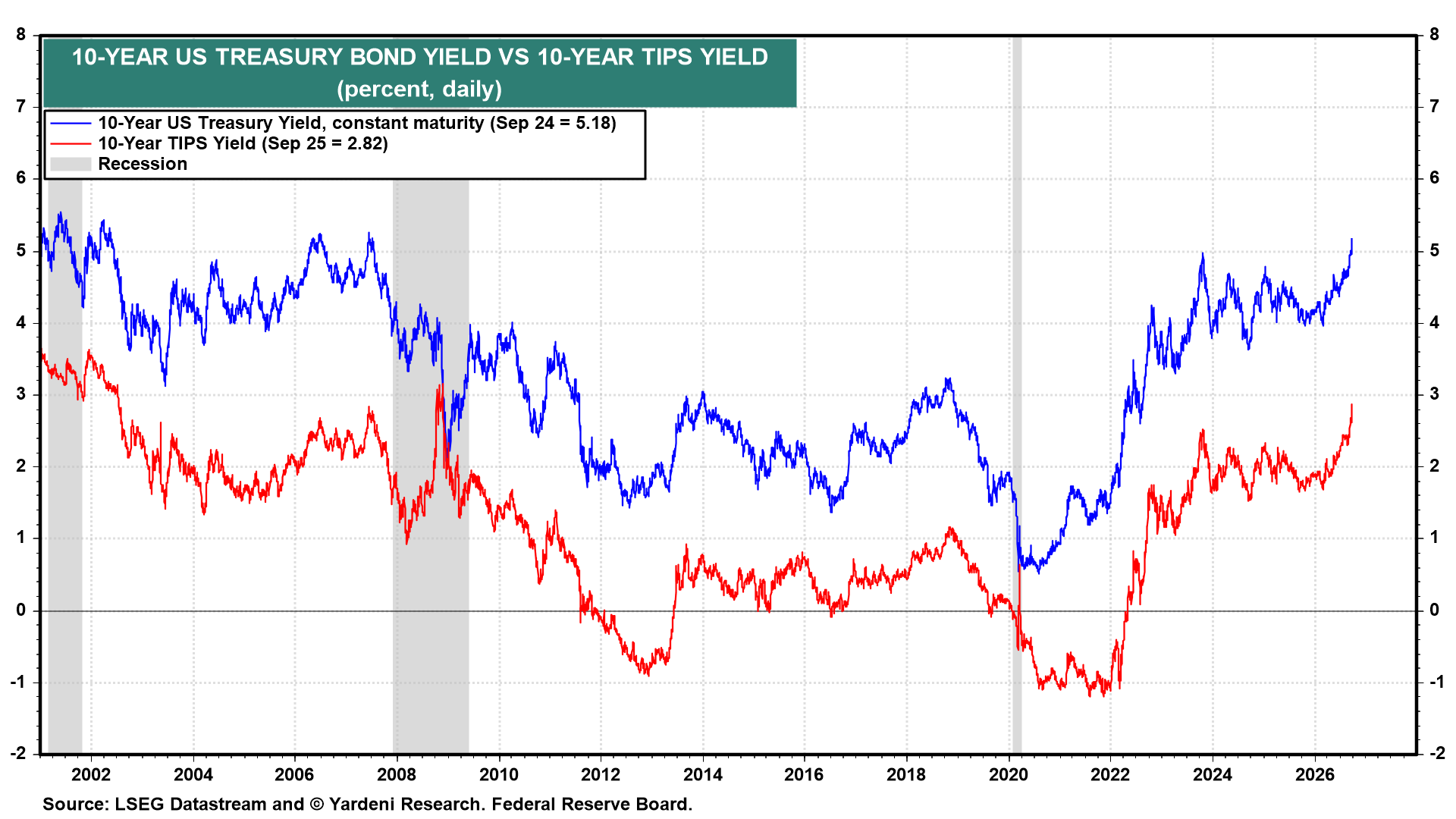
Last week's events confirm our "Proceed With Caution" call in September 15's QuickTakes. The main event was the jump in the 10-year US Treasury yield above 5.00% to an intraday high of 5.22% on Friday (chart). At the end of the day, it closed lower, at 5.18%, after news that Iran proposed reopening the Strait of Hormuz and ending fighting in the Middle East war. The Wall Street Journal subsequently reported that President Donald Trump has told his staff privately that he’s skeptical that Iran will meet his demands and that the US likely will launch a renewed bombing campaign after the November midterm elections.
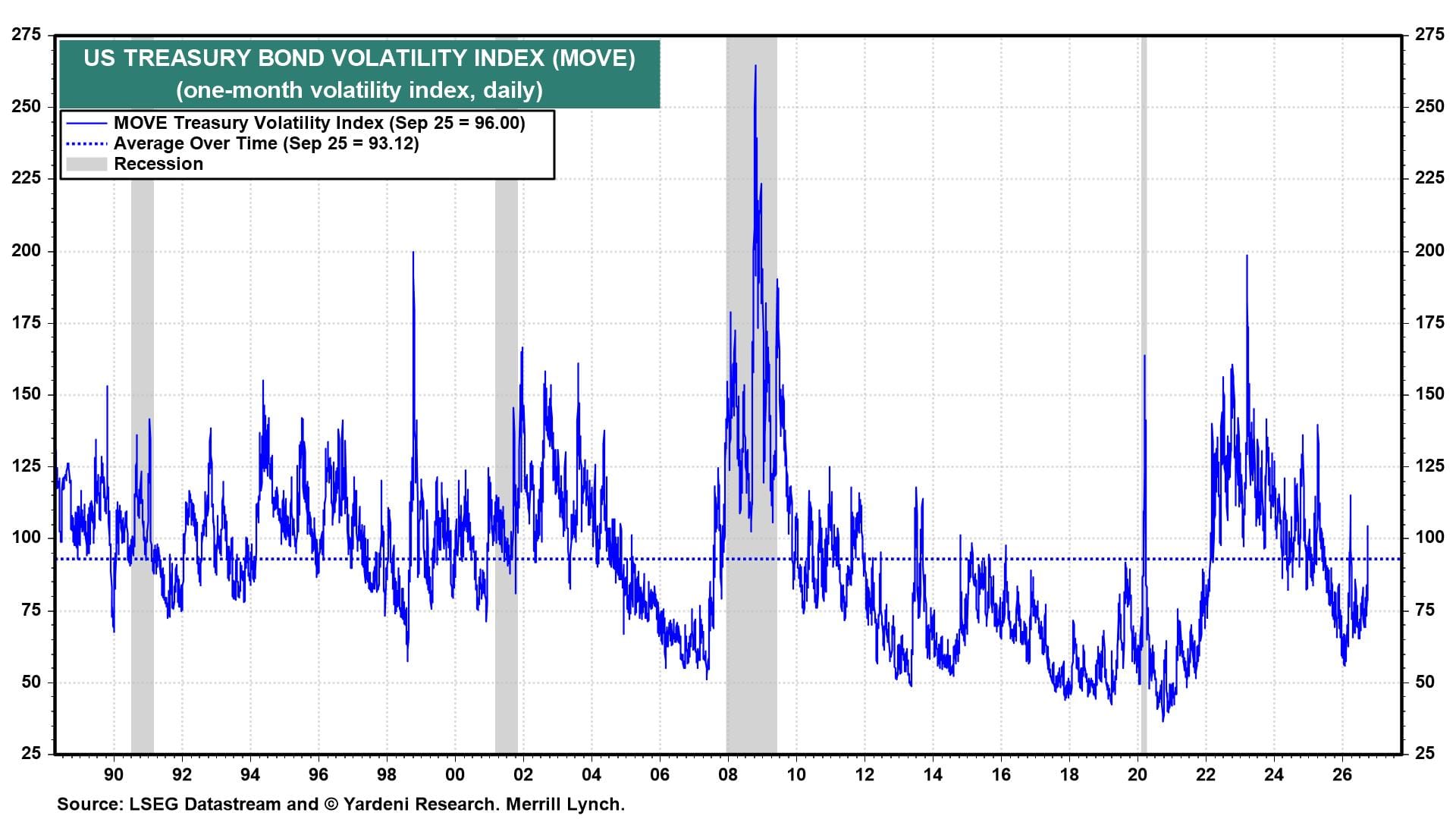
We suspect that the bond market has been hacked by Bond Vigilante algorithms. They respond to news headlines with huge trades that exacerbate bond market volatility (chart). The US Treasury bond volatility index (a.k.a. MOVE) jumped sharply higher on Friday.
We also suspect that the unwinding of the yen-carry trade might explain the worldwide uptrend in bond yields. Of course, central banks have also been tightening in response to the inflation shock from the Middle East war.
The credit market always sees trouble coming before the stock market does—for example, the news Friday that a big data center project is being halted.
Oracle, SoftBank, and OpenAI are tied together in the $500 billion “Stargate” alliance; OpenAI provides the model demand, SoftBank arranges the massive capital, and Oracle provides the cloud infrastructure to train the next generation of frontier AI models. On Friday, Oracle issued a force majeure notice on Project Jupiter, the flagship 2.45 GW New Mexico data center, because the state denied the 17-mile gas pipeline permit to power its Bloom Energy fuel cells. The banks that funded the construction are stuck with more loans than they planned to hold for now.
II. Performance
So far, the stock market hasn't been troubled by these developments in the credit market. Indeed, the Nasdaq rose to a new record high on Tuesday of last week (chart).
