


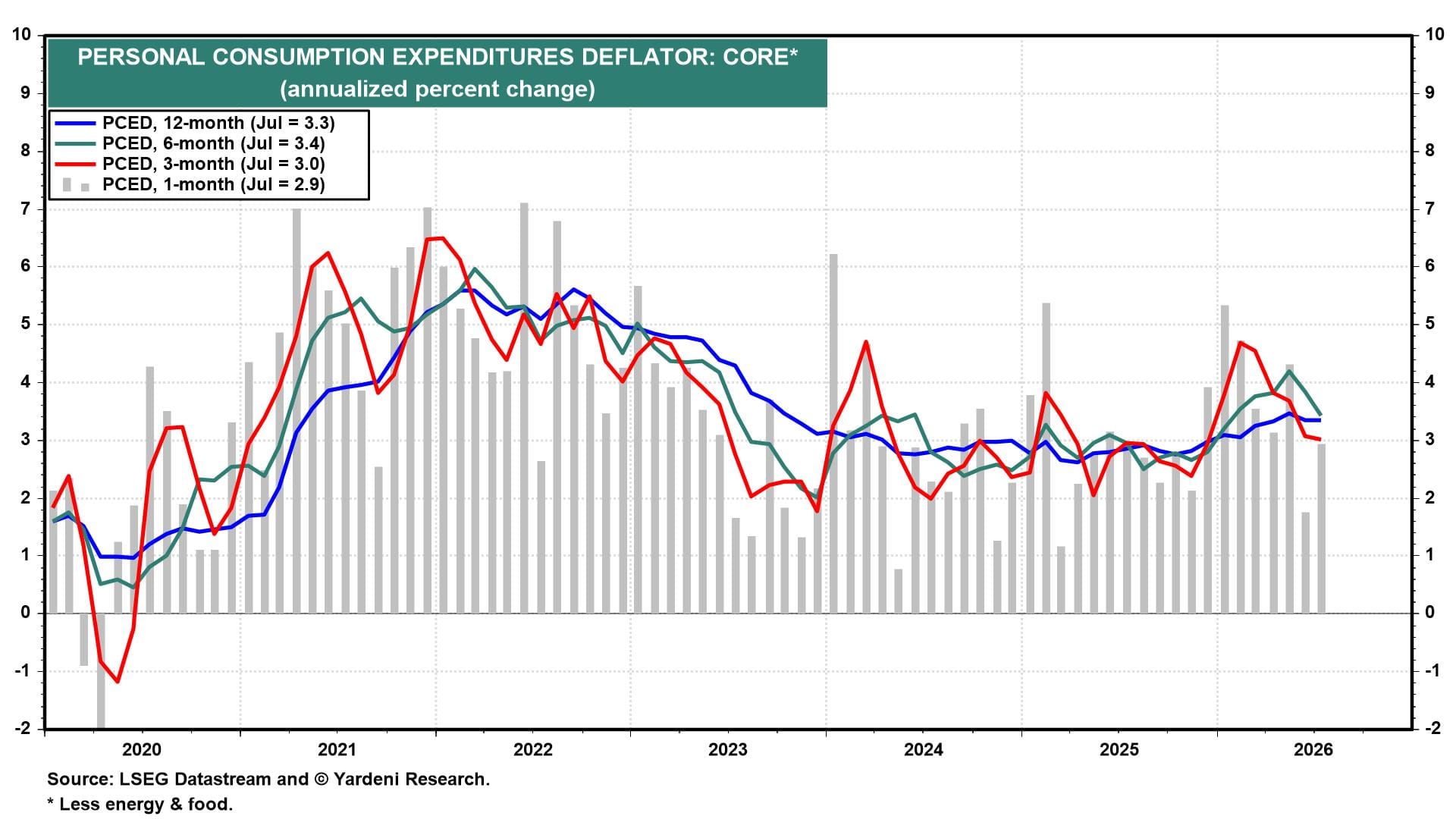
The outcome of the September 16-17 FOMC meeting will likely hinge on this week's August CPI and PPI reports. Fed Governor Christopher Waller recently noted that while inflation remains "meaningfully above" the Fed's 2.0% target, the three-month annualized core PCED inflation rate fell from 4.76% in February to 3.05% in July (chart). If that trend continues, he said he would favor holding the federal funds rate steady. We suspect many Fed officials share a similar view.
The challenge is that August's PCED report will not be released until after the FOMC meeting. Furthermore, the core CPI has not been a reliable guide to the hotter inflation pressures reflected in the core PCED recently. The spread between the two measures is the most negative since the early 1980s, with the core PCED running well above the core CPI (chart). Nevertheless, most Fed policymakers will likely use the CPI and PPI reports to estimate August's core PCED before casting their votes.
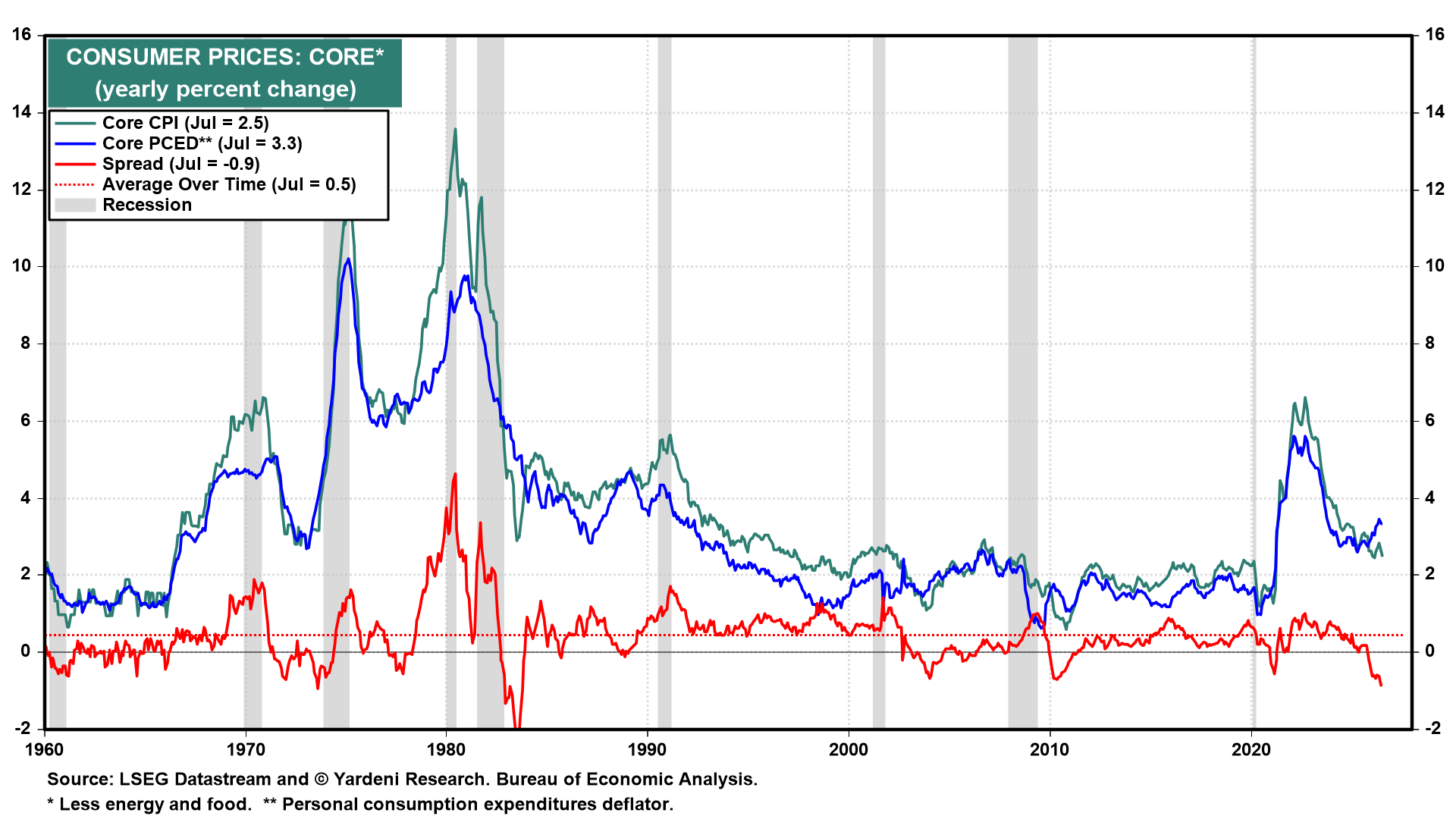
The widening wedge has two sets of drivers: some stem from structural differences between the indexes, and others reflect price dynamics unique to the current environment.
