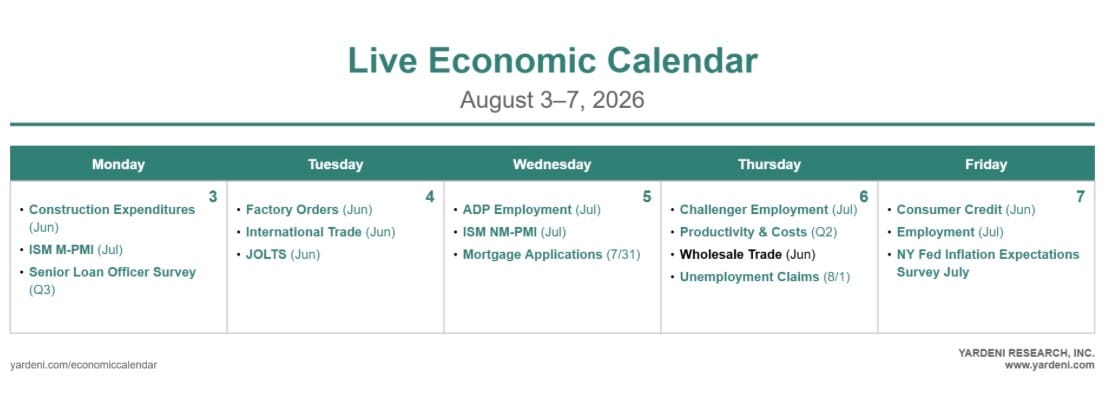
After a week dominated by the Fed news, Q2's GDP release, and four Mag-7 earnings reports, the week ahead is jam-packed with labor market data, capped by Friday's employment report. Fedspeak resumes as well, with Governor Lisa Cook and SF Fed Bank President Mary Daly both speaking on Wednesday. They were not among the three hawkish dissenters at last week's FOMC meeting. So it will be interesting to see which way they lean. That might give the financial markets some forward guidance, which Fed Chair Kevin Warsh refuses to do!
There will also be some highly anticipated earnings reports this week. Palantir, AMD, Eli Lilly, and SanDisk will headline the tape. SpaceX will make its first earnings announcement as a public company on Tuesday.
Here are the key economic releases most likely to shape investors' thinking this week:
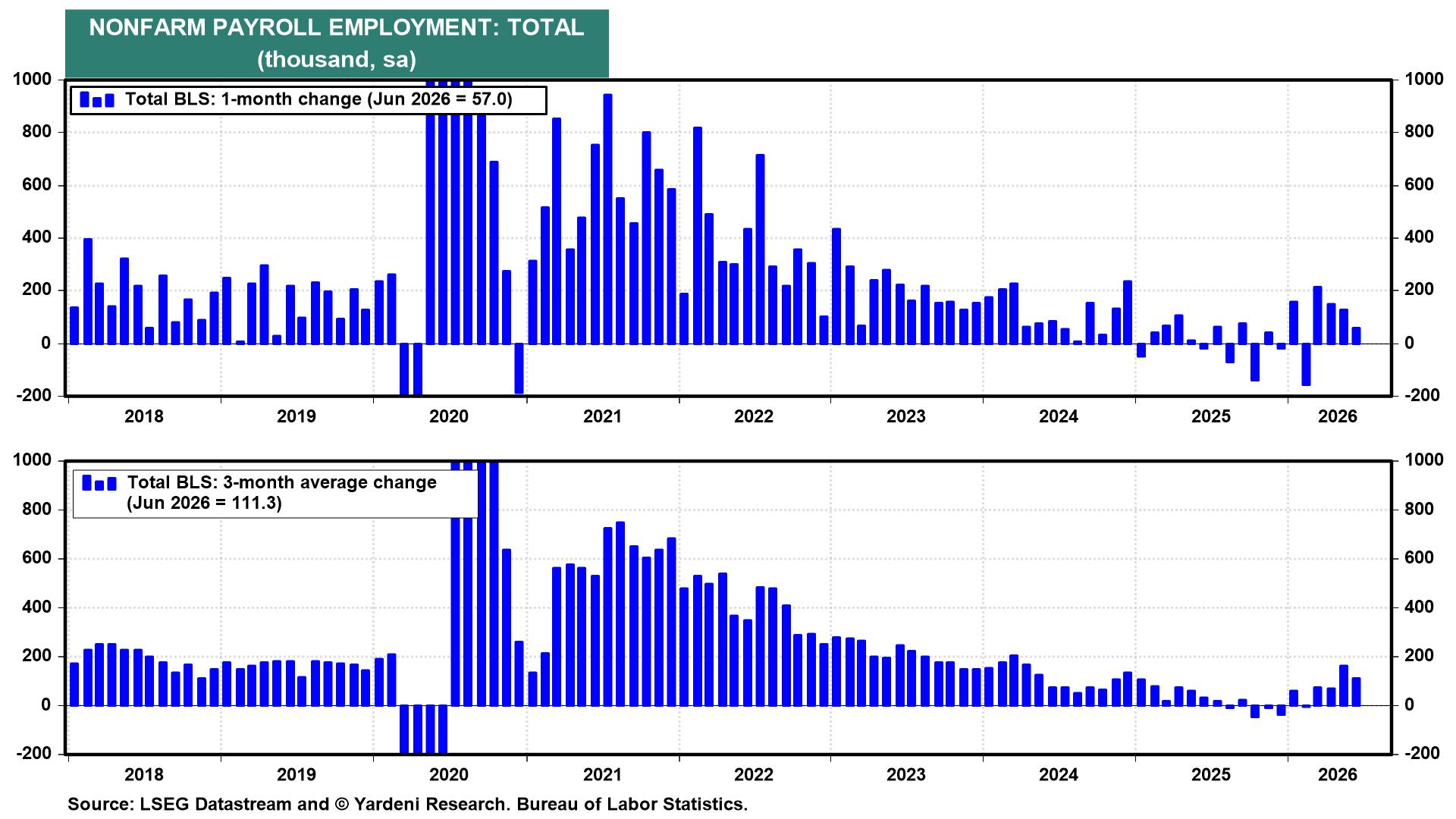
(1) Employment. July's employment report (Fri) is the headliner. Payrolls rose just 57,000 in June, roughly half the consensus of 115,000, dragging the three-month average down to 111,300 (chart). We expect July's figure to rebound. June's shortfall came almost entirely from leisure and hospitality, which shed 61,000 jobs, a seasonal quirk unlikely to be repeated in July.
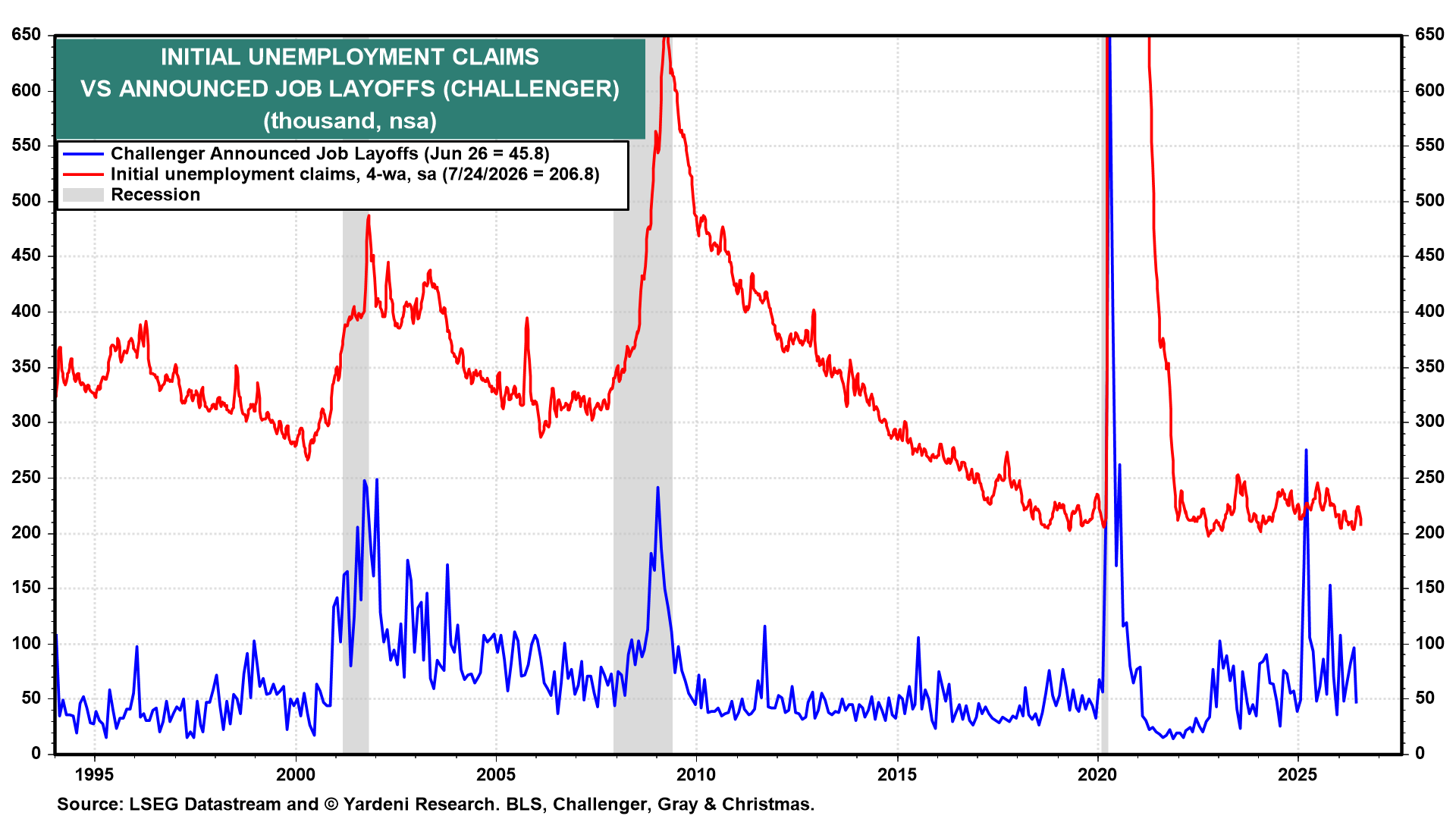
Challenger's July layoff announcements (Thu) follow June's 45,800, which is low by historical standards (chart). Layoffs remained light last month according to initial unemployment claims.
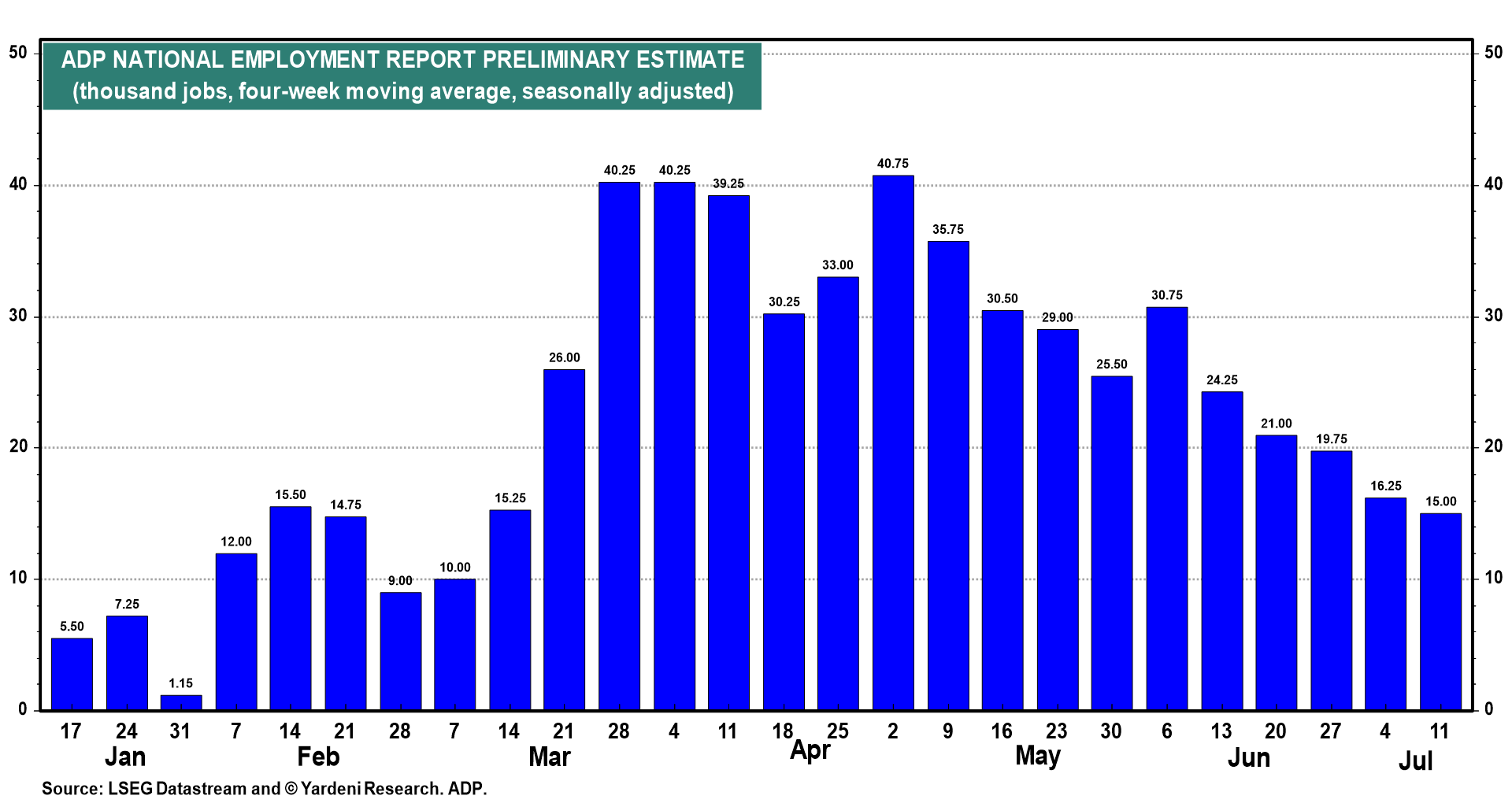
June's ADP private payrolls rose 98,000, down from May's 122,000 and below the 110,000 consensus, with services jobs accounting for 96,000 of the gain. July's ADP report (Wed) may be weaker, with ADP's weekly readings slowing for five straight weeks to a four-week average of 15,000 (chart). That would still be about 60,000 for July, around the breakeven pace needed to keep the unemployment rate from rising.
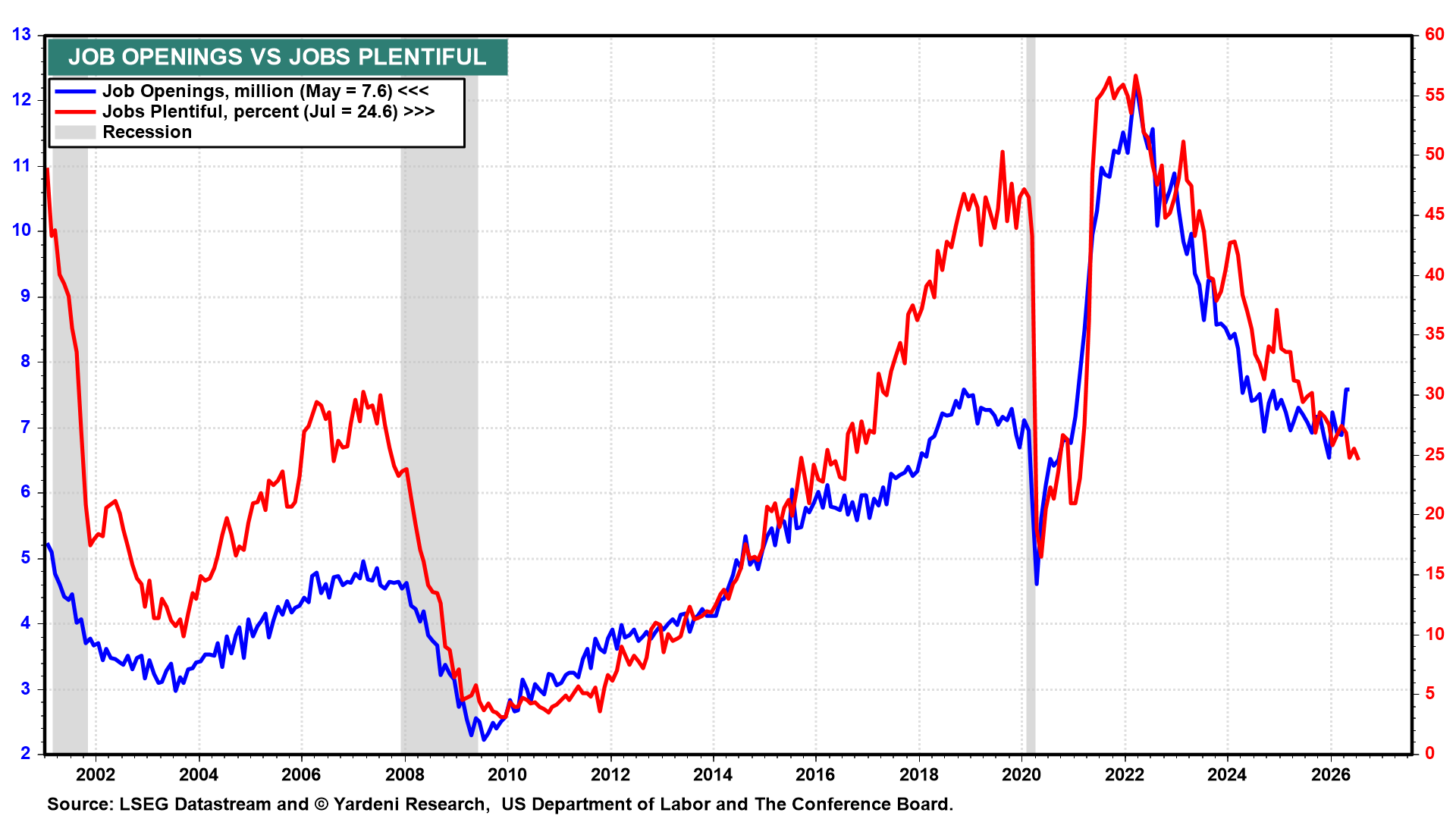
June's JOLTS report (Tue) should show some weakening in job openings, according to the "jobs plentiful" series from the Consumer Confidence Index survey for the month (chart).
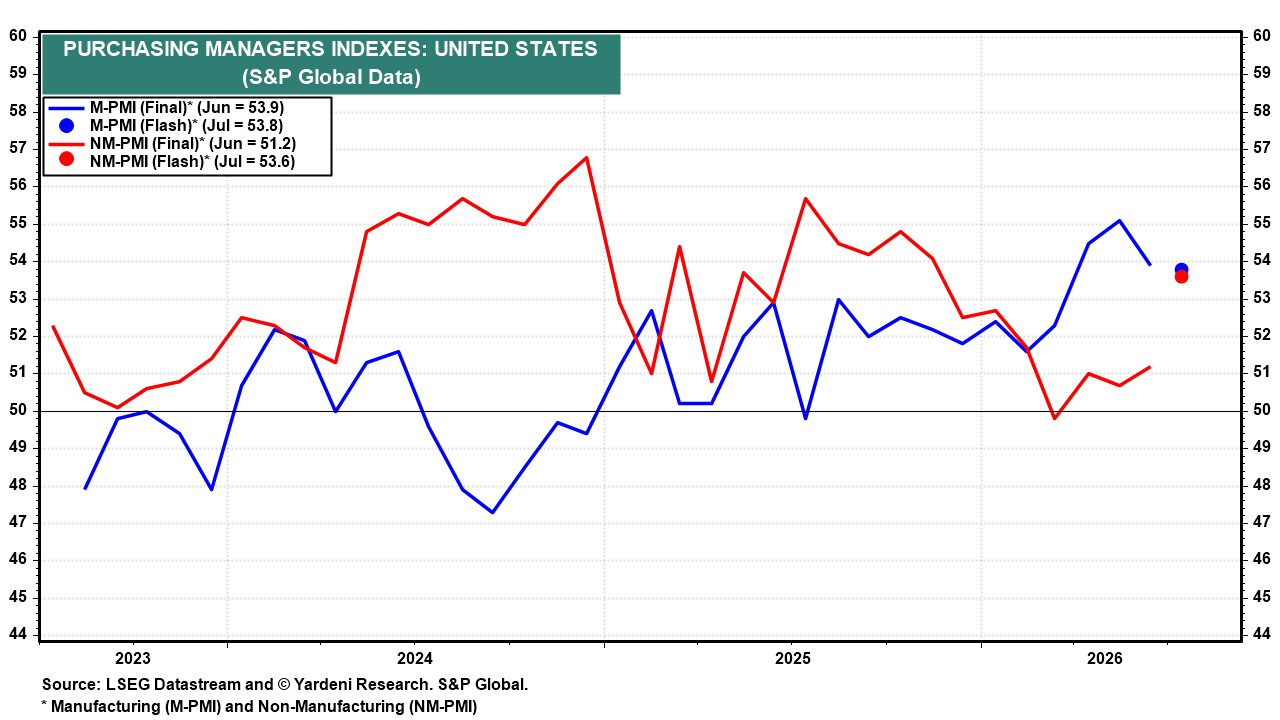
(2) PMIs. July's S&P Global PMIs showed a strong rebound in the nonmanufacturing index to 53.6 from 51.2 in June (chart). The manufacturing index remained strong at 53.8. Both suggest solid readings for July's M-PMI (Mon) and NM-PMI (Wed) compiled by the Institute for Supply Management.
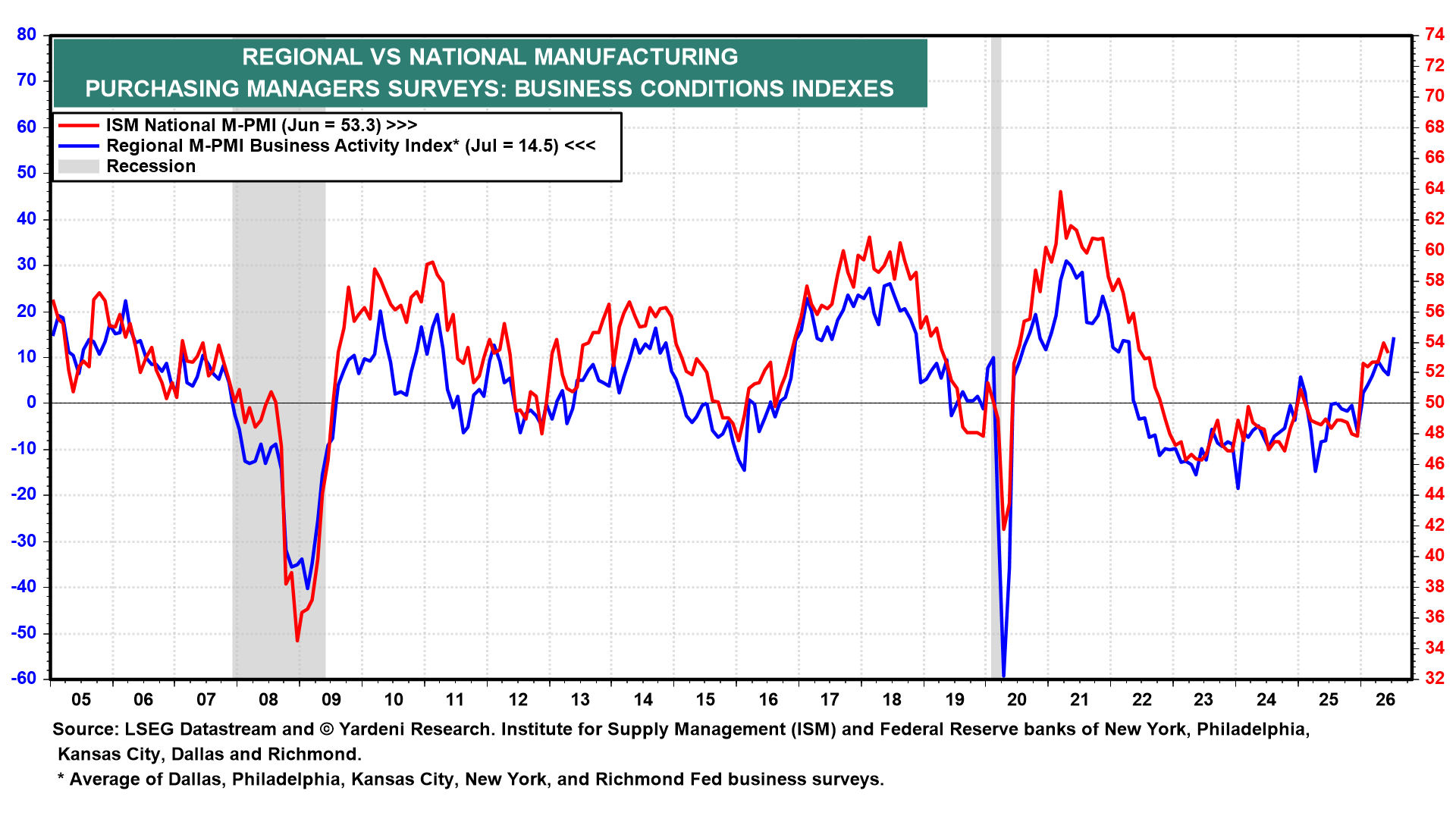
The regional business surveys conducted by five of the 12 Federal Reserve district banks confirm that a strong reading for the ISM M-PMI (Mon) is likely (chart).
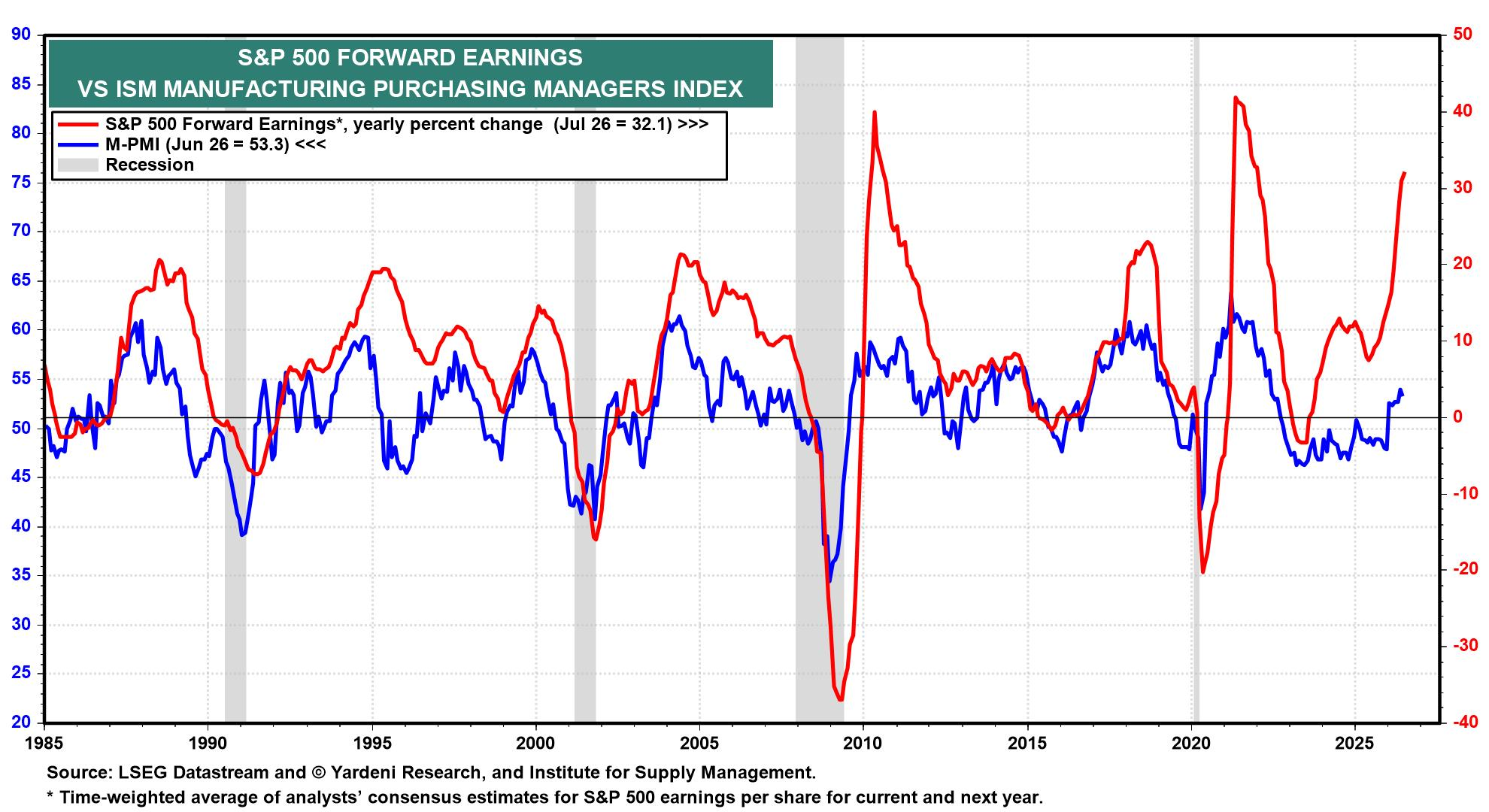
While the growth rate of S&P 500 forward earnings has been distorted by significant mark-to-market gains on investments by Alphabet and Amazon, this series is yet another reason to expect a strong reading in the M-PMI (chart).
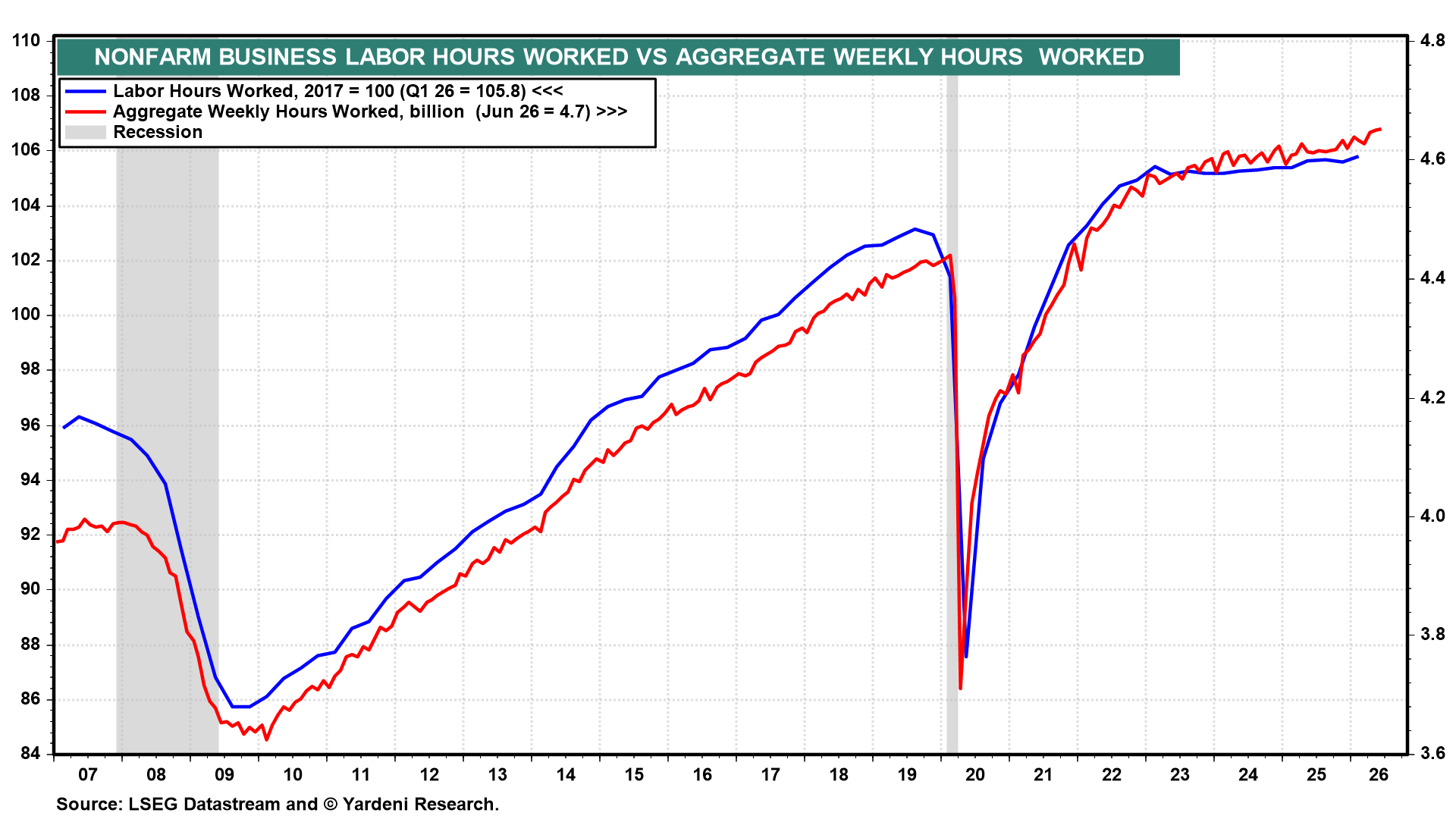
(3) Productivity & labor costs. Q2 productivity growth (Thu) might be on the weak side given that aggregate weekly hours worked rose at a faster pace that quarter than during Q1 (chart).
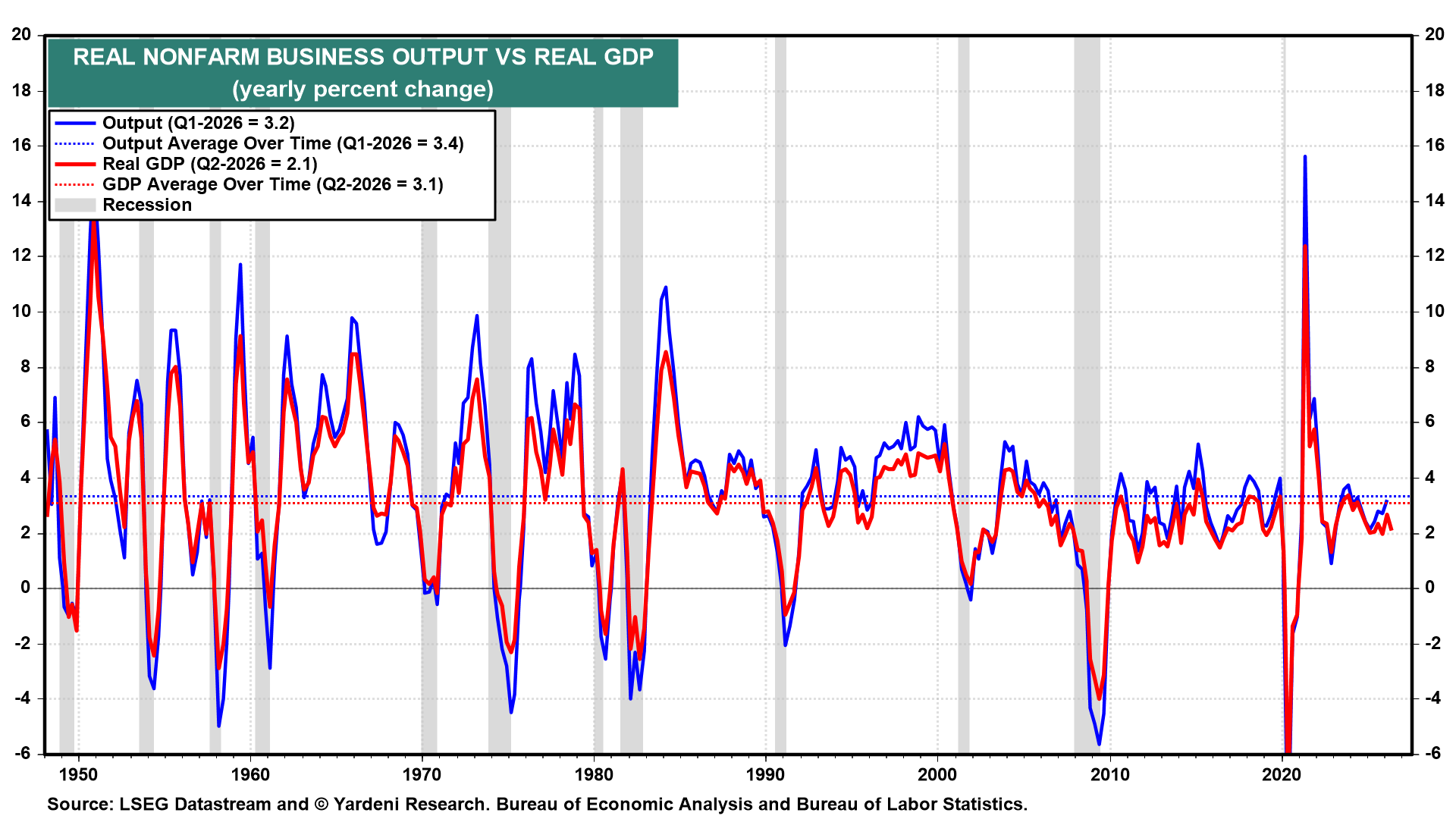
Furthermore, the growth rate of GDP was weakened during Q2 by a surge in AI-related imports. However, real nonfarm business output, which is used to calculate productivity, tends to grow a bit faster than real GDP (chart).
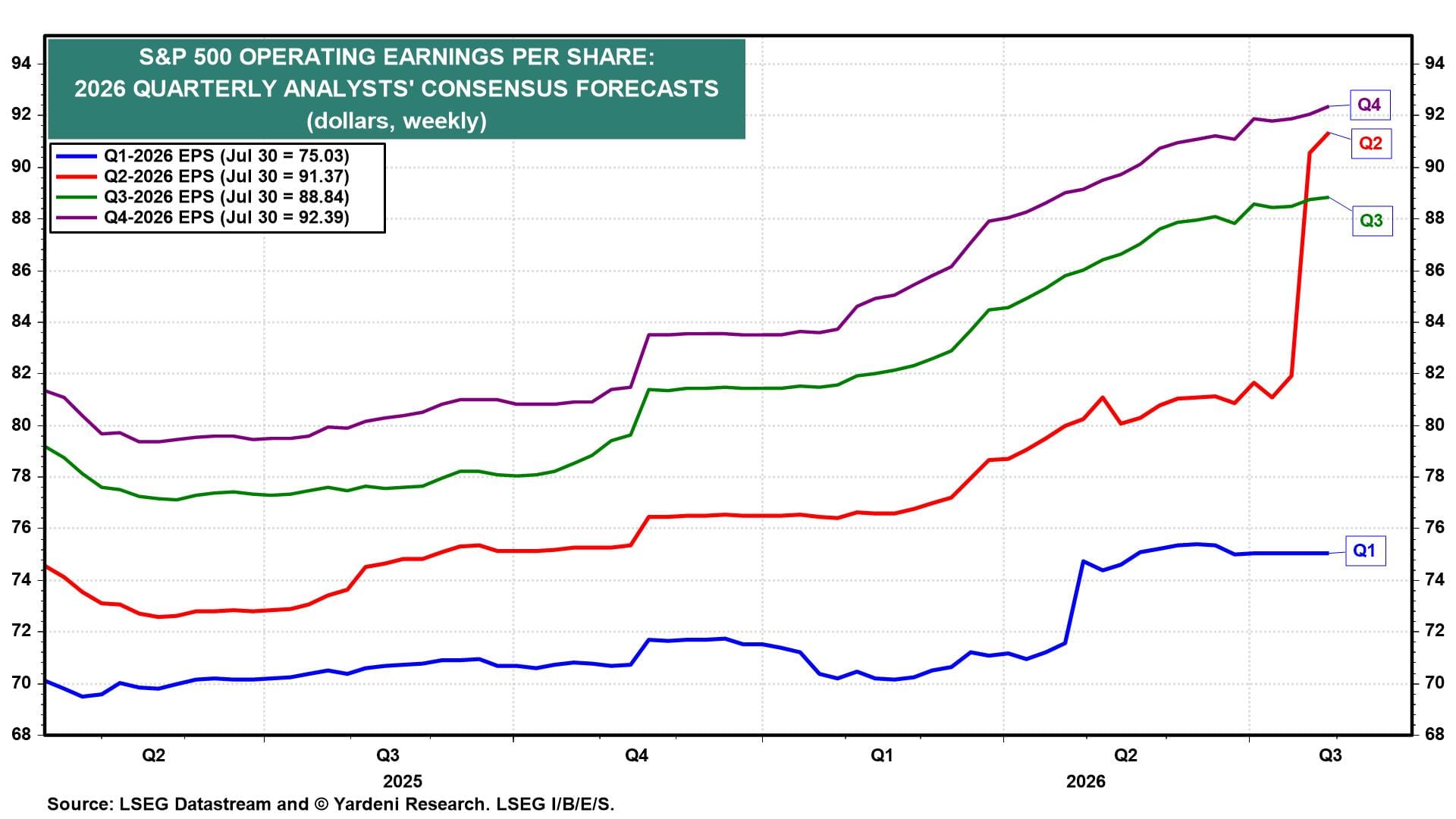
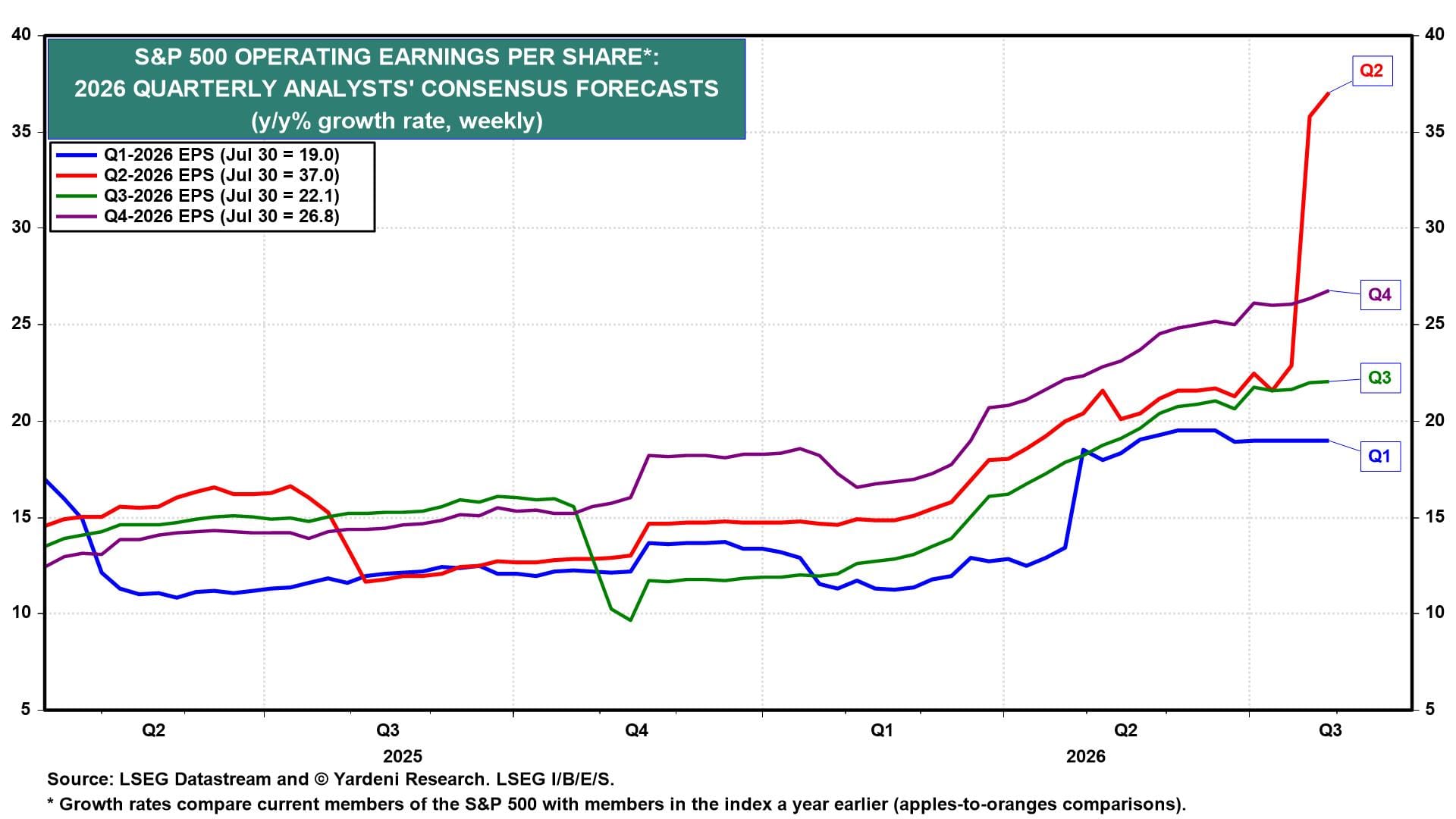
(4) Earnings. Some 71% of S&P 500 companies have now reported Q2 results, with another 15% of the index due this week. The consensus of analysts' estimates implied Q2-2026 operating EPS growth of 37.0% y/y as of July 30, up from 35.8% last week (charts). That figure includes the mark-to-market investment gains booked by a few of the Mag-7 companies. Nevertheless, estimates for Q3 and Q4 continue to trend higher.