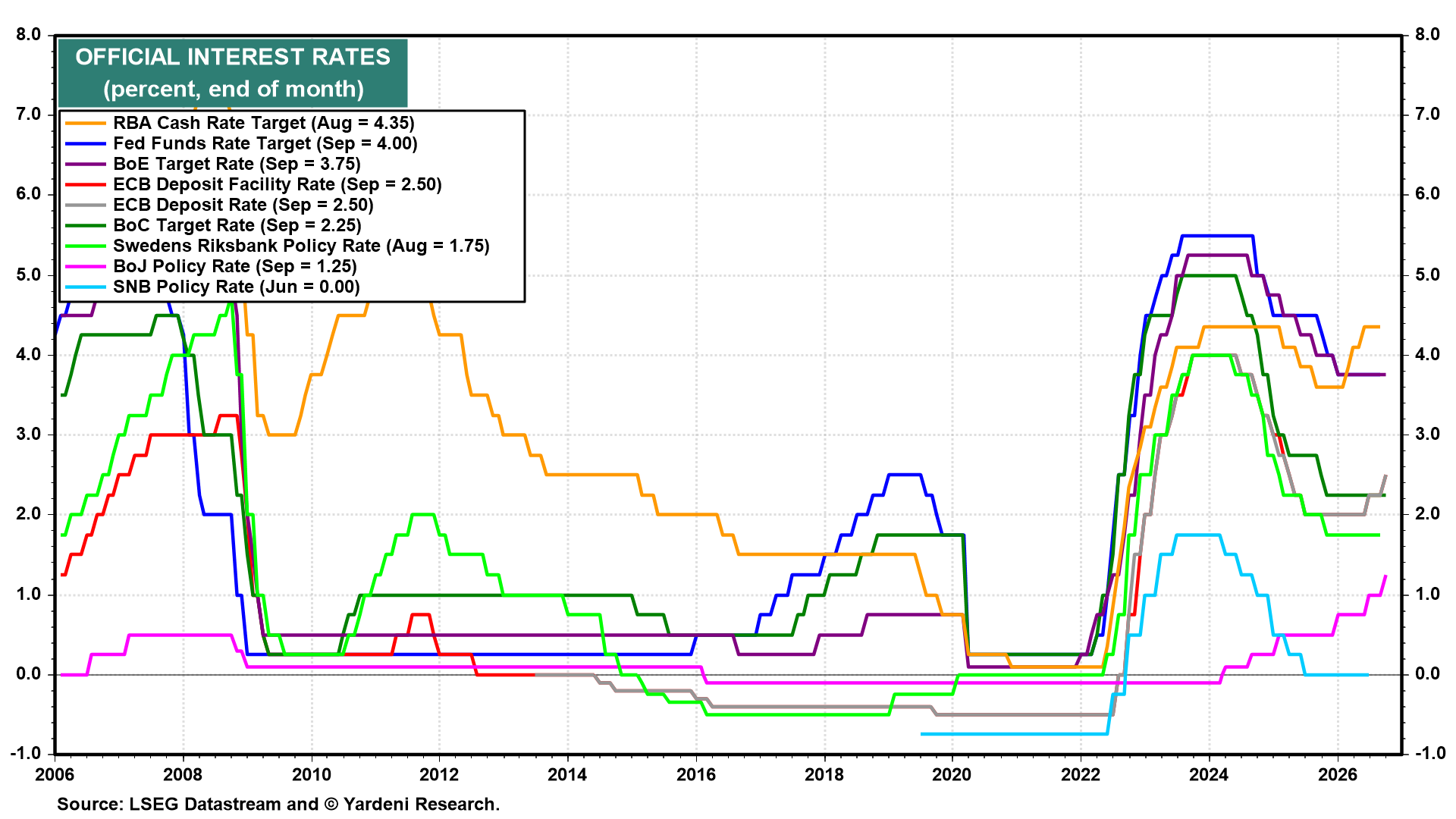
The Federal Reserve raised the federal funds rate (FFR) by 25bps on Wednesday, lifting the target range to 3.75%-4.00%. The vote was unanimous. Fed Chair Kevin Warsh cited stronger growth, insufficient progress on inflation, and rising geopolitical risk as reasons for the move. The Fed's updated projections show inflation not returning fully to target until 2029, while growth and employment forecasts improved. Global bond yields eased a bit.
President Trump hosts Chinese President Xi Jinping in Washington this week, with markets watching for progress on the export-control truce, the countries' new trade and investment boards, and the long-delayed Taiwan arms package. Attention also turns to Fedspeak, with nine officials set to hit the tape. Goolsbee, Williams, Jefferson, Barkin, Barr, Hammack, Paulson, Bowman, and Schmid are all on the calendar.
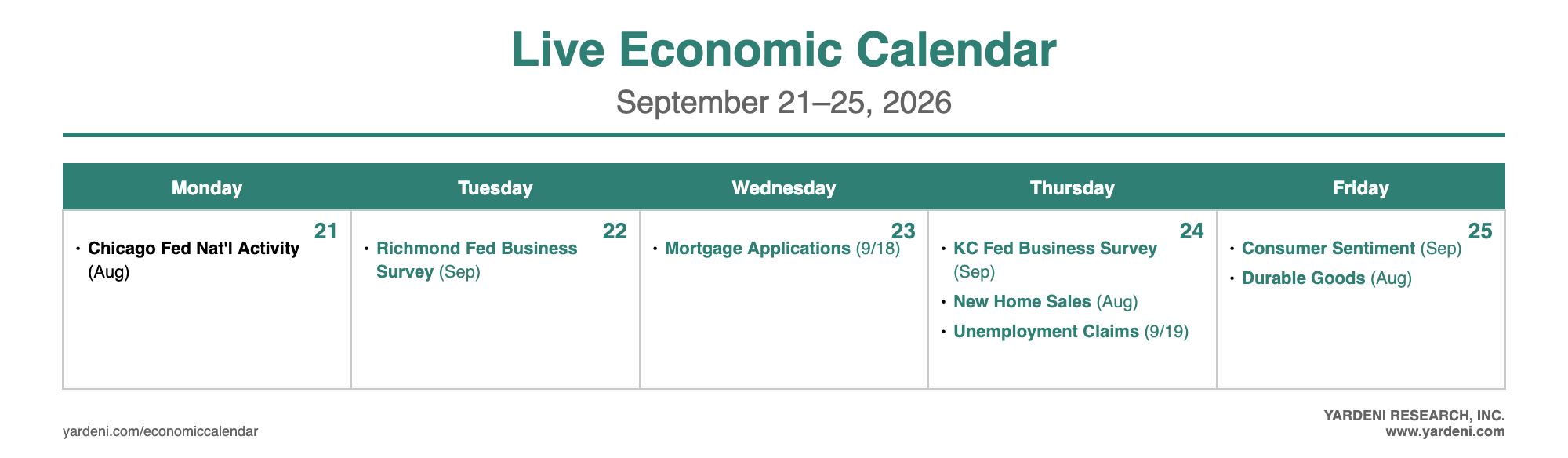
It's a light week for economic data. Unemployment claims (Thu) and regional business surveys from Richmond (Tue) and Kansas City (Thu) round out the domestic calendar. Flash PMIs (Wed) will offer an early read on September activity, both domestically and overseas. Overseas, the Swiss National Bank meets Thursday.
Here's more:
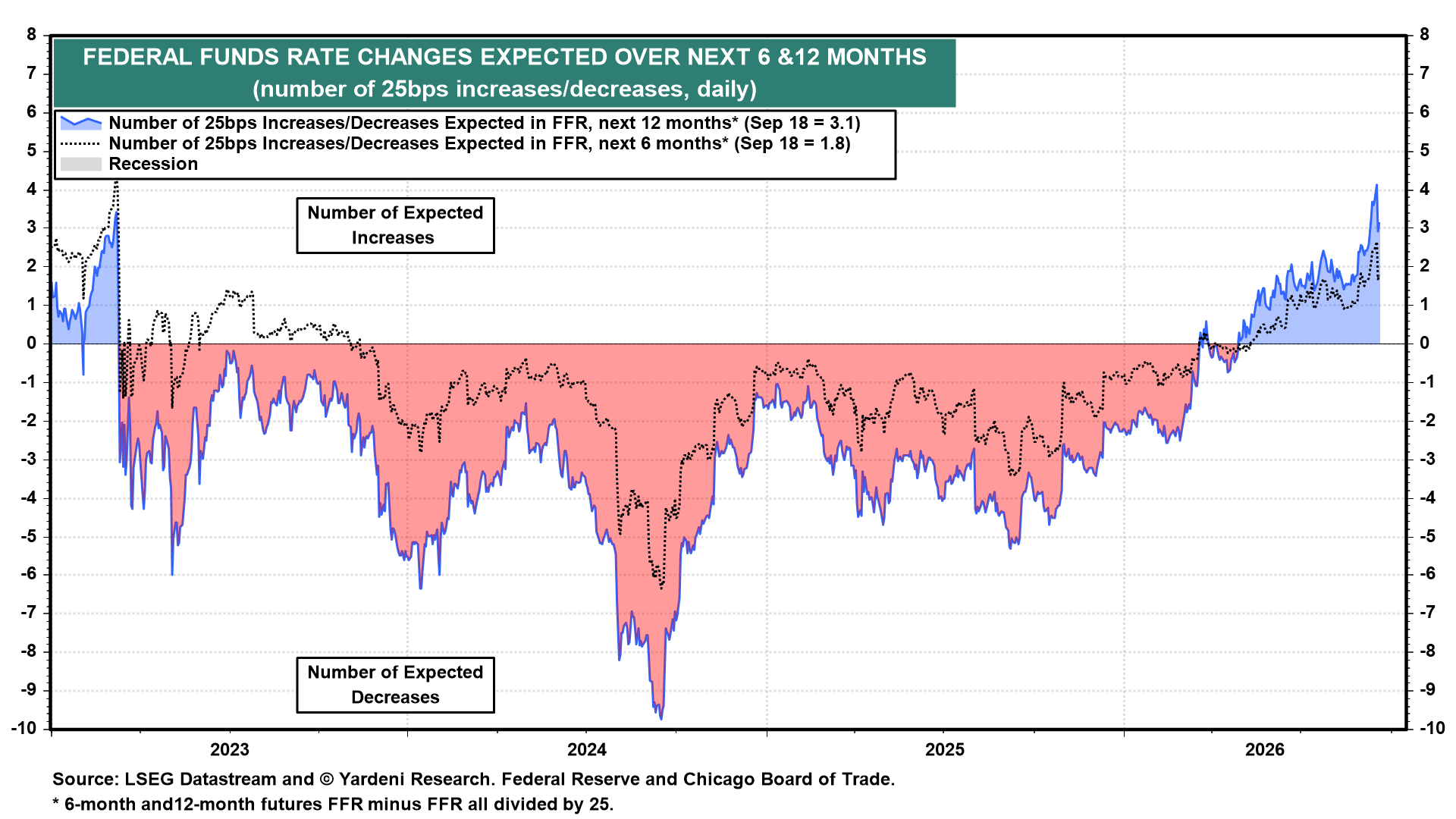
(1) FedSpeak. Fed funds futures now imply 3.1 rate increases over the next 12 months and 1.8 over the next six (chart). The odds of an October hike stand at roughly 58%, against 42% for a hold. The odds of hikes at both the October and December meetings are at 44%. With October hike odds still close to a coin flip, this week's remarks by the various talking Fed heads carry real weight for a potential revision of those numbers.
Kansas City Fed President Jeffrey Schmid, speaking Friday, supported this week's hike, saying elevated inflation reflects more than just oil prices, with a broad range of goods and services also running hot. He described the labor market as balanced and growth as solid. He is not a voter on the FOMC this year.
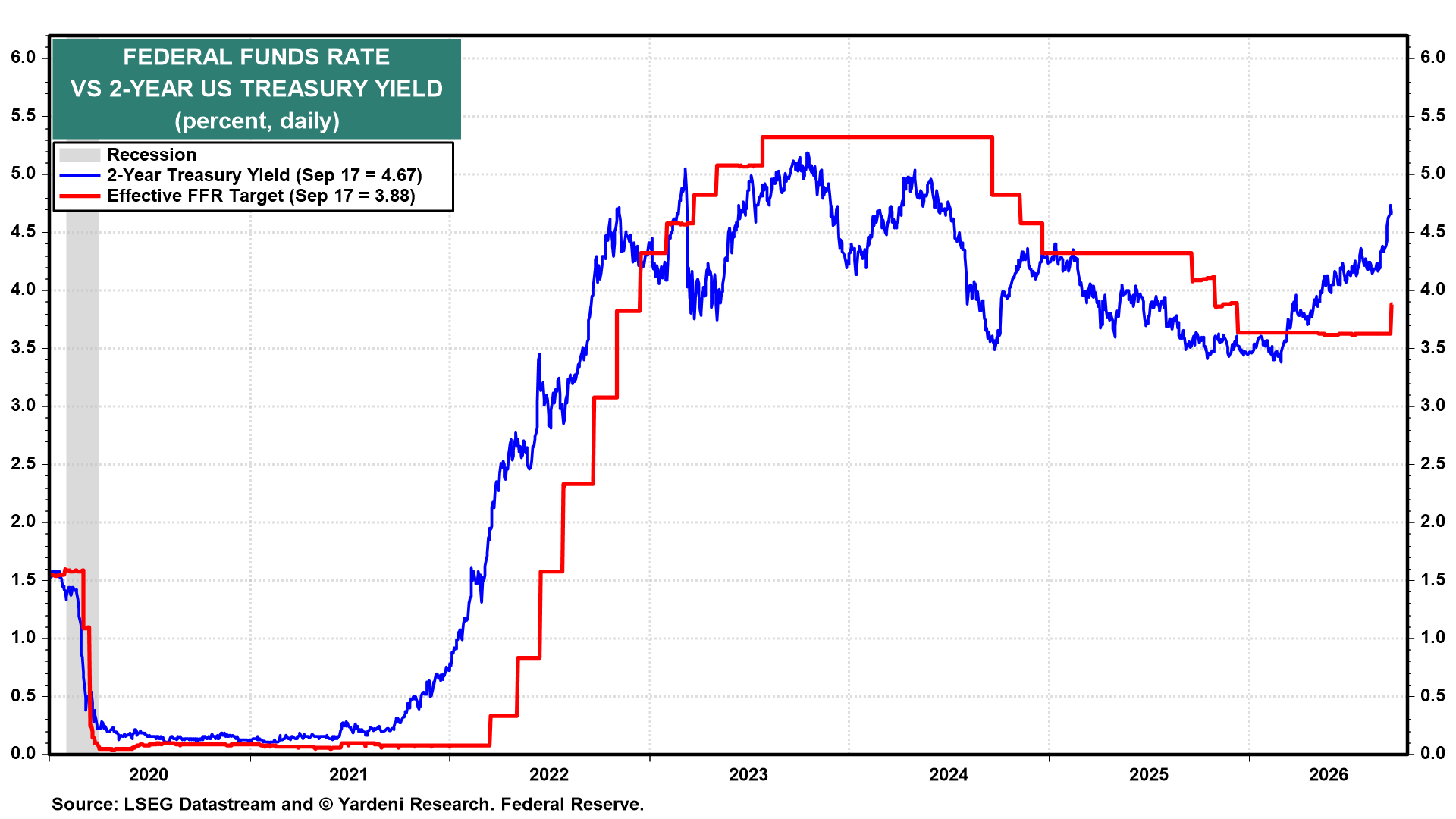
The 2-year Treasury yield climbed to 4.75% by Friday's close, up from 4.67% a day earlier, and remains well above the FFR (chart).
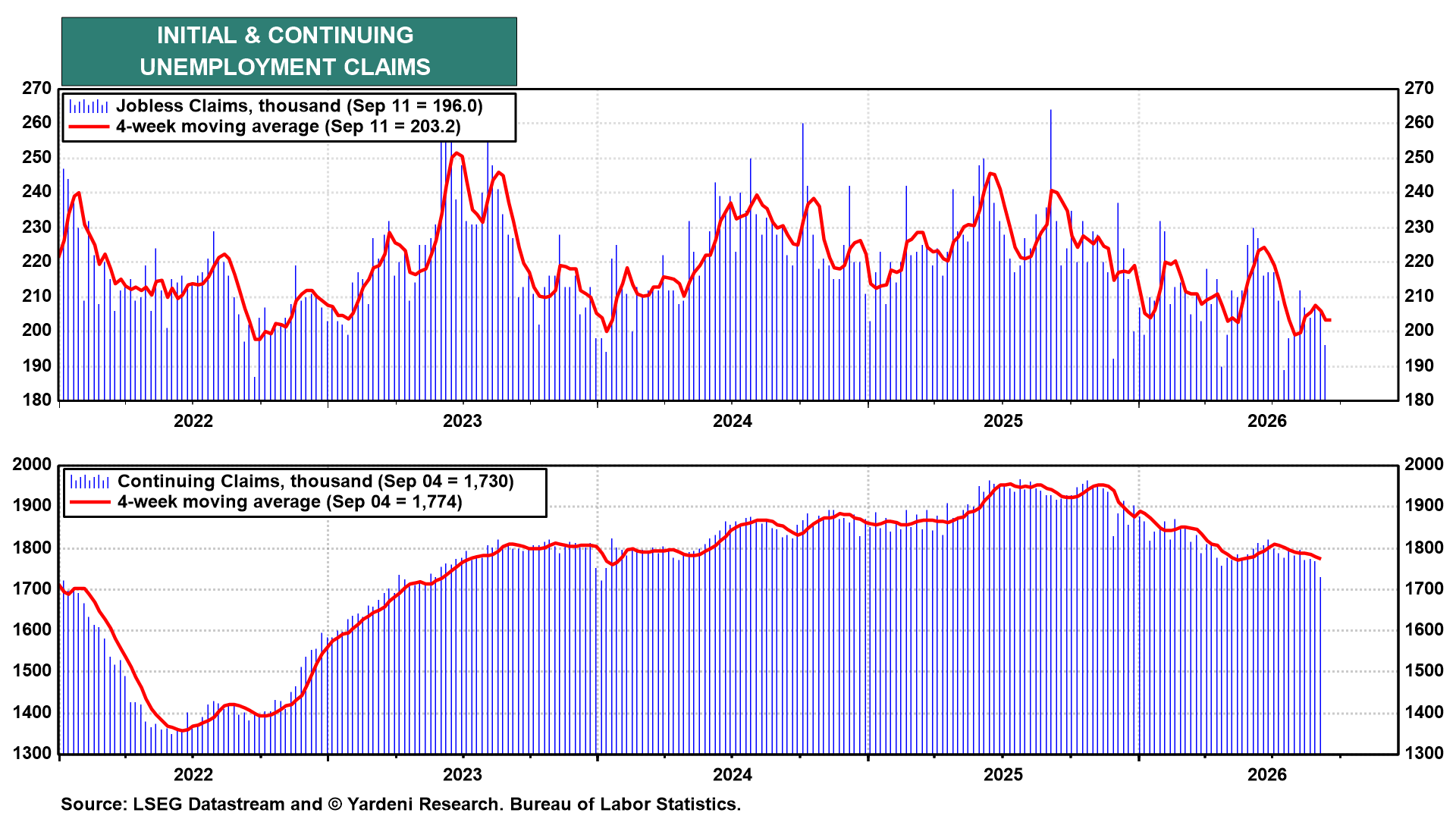
(2) Unemployment Claims. Initial jobless claims (Thu), covering the week ended September 18, follow last week's 196,000 print, the lowest since July and a break from five straight weeks above the 200,000 mark. That reading came in below the four-week average of 203,200 (chart). Continuing claims eased to 1,730,000 for the week ended September 4, with the four-week average at 1,774,000 (chart).
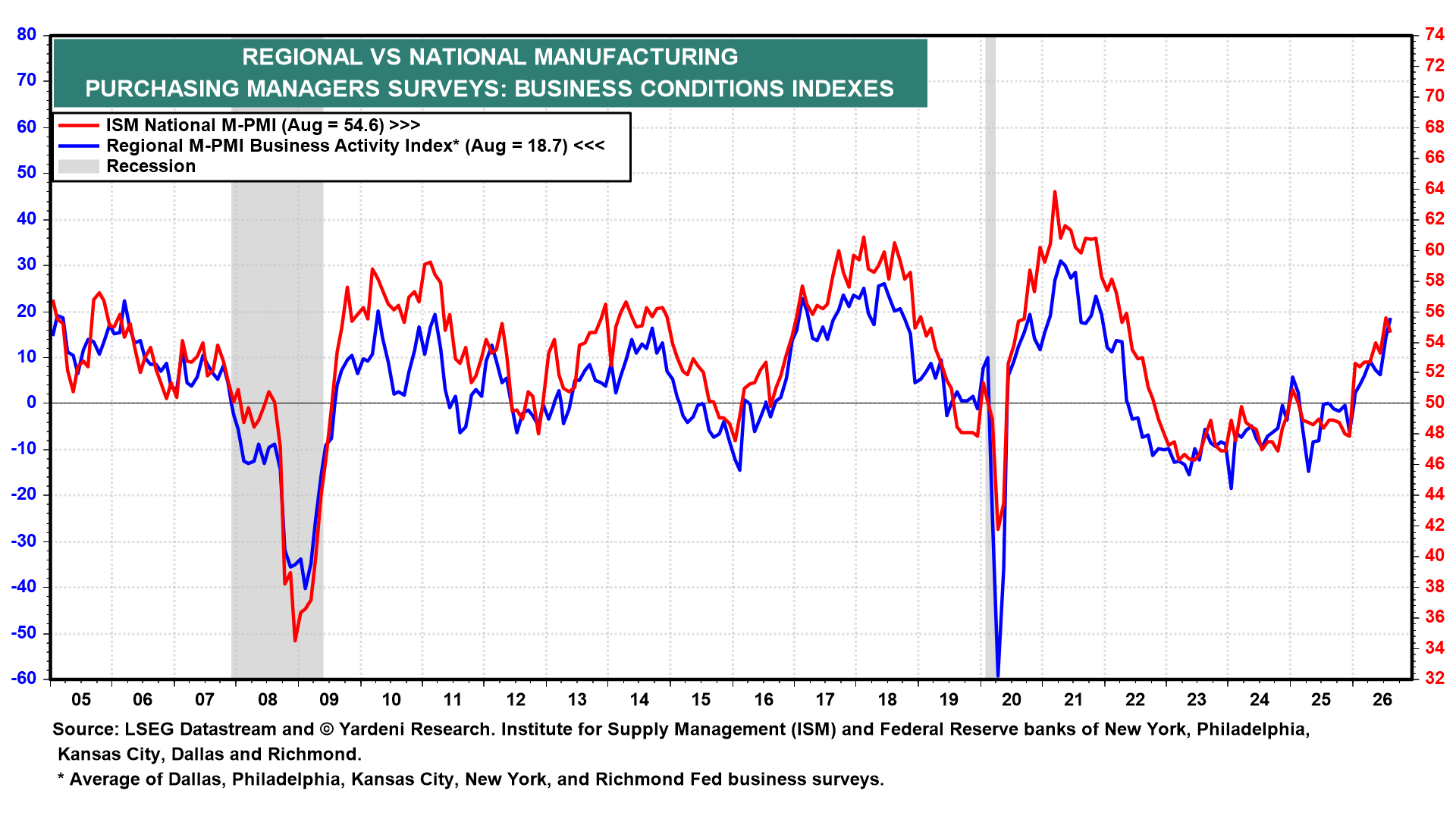
(3) Regional Business Surveys. The Federal Reserve banks of Richmond and Kansas City release their districts’ September business surveys this week. The regional M-PMI business activity index continues to track the national M-PMI, which eased to 54.6 in August from July's 55.6 (chart).
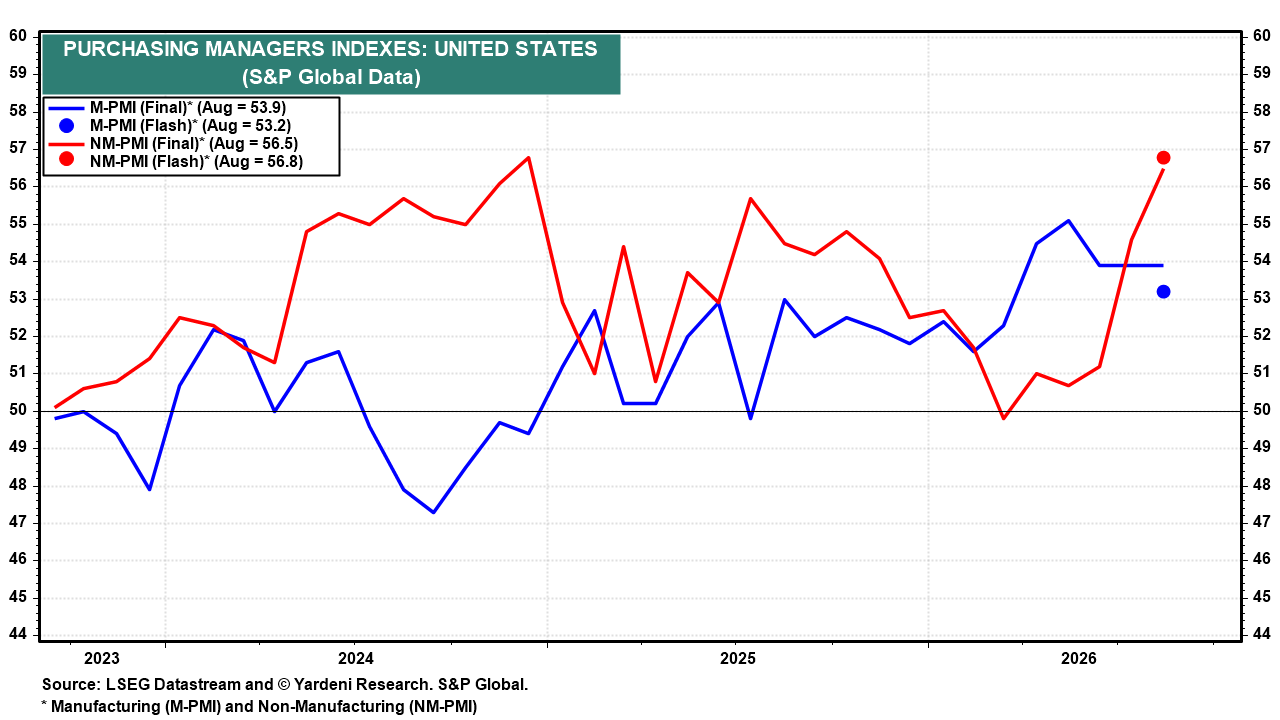
(4) Flash PMIs. According to S&P Global's survey, August's final manufacturing PMI came in at 53.9, up from a flash reading of 53.2. Services eased to a final 56.5, down from its flash print of 56.8 (chart). September's flash PMIs (Wed) are expected to ease slightly from those levels.
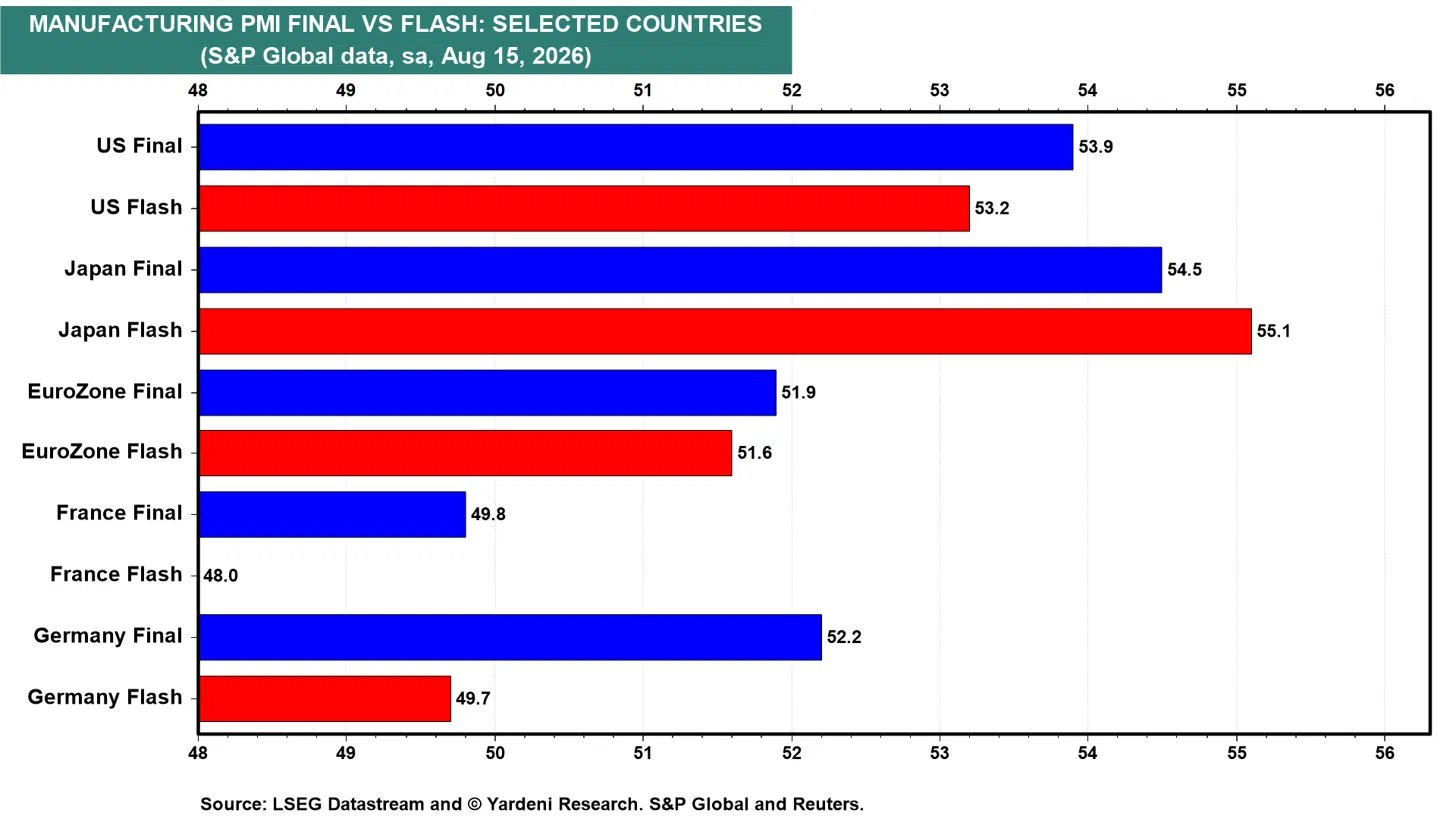
Global flash and final manufacturing readings tracked closely in August. Japan's flash reading led at 55.1, while France's lagged at 48.0 (chart).
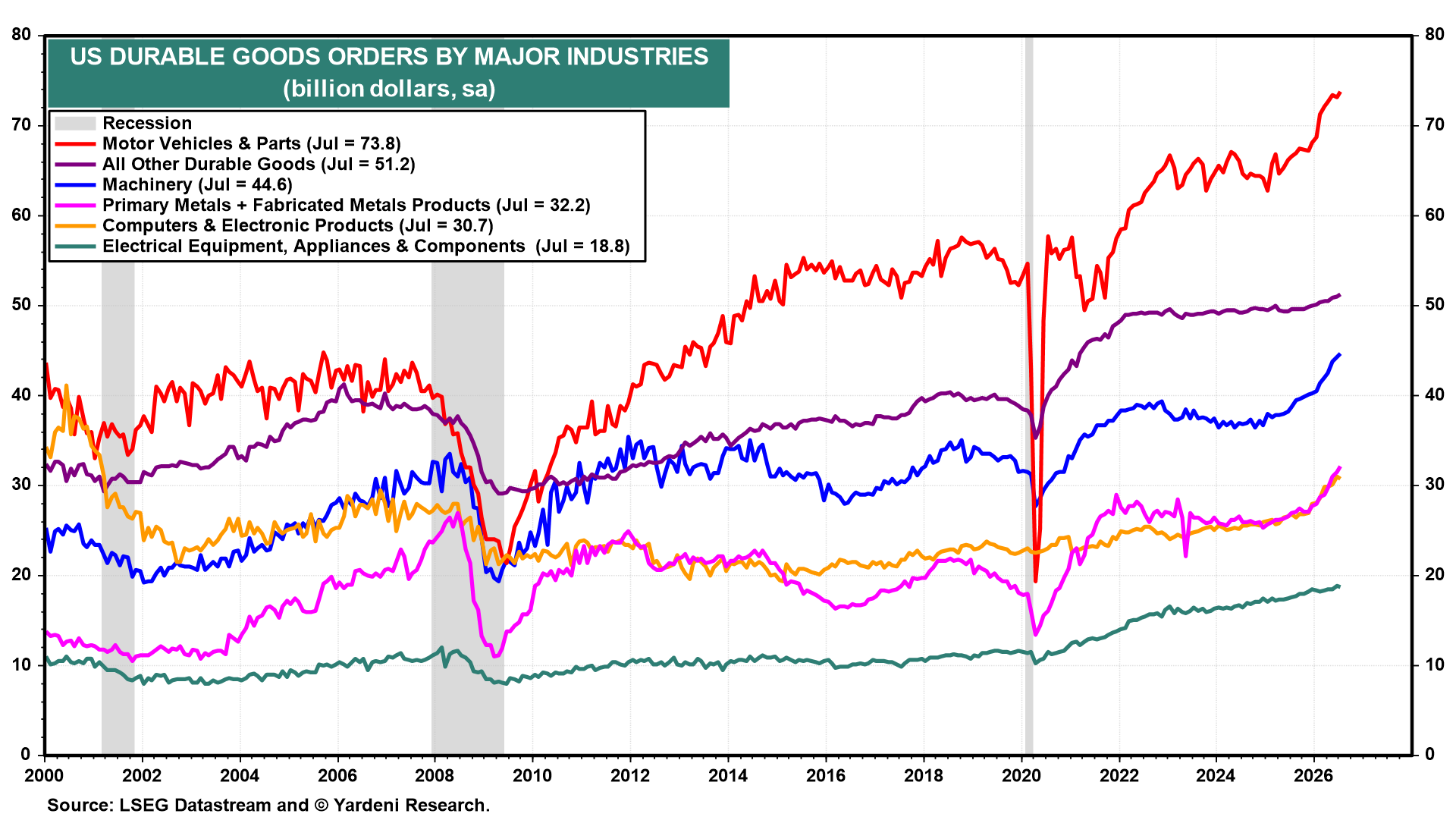
(5) Durable Goods Orders. August's new orders for durable goods (Fri) likely rose to yet another record high as a result of the AI capital spending boom. Most of the major durable goods industries are benefiting from the AI buildout (chart).
(6) Global Interest Rates. The Swiss National Bank (Thu) is expected to hold its policy rate at 0.00% (chart).