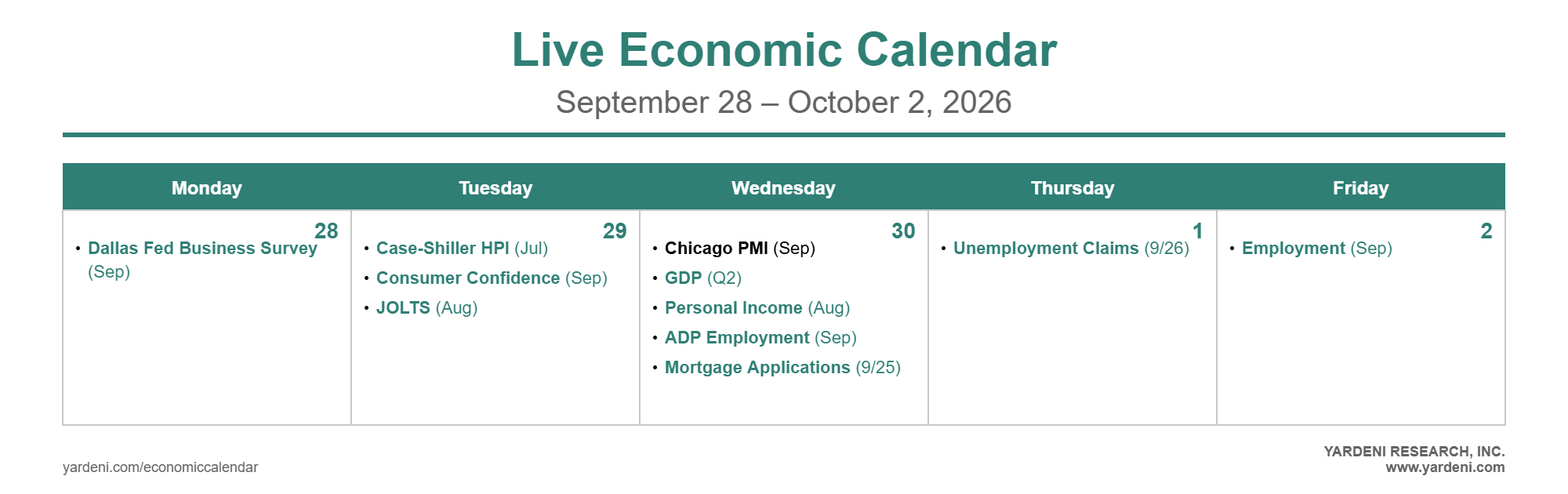
The week ahead is jam-packed with labor market data releases, capped off by September's employment report (Fri). August's PCED and the third estimate of Q2 GDP arrive Wednesday, along with BEA's annual revisions, followed by ISM's M-PMI on Thursday.
FedSpeak continues, with Richmond Fed President Tom Barkin, Governor Lisa Cook, Chicago Fed President Austan Goolsbee, Minneapolis Fed President Neel Kashkari, and New York Fed President John Williams among those scheduled to speak. They will likely weigh in on September’s FOMC rate-hike decision and the recent rise in global bond yields.
Overseas, the Reserve Bank of Australia will issue the week's only scheduled interest-rate decision. China's official PMIs and flash Eurozone inflation figures are also due out, with European Central Bank President Christine Lagarde making several public appearances. Micron reports earnings on Wednesday.
Here’s more:
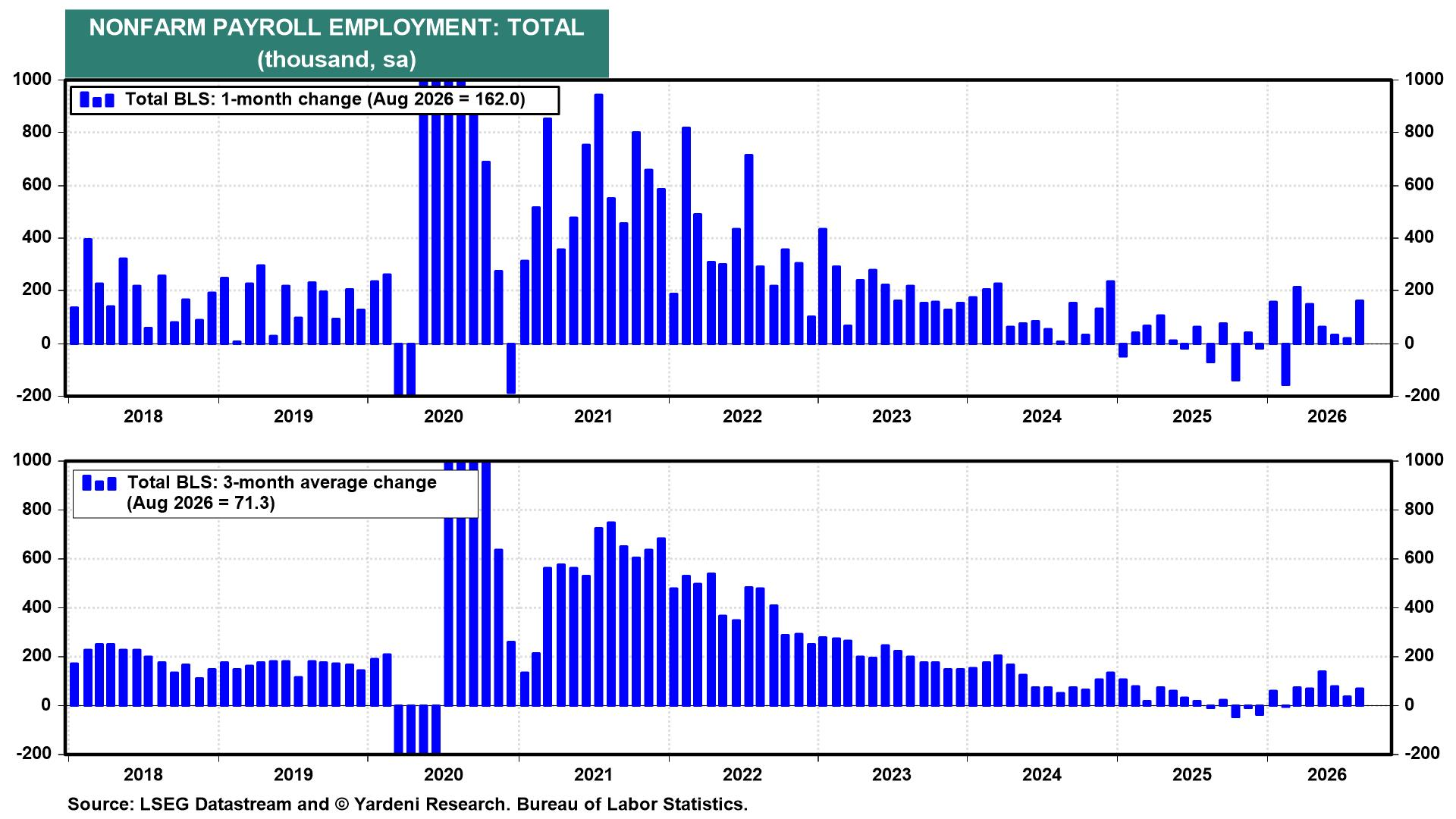
(1) Employment. September's employment report (Fri) is the headliner. Payrolls rose 162,000 in August, lifting the three-month average to 71,300 (chart). Private payrolls accounted for 127,000 of the gain, led by leisure & hospitality (62,000) and goods-producing industries (41,000). We expect a figure close to 100,000 for September.
Fed Chair Kevin Warsh said at his September 16 press conference that the unemployment rate, at 4.1% in August, is "basically running consistent with full employment." He added, "I don't believe that we need to do harm to the labor markets to achieve our [inflation] objective."
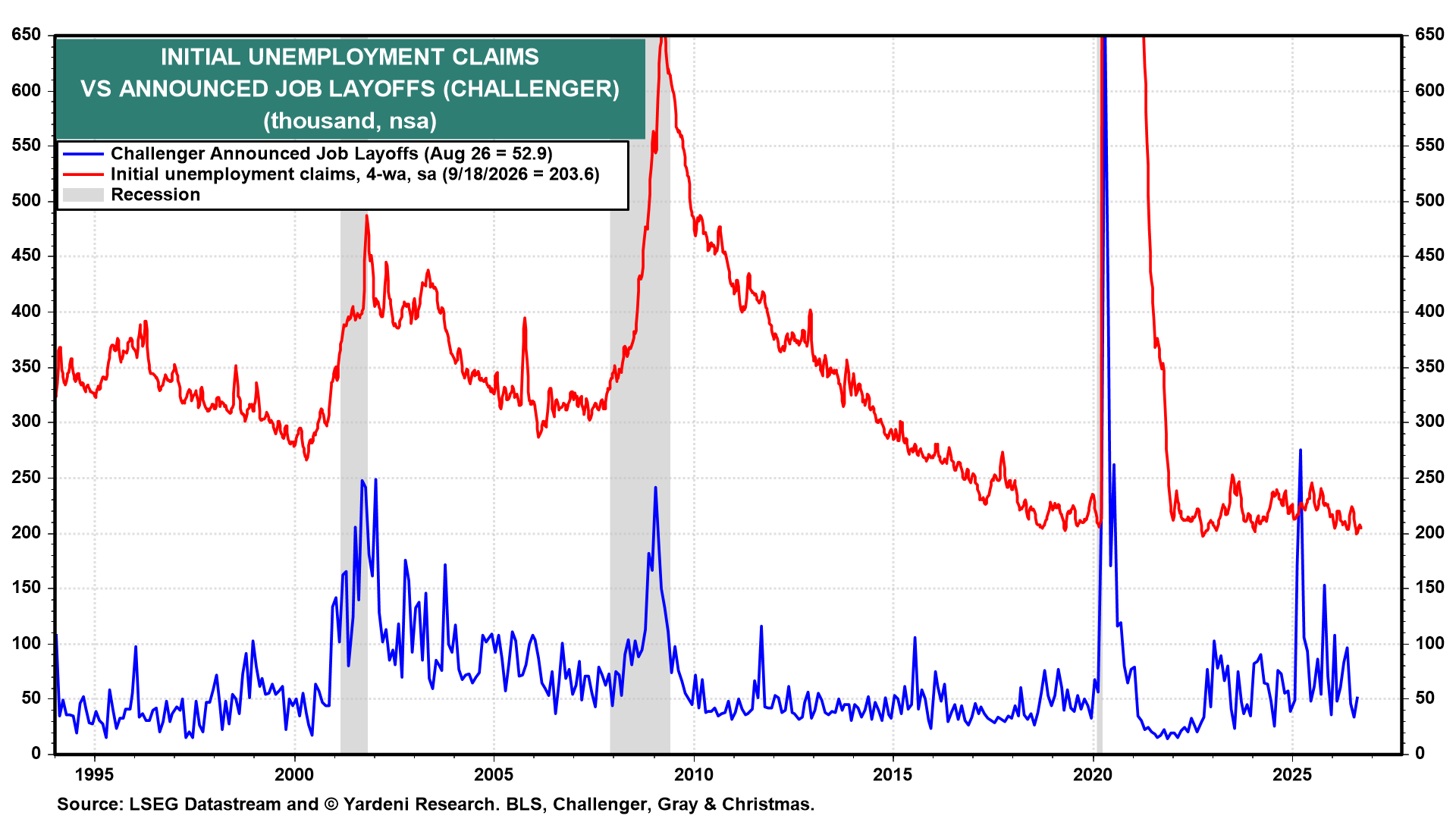
Challenger's September layoff announcements (Thu) follow August's 52,900, still low by historical standards (chart). Layoffs probably remained light last month, according to initial unemployment claims, which held at a four-week average of 203,600 as of September 18. Warsh noted that claims are running at levels consistent with full employment.
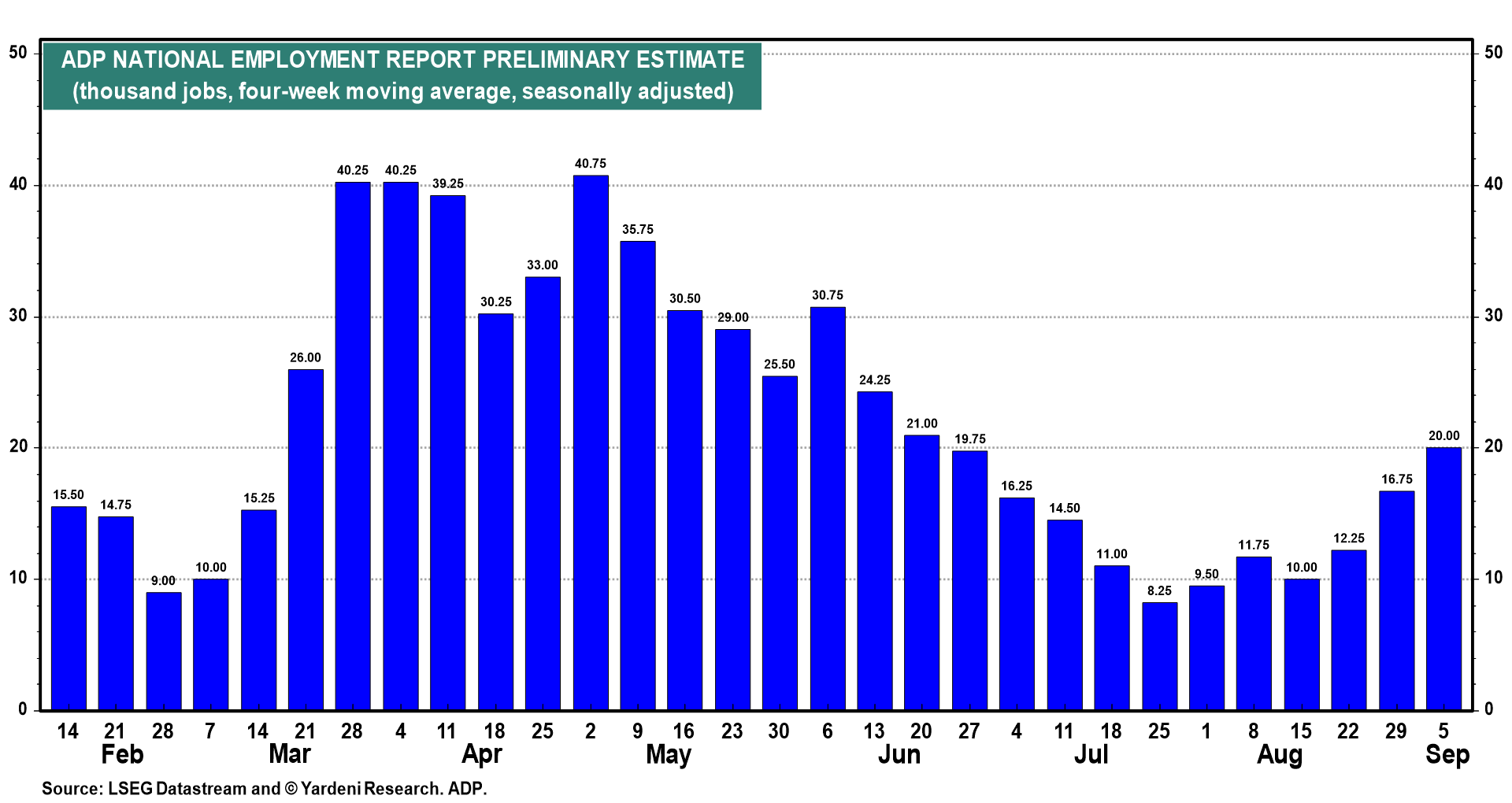
August's ADP private payrolls rose 38,000, below the 47,000 consensus and July's upwardly revised 46,000. September's ADP report (Wed) may show improvement, with ADP's weekly readings rising for three straight weeks to a four-week average of 20,000, up from a late-July bottom of 8,250 (chart). That pace equates to roughly 85,000 a month.
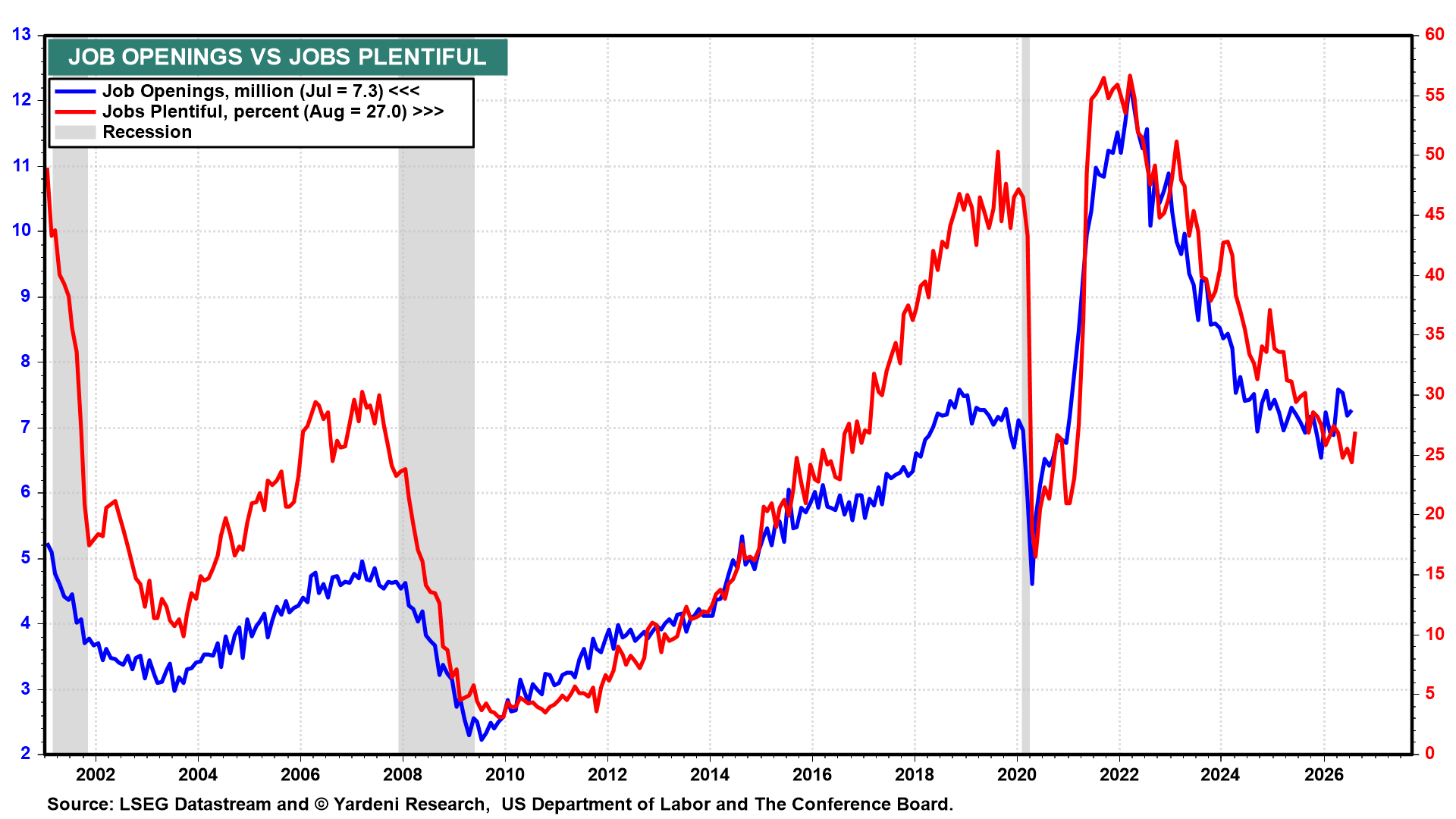
July's JOLTS data showed job openings at 7.3 million, with the share of consumers saying "jobs are plentiful" at 27.0% in August, both consistent with a stable labor market (chart). We expect more of the same in August's JOLTS report (Tue).
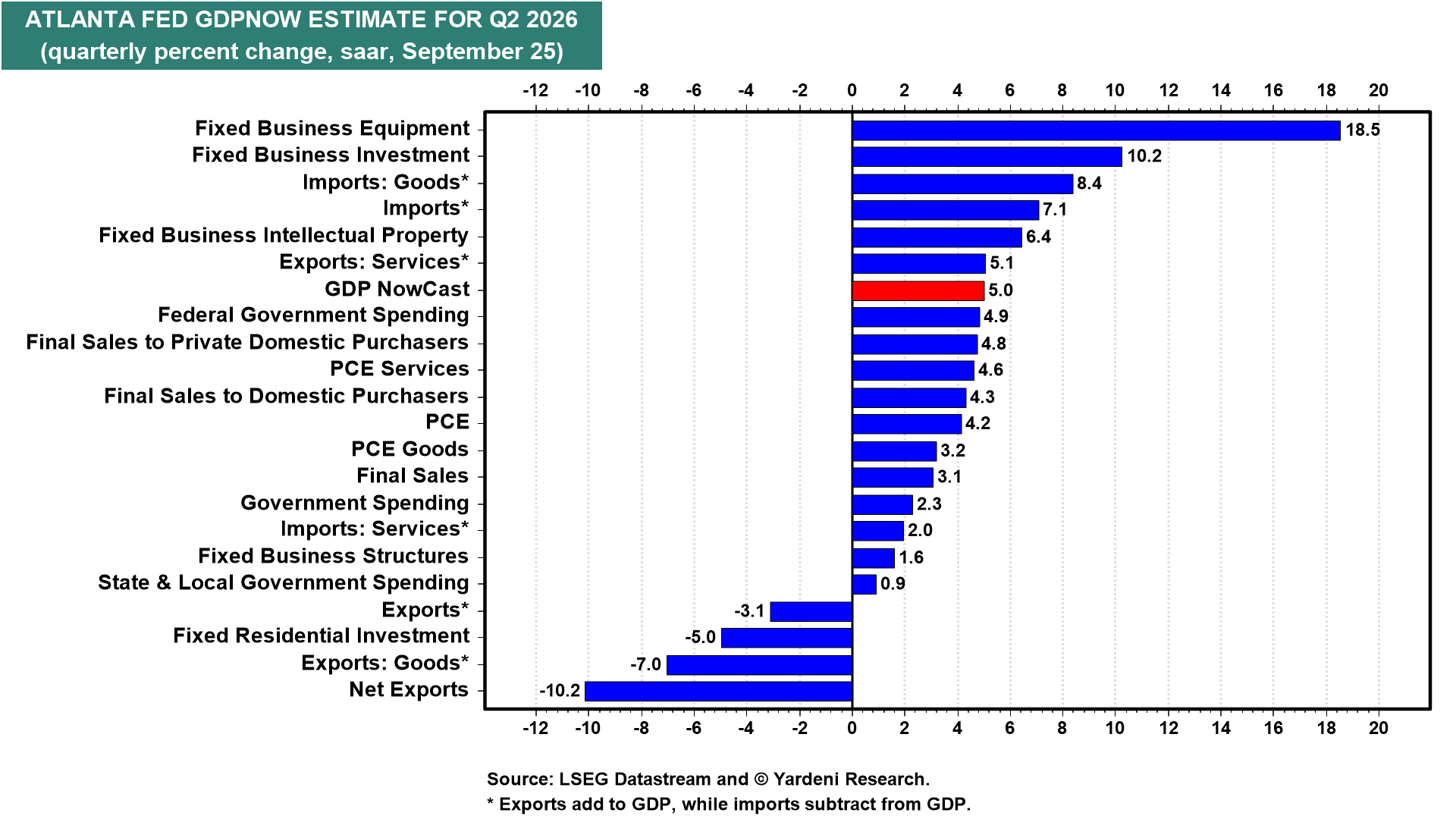
(2) GDP. The third estimate of Q2 GDP (Wed) follows the second estimate of 1.5% saar, with the GDP price index up 6.4%. It arrives with BEA's annual update, which will revise prior data. The Atlanta Fed's GDPNow model estimated Q3 growth at 5.0% as of September 25, led by an 18.5% jump in business equipment spending (chart).
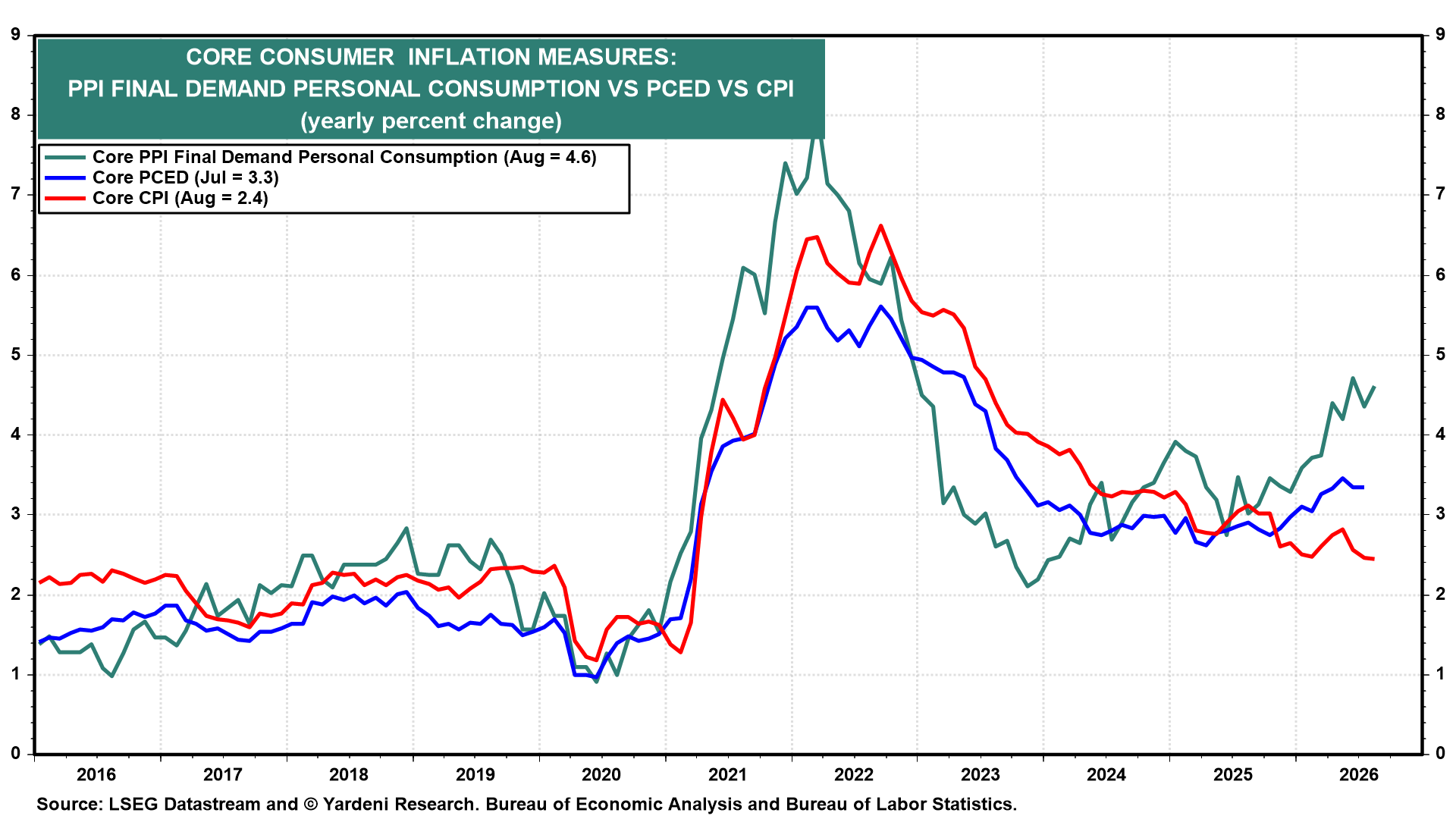
(3) PCED. August's core PCED (Wed) follows July's 3.3% y/y. That was well below August’s 4.6% pace of core PPI final demand for personal consumption (chart). The core CPI was 2.4% in August. Based on the CPI and PPI data for August, Warsh estimated August’s core PCED at about 3.2% y/y and headline PCED at about 3.6% y/y. The Cleveland Fed's Inflation Nowcasting model projects hotter readings of 3.4% and 3.8%, respectively. (The model’s m/m rates are 0.34% and 0.27%.)
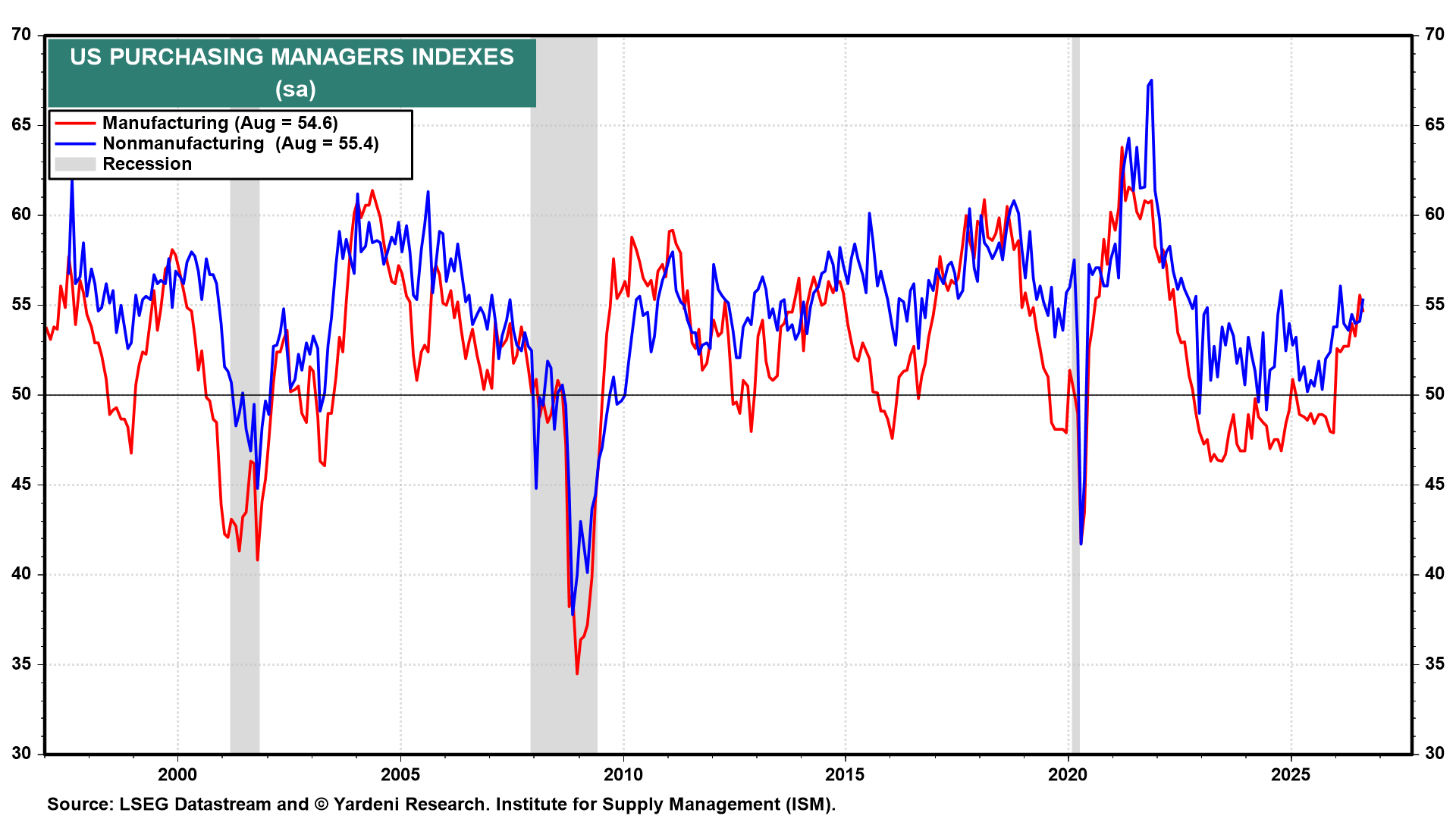
(4) M-PMI. ISM's M-PMI (Thu) was 54.6 in August, with the NM-PMI at 55.4 (chart). S&P Global's flash M-PMI for September jumped to 57.0 from 53.9, suggesting another strong ISM reading. The flash composite rose to 58.4, the strongest since July 2021. Input costs across goods and services rose at the fastest pace since October 2022.
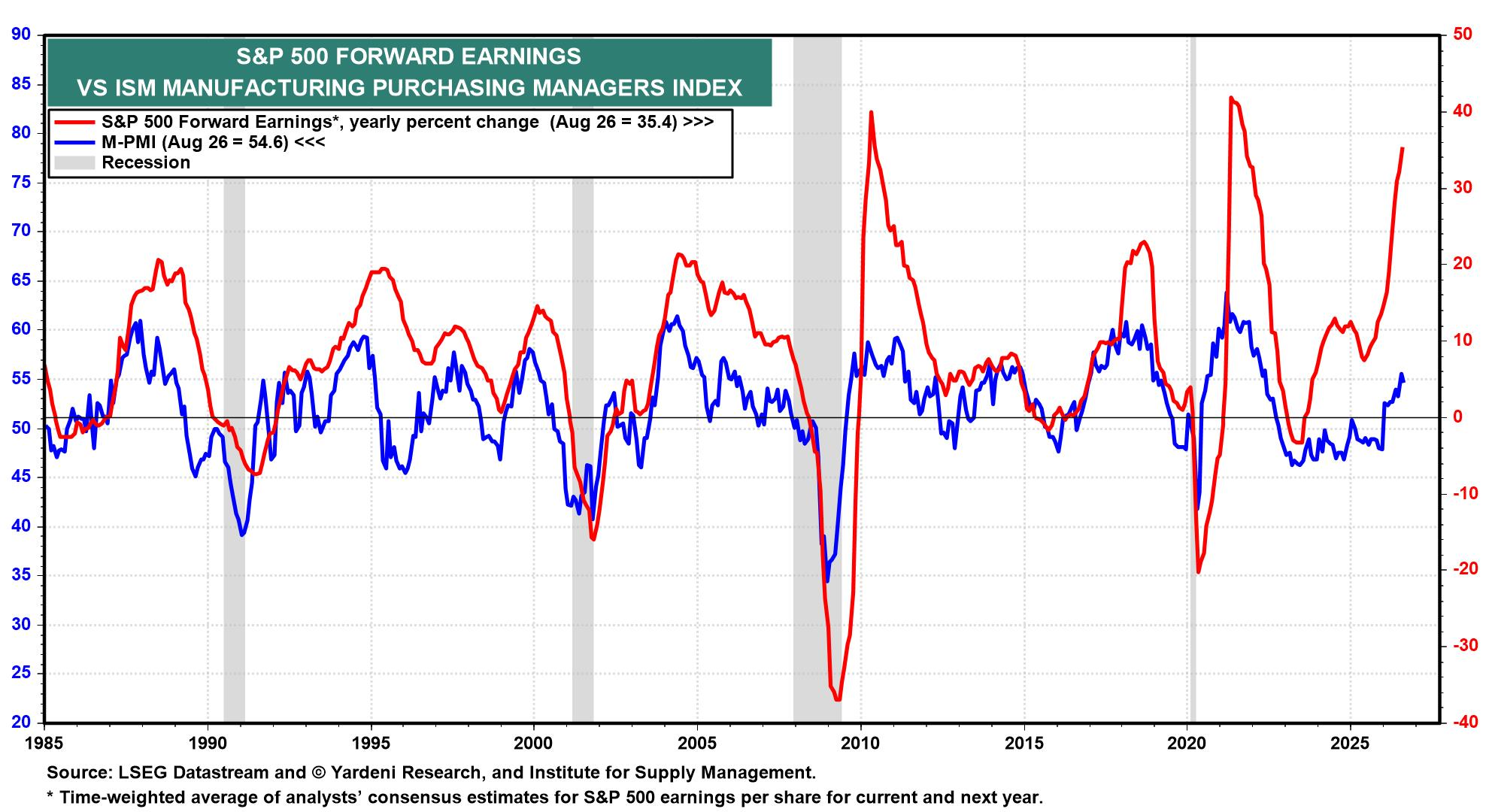
S&P 500 forward earnings continue to rise, increasing 37.2% y/y in September, suggesting more upside for the M-PMI (chart).
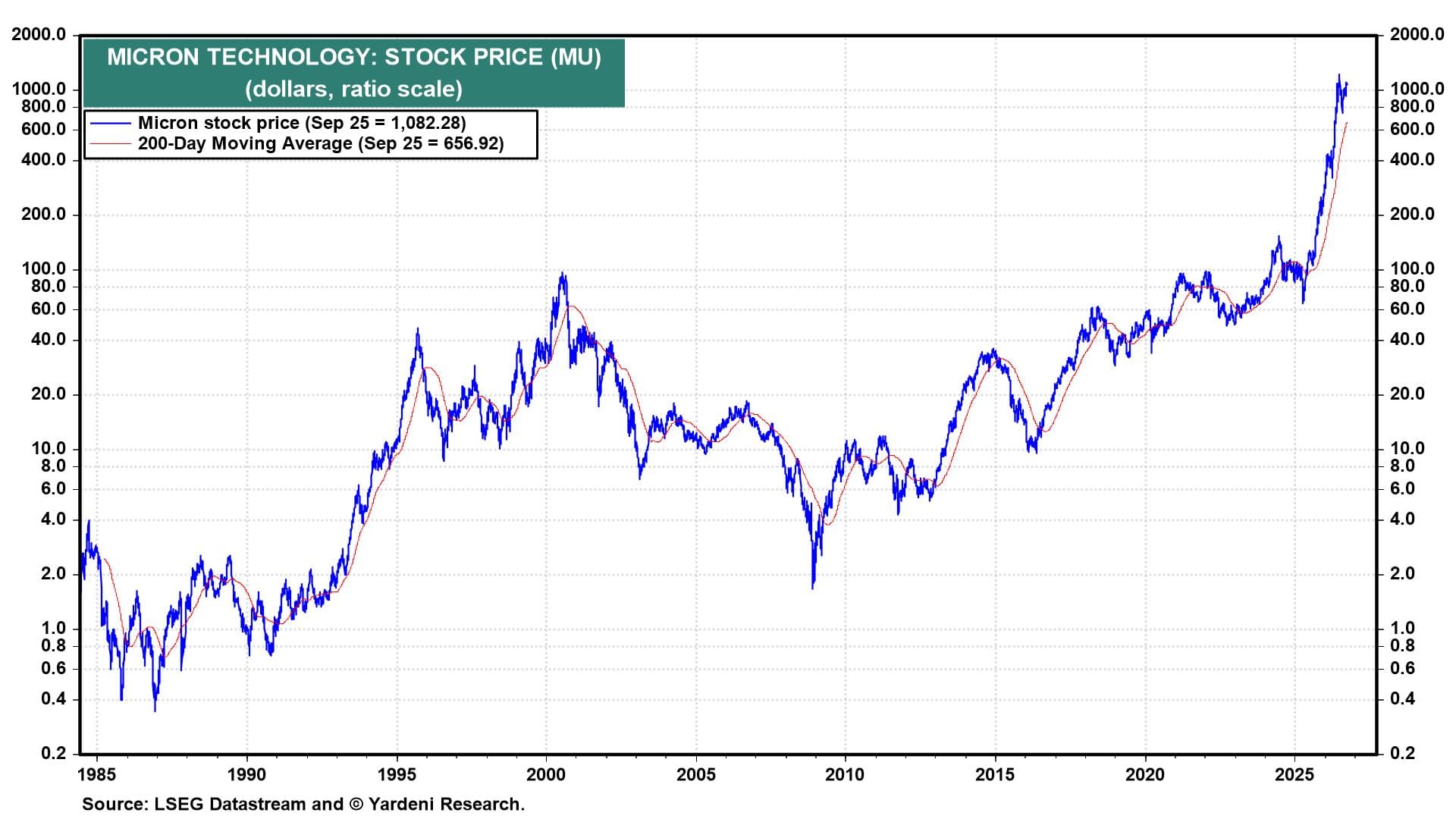
(5) Earnings. Micron reports fiscal Q4 results (Wed) for the quarter ended in August. Based on analysts’ consensus estimates, they expect revenue of $50.8 billion, up from $11.3 billion a year ago. EPS is expected at $31.45, within management’s guidance range of $30.00-$32.00 and up from $3.03 a year earlier. Yet the stock has fallen 11.1% since peaking after its last quarterly earnings report back in June (chart).
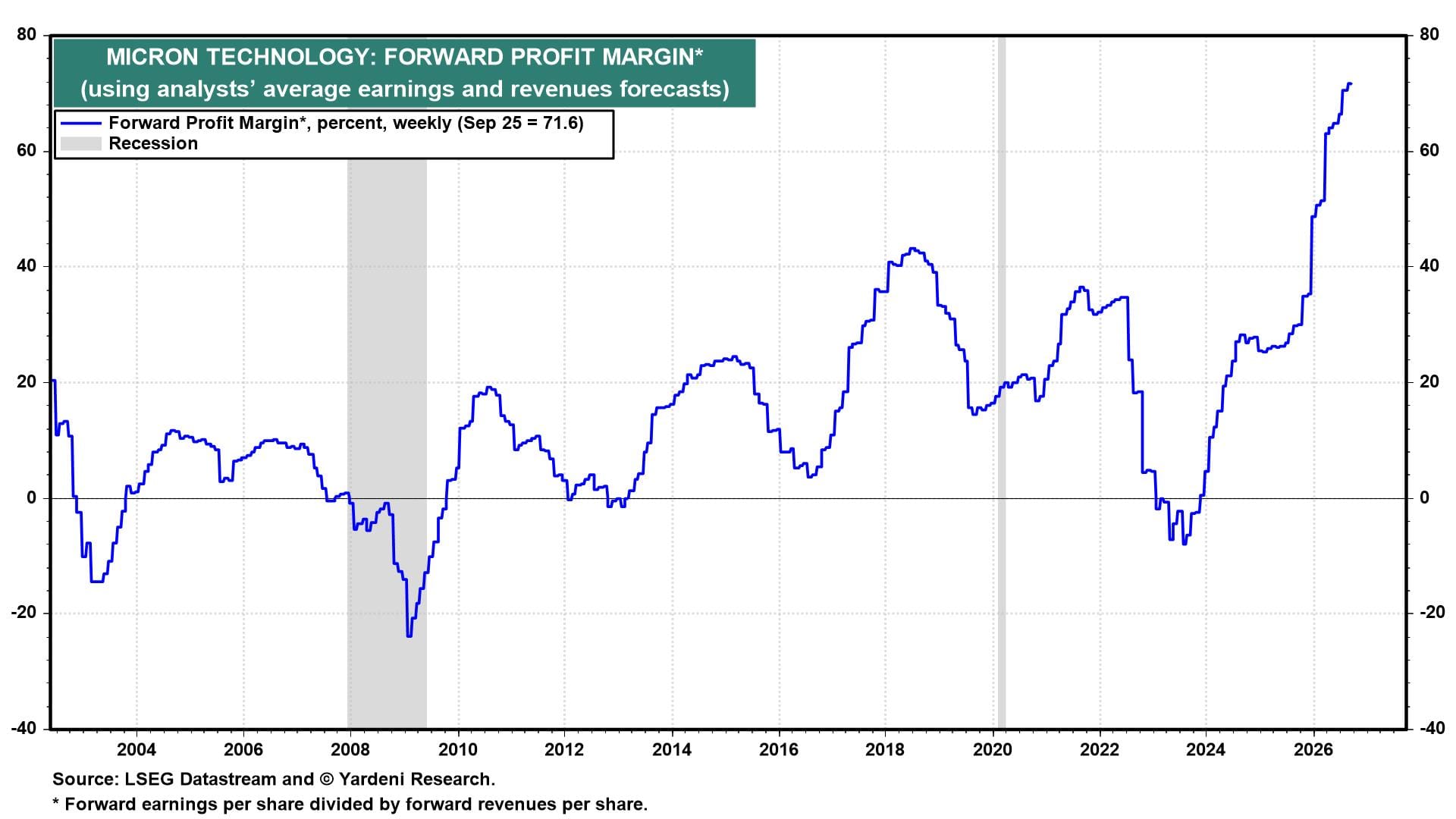
Analysts expect Micron's net income margin to widen to 70.7% in fiscal Q4 from 69.6% in Q3. Its forward profit margin has reached 71.6%, well above its 2018 peak around 42% (chart).