I. Yen-Carry Trade Unwinding?
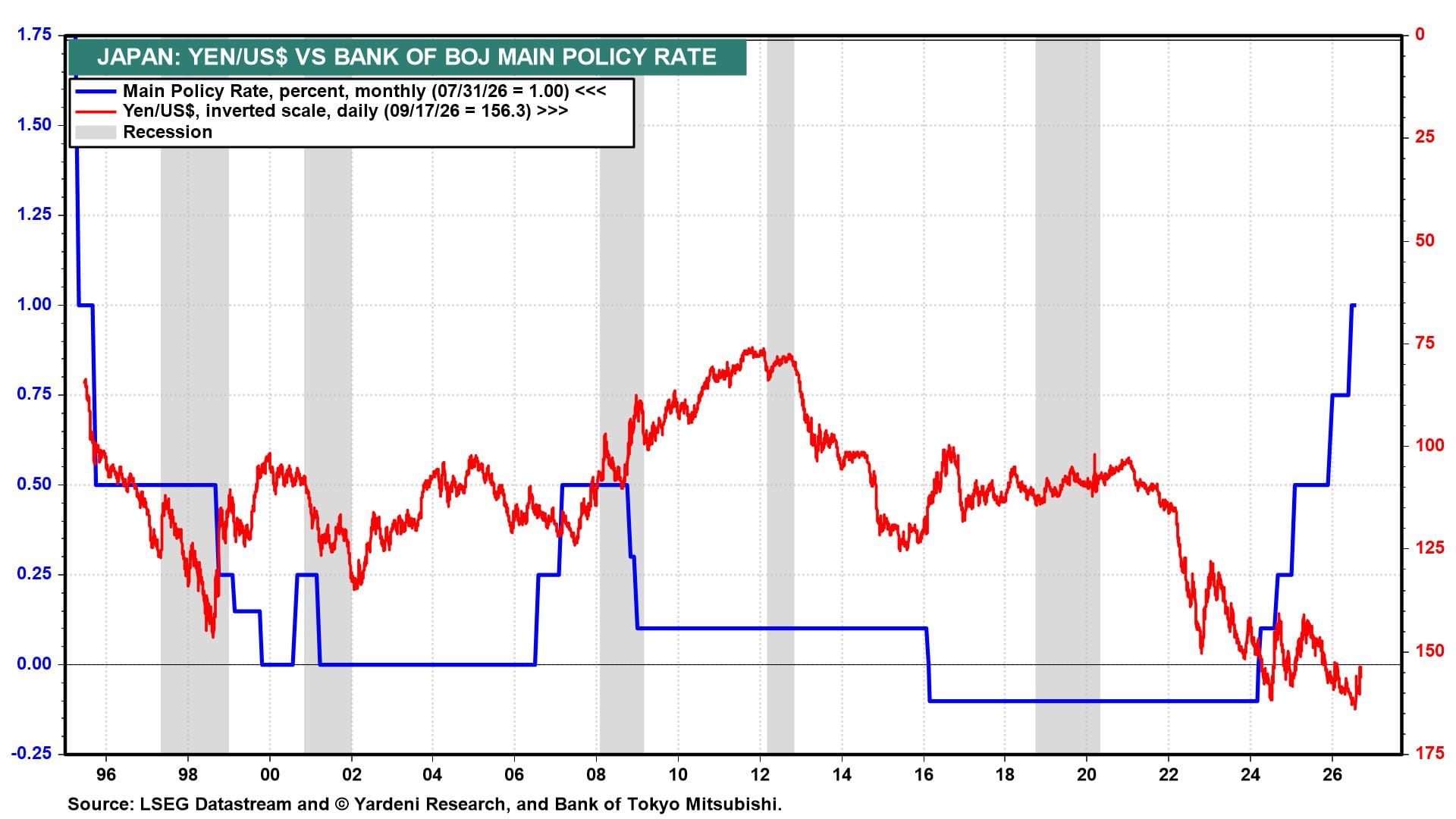
The “yen‑carry trade” has been a key feature of global financial markets since roughly 2012. It rested on two pillars: ultra-low Japanese interest rates and either a weak or relatively stable yen. Hedge funds could borrow funds cheaply in yen, convert the proceeds to other currencies, and buy government bonds in those currencies. The beauty of this trade is that it increased downward pressure on the yen as long as the Bank of Japan (BOJ) kept its official policy rate near zero (chart).
Today, both pillars are cracking. Since early 2024, after years of near-zero and even negative rates, the BOJ has raised its official policy rate to 1.0%, the highest since 1995, with another 25bps hike expected tomorrow morning. Meanwhile, the yen has become more volatile and is expected to strengthen in response to tighter monetary policy. After weakening to around ¥163 per dollar, near a four-decade low, it has rallied since late July following joint Japan-US intervention in the forex market.
Higher Japanese interest rates and likely further yen appreciation have been forcing traders to unwind their yen-carry trades. This might explain the rout in the global bond market since 2024.