


On Sunday night, Reuters reported that oil prices slipped to a two-week low as US-Iran talks seemed to be moving closer to a peace deal. Then again, the news service also reported that President Donald Trump is in no rush to make a deal and that the US will continue to blockade Iran. If so, then Iran will continue to blockade the Strait of Hormuz. Nevertheless, Japan's Nikkei 225 rose above 65,000 for the first time on Monday because oil prices fell.
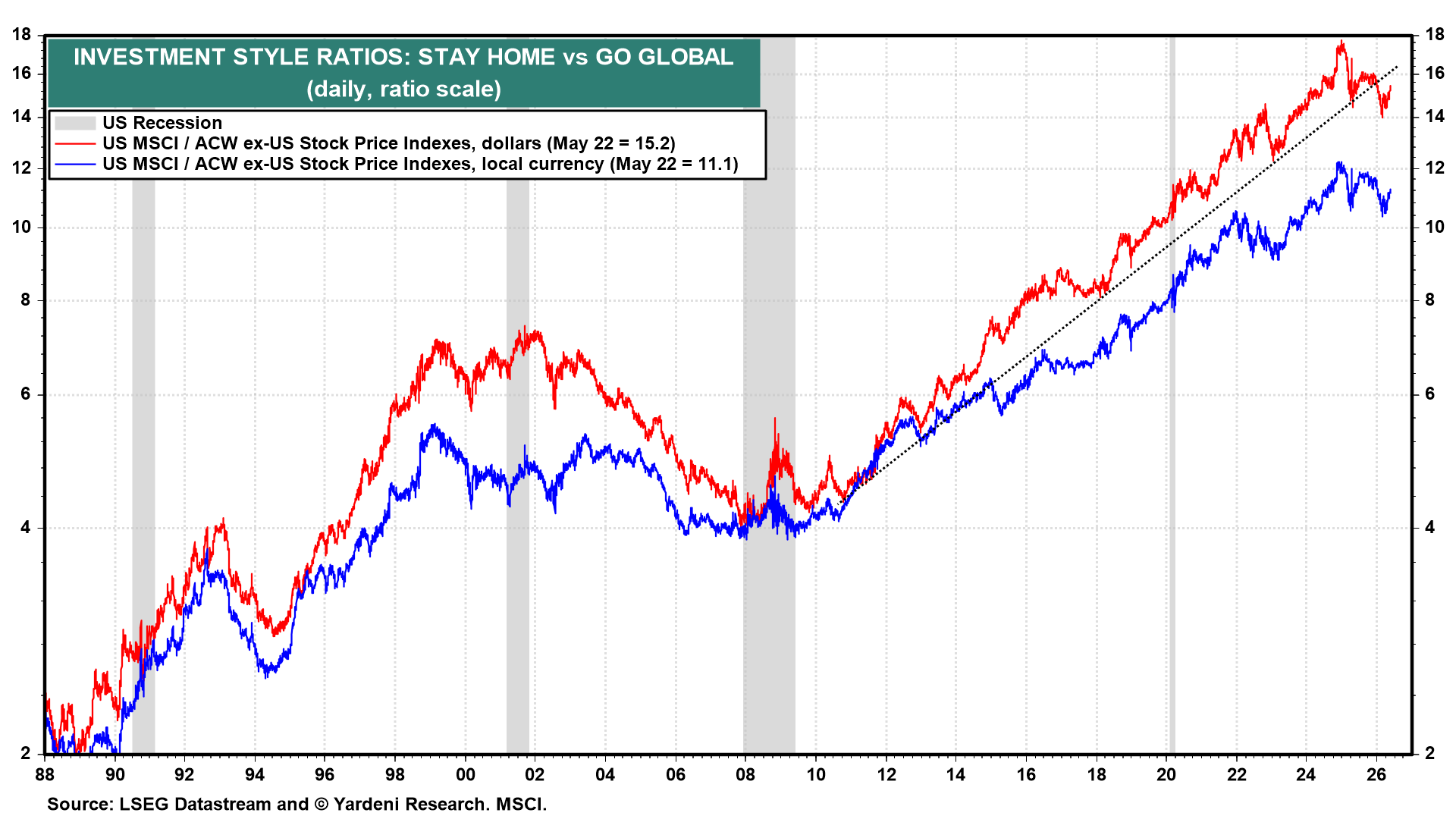
The All Country World (ACW) ex-US MSCI outperformed the US MSCI last year and early this year for the first time since the 2000s (chart). Since the start of the latest Middle East war, the US has outperformed the ACW ex-US MSCI because it is more energy-independent than most of the rest of the world. The rest of the world might soon start outperforming the US again on expectations that the end of the war is in sight. Falling oil prices would clearly benefit the rest of the world more than the US.
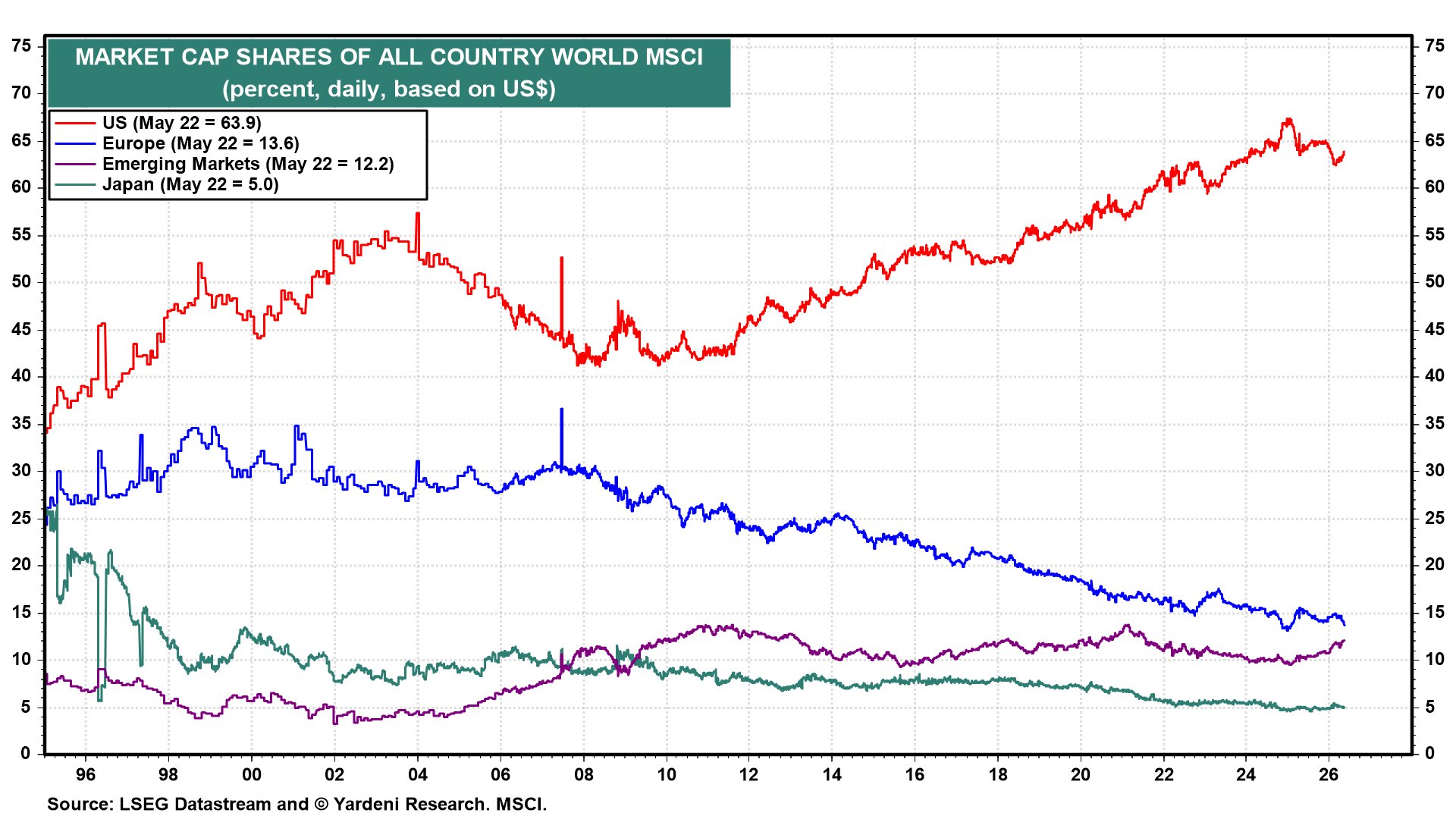
The US MSCI’s market-cap share of the ACW MSCI remains very high at 63.9% (chart). It is down from a record high of 67.4% during January 2025. Much of that market-cap share was gained by the Emerging Markets MSCI, which rose from 9.6% in early 2025 to 12.2% currently.
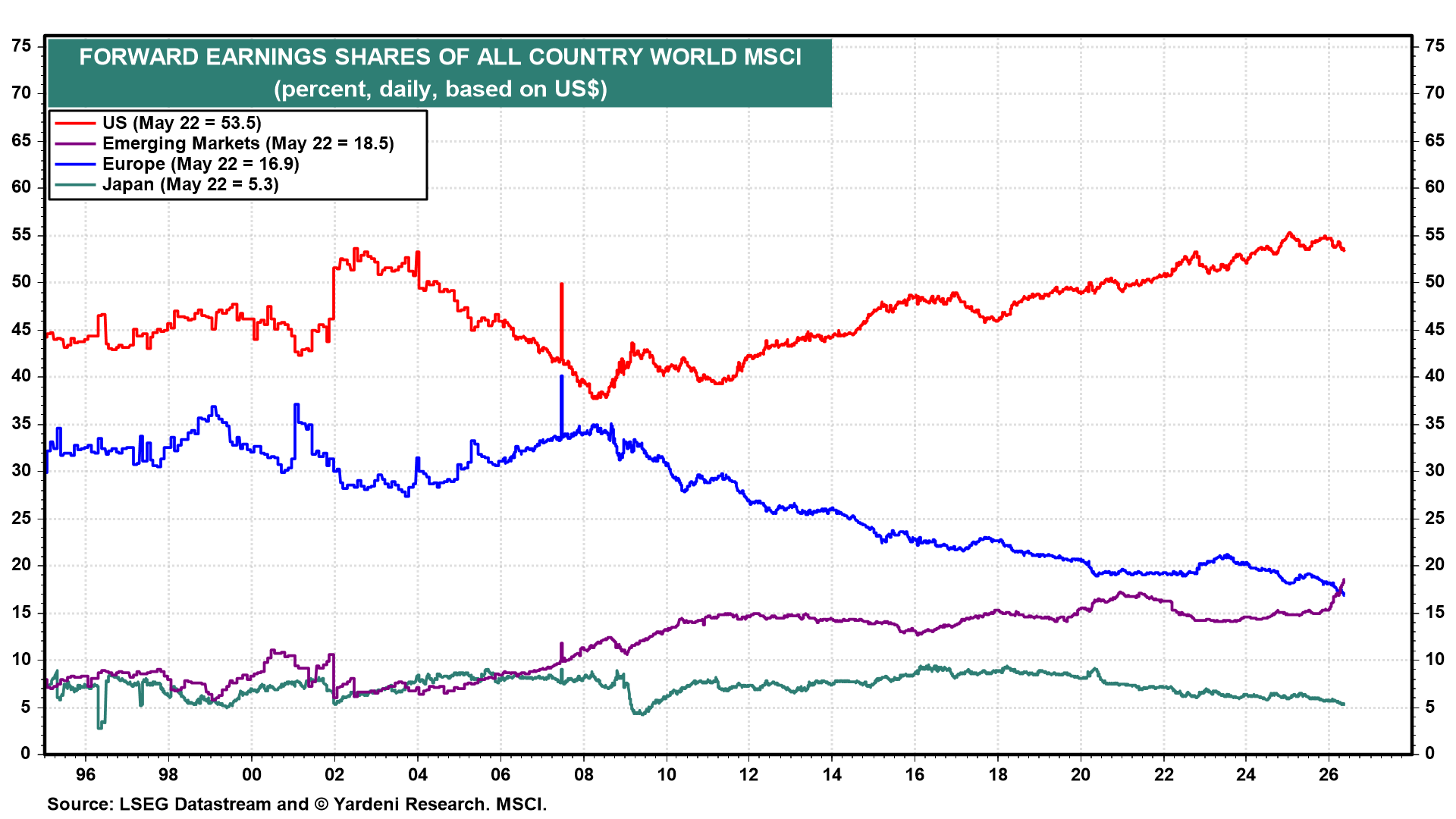
Interestingly, the only major regional MSCI index to gain a share of the ACW forward earnings so far this year has been Emerging Markets (chart).
Consider the following:
