


"You are going to see a crack in the bond market, OK?" JPMorgan CEO Jamie Dimon said in a May 30 speech at the Reagan National Economic Forum. The US government debt situation is "nearing the point of no return" and approaching a "death spiral" that could threaten the stability of the world's largest economy, Ray Dalio writes in his new book "How Countries Go Broke: The Big Cycle," published June 3.
Dimon and Dalio are smart and influential. We share their concerns. However, anyone who has followed their consistently pessimistic outlook over the past few years has missed a huge rally in the stock market. As for us, we'll worry about the government's debt when the Bond Vigilantes do. If a debt crisis is coming, we should make as much money as we can in stocks and sell just before the crisis hits.
The question is whether the crisis is imminent. Even more important is whether a policy response could stop the crisis from turning into a death spiral. If so, the crisis will be a buying opportunity.
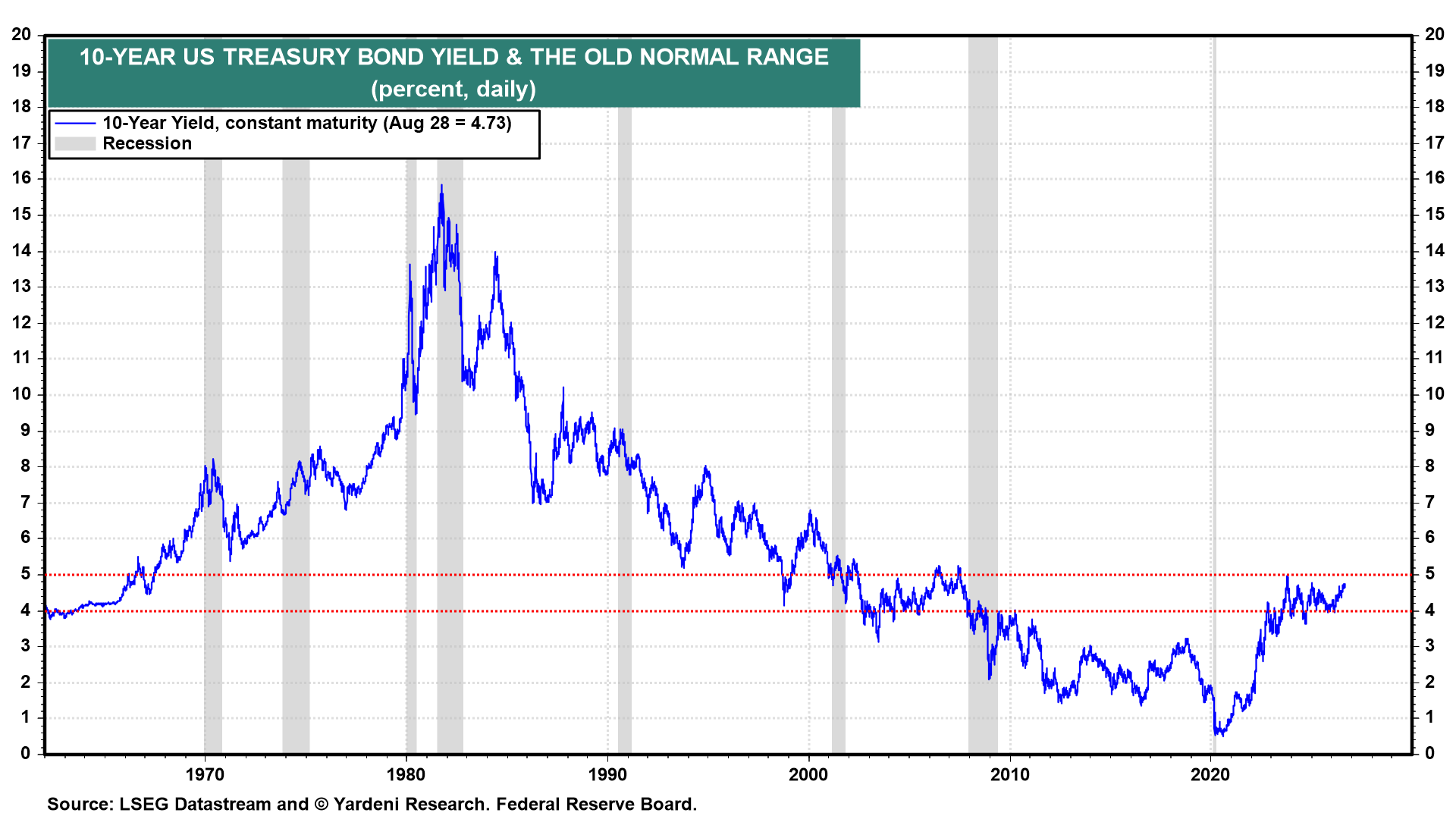
The Bond Vigilantes have been stirring lately, but the 10-year Treasury bond yield remains between 4.00% and 5.00%. We've contended that this range is the "old normal," i.e., the same range as in the years from before the Great Financial Crisis to the Great Virus Crisis (chart). This suggests the economy is back to normal and growing at a solid pace.
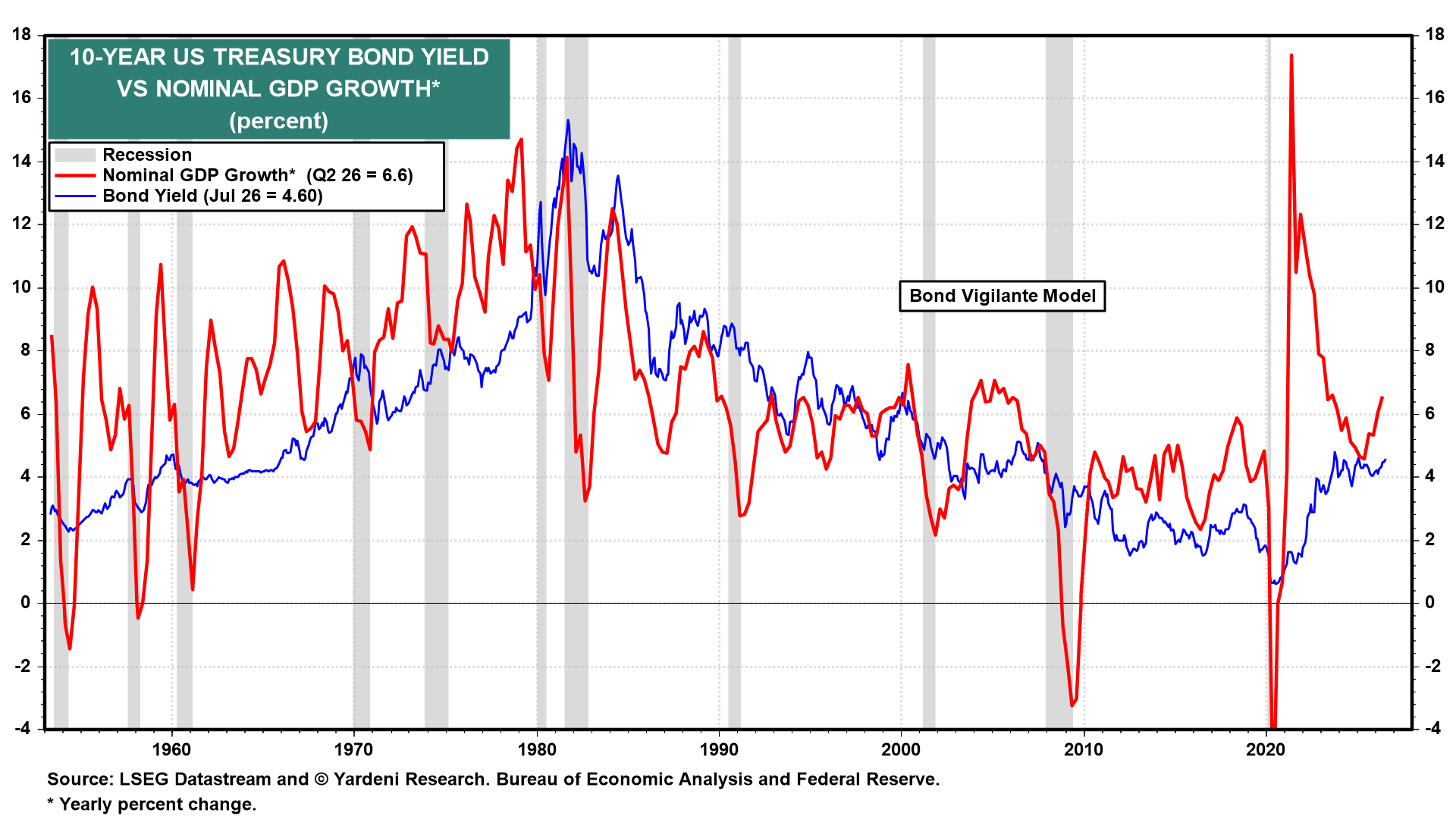
As we explained in our Bond Vigilantes Primer, the Bond Vigilantes tend to be on the loose when the 10-year US Treasury bond yield exceeds nominal GDP (chart). The yield is currently well below nominal GDP.
US debt levels are undoubtedly concerning. Total public debt surpassed $40 trillion in August, roughly double what it was a decade ago (chart). However, about $7.7 trillion consists of intragovernmental debt, or money the government owes to itself. Because it is not traded in public markets, it does not directly affect the supply of Treasuries.
