


I. Semis Cycle
Historically, the semiconductor industry has been notoriously cyclical. When chip demand outpaces supply, shortages boost prices; higher prices in turn slow demand. High prices boost profit margins and stimulate manufacturers to expand capacity. As demand moderates and new supply comes online, pricing power weakens, and earnings growth slows or even turns negative. In other words, the best cure for high chip prices is high chip prices.
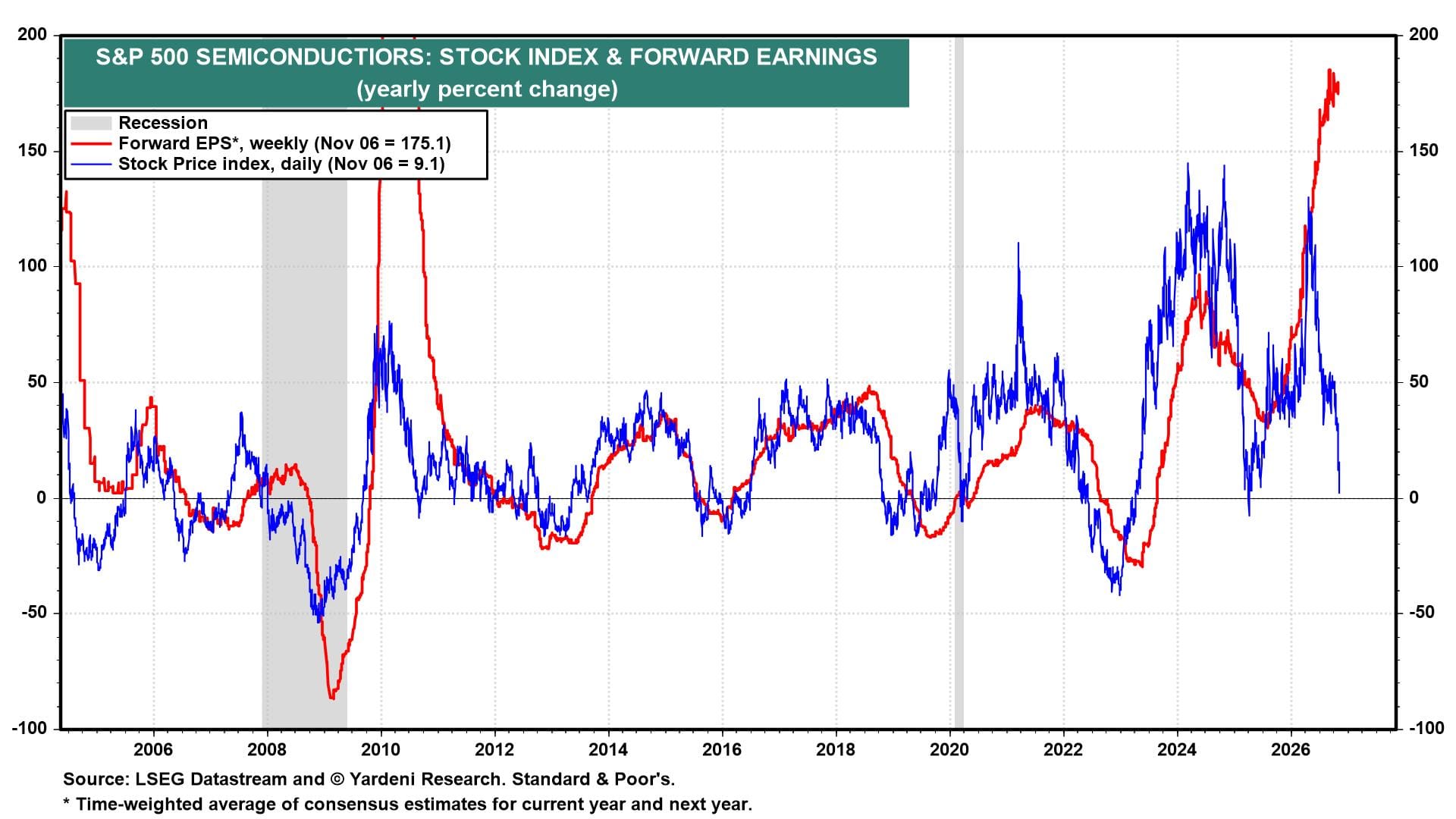
The AI boom has created an extraordinary imbalance between chip demand and supply, fueling surging semiconductor prices, revenues, earnings, and stock prices alike. But a key divergence has emerged recently. Forward earnings growth for the companies in the S&P 500 Semiconductors industry has soared to 175% y/y, while the gains in the industry's stock index plummeted from 130% y/y earlier this year to 9% currently (chart). Historically, the y/y percent change in the Semiconductor stock price index has tended to peak before earnings growth peaked and bottom before it recovered. The latest divergence suggests that investors may already be anticipating a peak in earnings growth.
We think investors may be partially right: Demand for chips should continue rising as the AI revolution drives ever-greater demand for computing power; that should propel earnings growth. However, financial, political, and physical constraints are creating speed bumps for the AI investment boom, which should moderate the pace of growth in both chip demand and earnings.
One physical constraint is expanding semiconductor manufacturing capacity, which should gradually increase supply. As the gap between demand and supply narrows, pricing power and profit margins could come under pressure. That would slow earnings growth.
That said, memory makers have sharply increased their use of long-term agreements (LTAs) with hyperscalers, moving from quarterly or annual contracts to three- to five-year deals backed by substantial prepayments, which should help cushion a potential slowdown. Micron alone reported roughly $150 billion in contracted future revenue last quarter.
