As confetti and red-and-yellow streamers rained down on the roaring crowd, the final whistle blew, and Spain lifted the World Cup trophy after a thrilling 1:0 victory over Argentina. The games are over. The fans are heading home, and an important economic tailwind is beginning to fade. According to Bank of America, the FIFA World Cup generated roughly $20 billion in economic activity across the United States, boosting spending in host cities and helping fuel the strongest surge in consumer spending in more than four years.
The stimulus from tax refunds is also fading. Thanks to the One Big Beautiful Bill Act, the total amount refunded to households rose 18.1% y/y to $324.8 billion, putting nearly $50 billion of additional cash into consumers' pockets. With both tailwinds now fading, the economic data are reflecting the slowdown. We aren't concerned. Seven years into our Roaring 2020s scenario, the underlying pulse of the US economy and American consumer remains strong.
Consider the following:
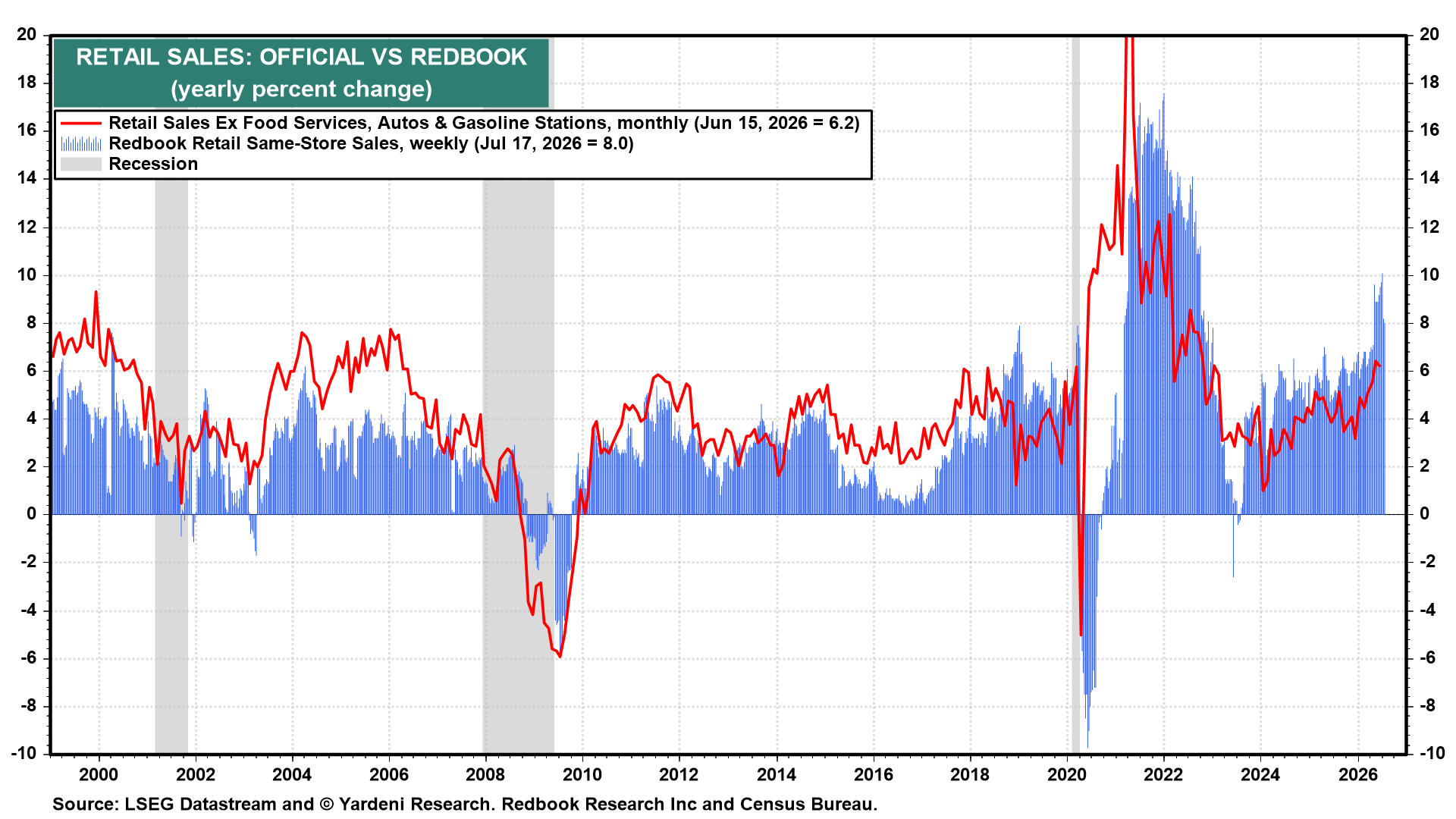
(1) Consumer spending. Redbook same-store retail sales growth cooled to 8.0% y/y in the week ending July 17, extending a pullback from exceptionally strong gains during the World Cup (chart). Sales growth remains robust by historical standards.