


During the final four months of 2025, the Fed lowered the federal funds rate (FFR) three times by a total of 75bps. The cuts were justified for two reasons: Inflation was approaching the Fed's 2.0% target, and the labor market was weakening. So the FFR was deemed to be too restrictive, i.e., above the "neutral" FFR. Under the Fed's dual mandate, the risk that unemployment would rise was increasing, while the risk that inflation would rise was falling.
Neither of these conditions holds today. Inflation has moved higher. Hiring has picked up, and the unemployment rate has remained low. Arguably, the current FFR is no longer restrictive, as the neutral rate has been boosted by robust AI-related capital spending and a drop in the personal saving rate as Baby Boomers retire.
The balance of risks suggests that the FOMC needs to pivot away from its easing bias at today's meeting. Here is an update on the current status of the Fed's dual mandate to maintain stable prices and full employment.
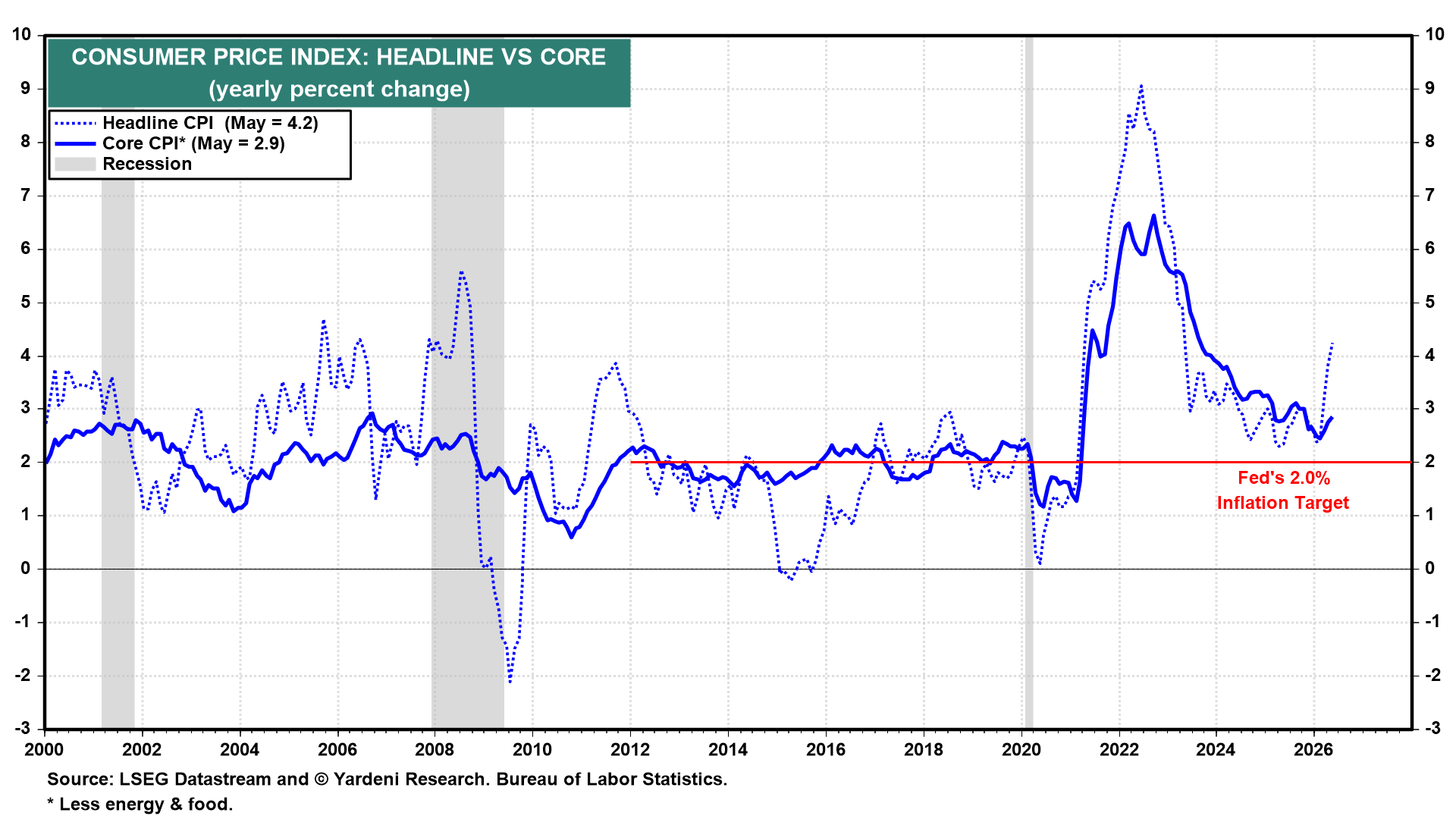
(1) Target practice. Headline and core CPI inflation rates have both exceeded the Fed's 2% target for five consecutive years. The former rose to 4.2% y/y in May, its highest since April 2023. The latter reached 2.9%, the loftiest since September 2025.
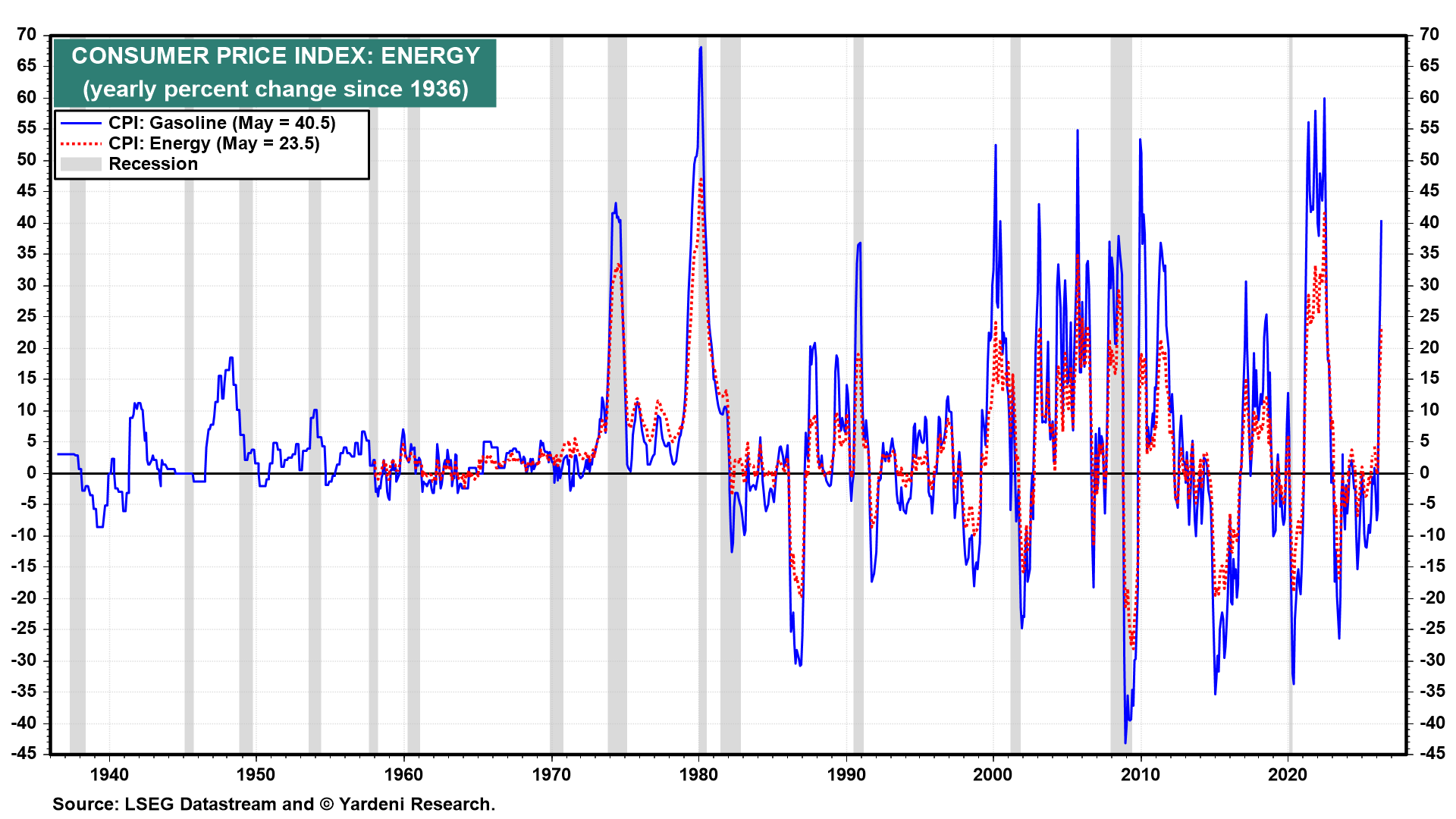
(2) Energy inflation. Most of the recent acceleration in inflation is attributable to the jump in energy prices caused by the Persian Gulf war. Gasoline surged 40.5% y/y in May's CPI, lifting overall energy inflation to 23.5%, its highest reading since August 2022 (chart). The US-Iran peace deal, set to be signed on Friday, should reopen the Strait of Hormuz. As a result, petroleum prices have fallen sharply in recent days.
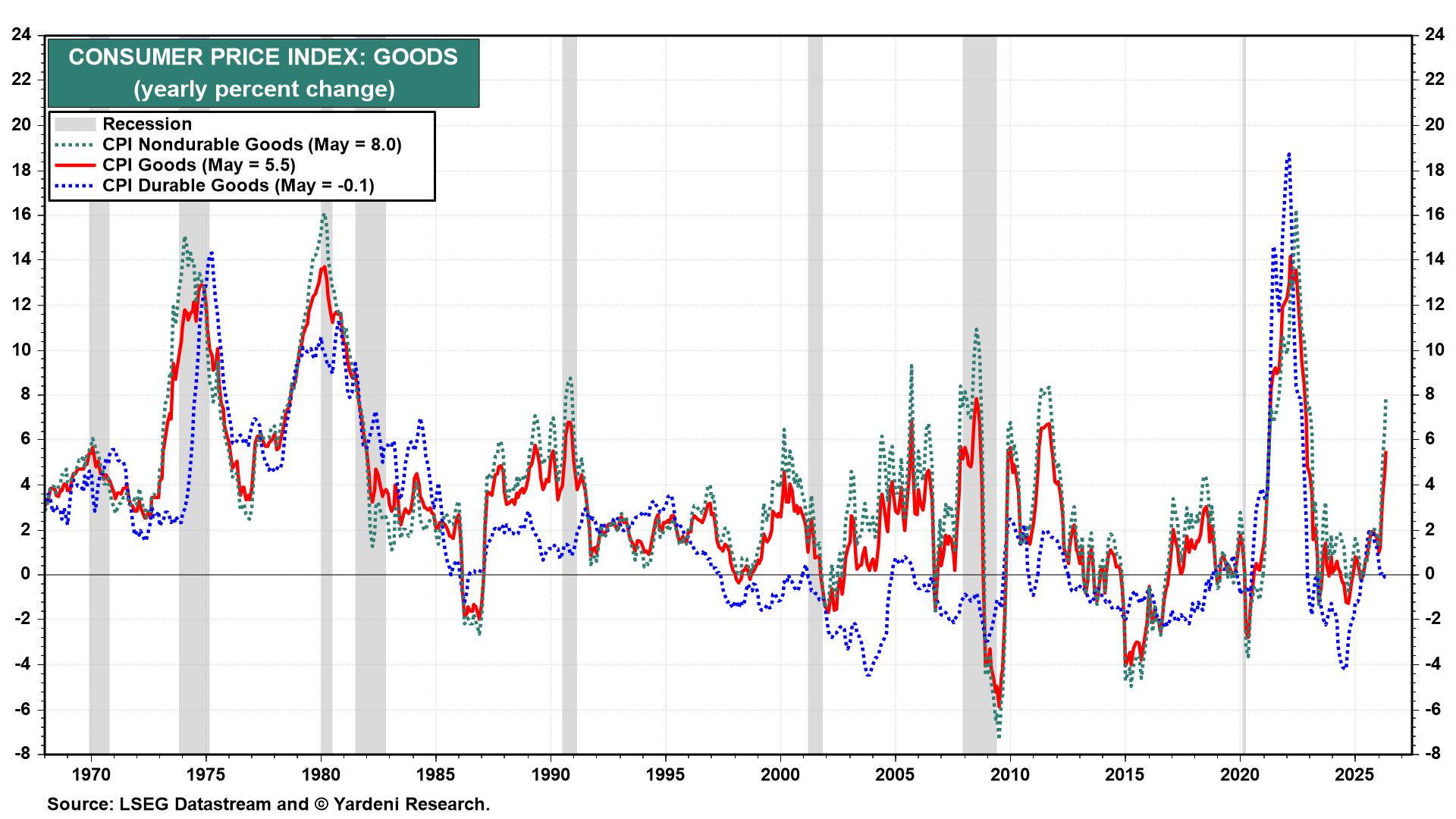
(3) Goods inflation. Soaring energy prices caused nondurable goods inflation to rise to 8.0% y/y in May, the highest pace since November 2022 (chart). On the other hand, durable goods inflation may be moderating. The spike resulting from last year's tariffs seems to be abating now.
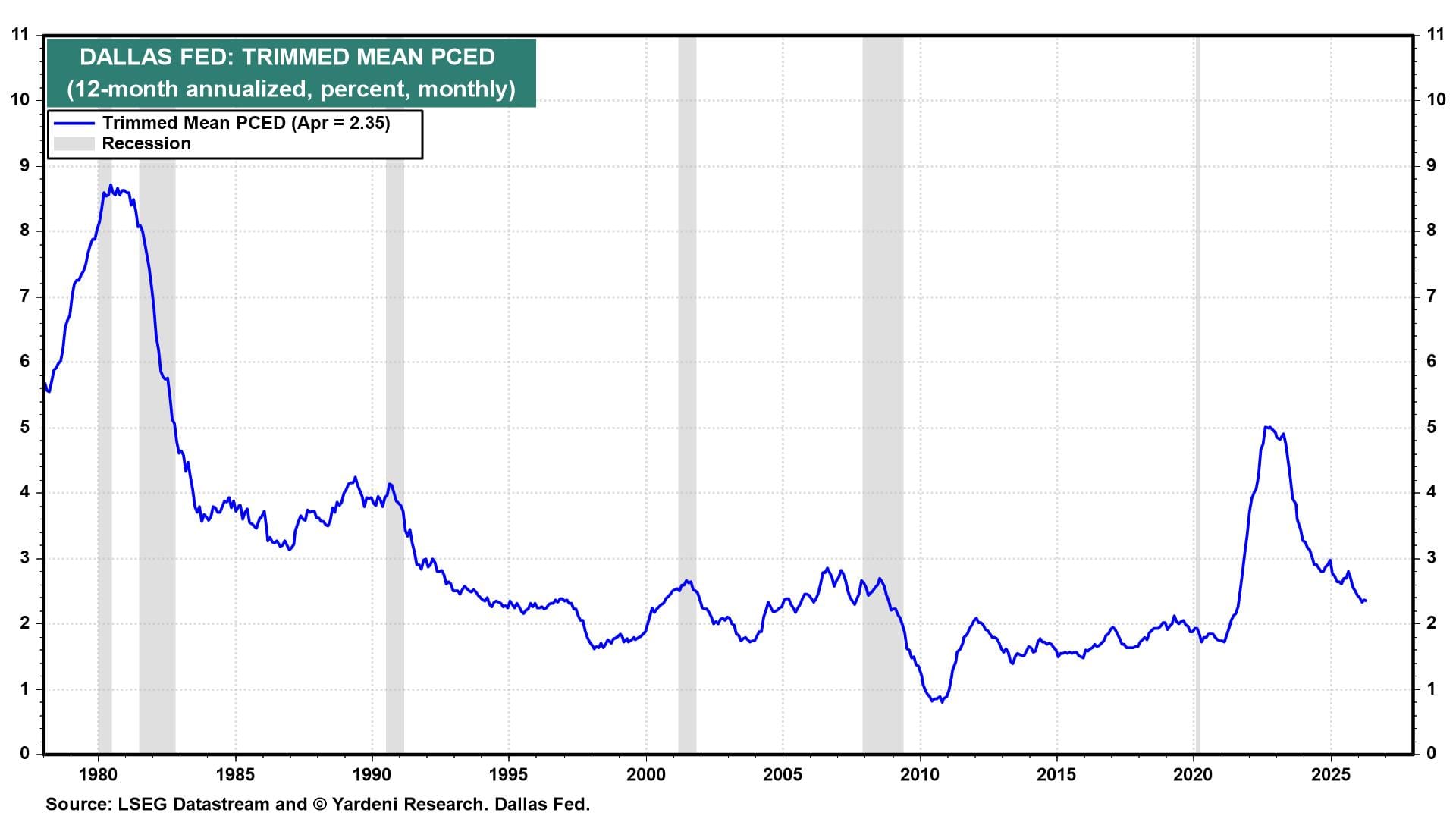
(4) Trimmed inflation. Fed Chair Kevin Warsh favors trimmed mean inflation measures, which remove outlier price moves. They are designed to show the underlying inflation rate. The Dallas Fed's trimmed-mean PCED inflation rate was only 2.35% y/y in April, very close to the Fed's inflation target (chart). Warsh will likely push back against an overly hawkish pivot by attributing this year's inflation spike to a transitory supply shock related to the war in the Middle East, which seems to be ending.
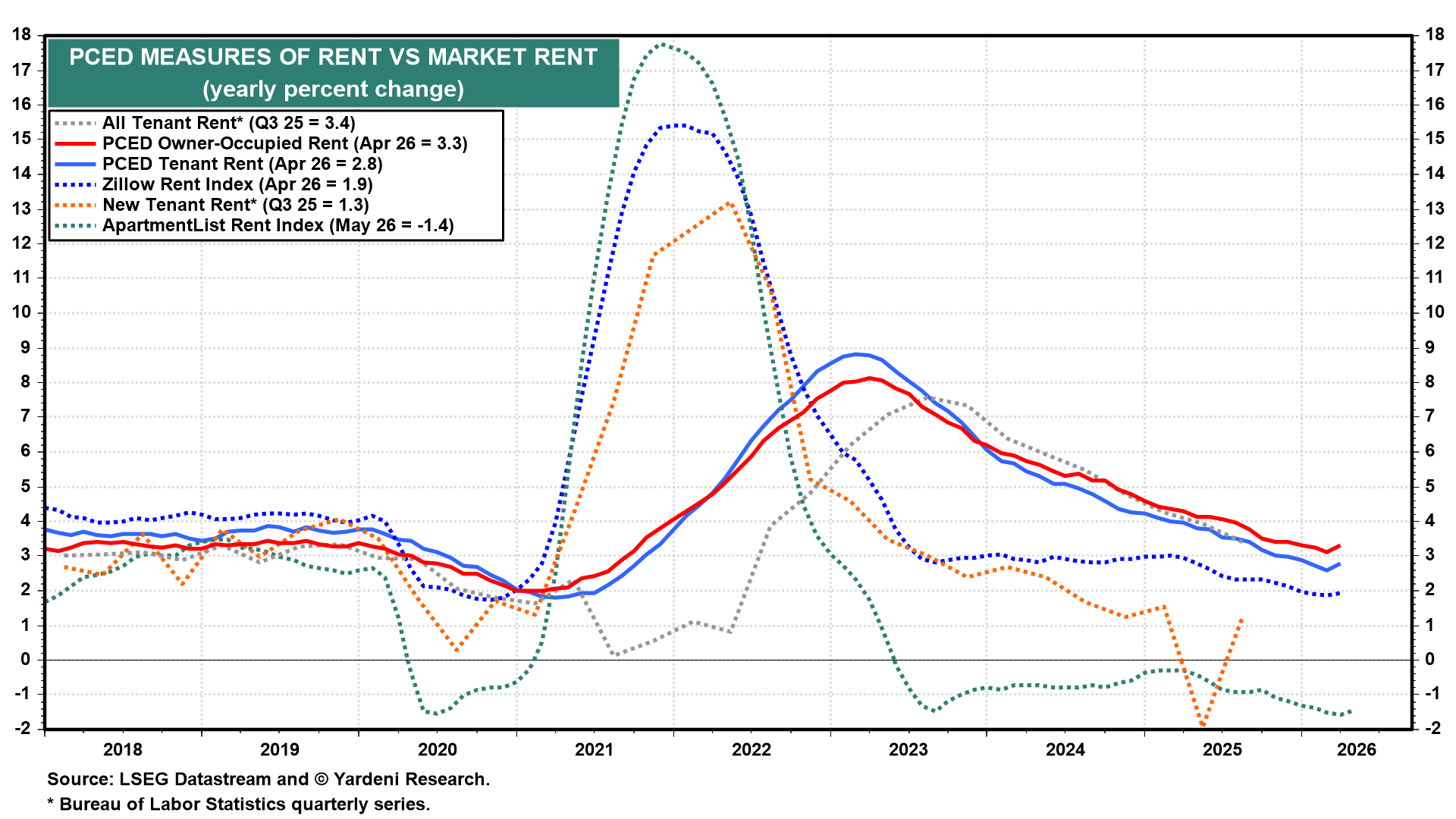
(5) Rent inflation. Shelter accounts for roughly 44% of the CPI basket. Its shelter inflation component lags real-time market rents. Both the Zillow and Apartment List rent measures have declined sharply, with the Apartment List index now in negative territory (chart). Official shelter inflation is likely to continue converging toward spot-market rents, creating a disinflationary tailwind in the months ahead.
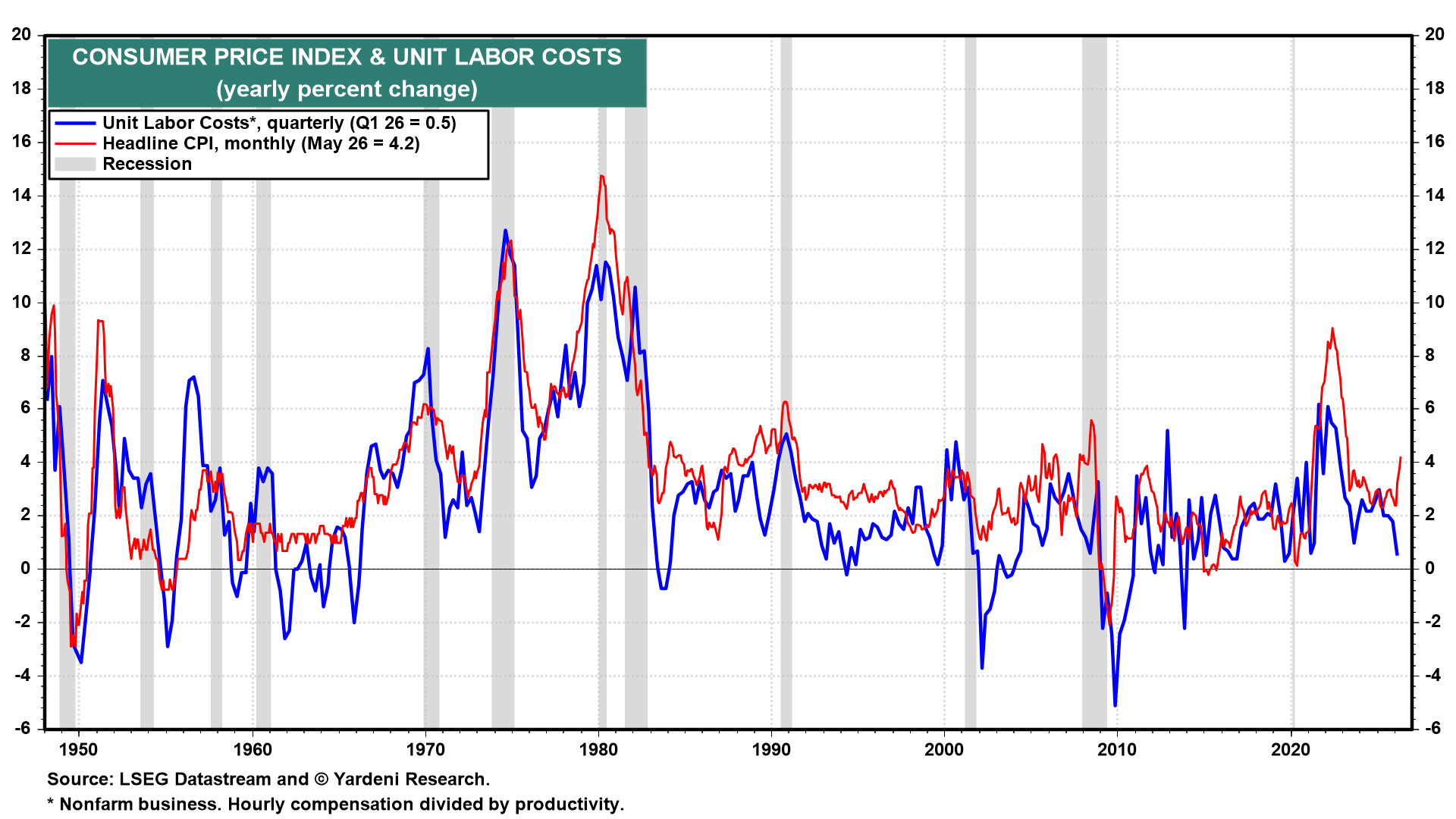
(6) Productivity & unit labor costs. The underlying inflation rate in the labor market is very low because productivity gains offset gains in hourly compensation. Unit labor costs rose just 0.5% y/y in Q1-2026, the lowest since 2019 (chart).
That said, several factors suggest that a tightening bias is warranted.
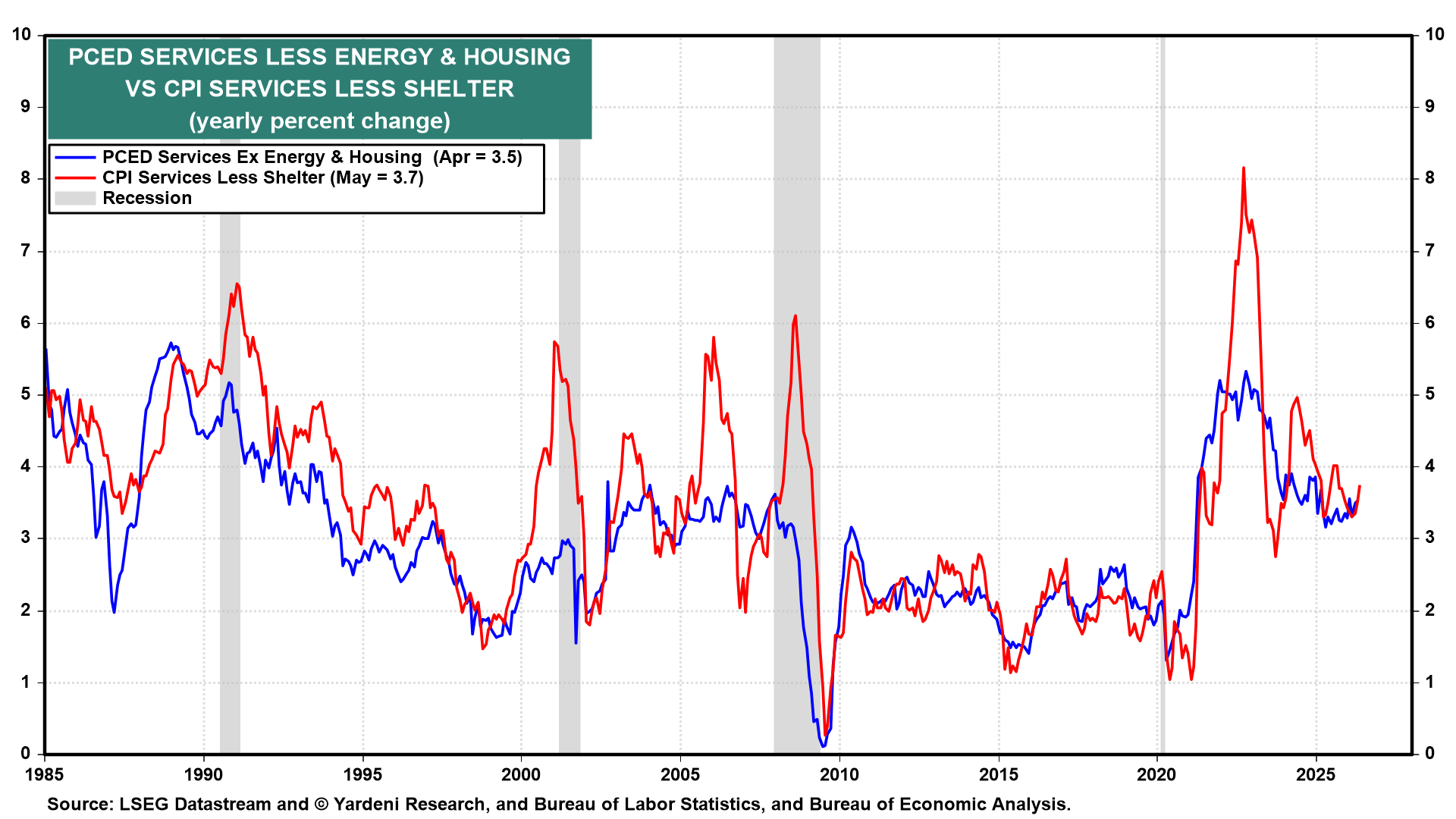
(7) Sticky underlying inflation. Core services inflation remains stuck around 3.5% (chart).
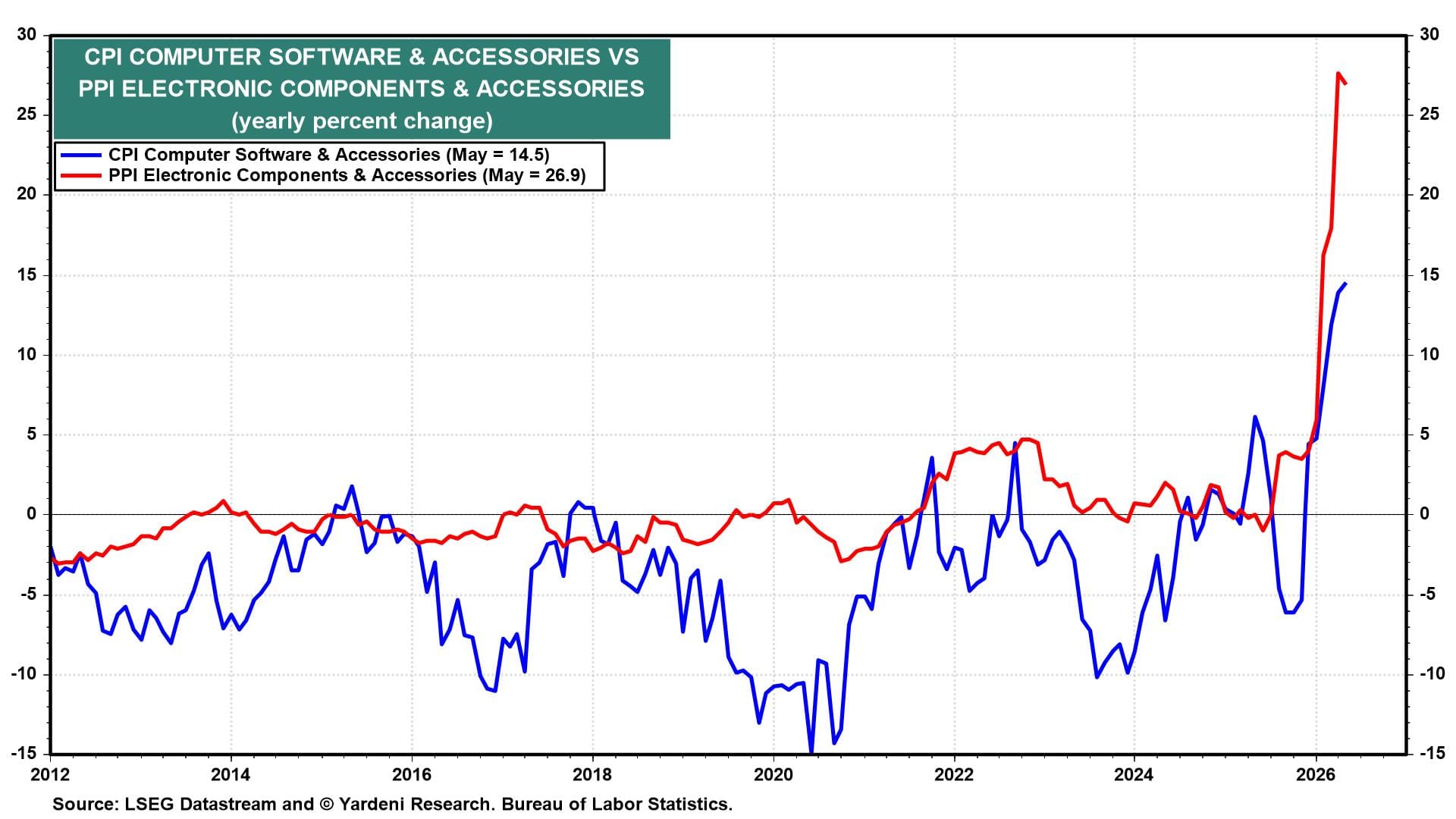
(8) AI inflation. The AI buildout is inflationary, boosting the demand for energy, semiconductors, and skilled labor. During May, the PPI for electronic components surged 26.9% y/y, while the CPI for software jumped 14.5% y/y (chart).
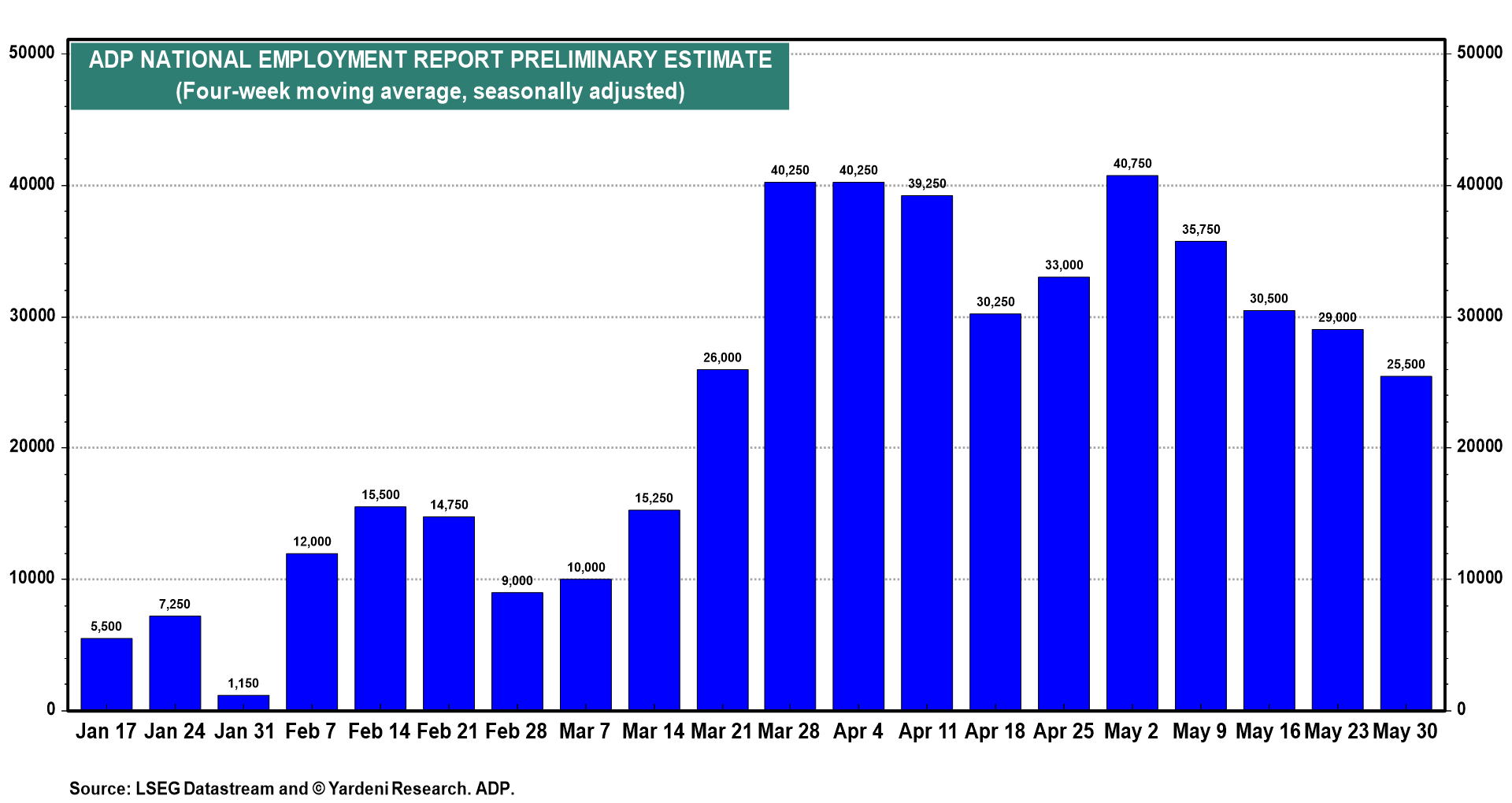
(9) Labor market conditions. Private employers added an average of 25,500 jobs per week in the four weeks ending May 30, according to ADP (chart). That implies a solid 116,000-job increase in May (chart). Then again, this series has been trending lower in recent weeks.
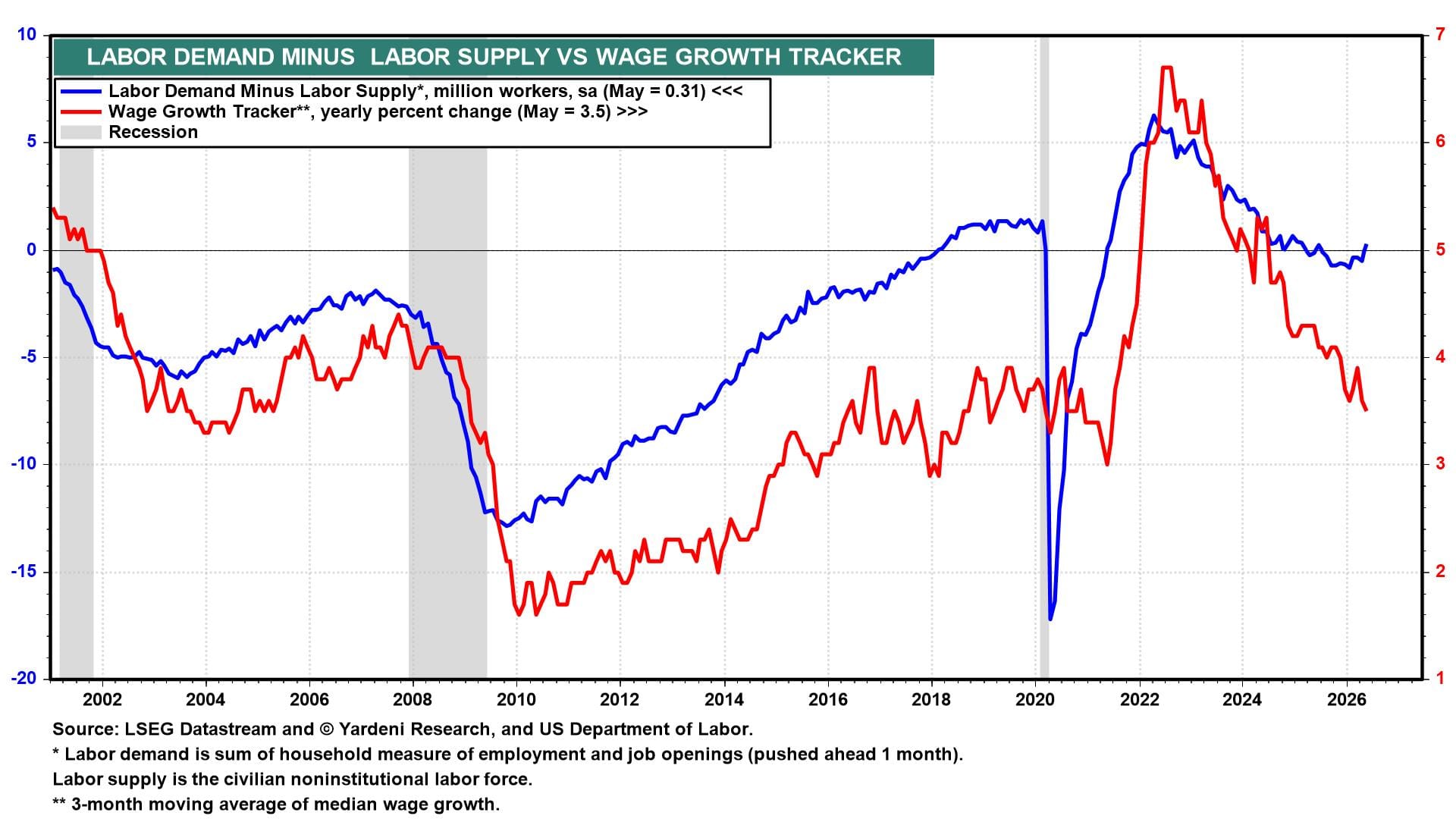
Meanwhile, May was the first month since June 2025 where labor demand exceeded supply (chart). If that persists, nominal wage growth will likely accelerate, exerting upward pressure on underlying inflation. Currently wage inflation remains moderate.
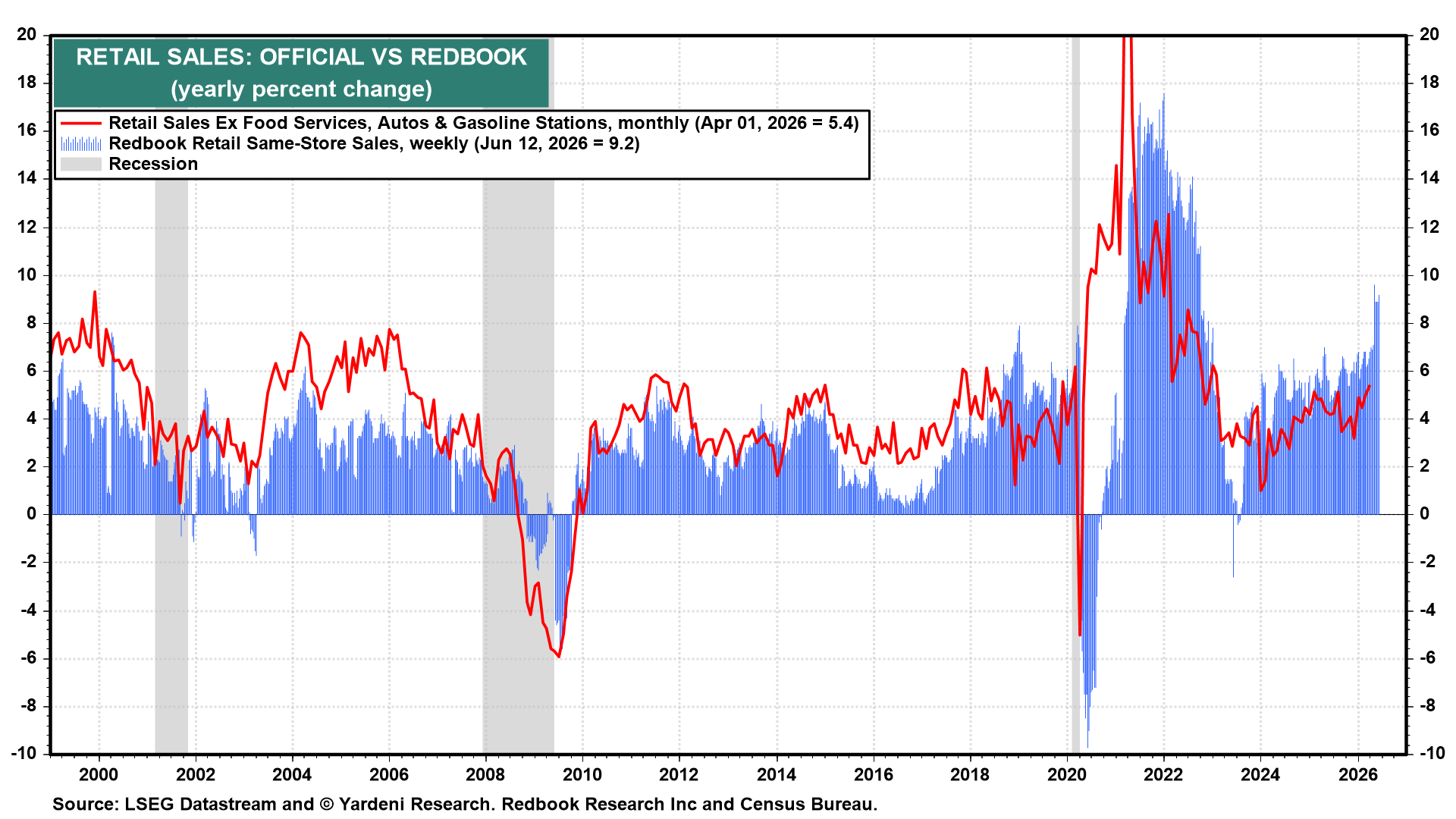
(10) Consumer spending. Consumer spending remains robust. The Redbook same-store retail sales index rose 9.2% y/y for the week ending June 12; the four-week average hit 9.1%, the highest since October 2022 (chart).
(11) Bottomline. The recent acceleration in inflation is largely tied to the oil supply shock stemming from the closure of the Strait of Hormuz. Headline inflation should moderate once the Strait reopens. However, even before the war, inflation remained above the Fed's target.
In any event, the risks are now clearly skewed toward the inflation side of the Fed's dual mandate. The rate cuts implemented in 2025 were justified at the time. They are no longer justified today, which is why we expect the Fed to drop its easing bias and to signal a tightening bias at the June FOMC meeting.
