


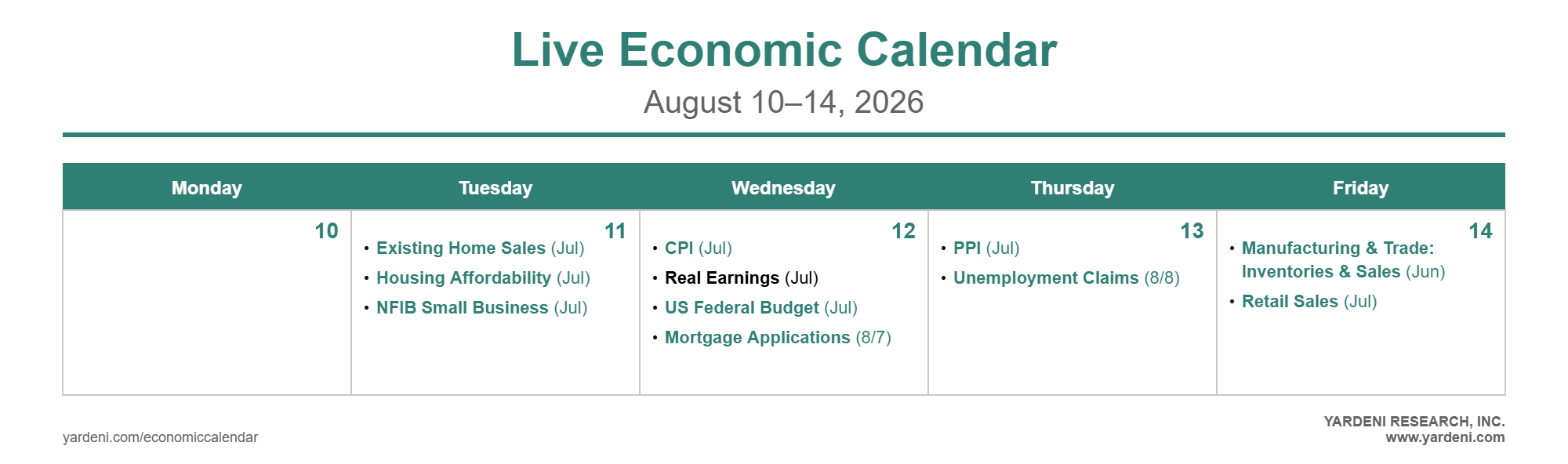
Last week, July payrolls fell 23,000, missing the 85,000 consensus, even as the unemployment rate edged down to 4.1%. The 2-year Treasury yield fell 7 bps on the release before recovering to close little changed near 4.21%. This week, attention turns to inflation. July CPI (Wed) and PPI (Thu) will be the first hard inflation data since the Fed's meeting two weeks ago. Retail sales close out the week on Friday.
“FedSpeak” resumes Thursday with Cleveland Fed President Beth Hammack (a dissenter at the July FOMC meeting) and Richmond Fed President Tom Barkin speaking. The Q2 earnings season still has two weeks to go, with lots of reports from retailers ahead.
Overseas, Japan's latest PPI (Wed night EST) will be released amid acute yen stress, the Reserve Bank of Australia (RBA) meets Tuesday, and the UK posts its first Q2 GDP estimate.
Here are the key economic releases most likely to influence the financial markets this week:
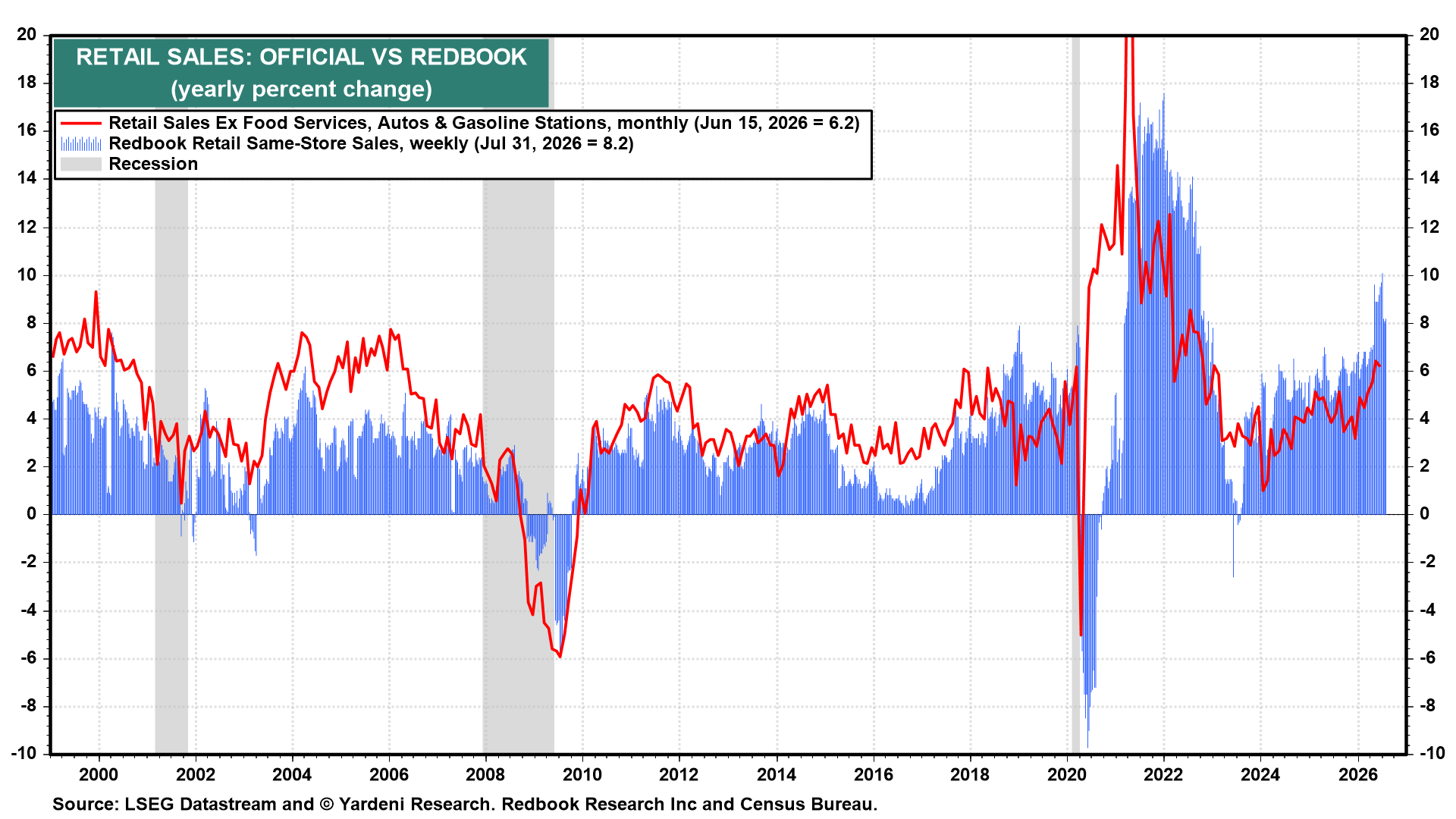
(1) Inflation. This week's inflation prints carry outsized weight heading into the September 16 FOMC meeting, where futures markets currently price roughly a 43% chance of a 25 bps hike, down from 55% before Friday's weak jobs report. The Cleveland Fed Inflation Nowcasting model has July's headline CPI (Wed) rising 0.1% m/m and 3.4% y/y, down from 3.5% in June (chart). The model’s projection for core CPI looks similarly benign, rising 0.2% m/m and 2.5% y/y from 2.6% in June.
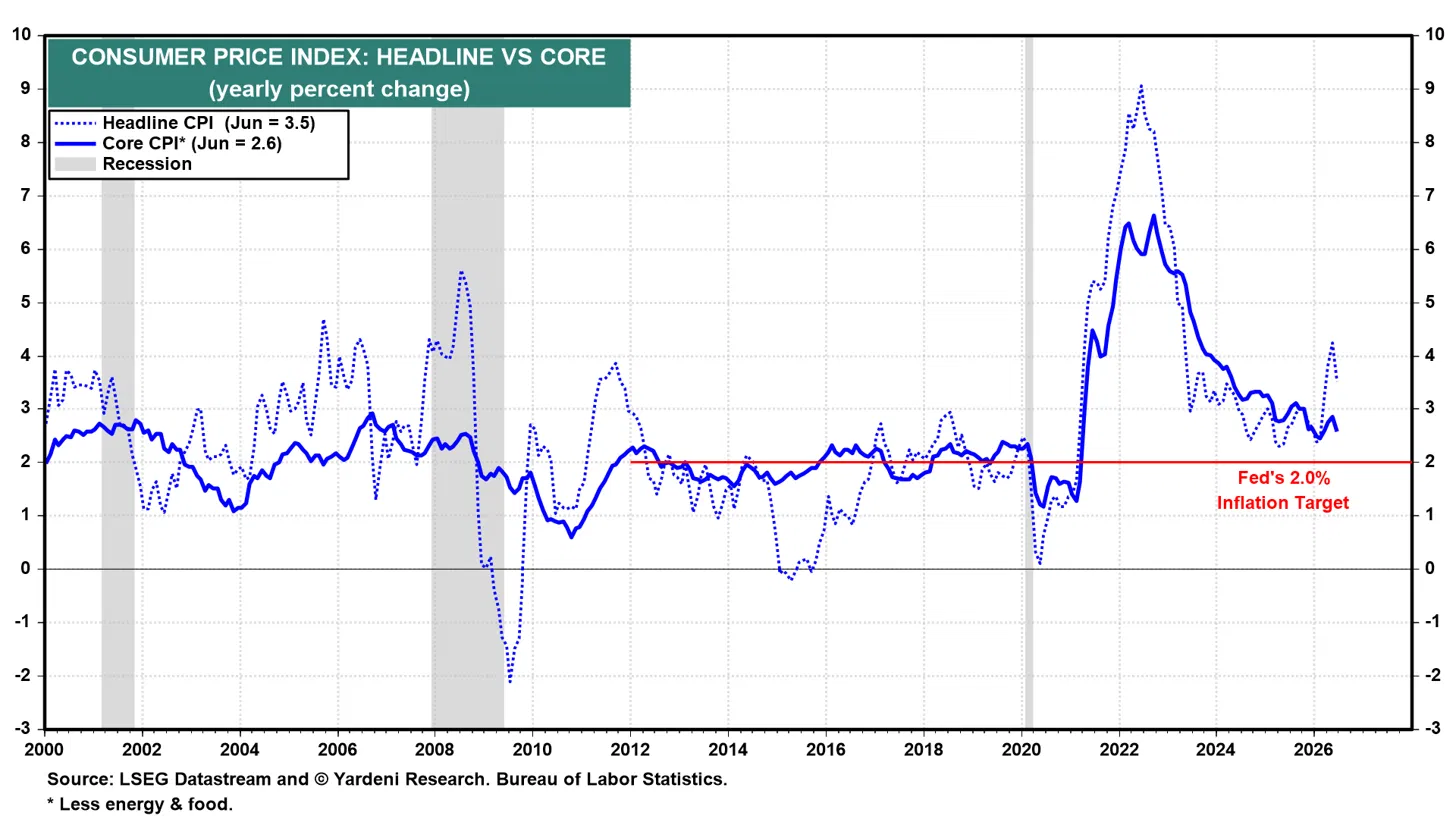
June's PPI Final Demand rose 5.5% y/y, while the measure excluding trade services ran hotter at 6.1%, and the core measure (also stripping food and energy) firmed to 5.1% (chart).
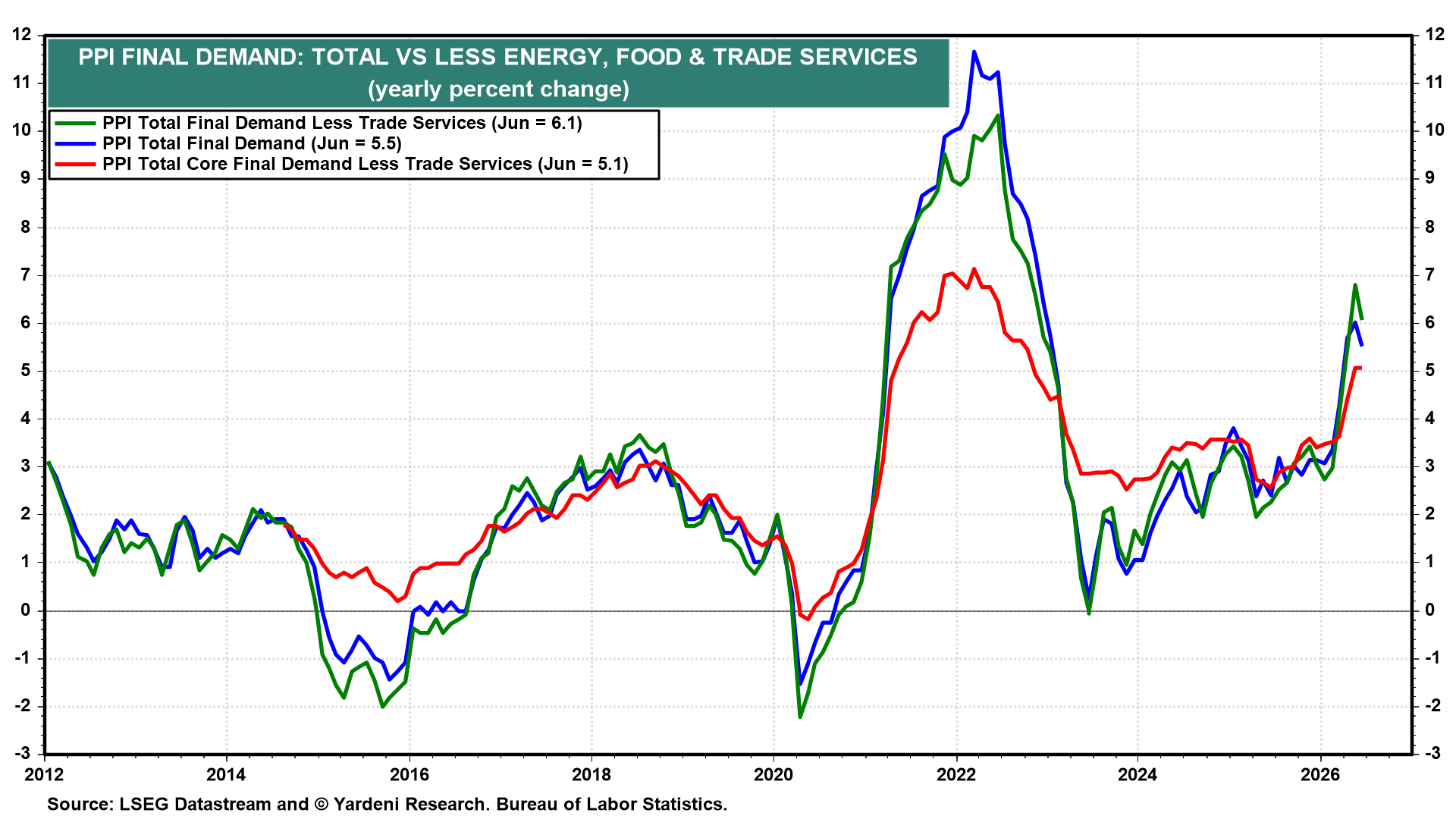
(2) Retail Sales. The release of July retail sales (Fri) follows a June increase of 6.7% y/y (chart). The weekly Redbook same-store sales index has slipped a bit but remains high, easing to 8.2% y/y for the week of July 31 from 10.1% in early July. That pace is still well above trend, confirming that consumer spending has stayed healthy despite slower headline jobs growth.
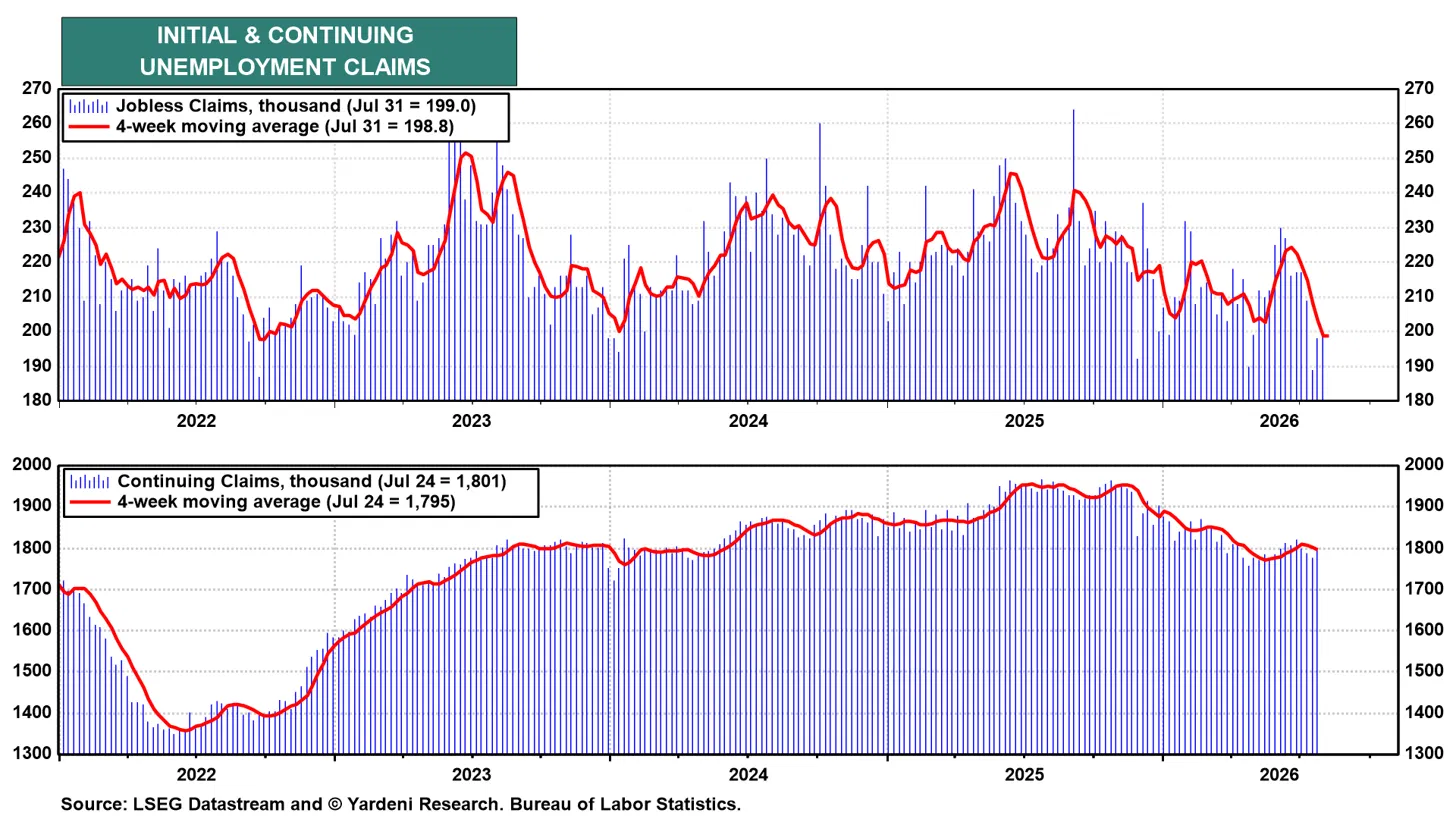
(3) Unemployment Claims. Initial jobless claims for the week ending July 31 rose slightly to 199,000, still below 200,000 for a third straight week, with the four-week average at 198,800, near the lowest since 2022 (chart). Continuing claims held at 1,801,000, with its four-week average at 1,795,000. Both point to a labor market that remains resilient at the margin, even after Friday's weak payrolls print.
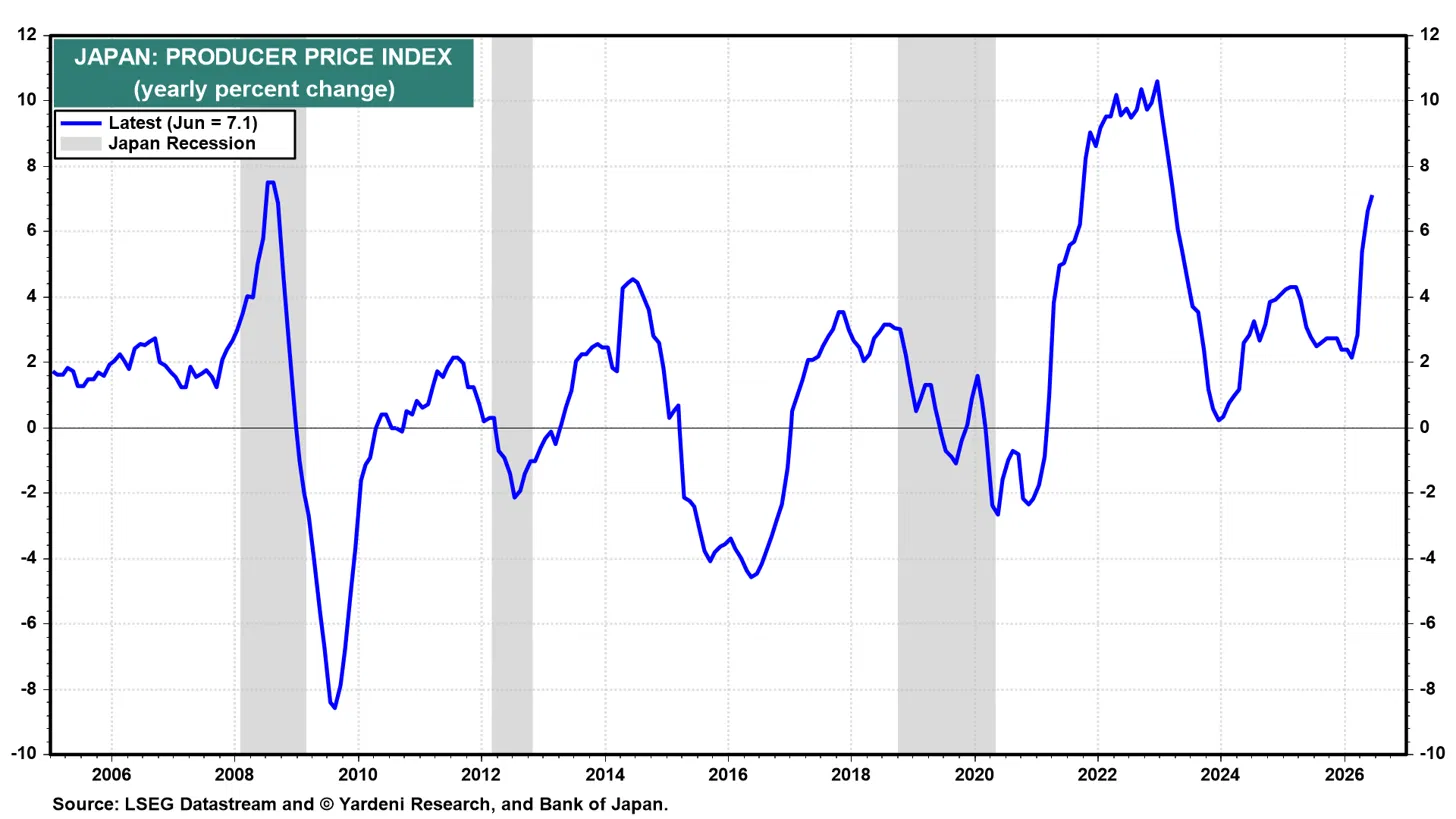
(4) Global. Japan's July PPI (Wed) follows a rare joint US-Japan intervention to defend the yen, which hit 40-year lows in late July, with the Bank of Japan signaling its most explicit openness yet to an early rate hike. June's PPI jumped to 7.1% y/y, its fastest pace since March 2023 (chart). A hot July print would add pressure on the BOJ to tighten rather than to lean on currency intervention alone to rein in inflation.
Elsewhere, the RBA (meeting Tue) is widely expected to hold its key interest rate at 4.35% after the June-quarter trimmed mean inflation rate cooled to 3.6%. Also: The UK posts its first Q2 GDP estimate on Thursday, following Q1 GDP growth of 0.6%.
