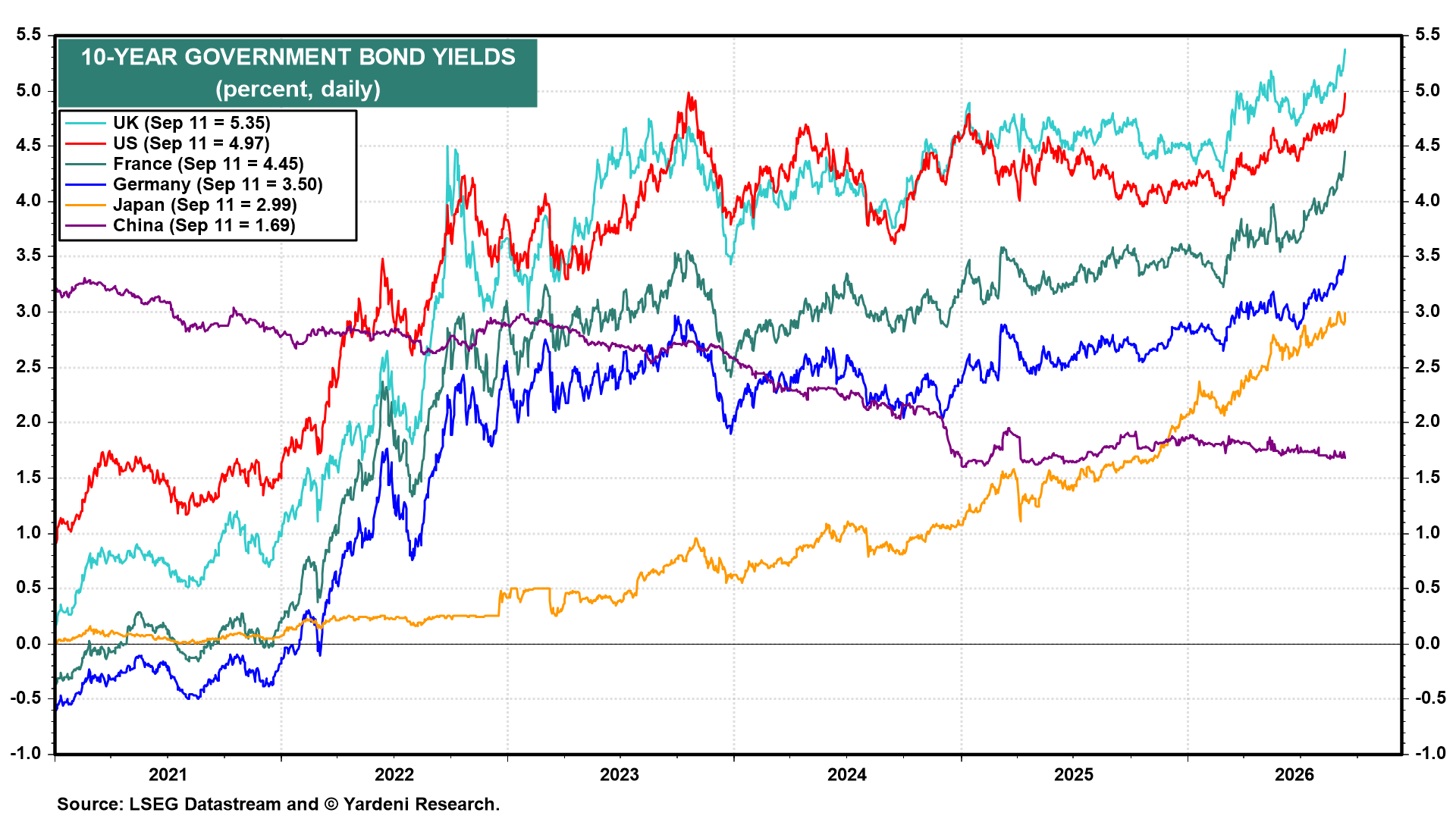
Global bond yields rose across the board last week (chart). The US 10-year Treasury bond yield climbed 19 basis points to 4.97%. The UK's 10-year gilt closed at 5.35%, near its highest level in decades. Even Japan's 10-year, at 2.99%, is near multi-year highs.
The European Central Bank (ECB) delivered its third rate hike of the latest tightening cycle on Thursday, lifting its policy rate to 2.50% and raising its inflation and GDP growth projections. ECB President Christine Lagarde declined to signal what comes next, but futures markets now price roughly a 50% chance of a follow-up rate hike in October, up from about a 33% chance before the meeting.
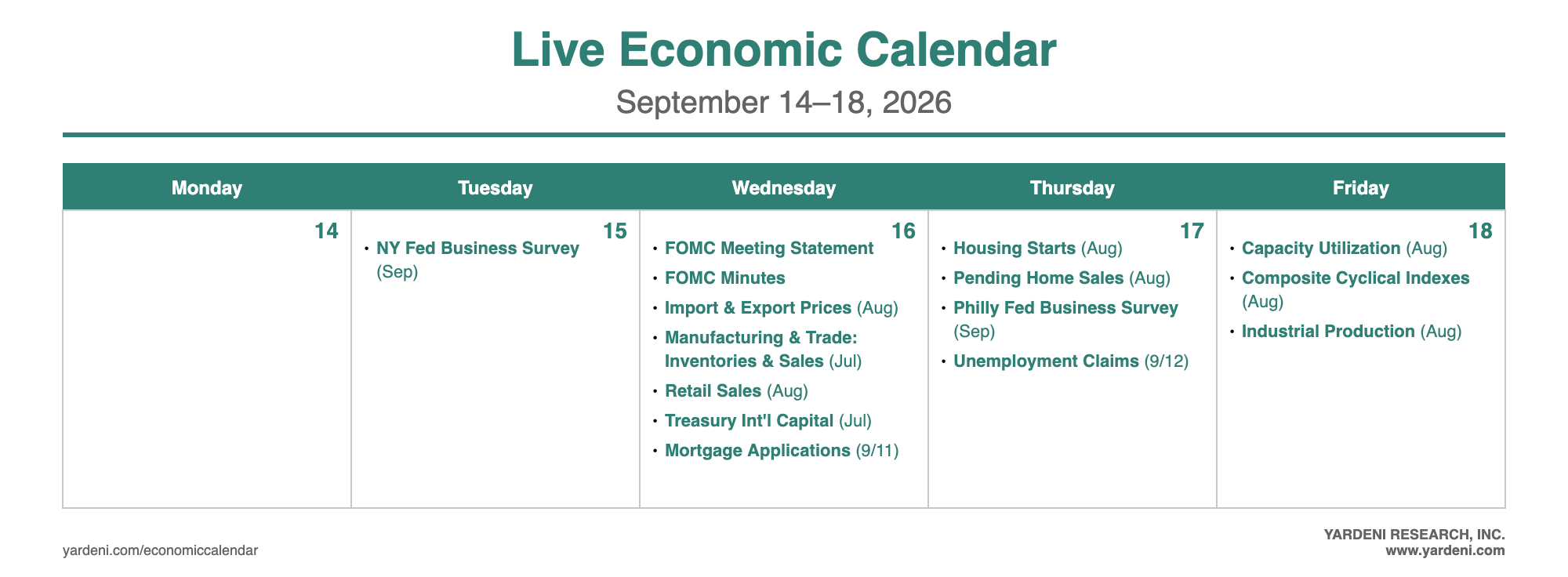
This week, attention turns to the Fed. The marquee event: Wednesday's FOMC meeting, including the release of the committee's Summary of Economic Projections (SEP). Retail sales and regional business surveys round out the domestic data reports. Overseas, both the Bank of England (BOE) and the Bank of Japan (BOJ) meet next week, with the financial markets expecting a BOE hold and a BOJ hike.
Here's more:
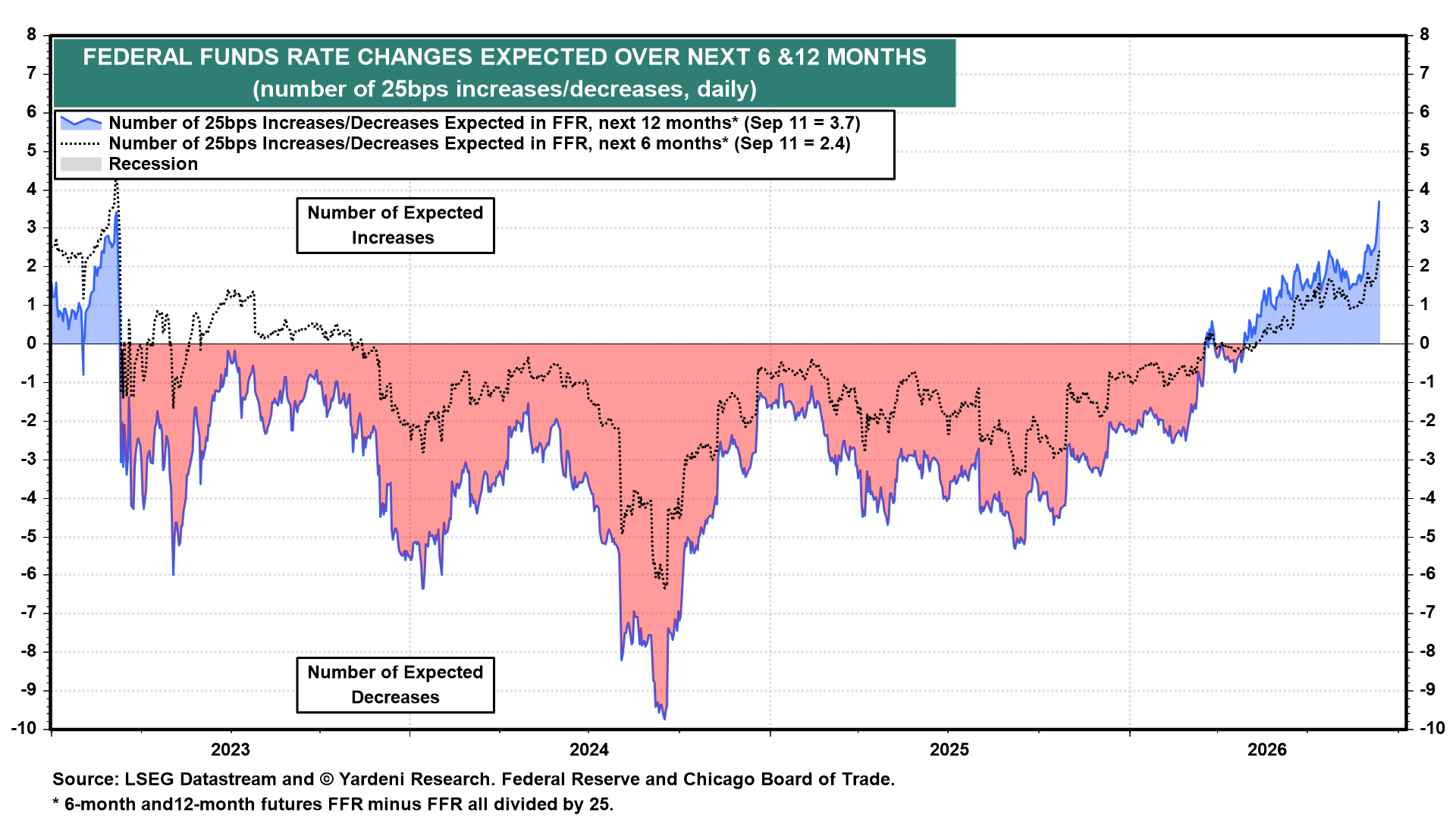
(1) FOMC & SEP. The FOMC's two-day meeting concludes Wednesday, followed by Chair Kevin Warsh's press conference. A rate hike is now priced at approximately 87% following Friday's hotter-than-expected August CPI and rebounding oil prices last week. Fed funds futures now imply 3.7 rate hikes of 25 basis points each over the next 12 months and 2.4 of them over the next six (chart).
June's SEP put the federal funds rate at 3.8% by year-end (chart). A September hike would push that projection higher still, and the accompanying core PCED forecast is likely to move up too given that higher-for-longer oil prices are likely to spill over into core prices.
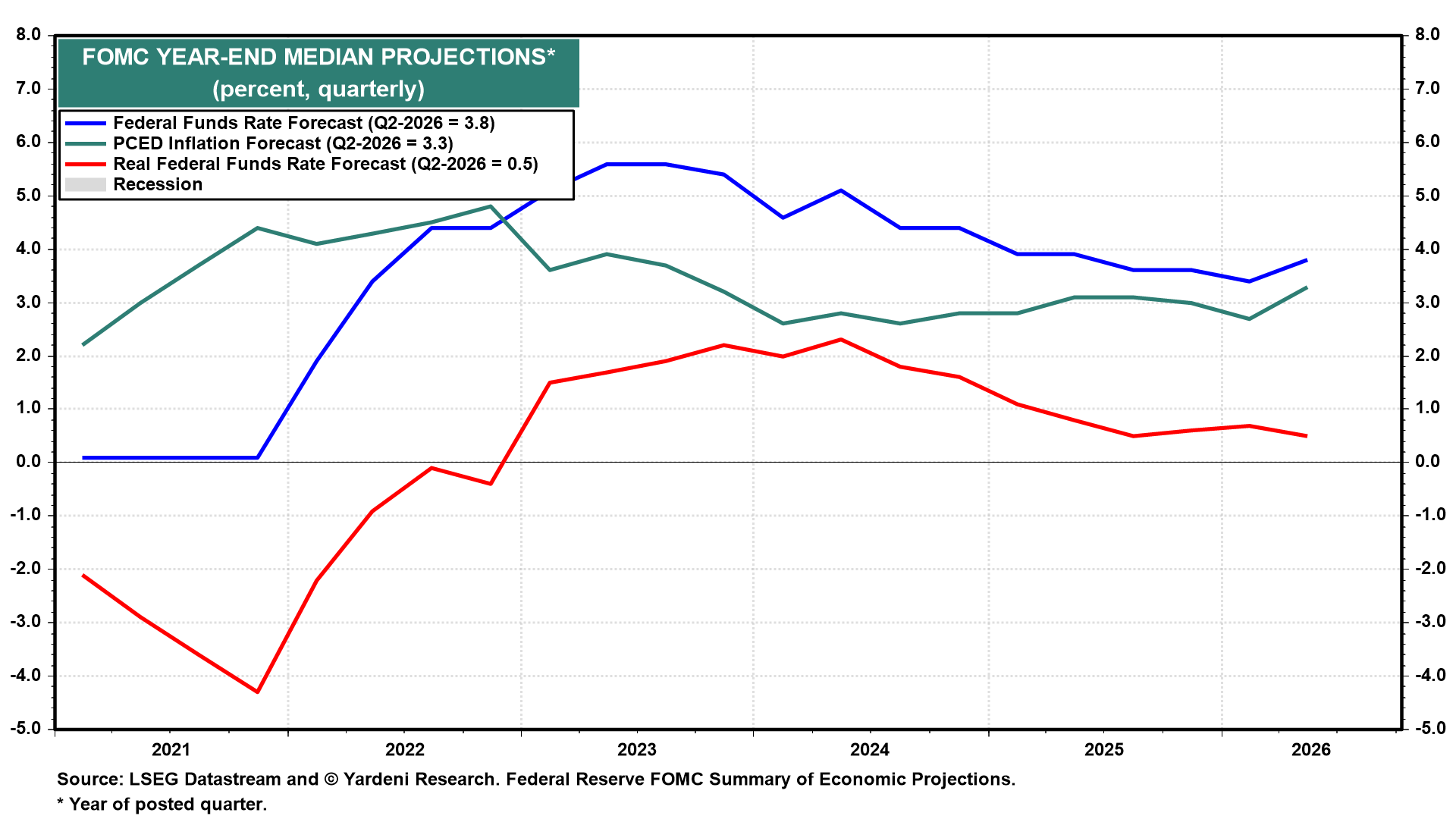
We said the Fed should have hiked back in July, when it was a contrary view. A move this week would help restore the Fed's inflation-fighting credibility and might ease some of the upward pressure on long-term yields.
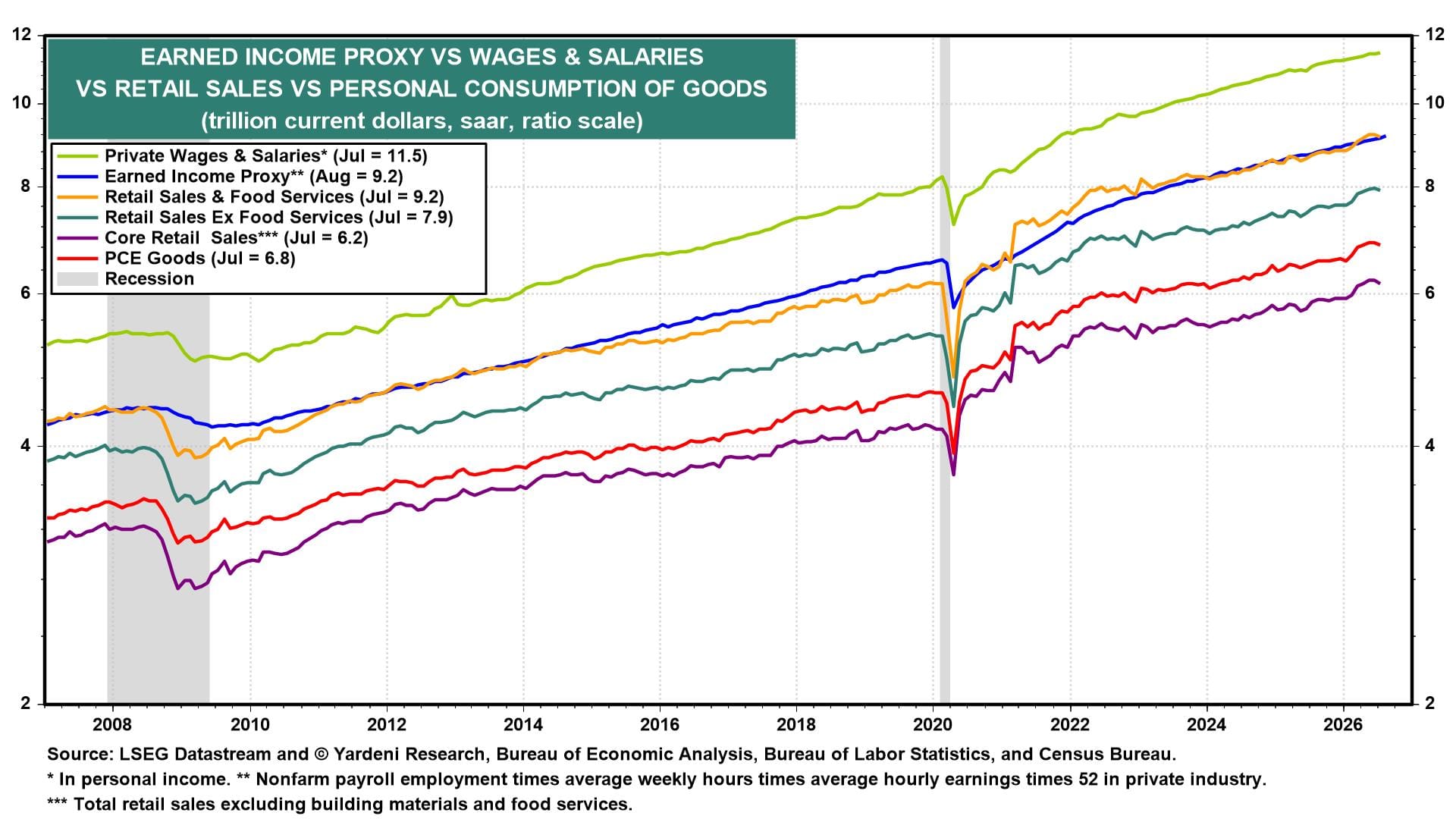
(2) Retail Sales. August retail sales (Wed) is expected to pick up month over month after July's decline. Our Earned Income Proxy for private industry wages and salaries increased 0.7% m/m during August, suggesting a similar increase in retail sales (chart).
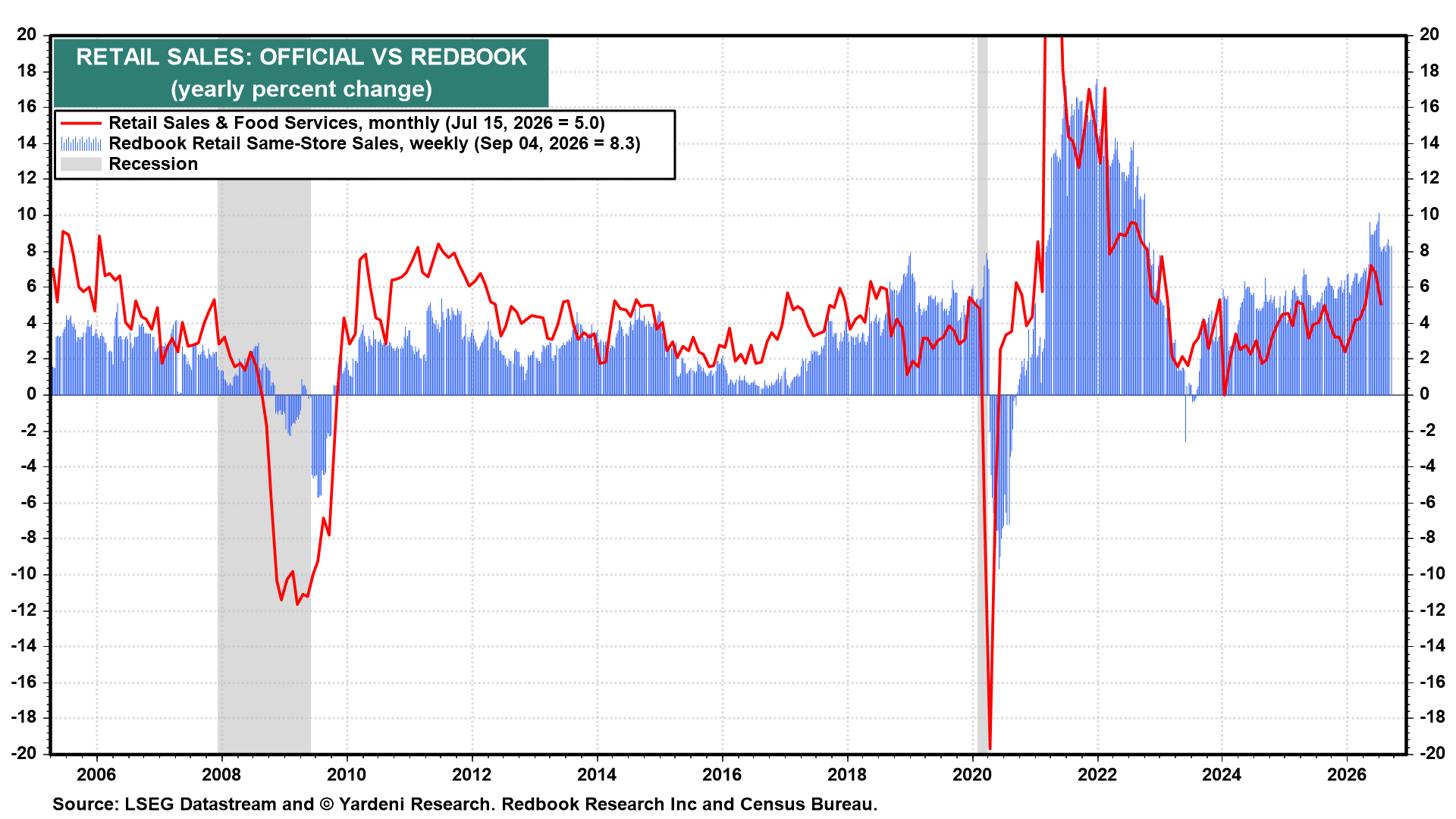
The Redbook same-store sales gauge held at 8.3% y/y for the week of September 4, pointing to solid consumer spending growth heading into fall (chart).
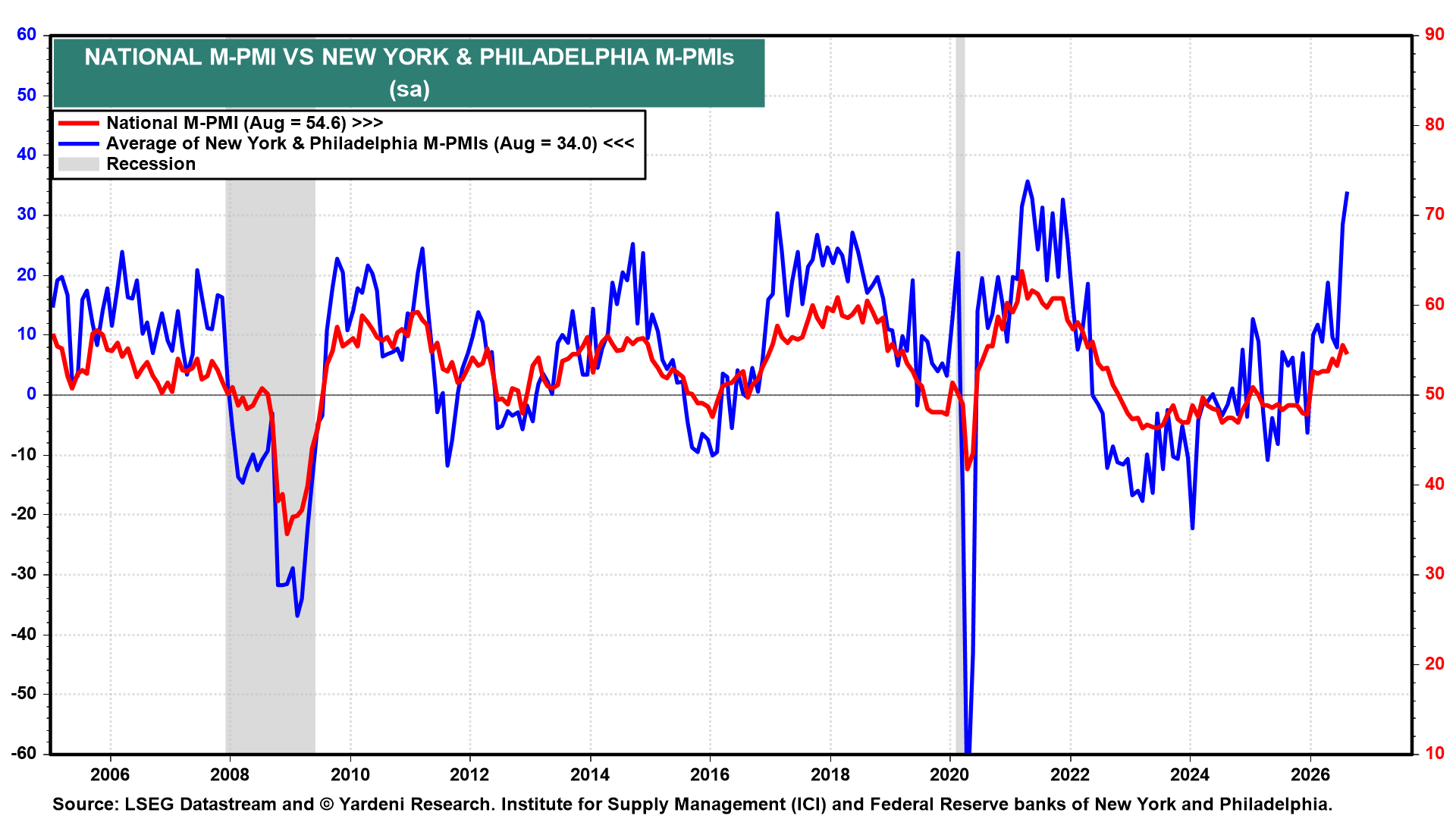
(3) Regional Business Surveys. September's NY and Philly Fed surveys (Mon, Thu) both are expected to ease after strong August readings averaging 34.0, near the strongest since 2021 (chart). The five regional gauges' averages have been reliable leading indicators of the national M-PMI in the past.
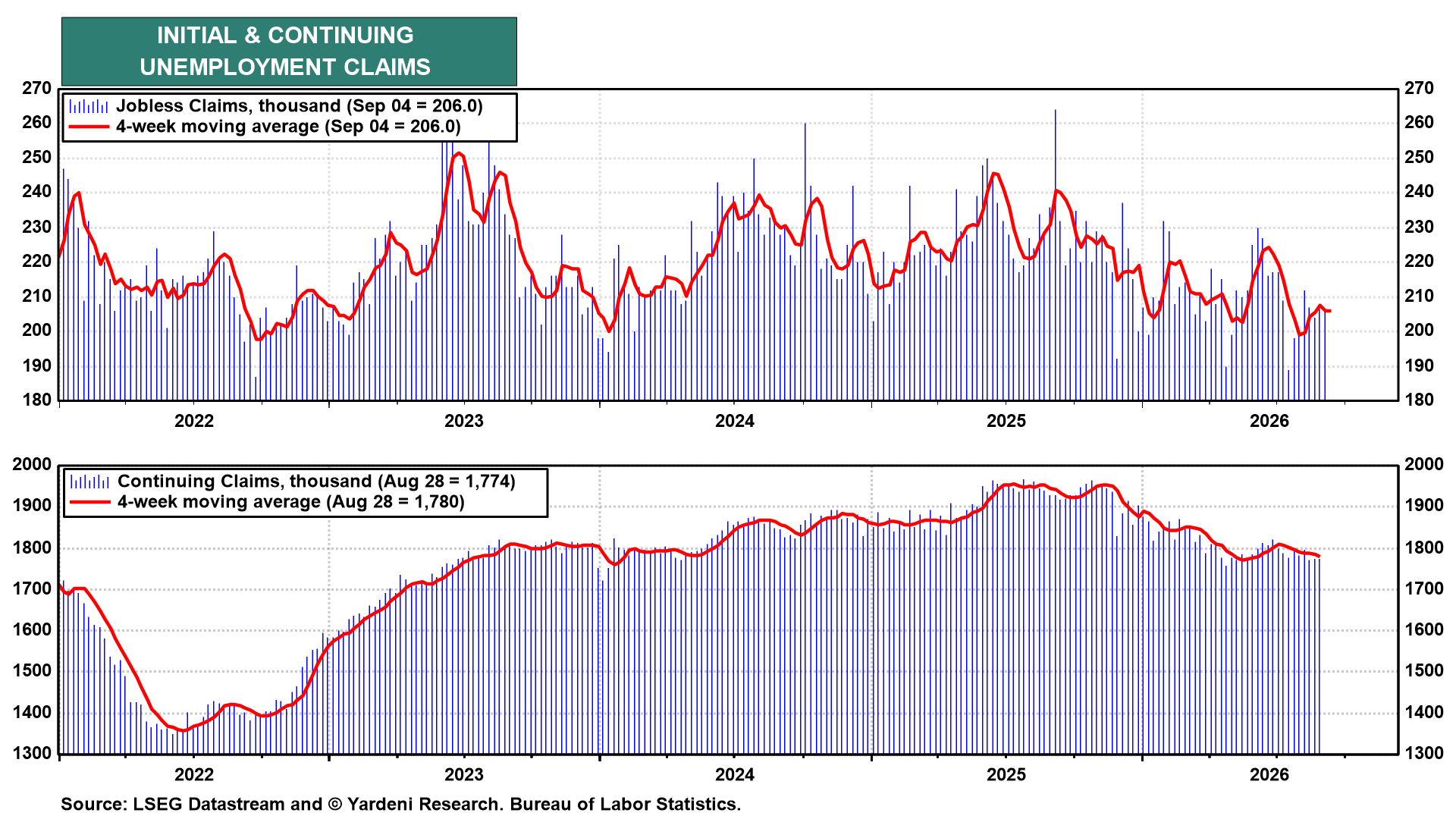
(4) Unemployment Claims. Initial jobless claims (Thu), covering the week ended September 11, follow last week's 206,000 print, matching the four-week average (chart). That follows August's payrolls report, which added 162,000 jobs while the unemployment rate held steady at 4.1%, confirming stable labor market conditions at full employment.
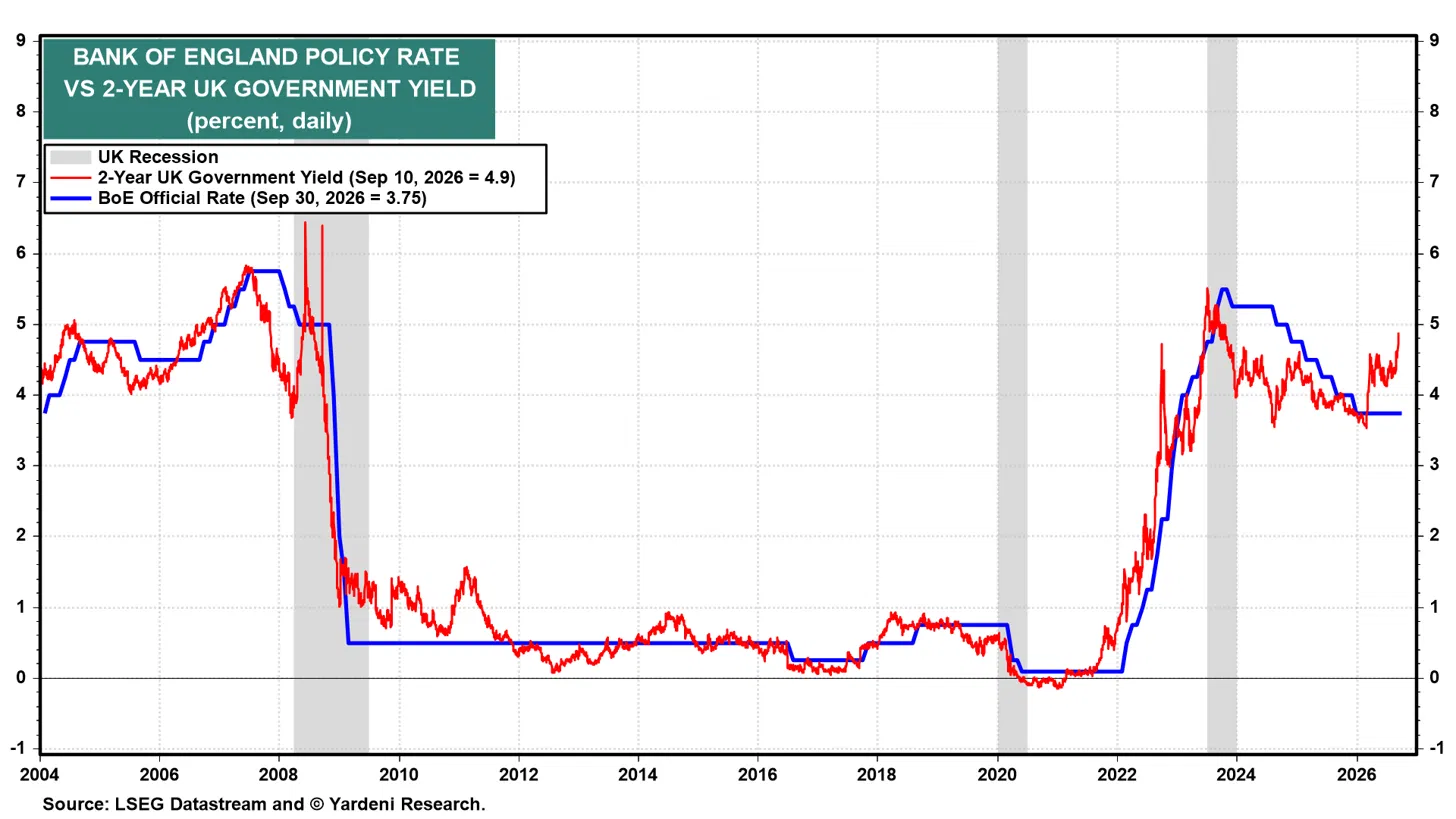
(5) Global Central Banks. The BOE (Thu) is expected to hold its policy rate at 3.75% (chart). Futures markets are pricing in a hiking cycle from November onwards that lifts the policy rate to roughly 4.50% by March, up from 3.75% today.
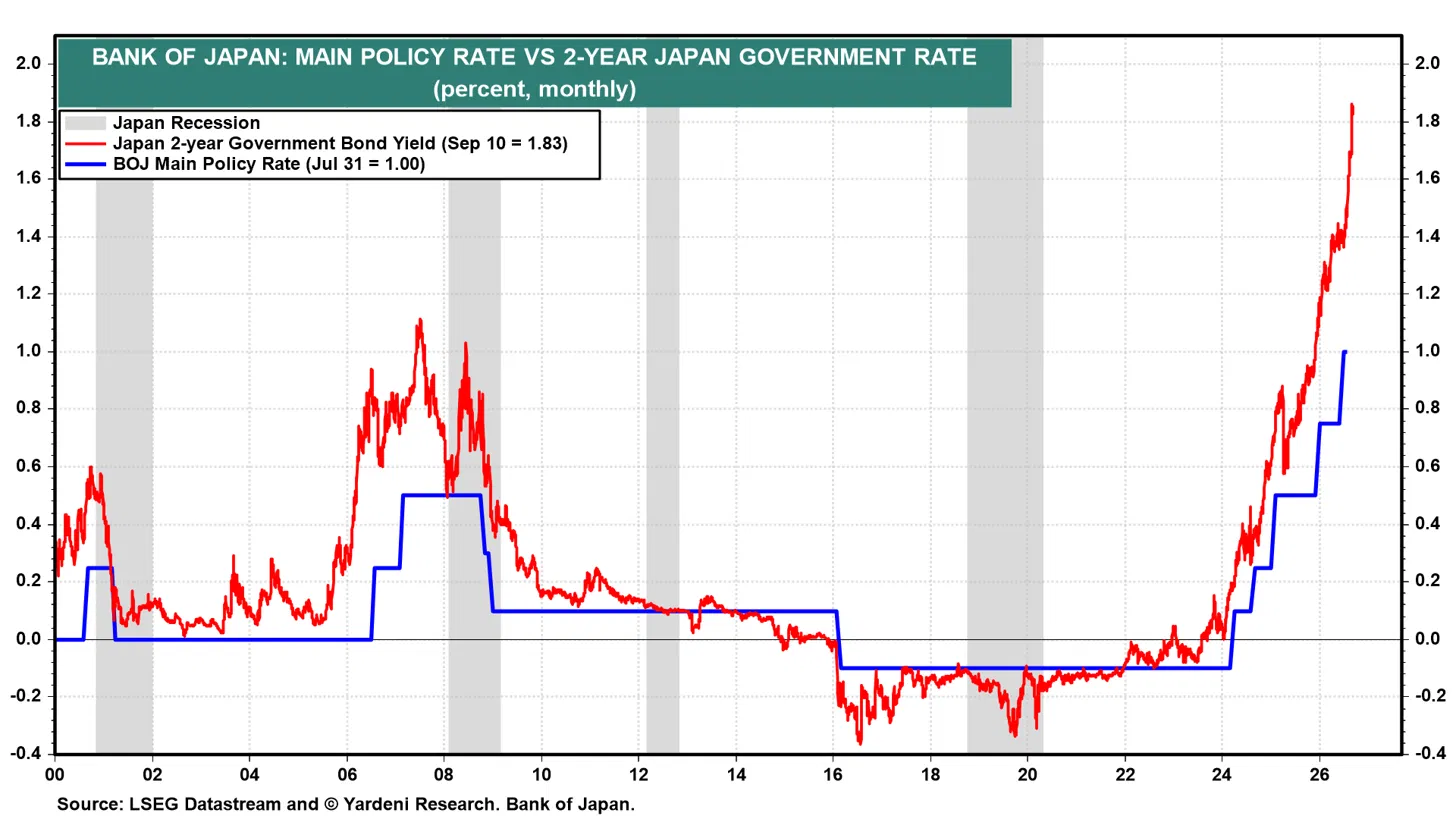
The BOJ (Fri) faces the opposite setup. The markets expect the BOJ to raise its policy rate to 1.25%, continuing a tightening cycle that has taken the rate from -0.10% in February 2024 to 1.00% today (chart). The policy rate is expected to rise to roughly 2.00% before the end of 2027. Governor Kazuo Ueda said the BOJ could accelerate that pace further if financial conditions stay too accommodative and inflation risks keep building.