I. Performance
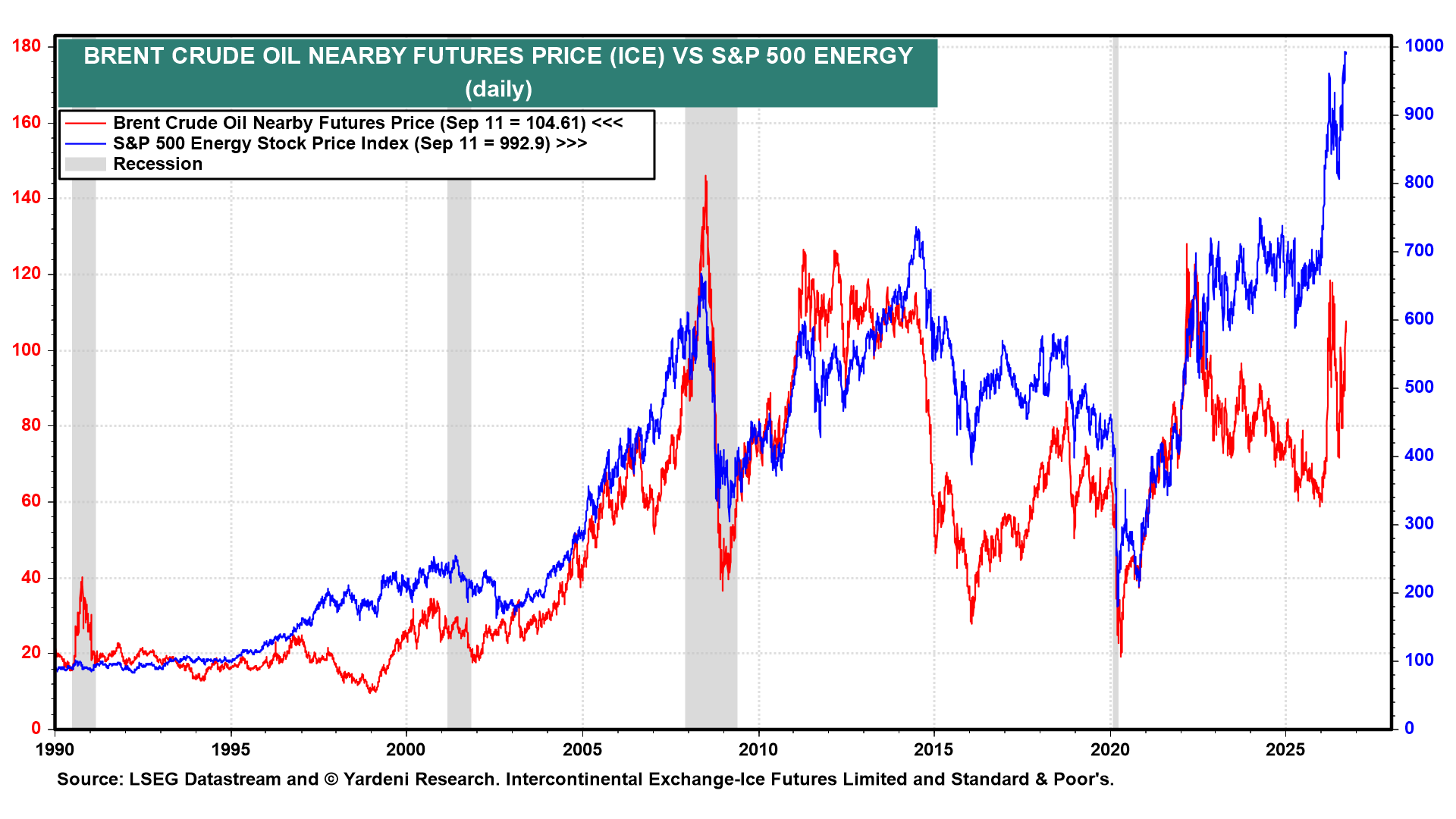
The good news is that our recommendation to overweight the S&P 500 Energy sector is working well (chart). The bad news is that it is doing so because the war in the Middle East has re-escalated. Saudi Arabia has shut down its East-West pipeline as a precaution after a drone attack that originated in Iraq. The pipeline had been moving 4 million to 5 million barrels of oil per day, amounting to 4% to 5% of global supply.
Oil prices shot up over the past week, and the retail price of diesel in the United States surged past a record-high $6 a gallon. Jacking the prices were two developments: The US and Iran both fired on oil tankers, and the Iran-aligned Houthis in Yemen advanced along the Red Sea, potentially extending disruption to another major oil route. If the Houthis close the Bab el-Mandeb Strait, that would deal another economic blow, constraining another 7% of global petroleum supplies and about 12% of global trade.
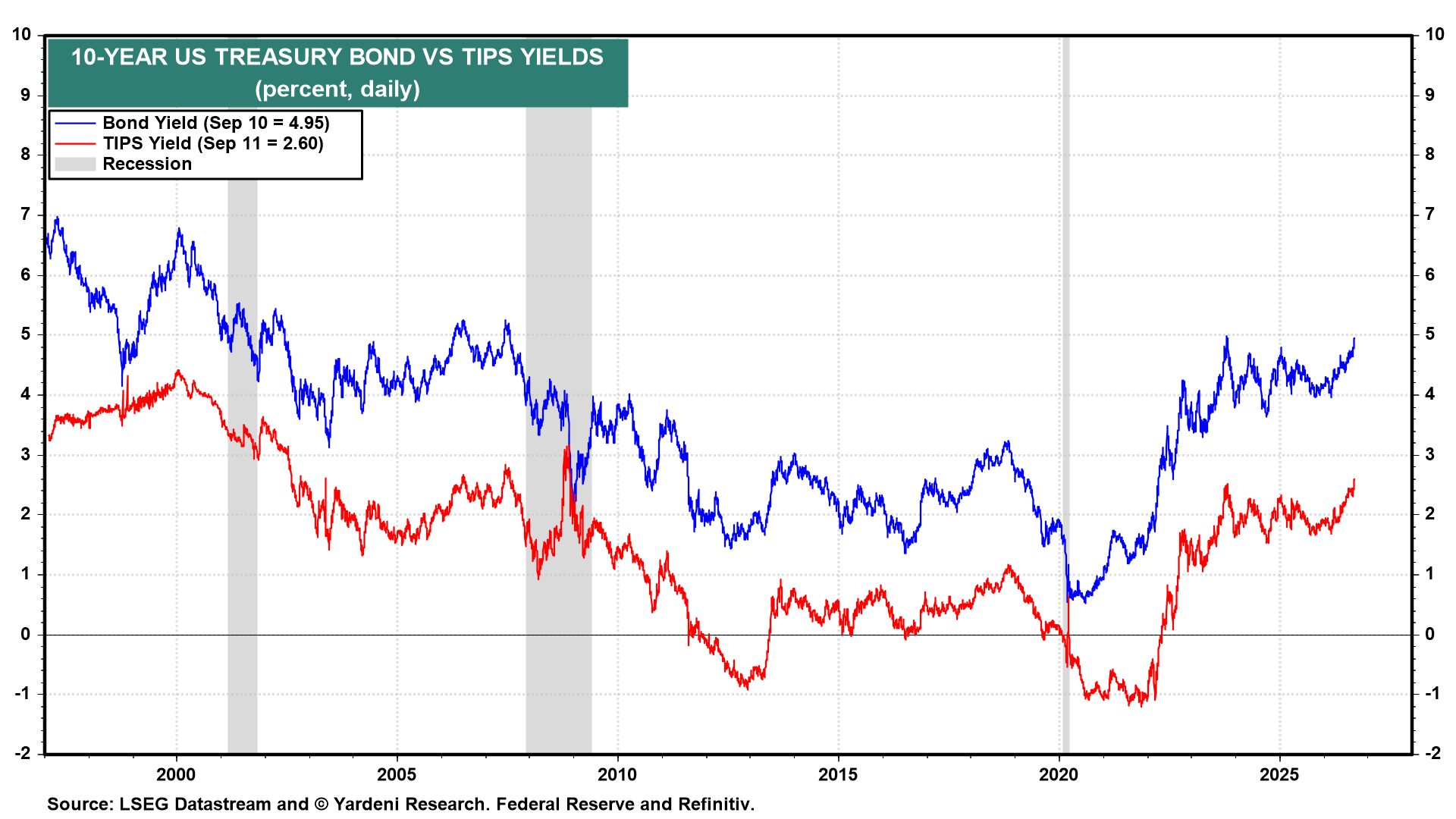
The latest rebound in oil prices above $100 a barrel boosted the 10-year US Treasury bond yield to nearly 5.00% and the comparable TIPS yield to 2.60% (chart). Yields are rising on fears that the war in the Middle East is far from over, resulting in higher-for-longer oil prices. If so, then the latest oil shock could spread inflationary pressures in the economy. That would increase the odds of a prolonged Fed rate-hiking cycle.
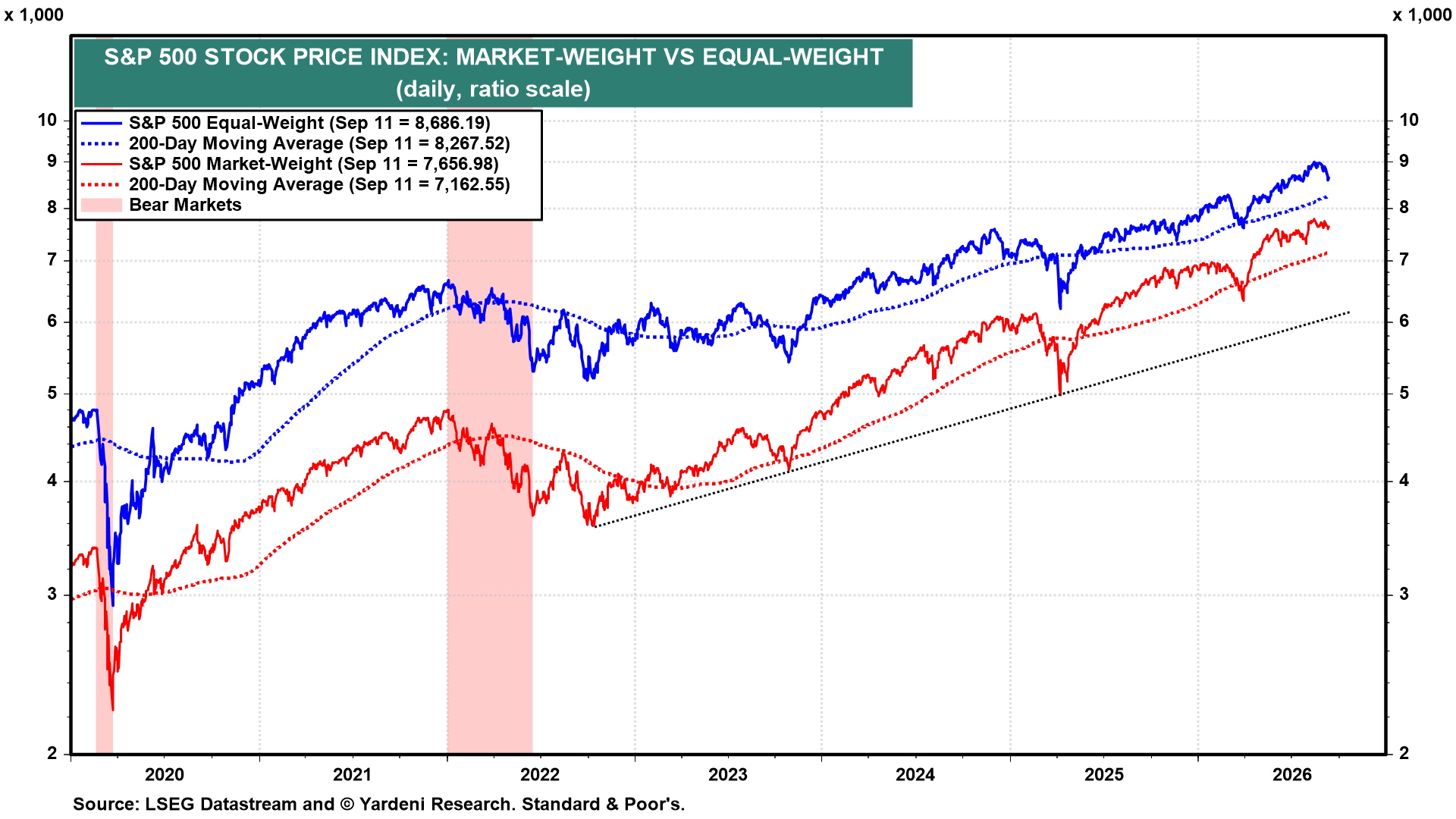
Yet the S&P 500 is down just 1.8% from its record high of 7798.99 on August 13 (chart). Over that same period, the equal-weight version of the index is down 3.5%.
II. Earnings
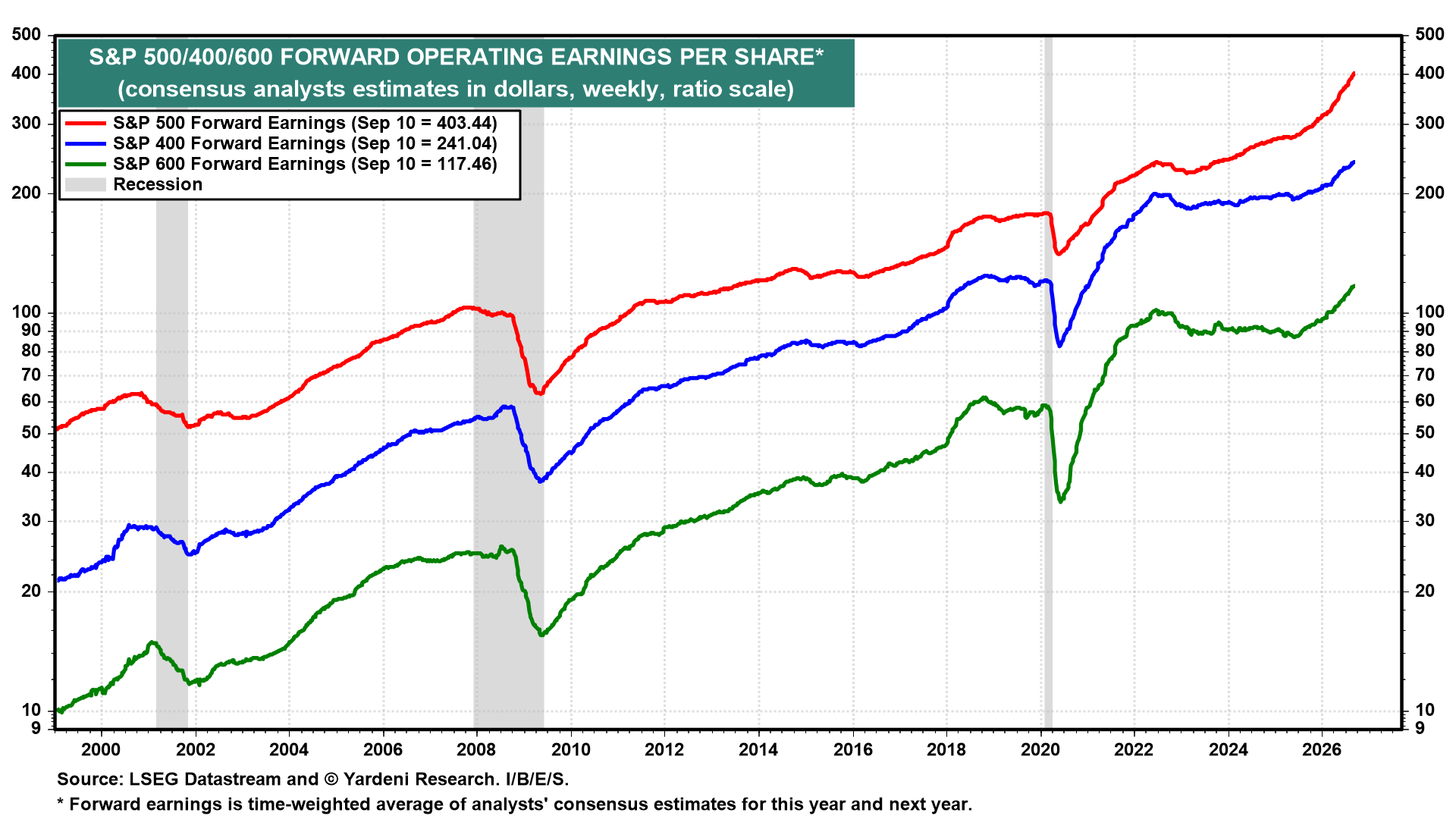
FEMO (Fabulous Earnings Momentum) continues to support stock prices despite the latest troubling developments. The S&P 500 forward earnings has risen to a record $403.44 per share (chart). By definition, it is approaching the analysts' consensus 2027 EPS estimate and will converge with that estimate by year-end. The consensus has risen to $419.54, and we think it could rise further to $425 by year-end. By the way, the 2027 estimate is not distorted by mark-to-market (MTM) capital gains, as is the 2026 estimate.
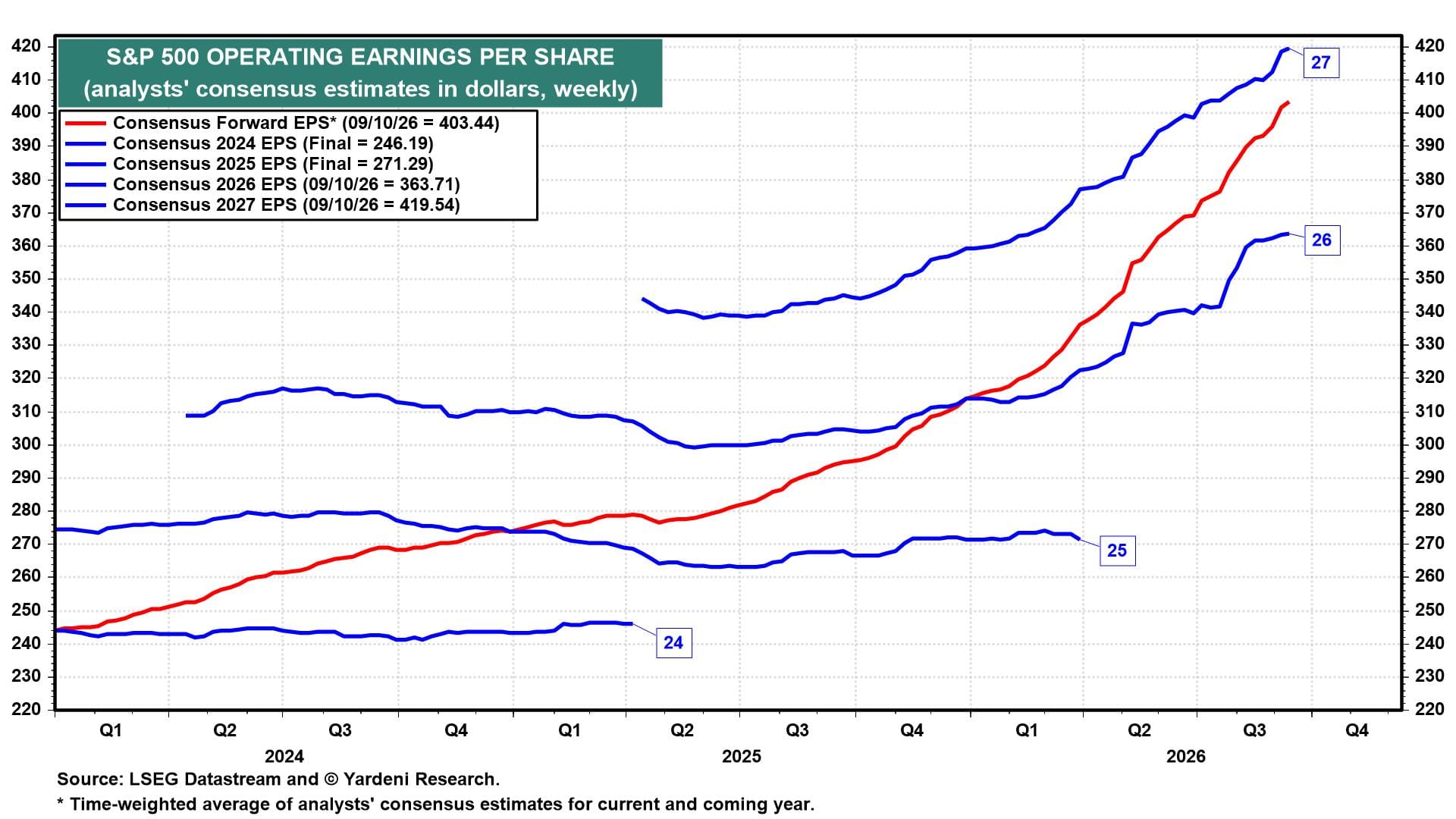
S&P 500 forward earnings has been rising at a faster pace in recent weeks (chart). This suggests that the underlying trend in actual earnings (excluding the recent MTM gains) remains very strongly to the upside.
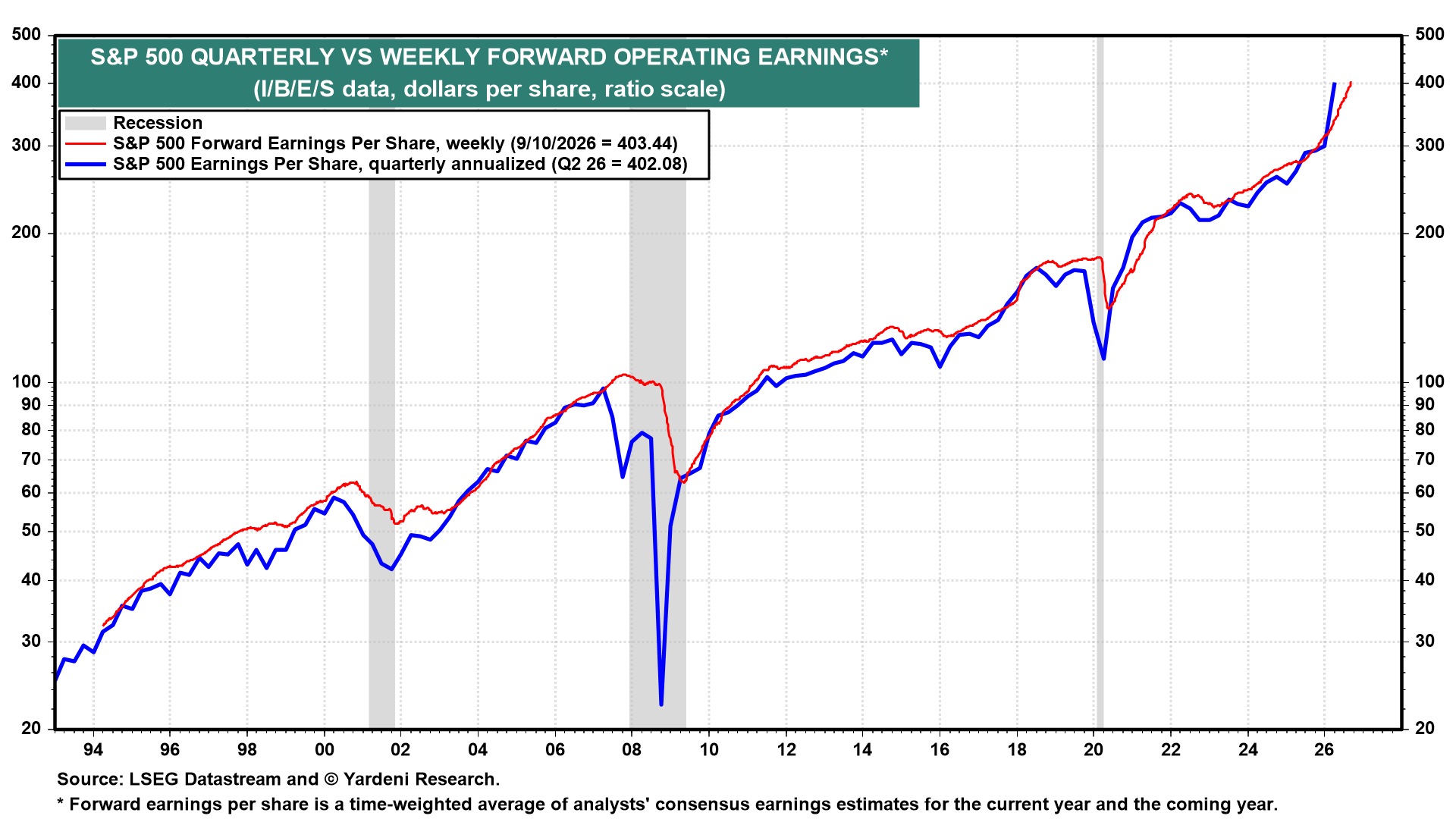
FEMO can be explained by the surprisingly strong pace of S&P 500 revenue growth (chart). It has accelerated this year, notwithstanding rising oil prices and bond yields.
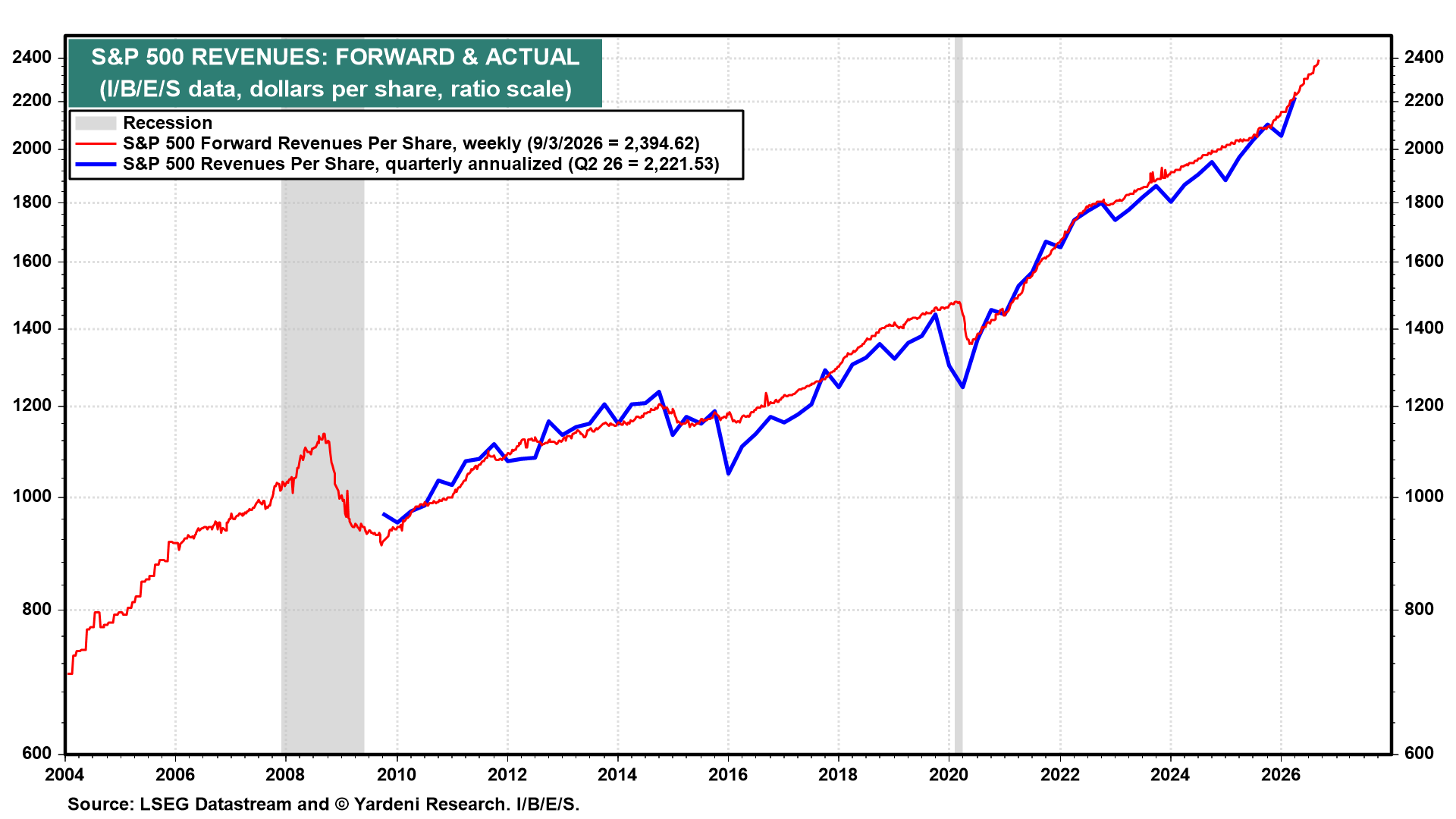
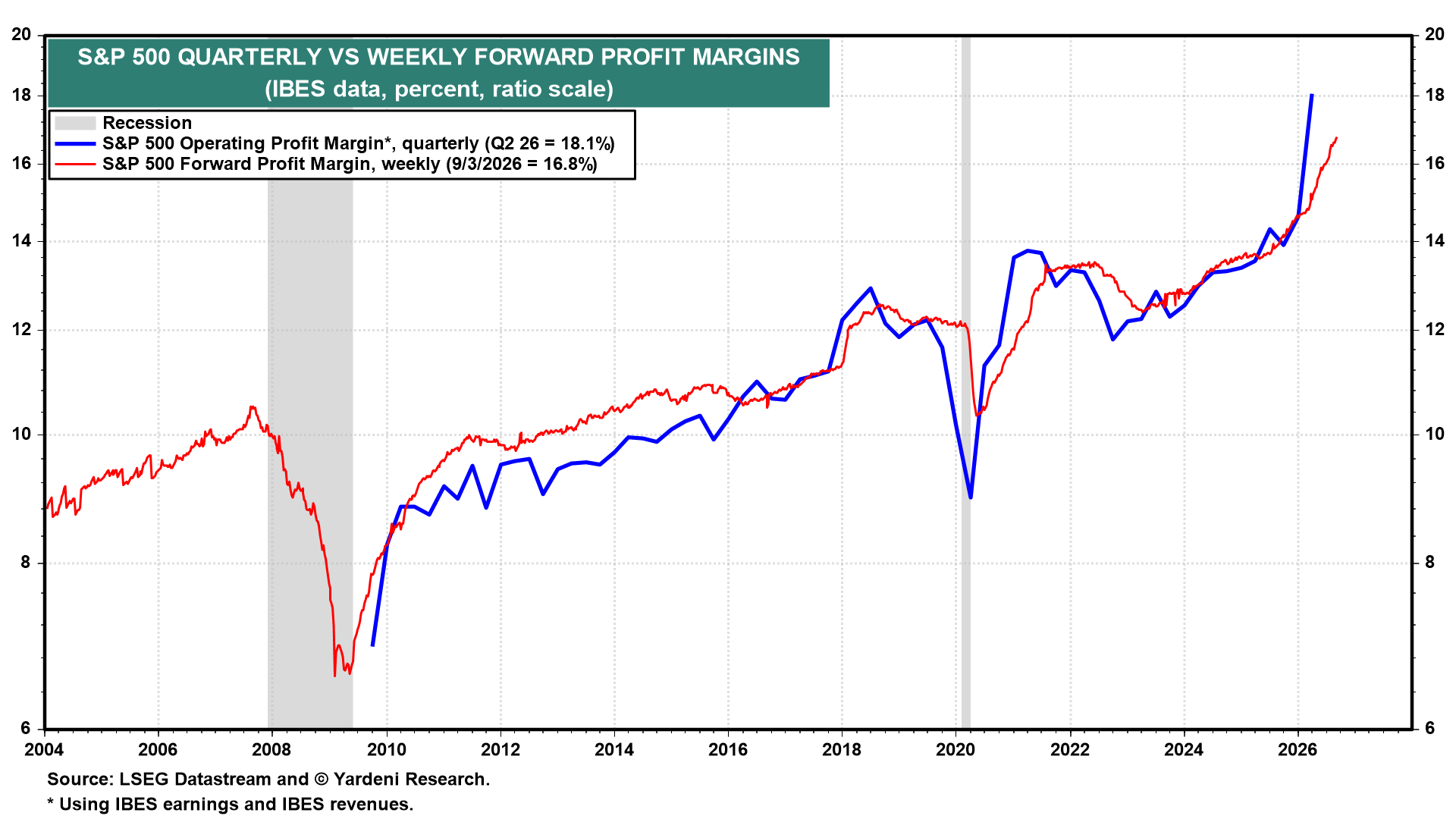
FEMO has also gotten a big boost from a spike in the S&P 500 profit margin (chart). The S&P 500 forward profit margin rose to a record-high 16.8% in early September, confirming that the trend is solidly to the upside even excluding the MTM distortion during the first two quarters of this year.
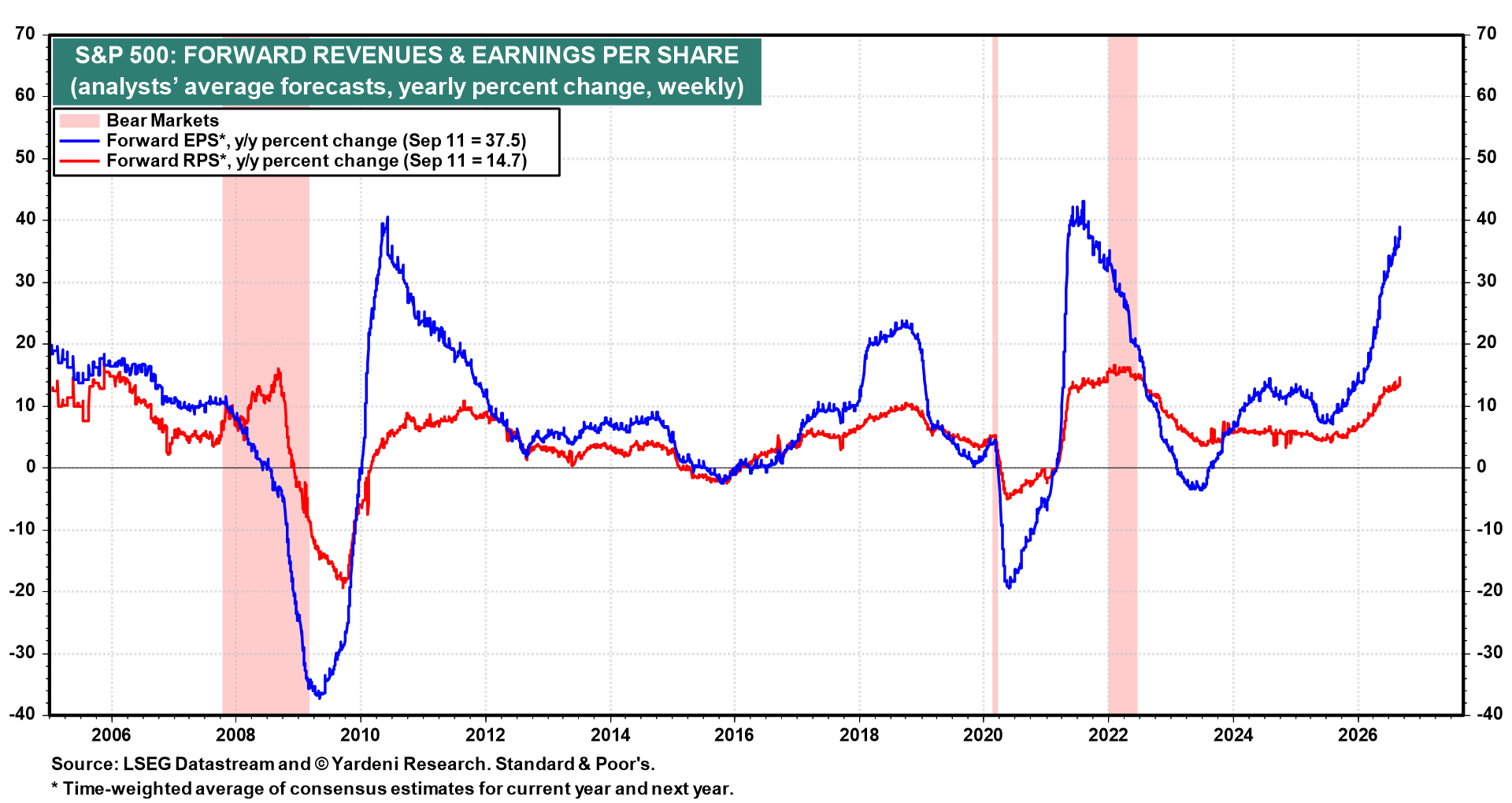
On a y/y basis, there is no sign of any slowdowns in the growth rates of either S&P 500 forward revenues or S&P 500 forward earnings (chart).
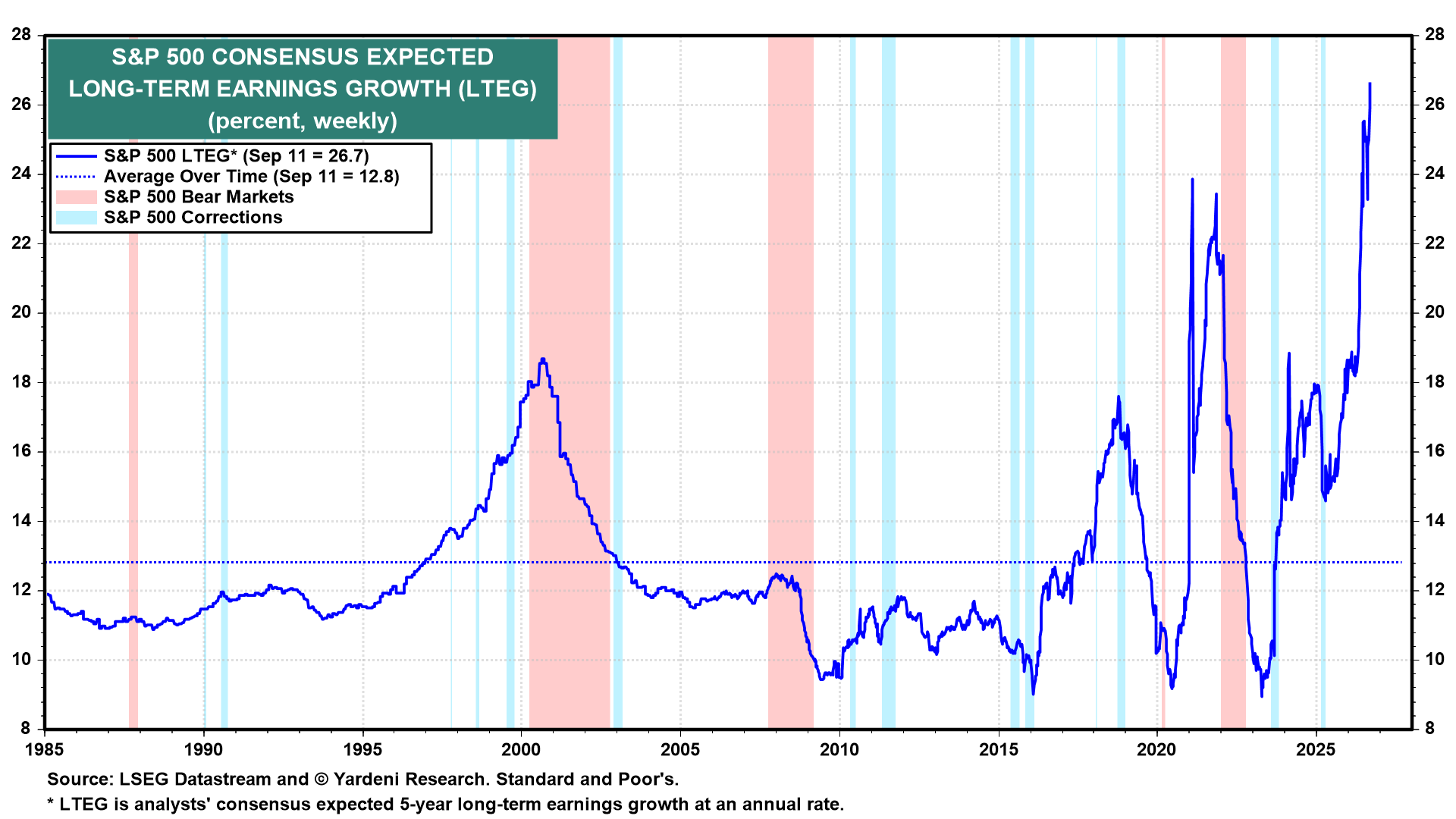
Even more remarkable is that analysts' consensus long-term earnings growth (LTEG) expectation continues to rise to record highs (chart). Last week, LTEG rose to 26.7%. Of course, such a rate of growth would be impossible given that nominal GDP growth is well below that. However, it reflects analysts' collective exuberance about the earnings prospects of the companies they follow.
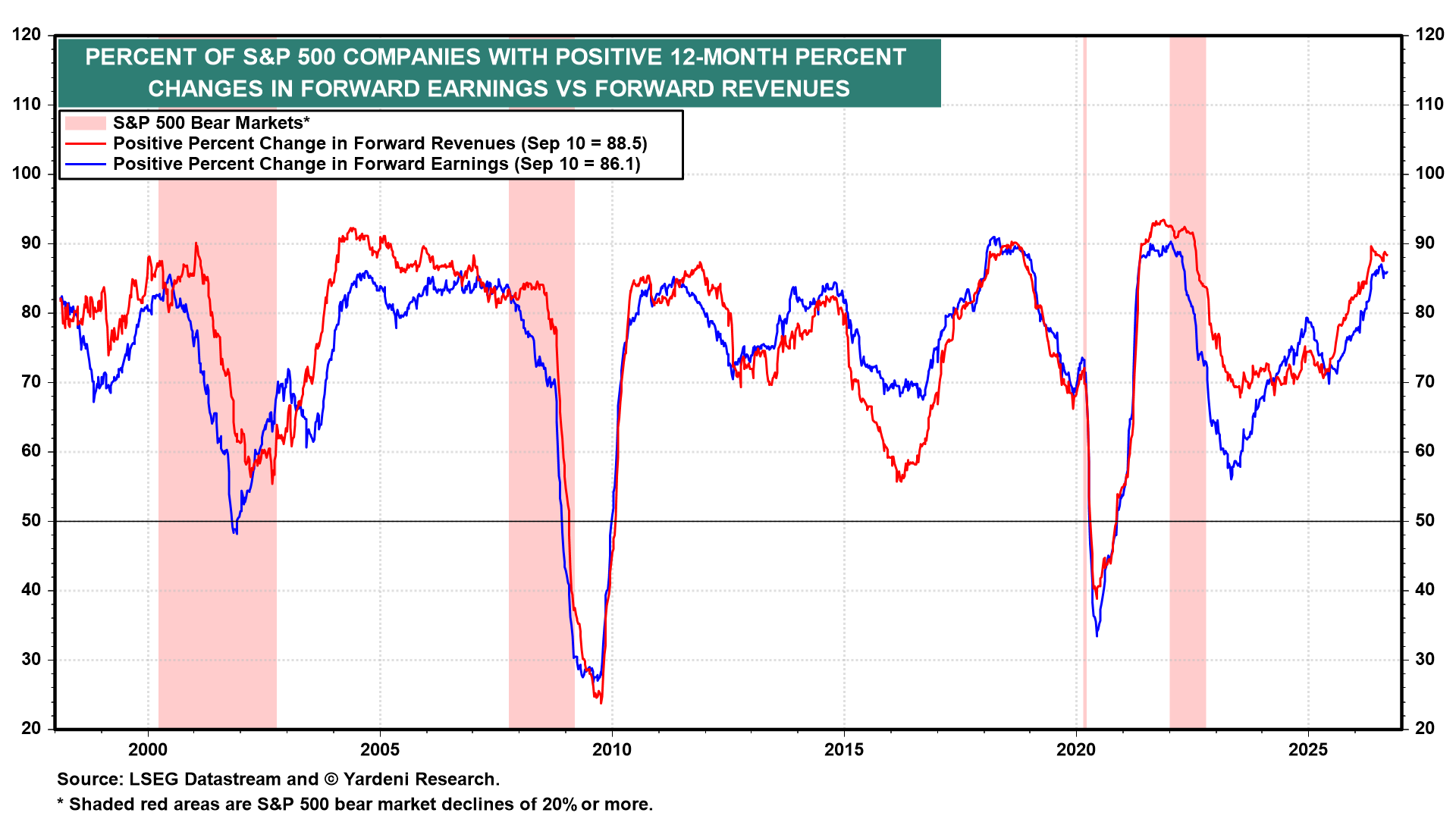
The dispersion of positive y/y percentage changes in S&P 500 forward revenues and forward earnings remains very high (chart).
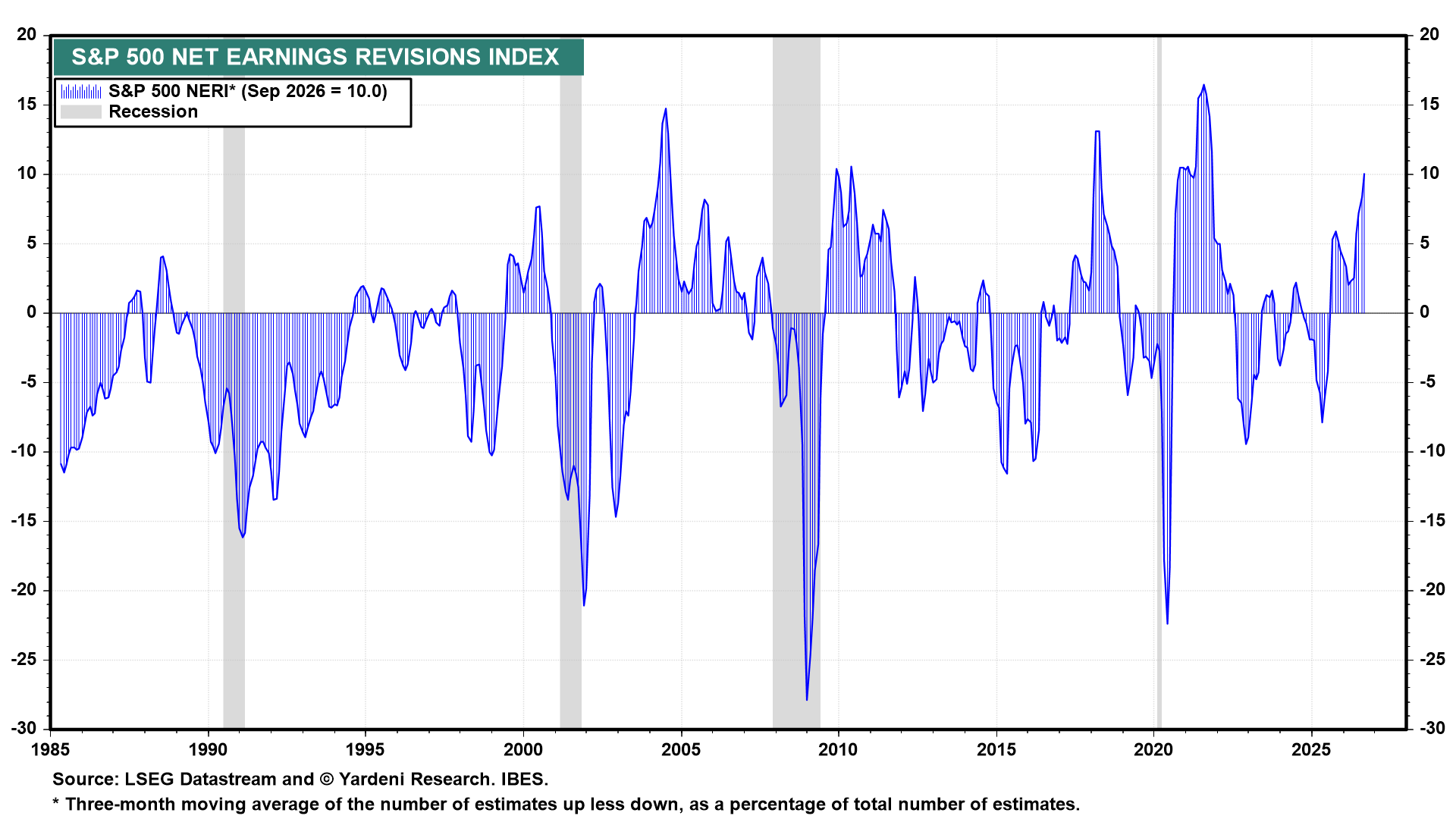
The S&P 500 Net Earnings Revisions Index also rose to a cyclical high in September (chart).
The forward earnings of the S&P 500, S&P 400, and S&P 600 all rose to record highs last week (chart).
III. Valuation
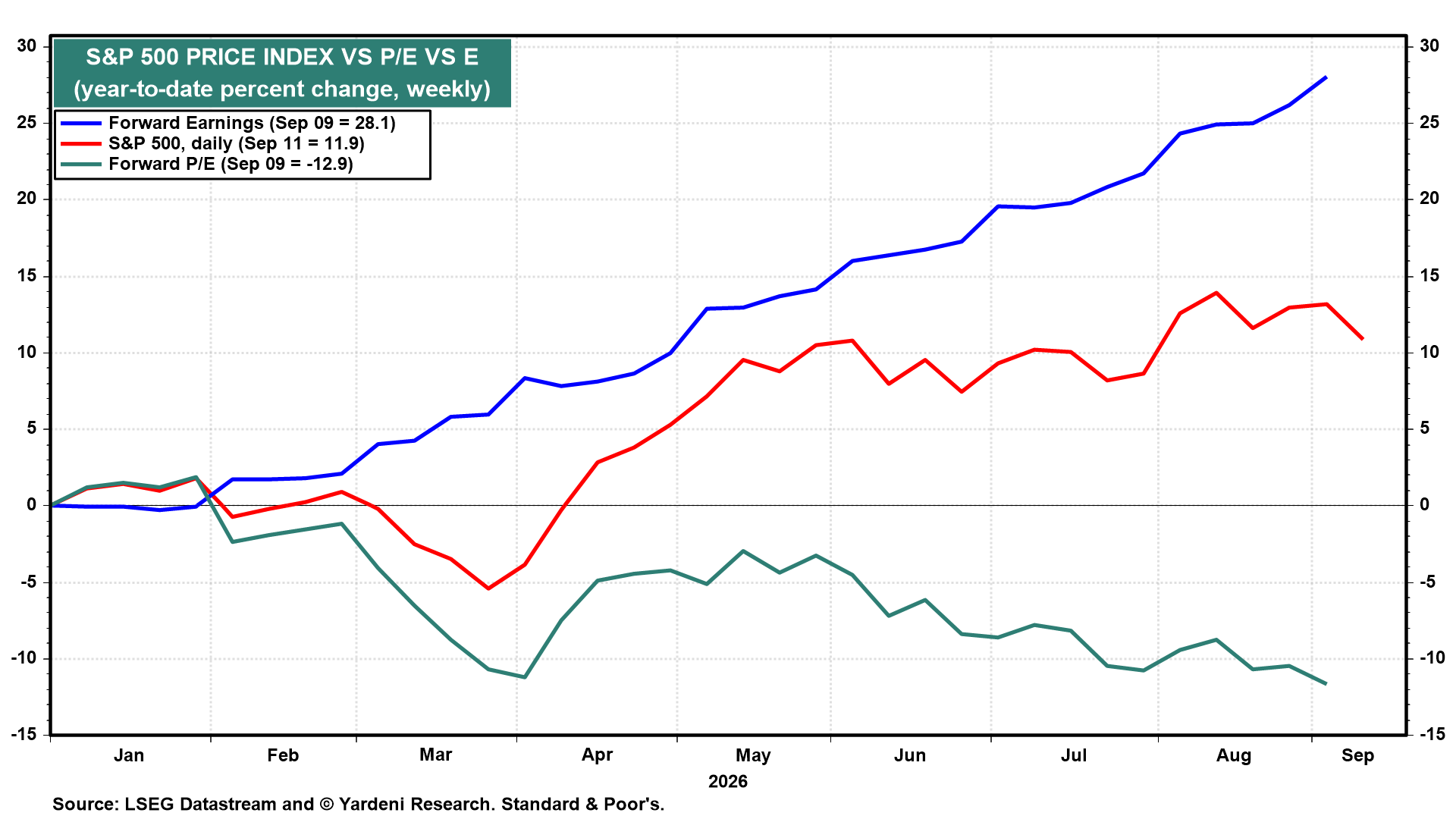
Since the start of the year, the S&P 500’s forward earnings has risen 28.1%, while its forward P/E has fallen 12.9% ytd (chart). Investors aren’t willing to pay as much for FEMO as they were in January. They may be concerned that analysts' EPS projections reflect a fair amount of irrational exuberance, even though that exuberance has been fueled by actual EPS results!
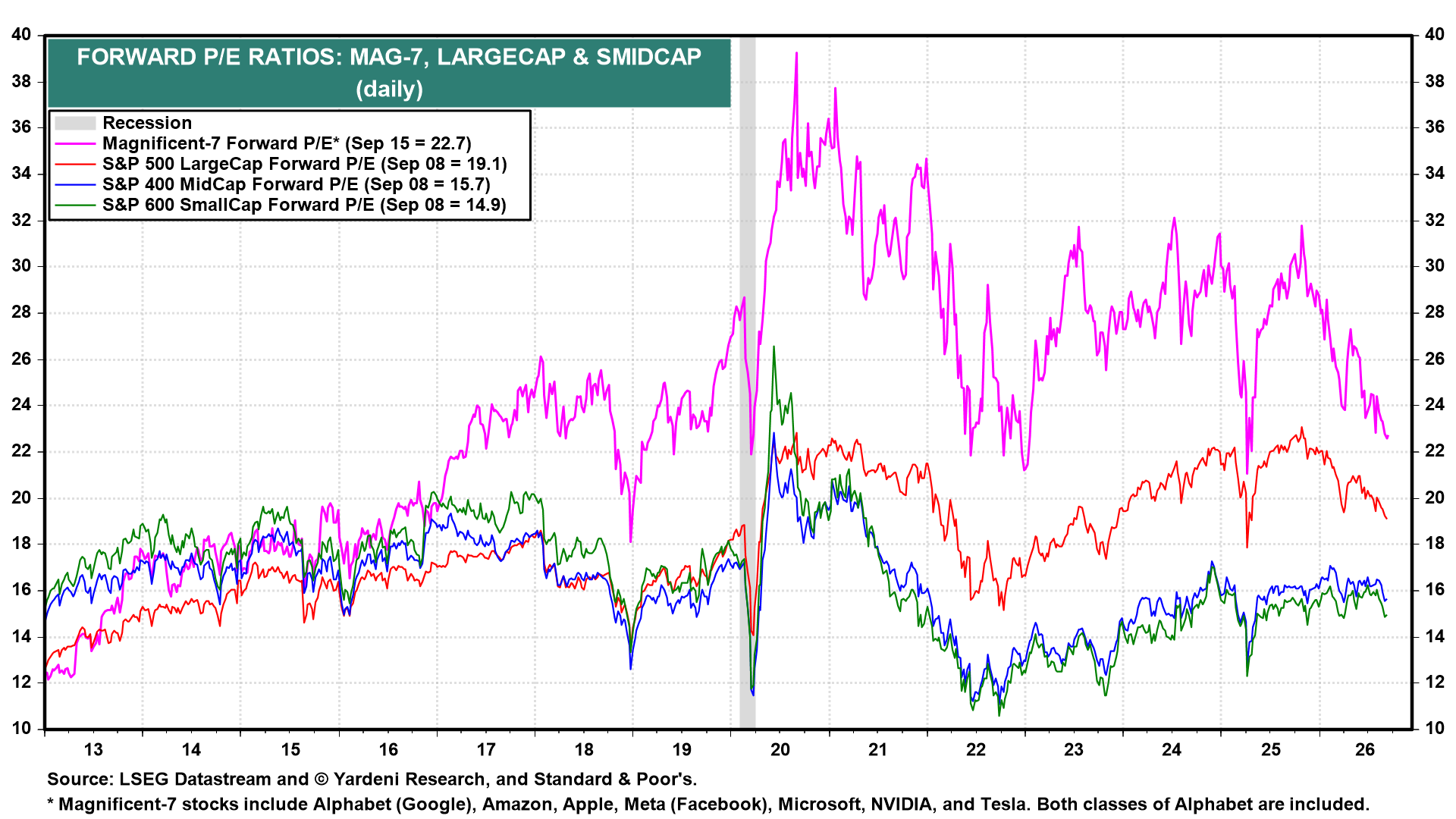
In recent weeks, the forward P/Es of the major market indexes have declined as forward EPS estimates have outpaced stock price gains (chart). FEMO has been partially offset by less FOMO!
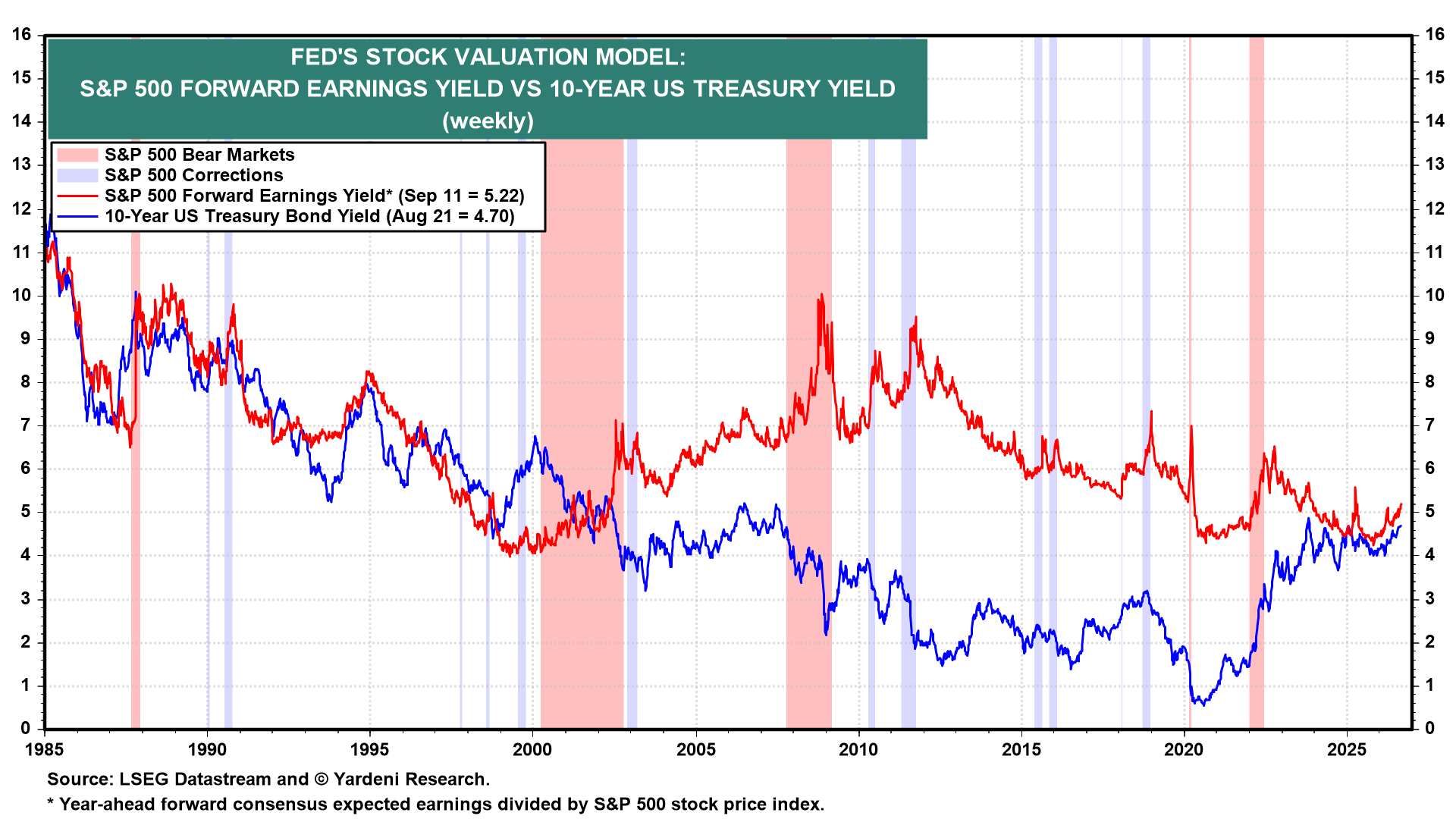
Also weighing on forward P/Es has been the rise in bond yields (chart). We are still projecting 8400 for the S&P 500 by the end of the year. That target might be hit with stronger forward earnings and a weaker forward P/E than we had expected. So we are raising our 2027 earnings estimate to $425 per share from $415 and lowering our forward P/E expectation to 19.7 from 20.2.
IV. Sentiment
Admittedly, recent developments in the oil and bond markets are unnerving. We are acknowledging that by lowering the odds of our Roaring 2020s scenario through the end of the decade from 80% to 70%. We are raising the odds of a more bearish outcome from 20% to 30%.
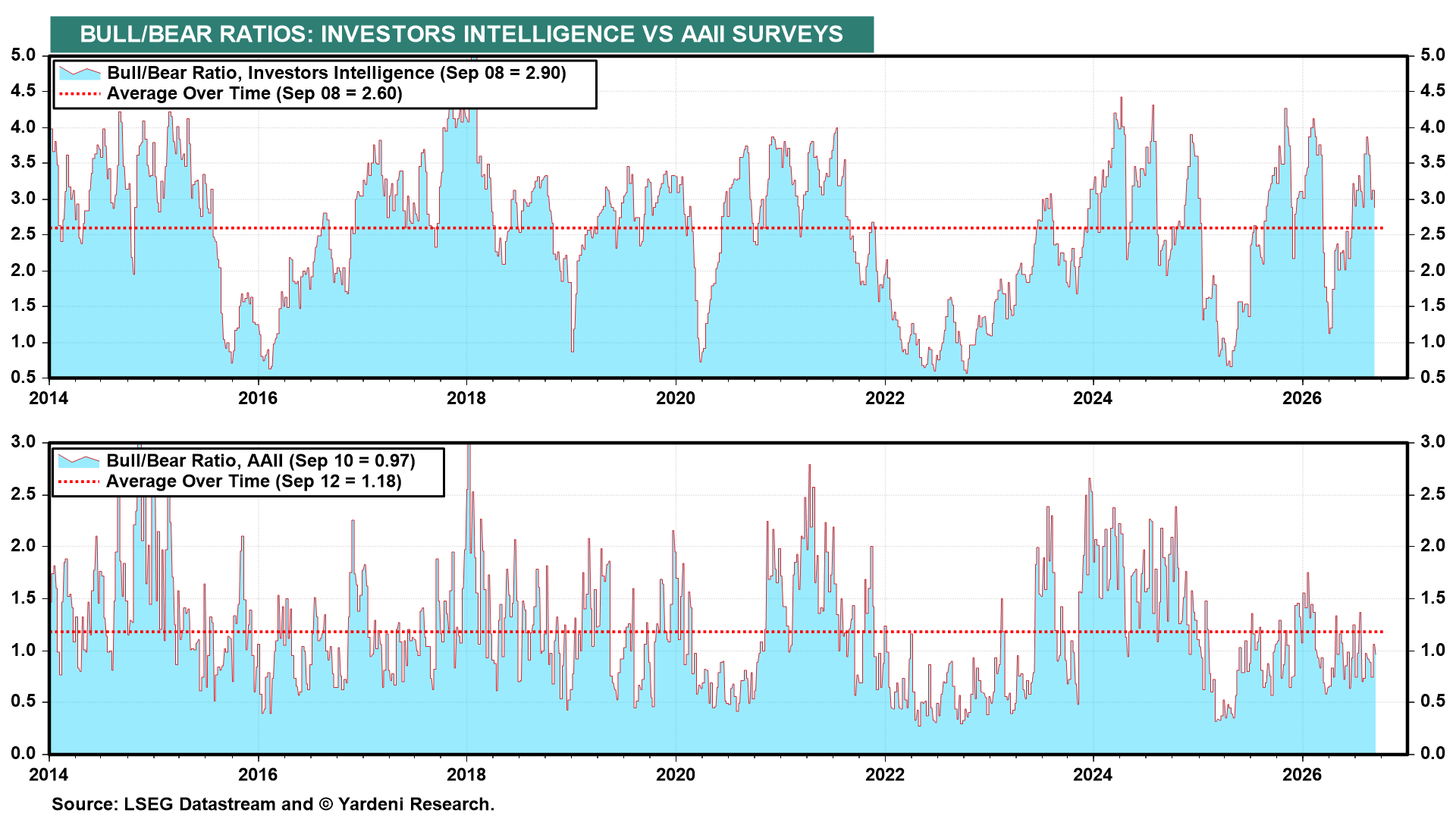
September has often been the toughest month of the year for stock investors. That could be the case this year too. The bull-bear ratios we track could fall sharply over the rest of the month because of the concerns we discussed above (chart). From a contrarian perspective, we would welcome that as a strong buying signal.