The answers are: Yes, Maybe, No, and No.
We have nothing to fear but nothing to fear. The stock market likes to climb a wall of worry. So too much optimism tends to be bearish, while too much pessimism tends to be bullish. Fortunately, there is plenty to fear these days. Indeed, in a recent LinkedIn post, billionaire Ray Dalio reiterated that recent events confirm that the US is on course for a debt crisis. Jeremy Grantham shares Dalio's deep pessimism, but his primary thesis focuses on an equity valuation "super-bubble" rather than an explicit sovereign debt crisis. Grantham believes the stock market is in the late stages of a historic bubble driven by AI exuberance, which he compares to the 1929 crash, the 2000 dot-com bubble, and the 1840s railroad mania.
Let’s examine the markets’ latest fears:
I. Fearing The Bond Vigilantes. In recent days, plenty of panic has focused on the Bond Vigilantes' role in pushing long-term Treasury yields higher. But panics often trigger a policy response. Sure enough: Treasury Secretary Scott Bessent recently responded with yen-buying so the Japanese government wouldn't be forced to sell its US Treasuries, announced larger Treasury bond buybacks, and suggested making those purchases through the Treasury General Account, which currently has close to $1 trillion in cash. These measures may be gimmicks, but they show the Treasury is intent on calming the Bond Vigilantes.
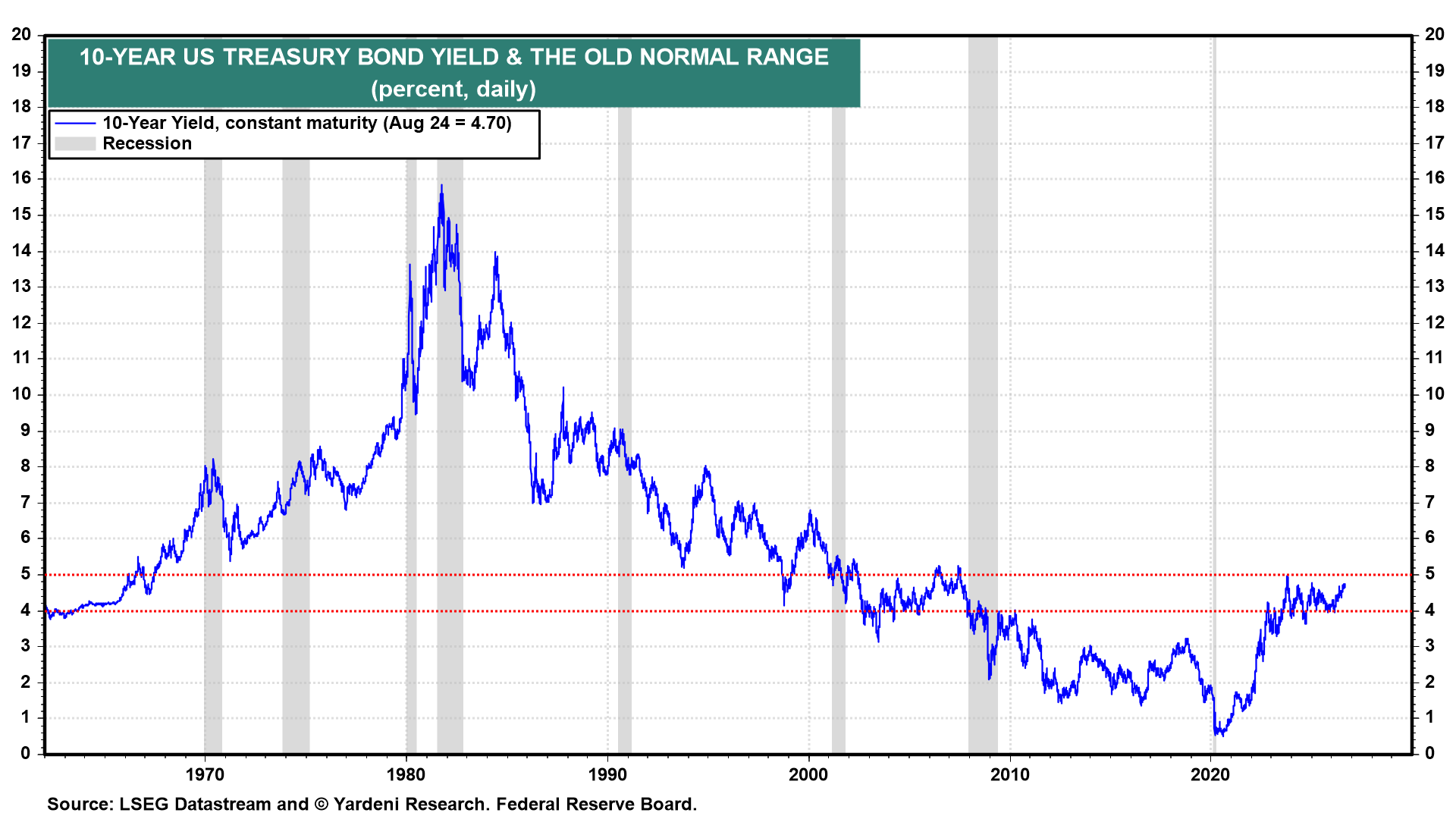
So far, so good. The 10-year Treasury yield is back down to 4.64% this evening from a recent high of 4.74% last Friday. It remains in what we call the "old normal" range of 4.00%-5.00%, which reflects a healthy economy (chart). Falling oil prices helped lower yields too today, reflecting mounting evidence that Iran no longer has the military means to effectively close the Strait of Hormuz.