What if the US won the war, but Iran can't surrender because no one is in charge over there? To make a deal, President Donald Trump needs someone to deal with. He was hoping to strike a deal this week in Islamabad, but the Iranians declined to meet because they are too busy fighting among themselves. Indeed, Trump, today, said that he extended the ceasefire because "the Government of Iran is seriously fractured, not unexpectedly so," a reference to US-Israeli assassinations of many of the country's leaders.
That seems to explain why President Donald Trump decided to extend the ceasefire indefinitely today. So, the US continues to blockade Iran's ports, while the Islamic Revolutionary Guard Corps continues to effectively close the Strait of Hormuz. The Iranian's figure Trump is setting them up for another surprise attack. They might be right. Or else, Trump may view the current situation as an acceptable status quo for now.
If so, that means that oil prices will remain higher for longer than Trump predicted. On the home front, higher-for-longer gasoline prices could raise concerns about consumer spending and the sustainability of the stock market rally. Nevertheless, we remain optimistic about the resilience of the economy and corporate earnings.
Consider the following:
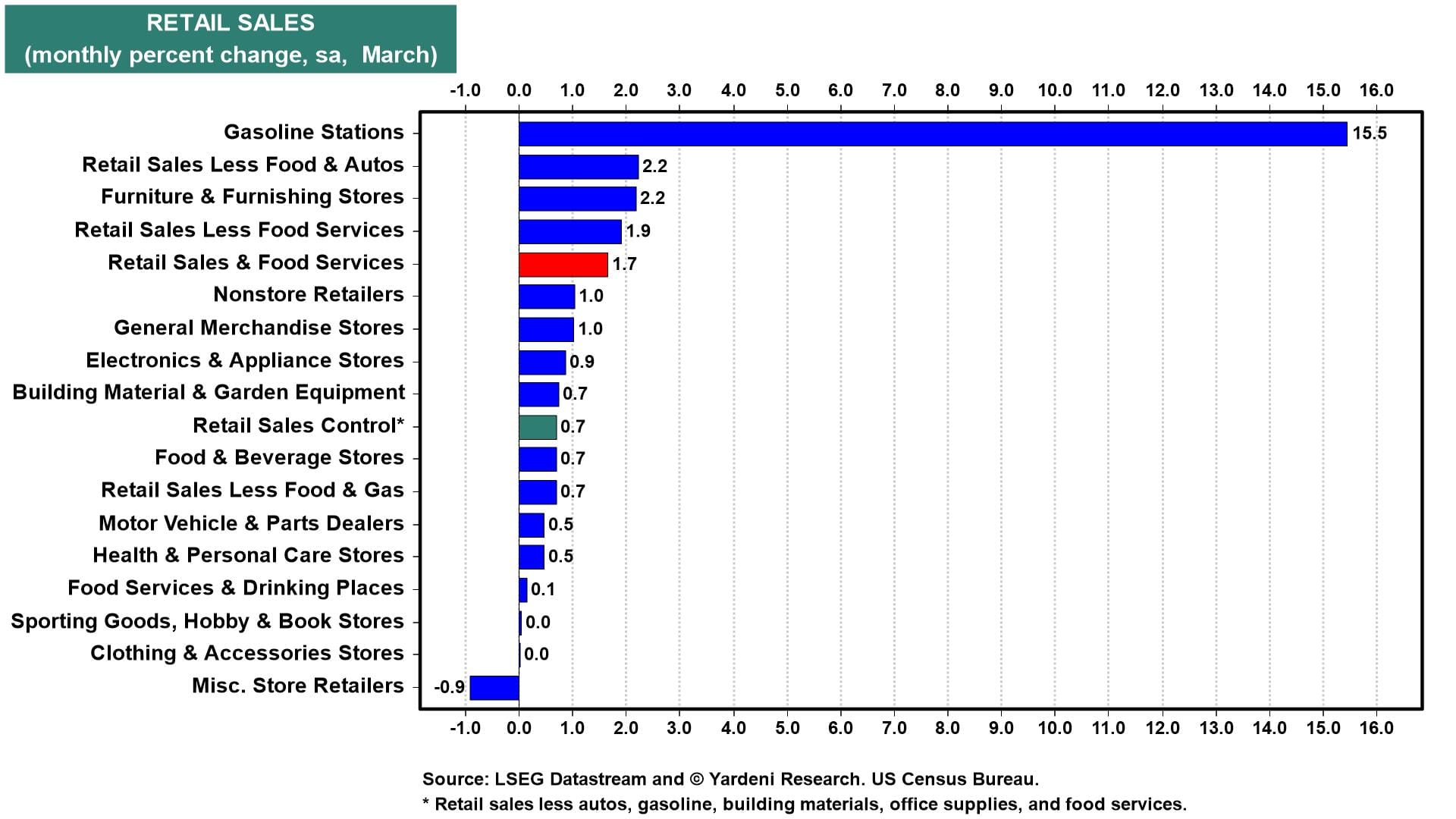
(1) Consumer spending. Today's retail sales report showed a solid 1.7% m/m gain in March (chart). But it was fueled by a 15.5% jump in gasoline prices. The retail sales control group rose 0.7%, up from 0.6% in February.
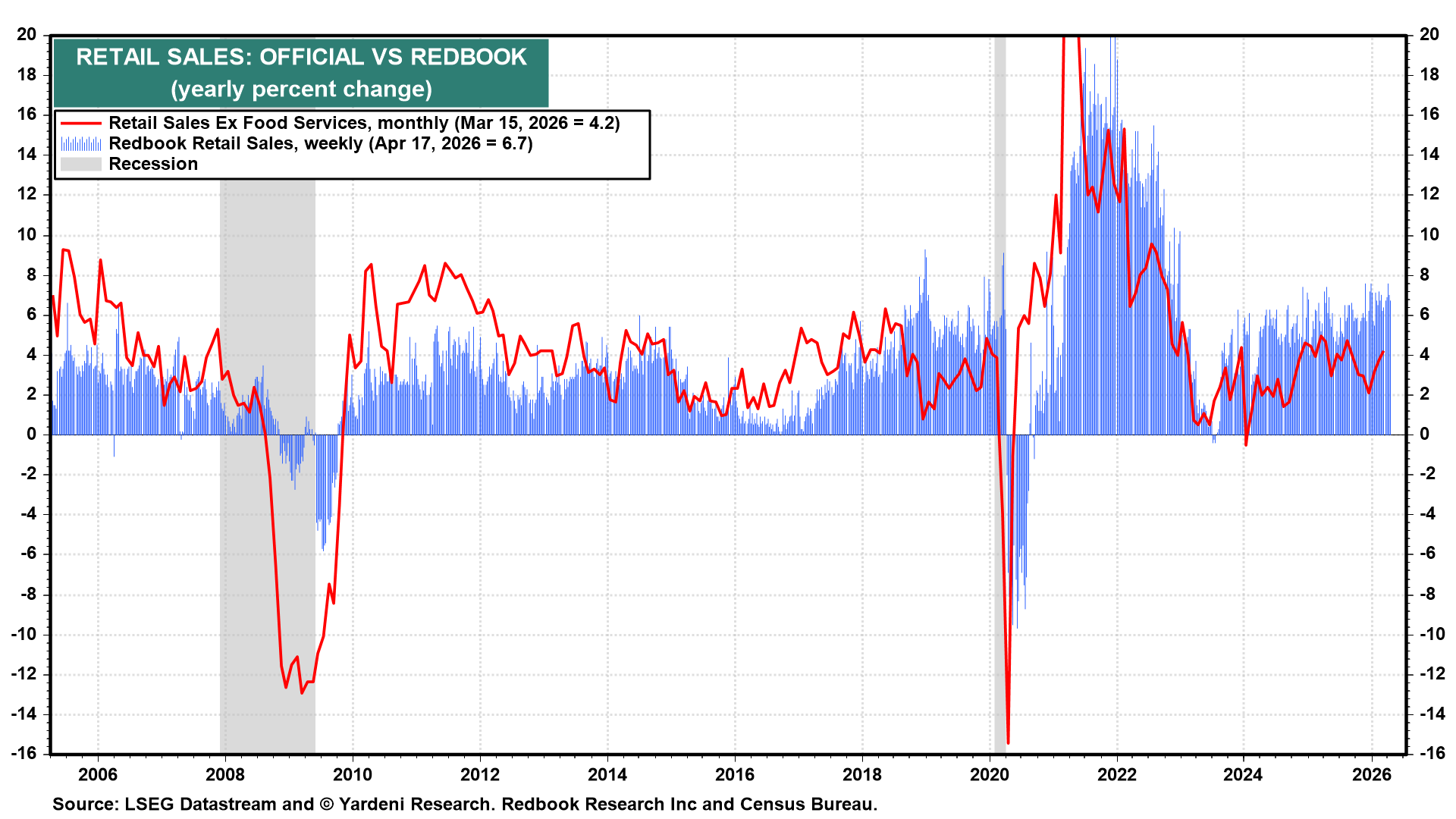
The Redbook Retail Sales Index of same-store sales for the week ending April 18 showed a solid gain of 6.7% y/y (chart). The index does not include gasoline sales.
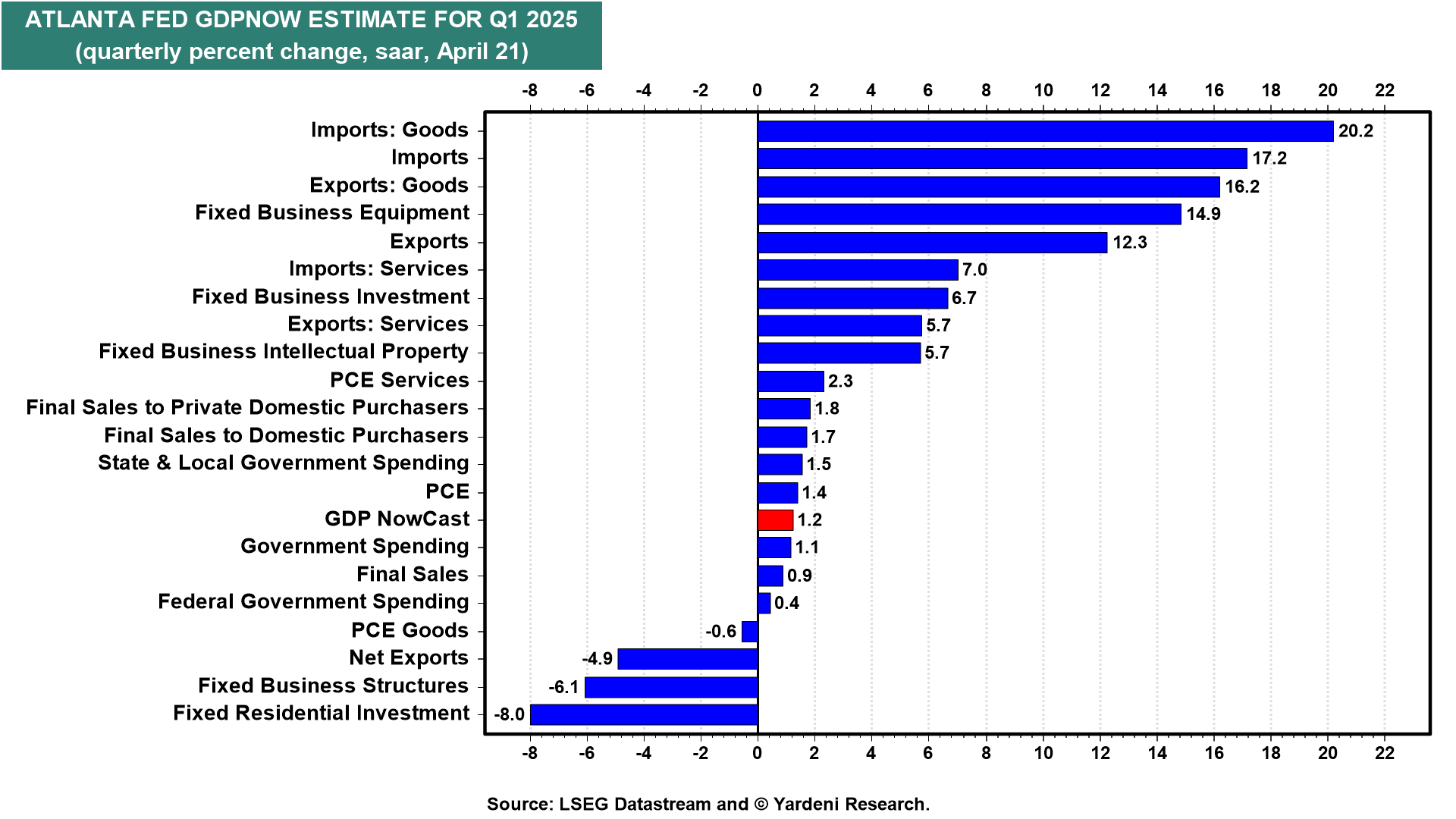
(2) GDP. After adjusting retail sales for inflation, the Atlanta Fed's GDPNow model raised the real personal consumption expenditures estimate for Q1 from 0.9% to 1.4%, and real GDP was revised up from 0.9% to 1.2% (chart). Both numbers are relatively weak. However, we believe that unusually severe winter weather depressed consumer spending and the economy during January and February.
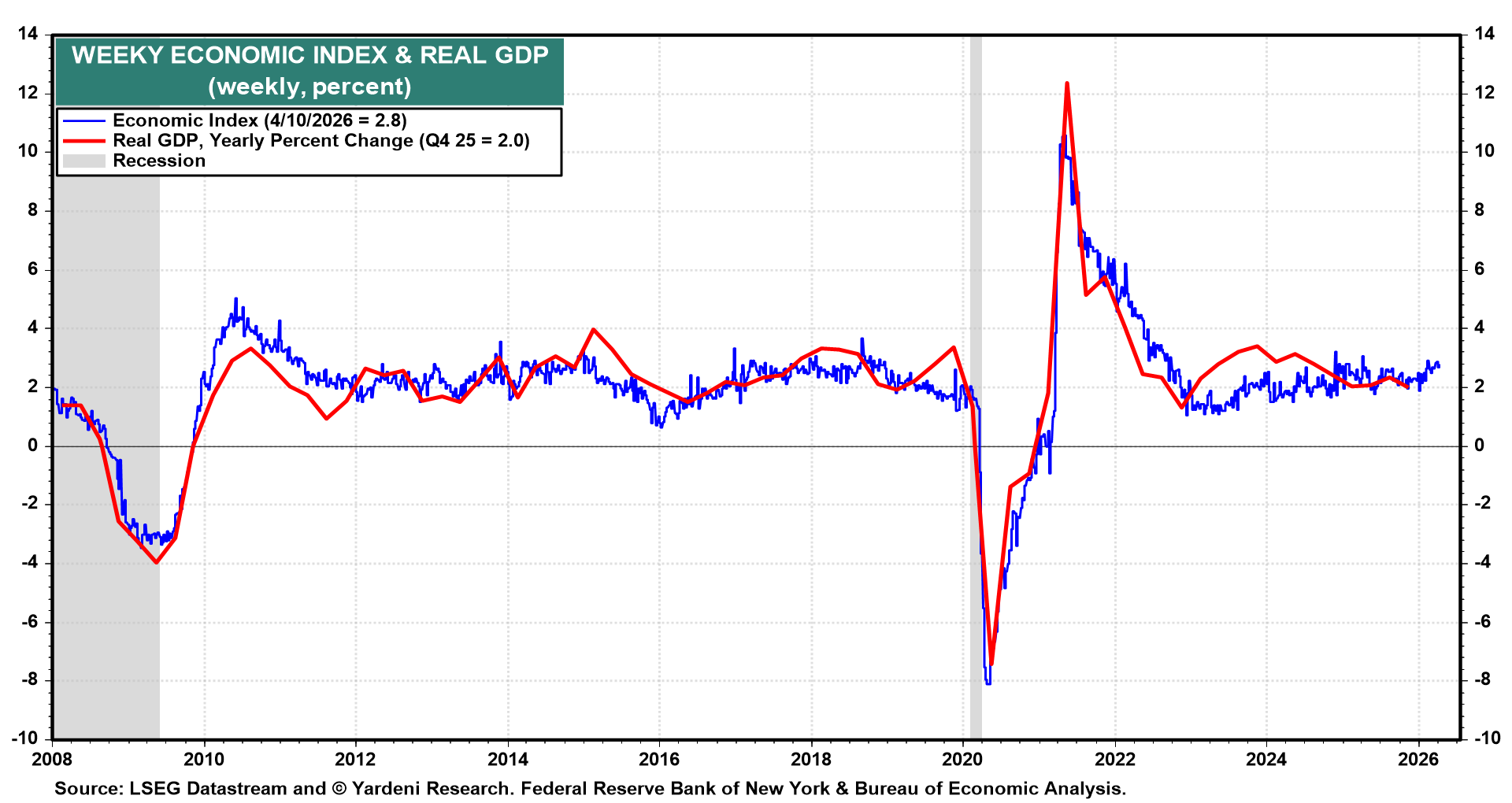
The Weekly Economic Index (WEI) is a high-frequency tracker designed to provide a real-time "nowcast" of the US economy. It was originally developed by the New York Fed in 2020 to monitor the rapid shifts of the pandemic. WEI has been relatively steady around 2.5% for the past year (chart). It rose to 2.8% during the week of April 10.
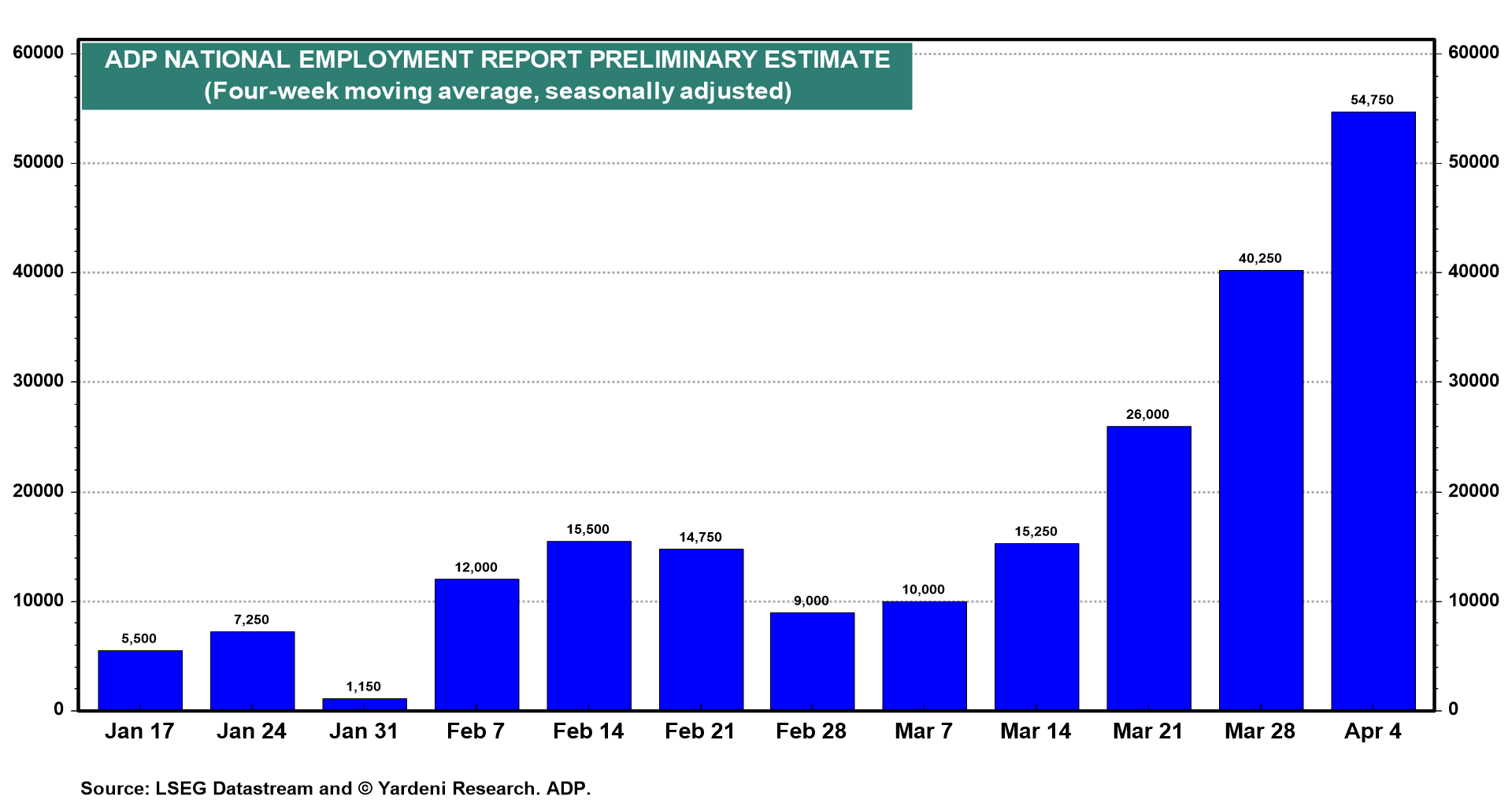
(3) Employment. ADP data for the four weeks ending on April 4 showed private sector employers adding an average of more than 54,000 jobs per week, the best pace so far this year (chart)!
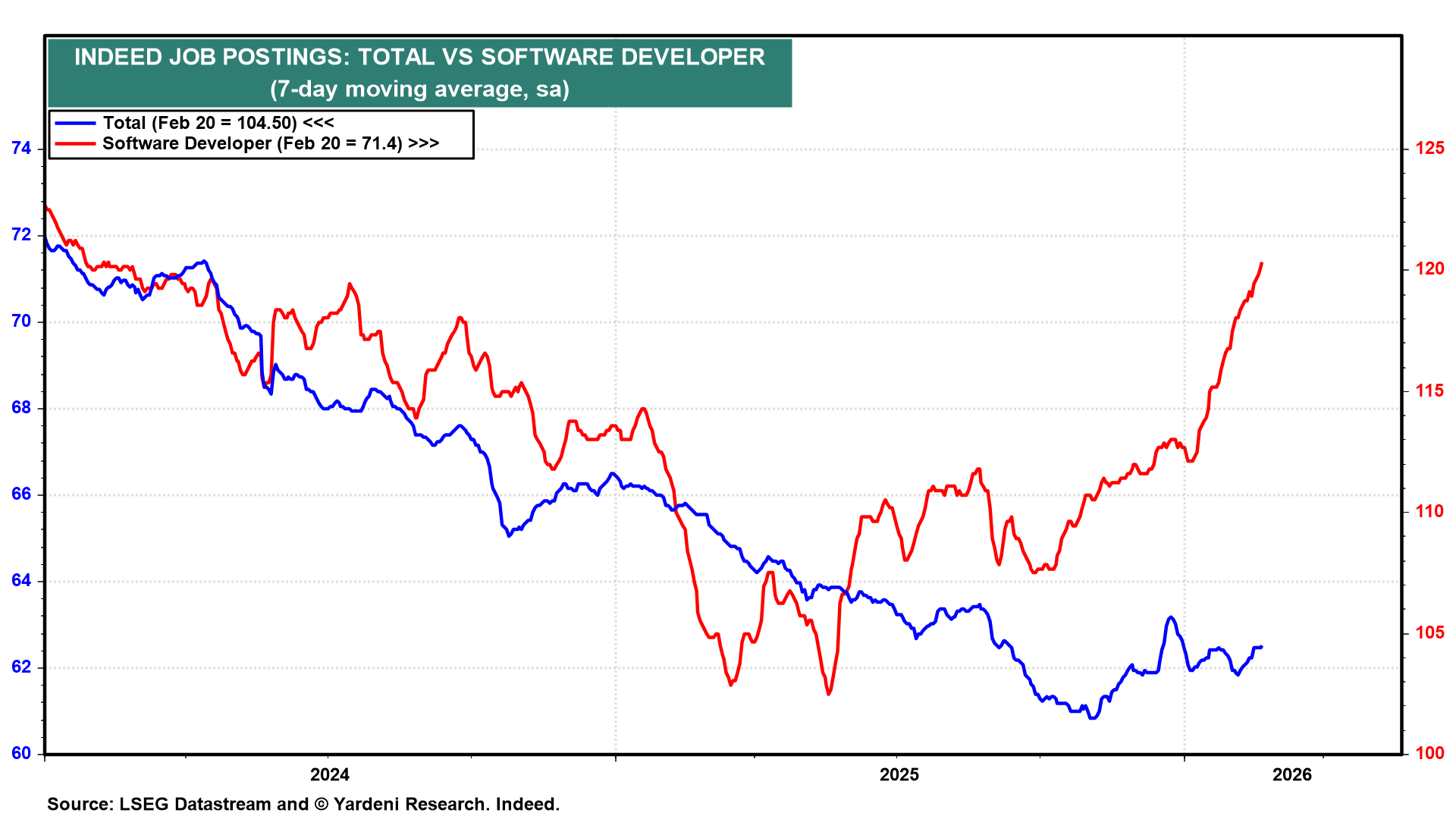
INDEED job postings have been trending higher since late last year (chart). Contrary to popular belief, job postings for software developers are soaring!
A recent ZipRecruiter report states: "Despite the challenging conditions, the share of recent grads who landed a role within three months of graduating rose from 63.3% a year ago to 77.2% today, reflecting the work they’re putting in to break into the labor market."
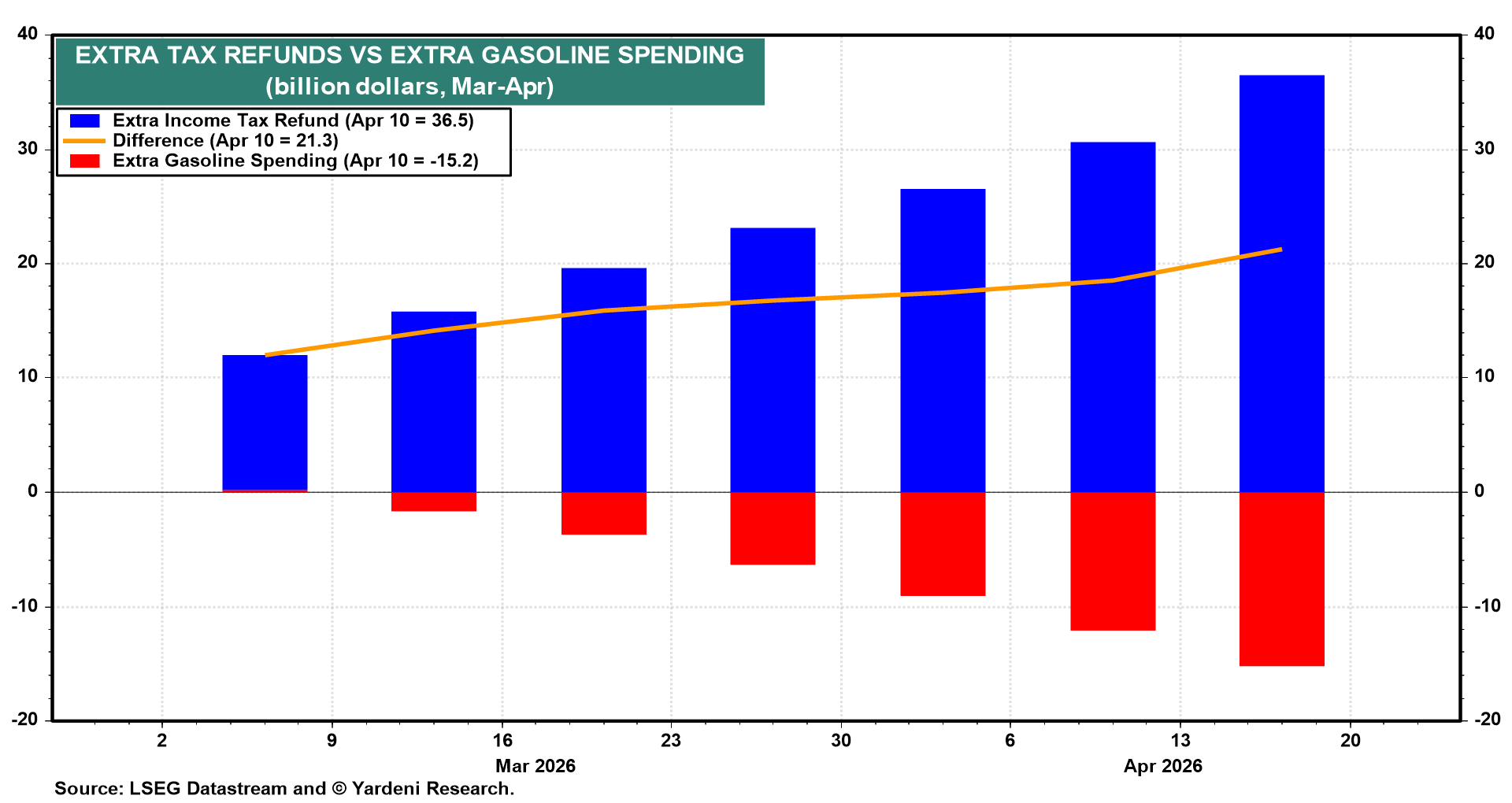
(4) Tax refunds vs gasoline spending. Our in-house analysis shows that the increase in income tax refunds from the One Big Beautiful Bill Act more than offsets the rise in gasoline spending since the outbreak of the war (chart). We estimate that the refund tailwind exceeds the gasoline headwind by more than $20 billion as of early April.
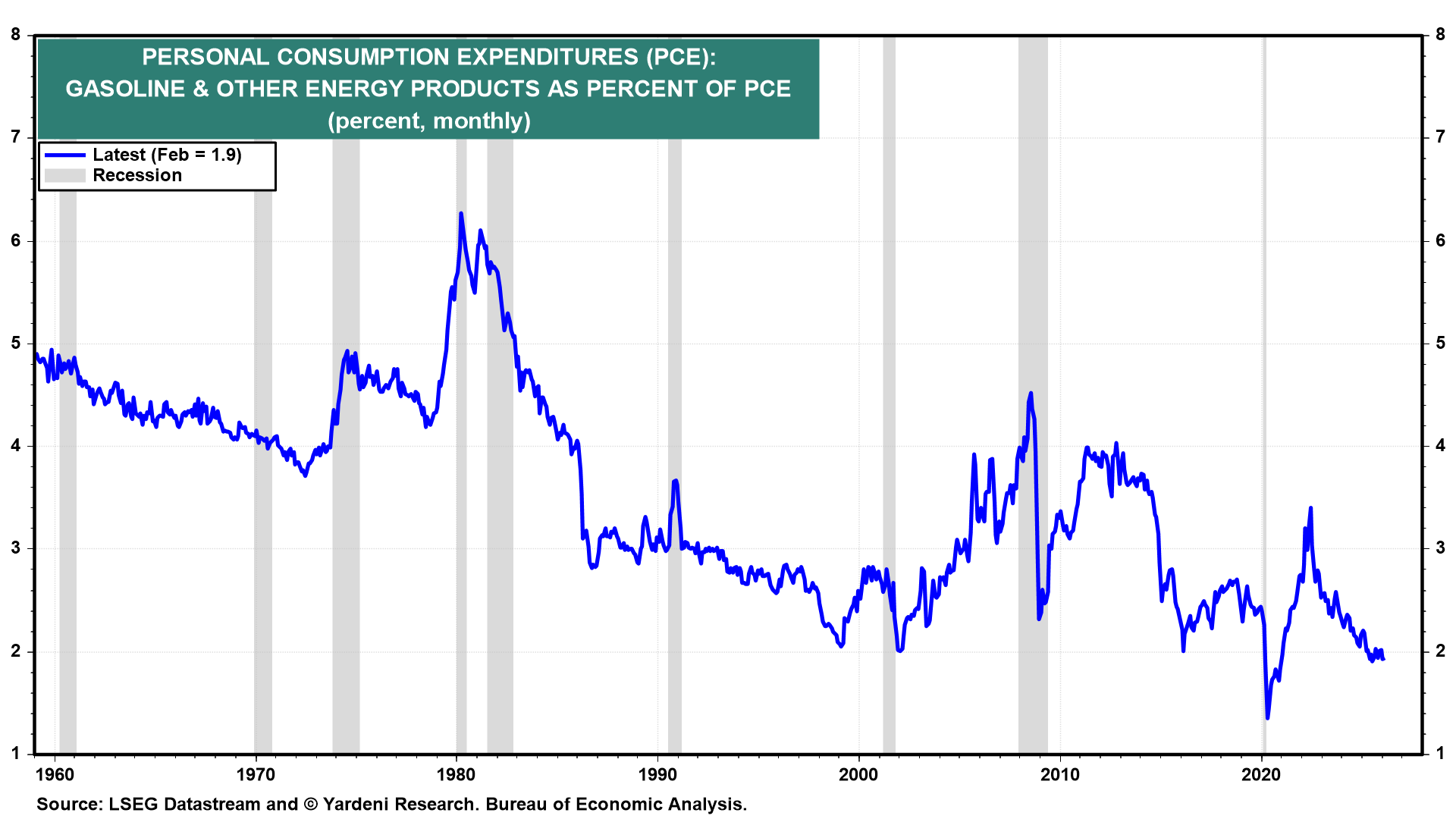
Americans spent only 1.9% of their consumption on gasoline during February (chart). That's the lowest reading since the pandemic!