


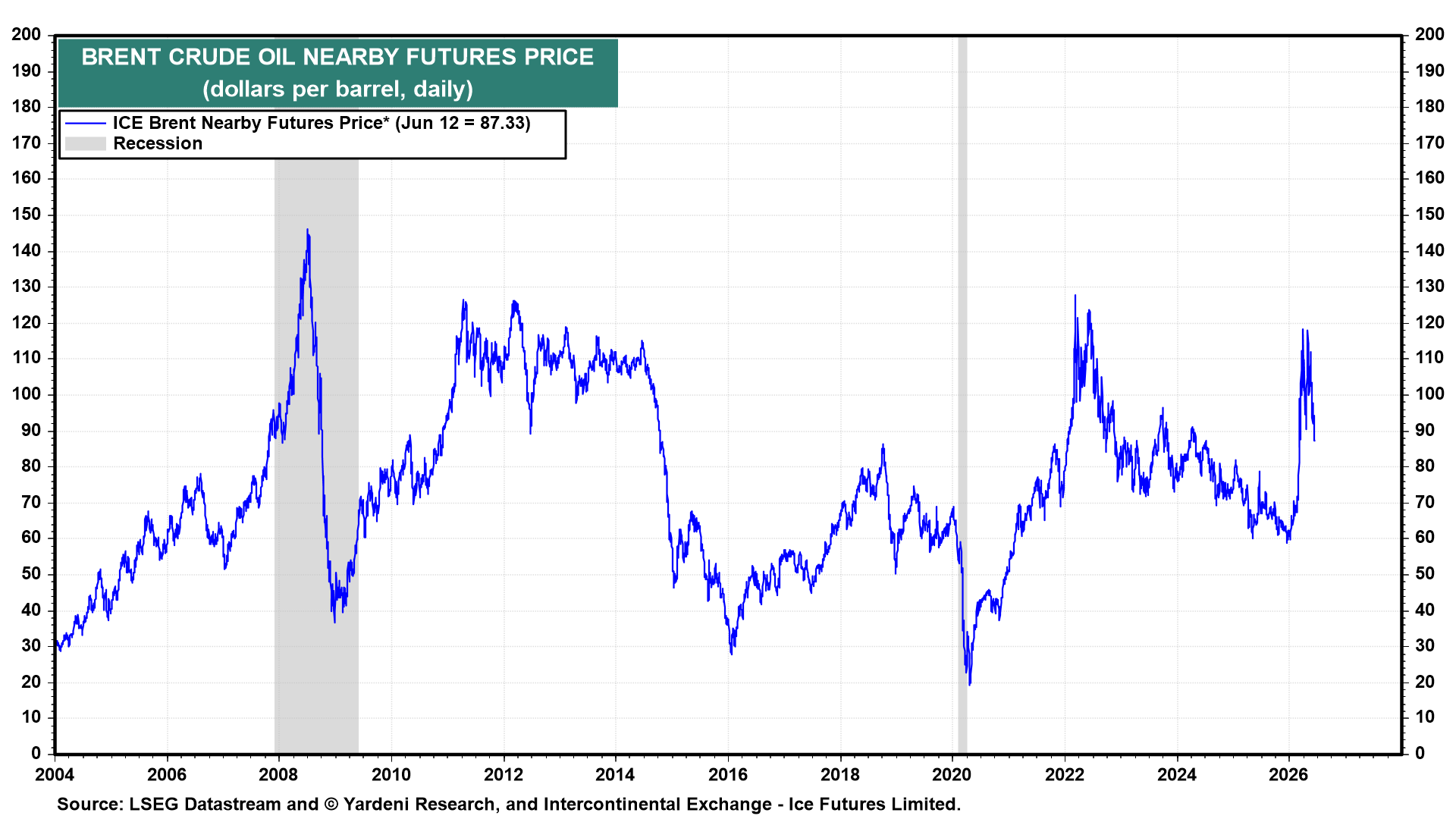
The past week was a win for our "Go Global" pivot at the end of last year, as foreign equity markets mostly outperformed the "Stay Home" alternative, i.e., the US stock market. Most of the move came in anticipation of lower oil prices on a possible deal between the US and Iran to end their war. This evening, both sides confirmed that a memorandum of understanding will be signed on Friday in Geneva.
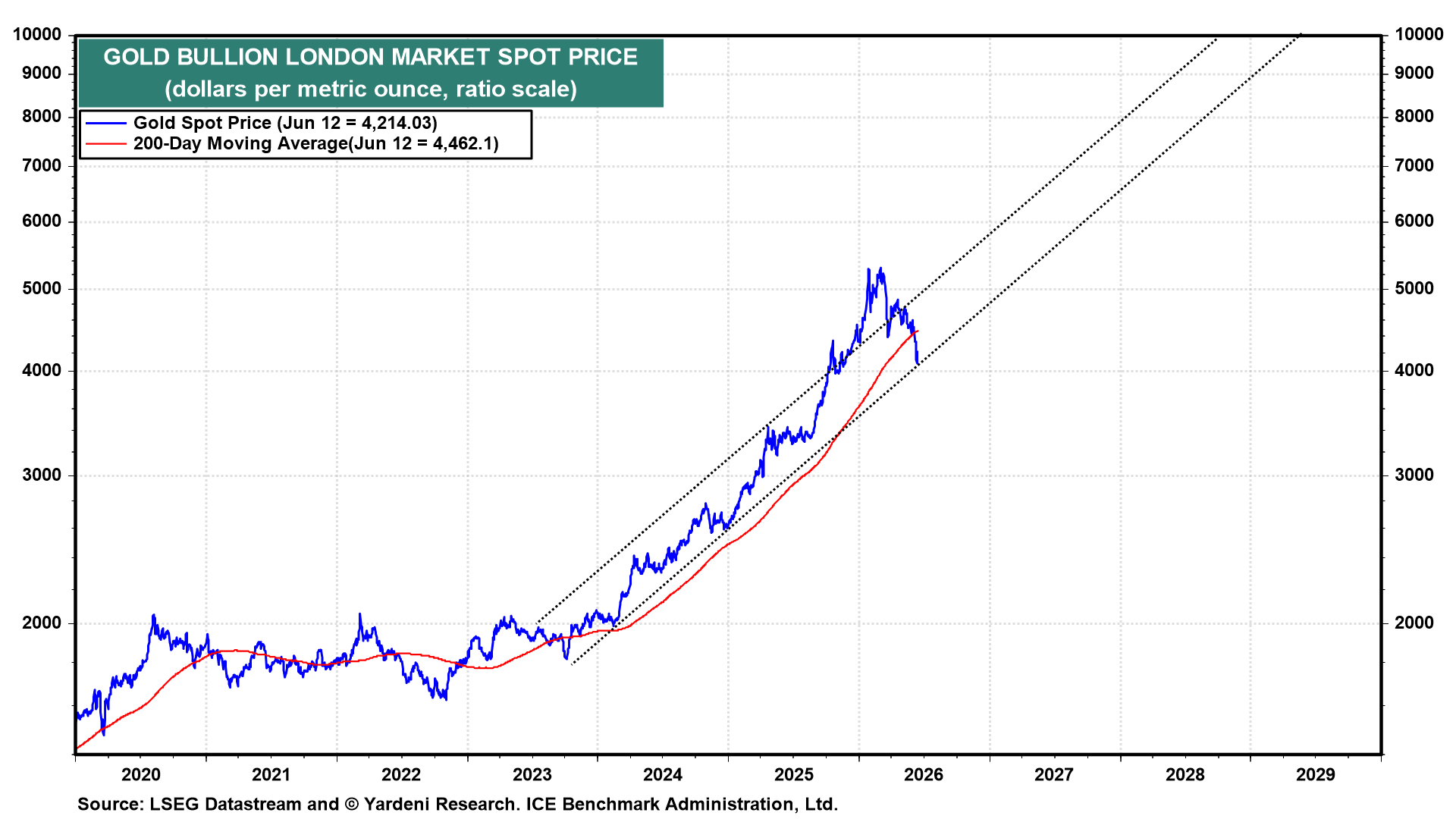
Oil prices fell sharply on Friday in anticipation of a weekend deal and are continuing to decline this evening on the news. As we anticipated, the price of gold held support just north of $4,000 per ounce last Thursday and is currently over $4,300 (chart). We also expected that the end of the war, the opening of the Strait of Hormuz, and lower oil prices would benefit many foreign economies and stock markets more than the US. This evening, the Nikkei and Kospi are up 4.91% and 5.48%, while the S&P 500 and Nasdaq futures are up 0.95% and 1.59%.
The logic of a peace dividend is simple. Lower oil prices reduce inflation worldwide, give central banks room to ease if necessary, allow bond yields to fall, and weaken the dollar (chart). Those are especially positive developments for oil-importing countries, particularly emerging economies (EMs).
Here's more:
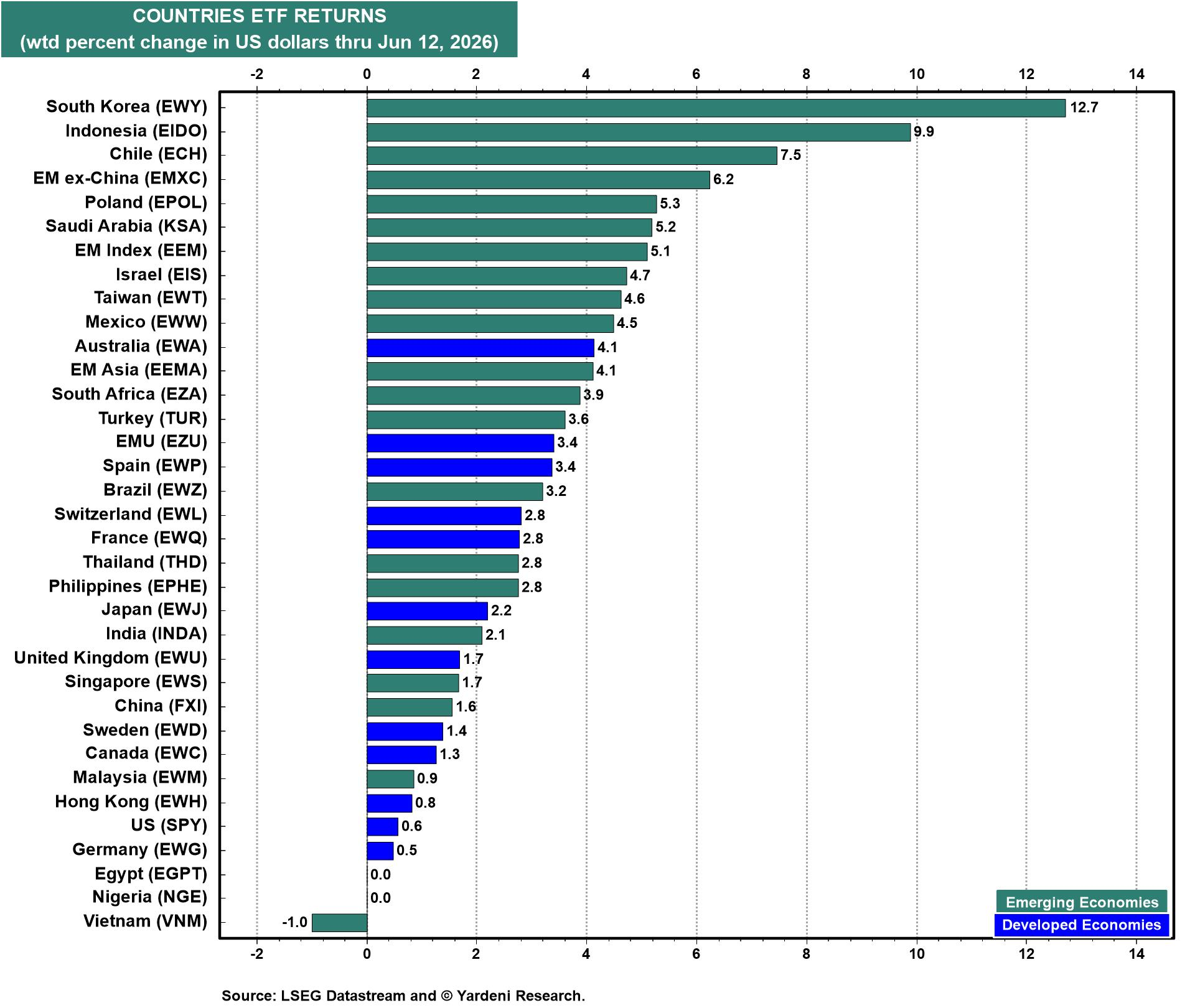
(1) Global stocks. Go Global outperformed last week in anticipation of a peace deal and lower oil prices. Korea (12.7%), Indonesia (9.9), Chile (7.5), EM ex-China (6.2), and Poland (5.3) led the way (chart). The US ranked near the bottom at 0.6%. EM ex-China is the standout among the regions, consistent with our call at the end of last year. We expect Go Global to outperform again after the war interrupted its momentum.
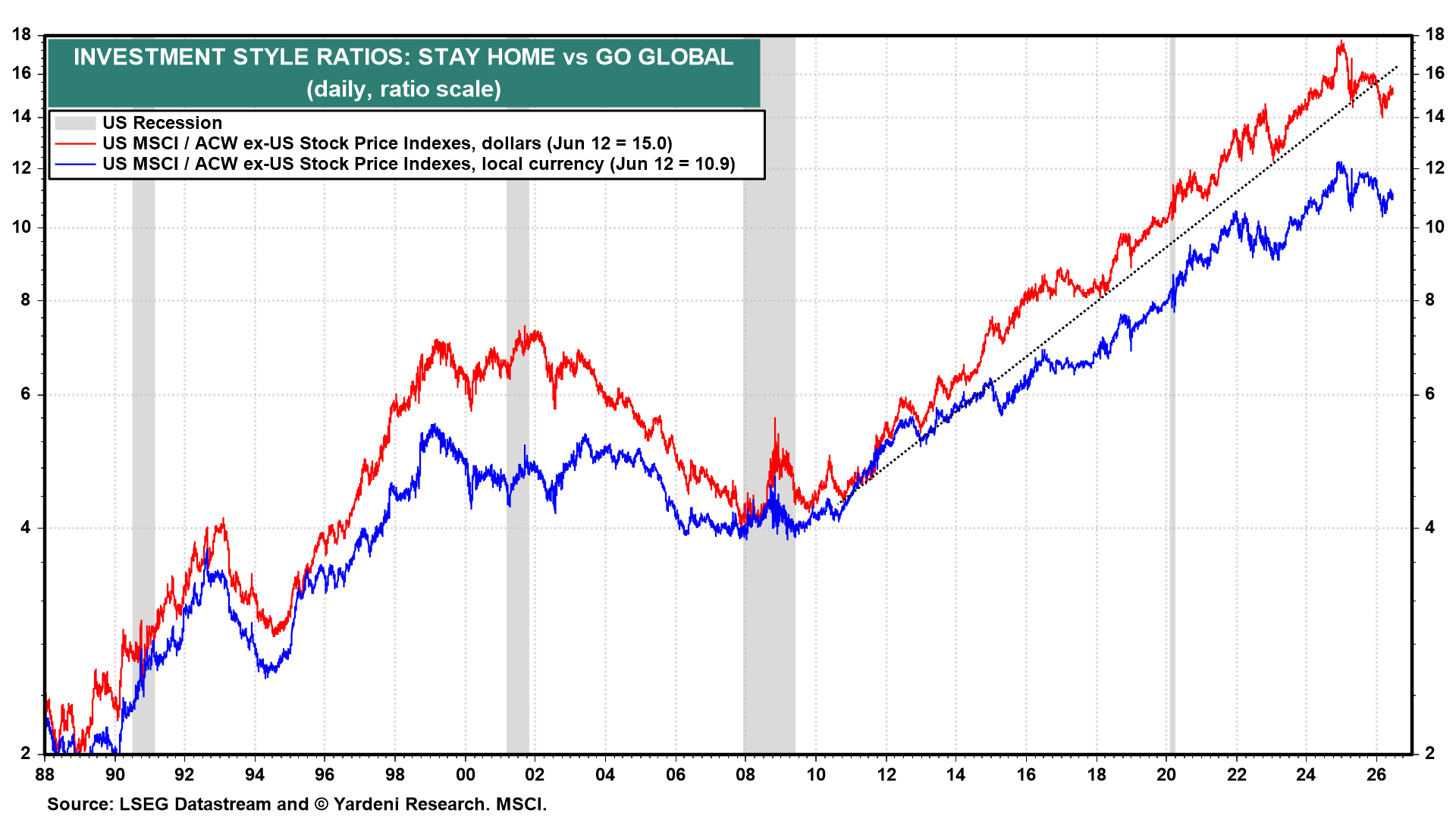
The Stay Home versus Go Global ratios (in US dollars and in local currencies) suggest that their long-term uptrends from 2010 through 2025 might have started to turn into down trends last year (chart).
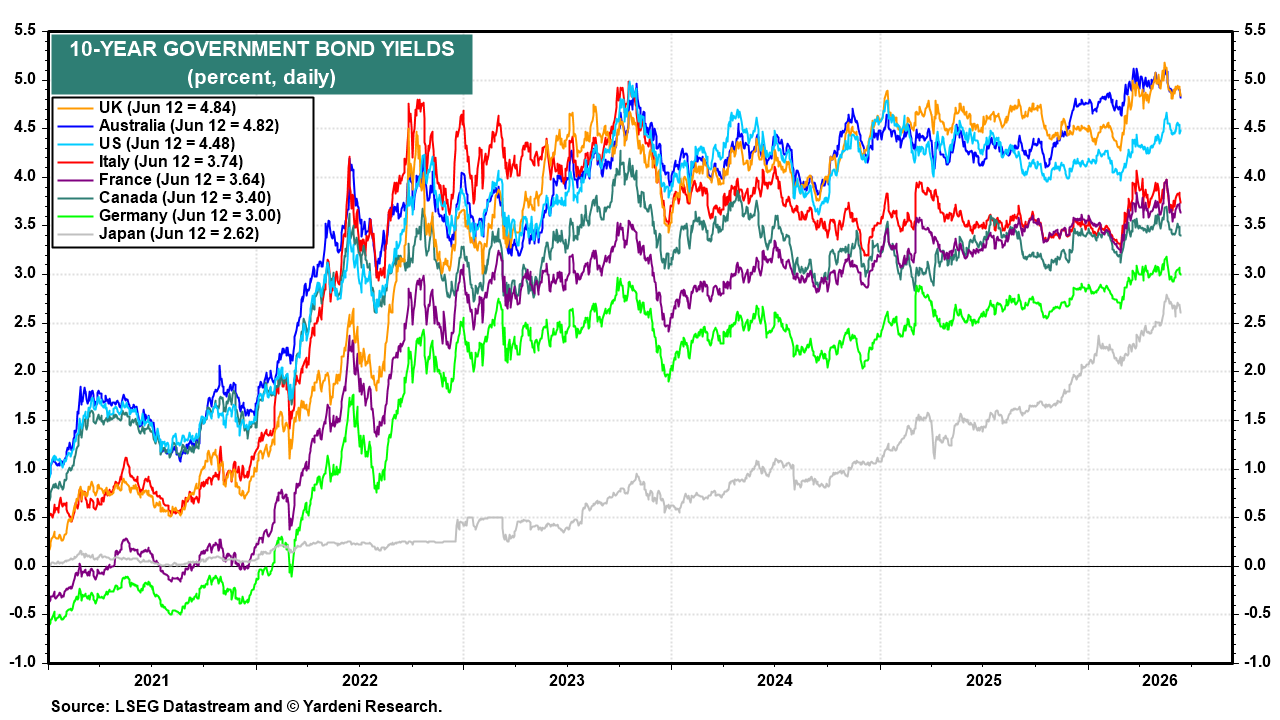
(2) Global bond yields. The opening of the Strait of Hormuz should continue to put downward pressure on oil prices in the coming months. That should calm the Bond Vigilantes around the world (chart). The 10-year US Treasury bond yield is down from the year's peak of 4.67% on May 19 to 4.42% tonight.
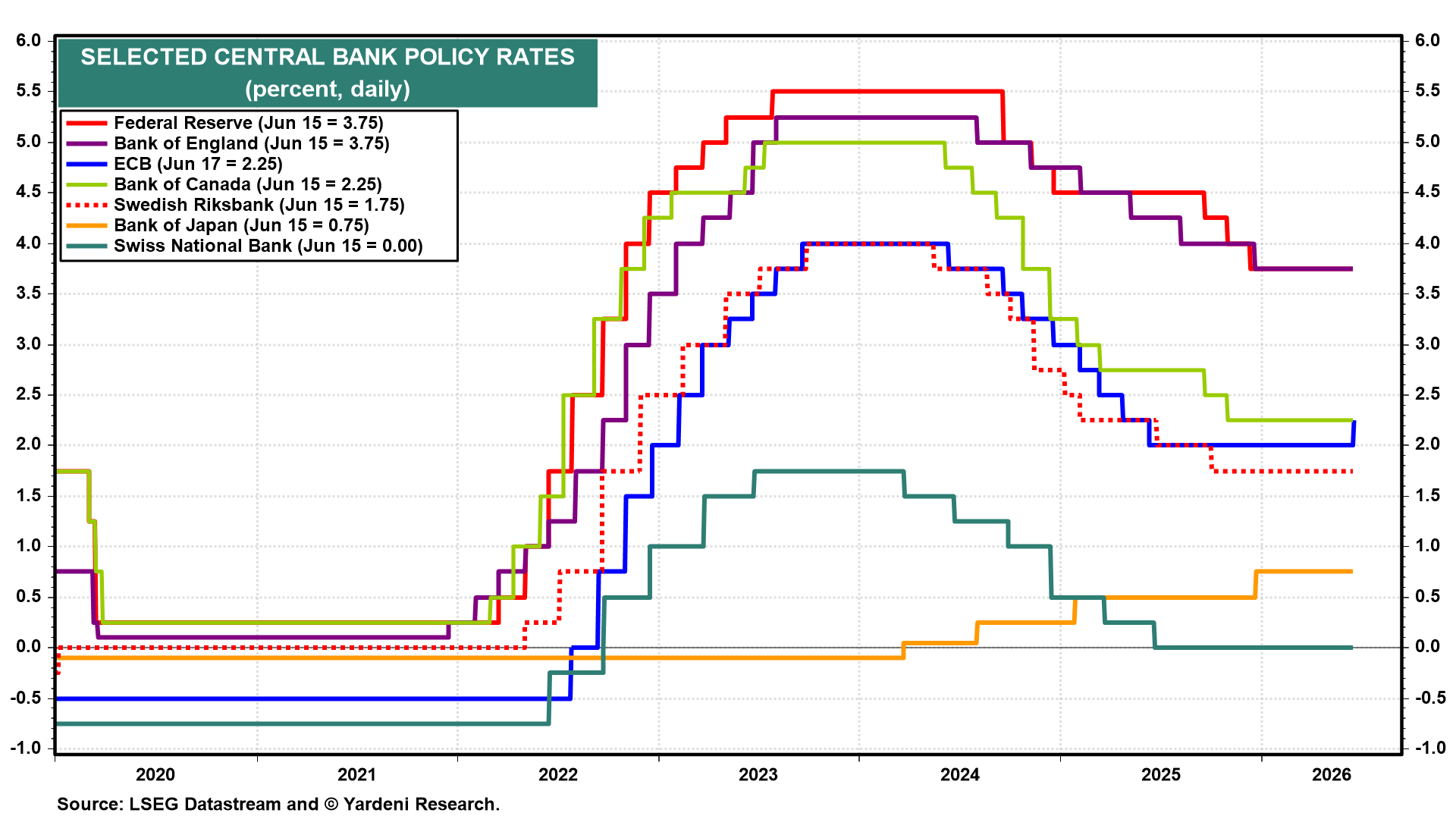
(3) Global central banks. Falling oil prices should give dovish members of central banks some ammo to counter their hawkish colleagues. The ECB raised its benchmark rate to 2.25% from 2.00% last week (chart). It might now pause. The Bank of Japan, with an official rate of 0.75%, is expected to raise it to 1.00% to bolster the yen. The Fed and the Bank of England are at 3.75% and on hold for now. However, we expect Wednesday's FOMC to pivot from its easing bias to a tightening bias. Inflation risks are higher than unemployment risks in the US. We acknowledge that falling oil prices increase the odds of a neutral Fed stance.
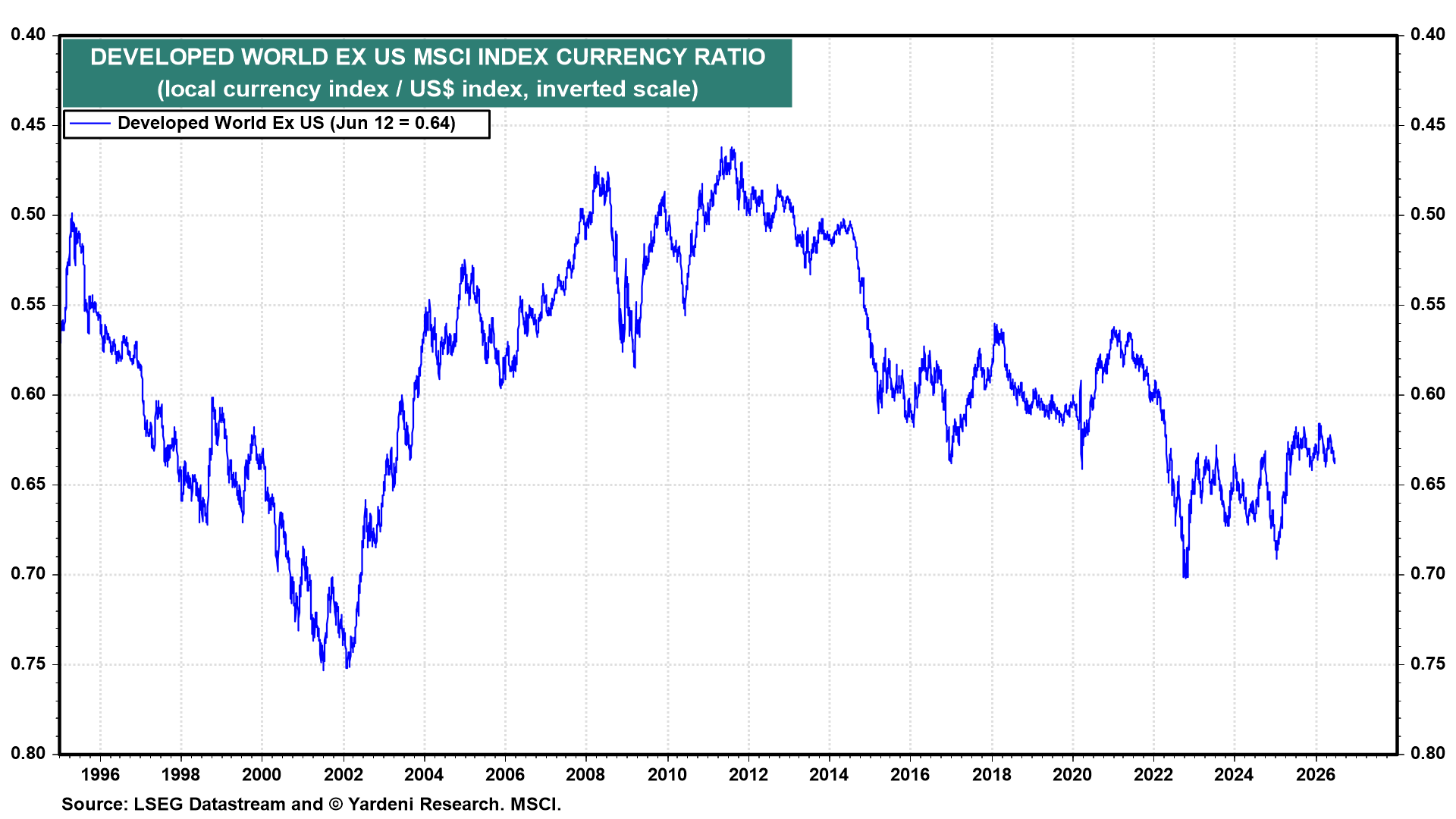
(4) Global currencies. The Developed World ex-US MSCI currency ratio has been weak since 2012 (chart). It did rebound in early 2025 as the dollar weakened, but has been relatively flat since then. We are neutral on this dollar measure for the rest of this year.
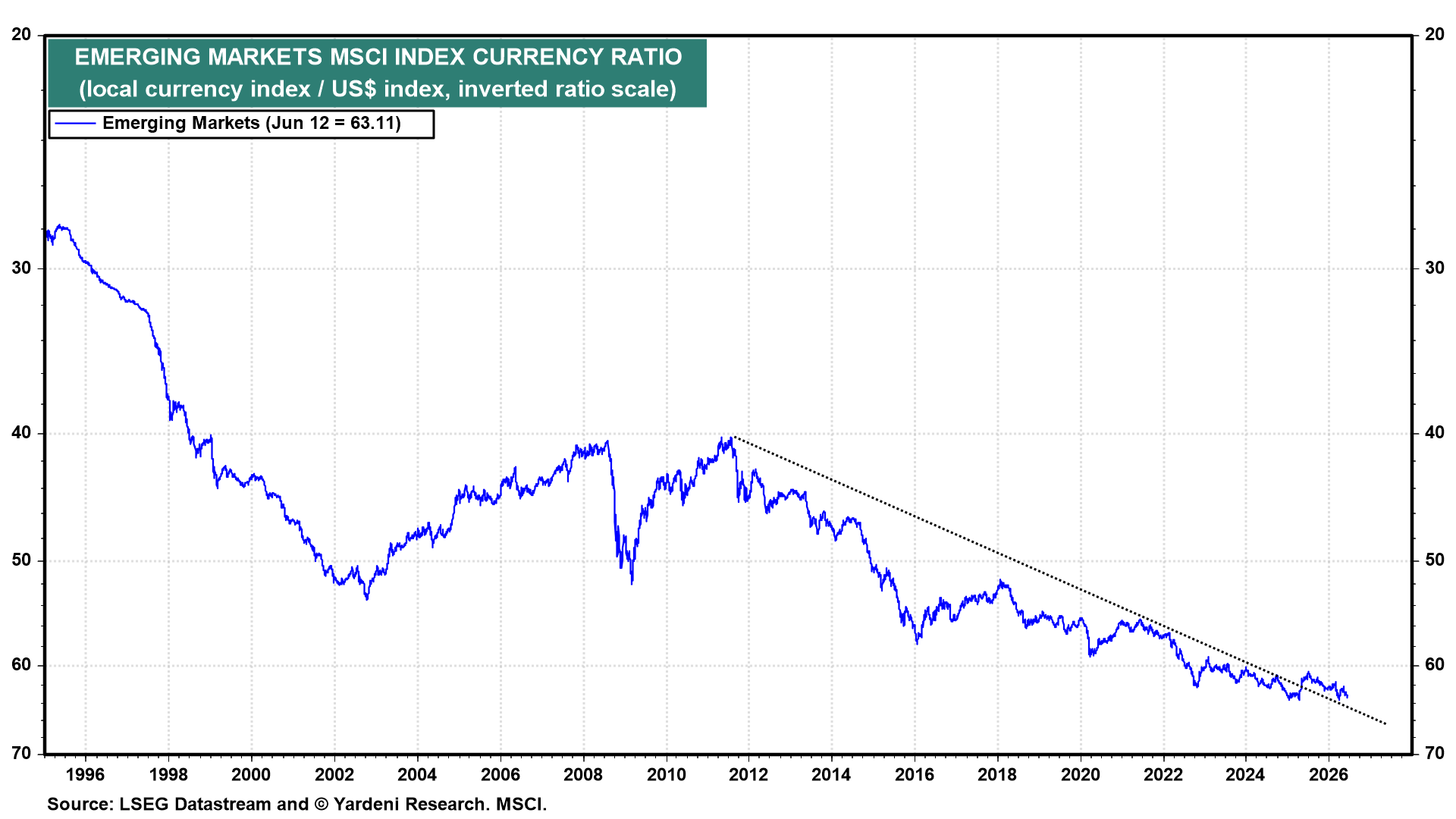
The EM currency ratio has also been weak since 2012 (chart). Falling oil prices should provide some support for the weak currencies of some EMs.
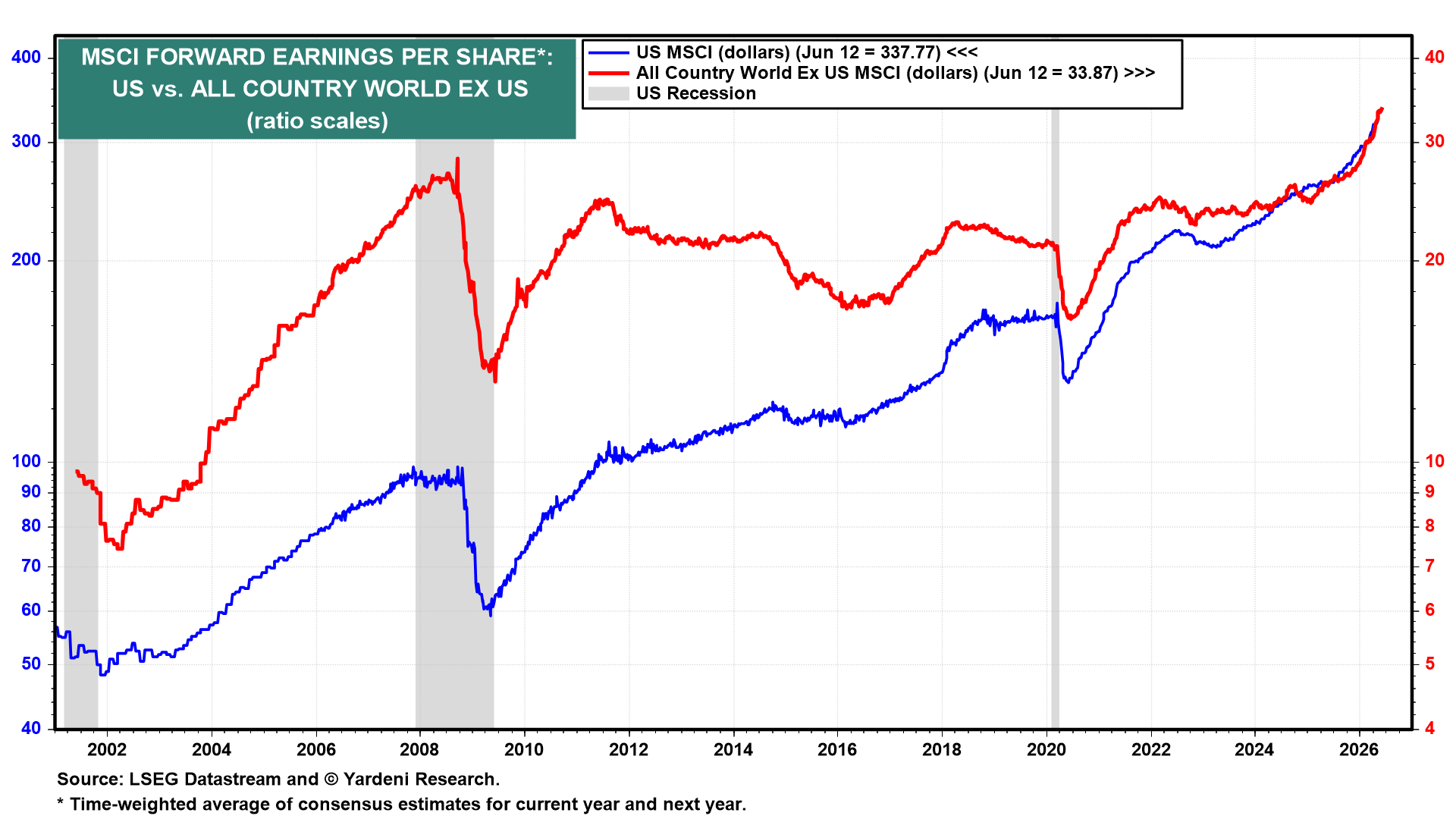
(5) Forward earnings. The forward earnings of the US MSCI and the All Country World (ACW) ex-US are rising faster this year, reaching record highs despite the war in the Middle East (chart).
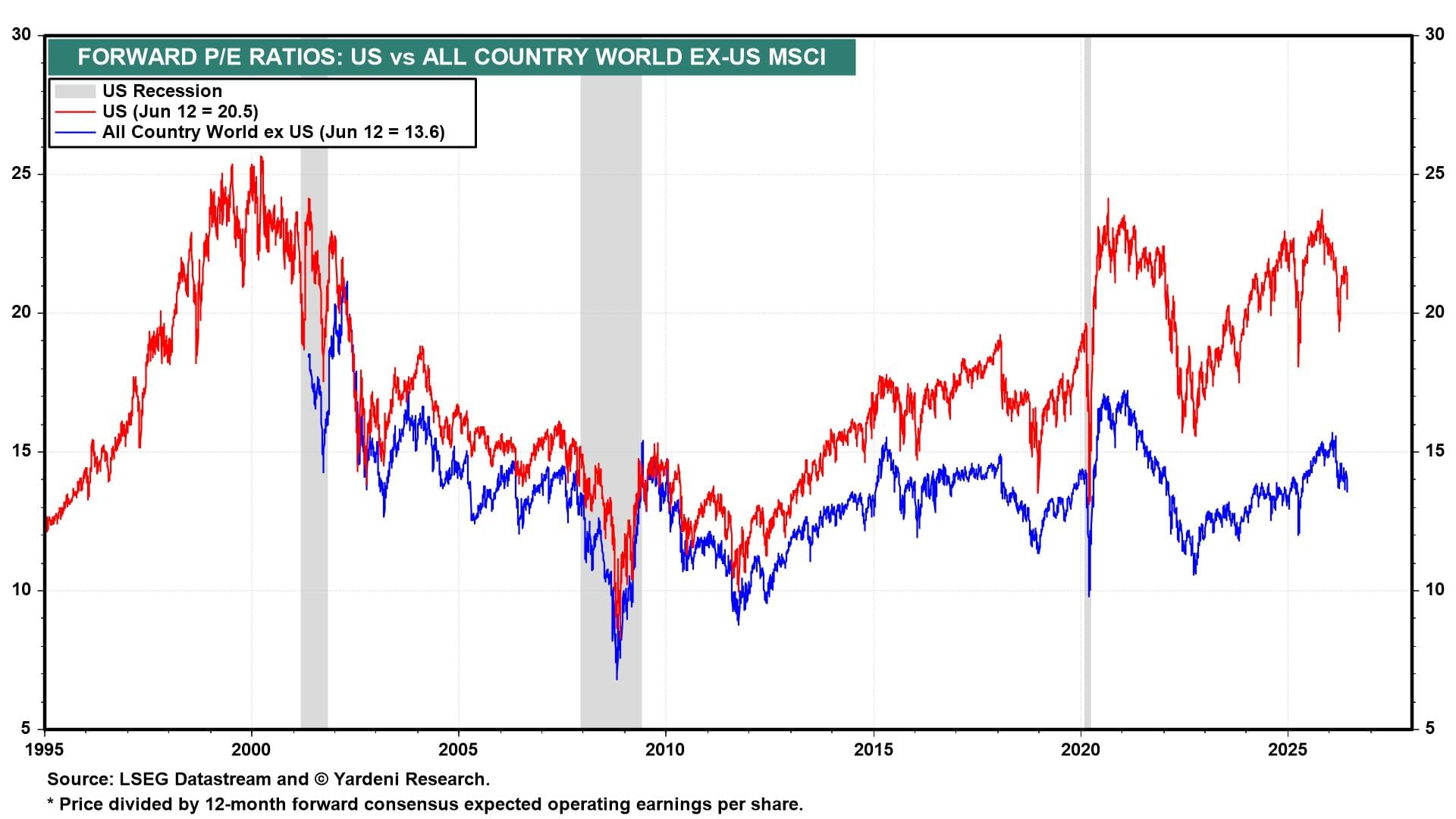
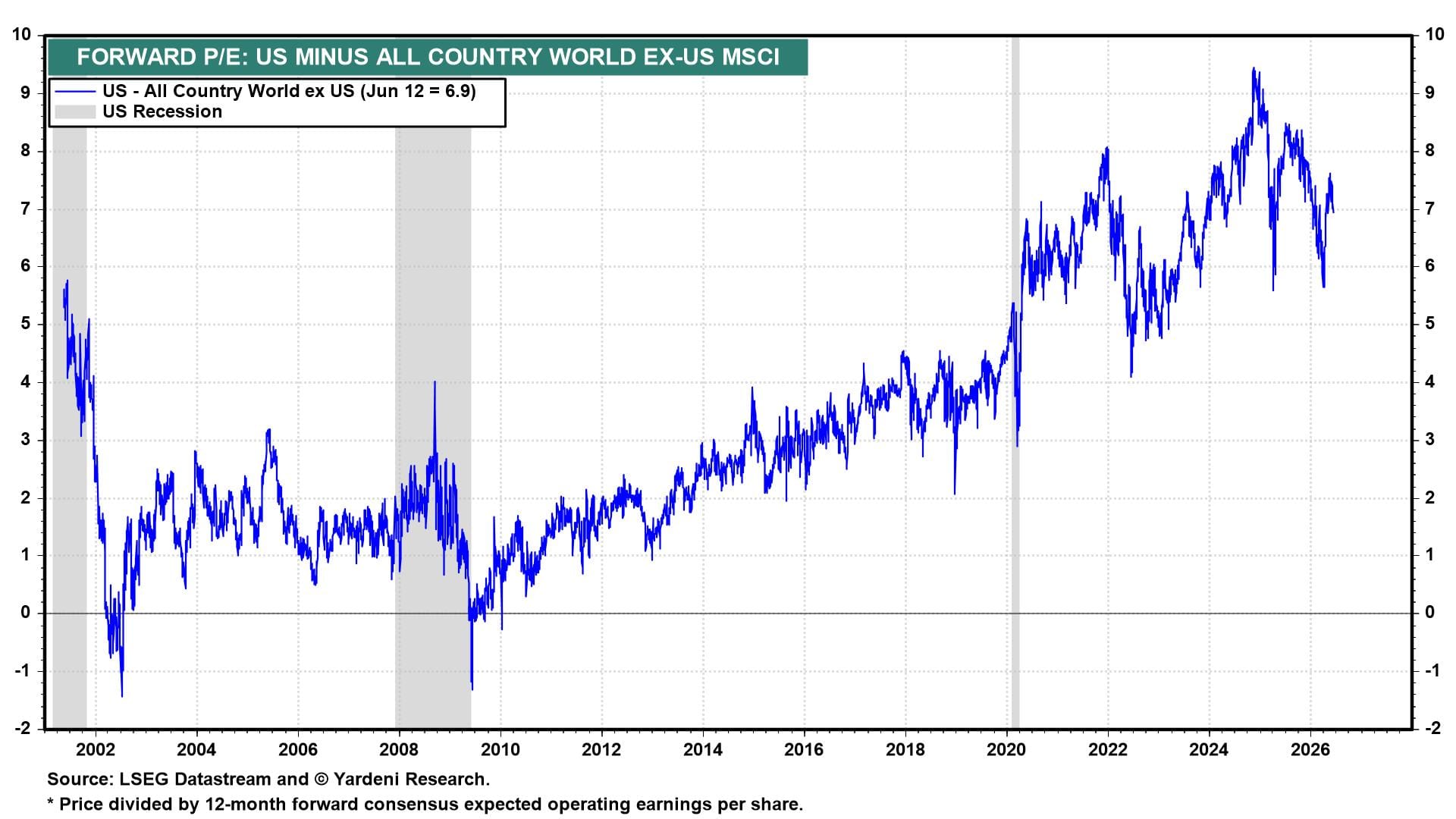
(6) Valuation. Based on forward P/Es, the ACW ex-US is much cheaper than the US MSCI (charts). The US is currently at 20.5, while the rest of the world is at 13.6. That's a 6.9 ppts spread.
All we are saying is give peace a chance and Go Global for now.
