


During the Napoleonic Wars, British financier Nathan Mayer Rothschild allegedly said: "Buy on the sound of cannons, sell on the sound of trumpets." This has become a legendary contrarian investing maxim. It suggests you should buy stocks when war or panic causes markets to plummet ("cannons"), and sell to lock in profits when peace returns and market euphoria sets in ("trumpets").
The maxim seems to be working again. The latest Gulf War started on February 28. It ended on April 8, when the US and Iran signed a Memorandum of Understanding. The S&P 500 tumbled during March, but bottomed on March 30. That selloff provided lots of great buying opportunities. The index rose to a record high on June 2.
It has been a sea of red across global stock markets since then through Friday's close, despite the opening of the Strait of Hormuz and the plunge in oil prices in June. Consider the following:
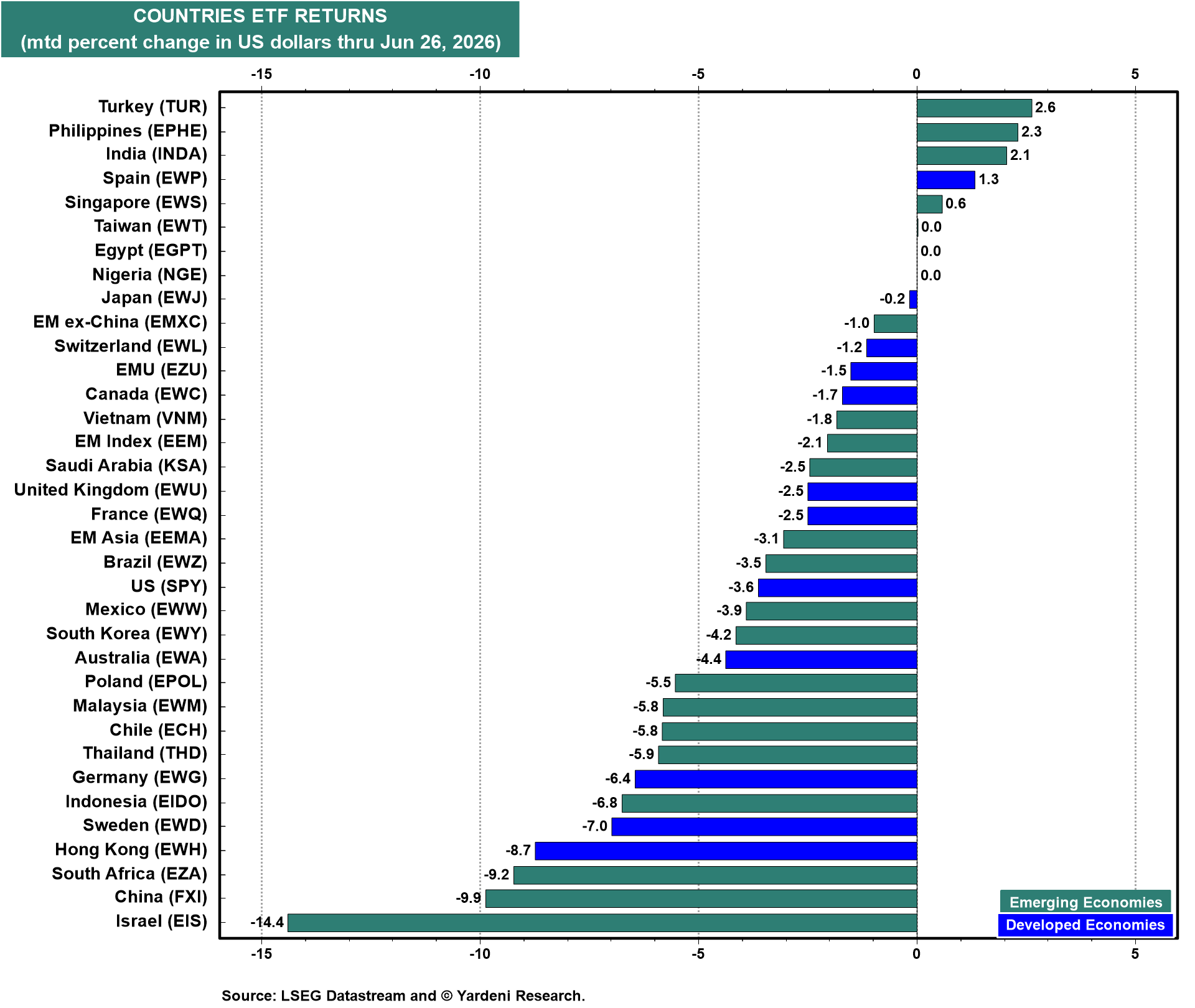
(1) June Swoon. The country ETF panel was a wipeout in June, with only Turkey, the Philippines, India, Spain, and Singapore with gains (chart). China continued to lag, with a 9.9% drop. South Korea gave back 4.2% after May’s surge. EMXC was down 1.0%, while EEM fell 2.1%. Both beat the US SPY, which fell 3.6%.
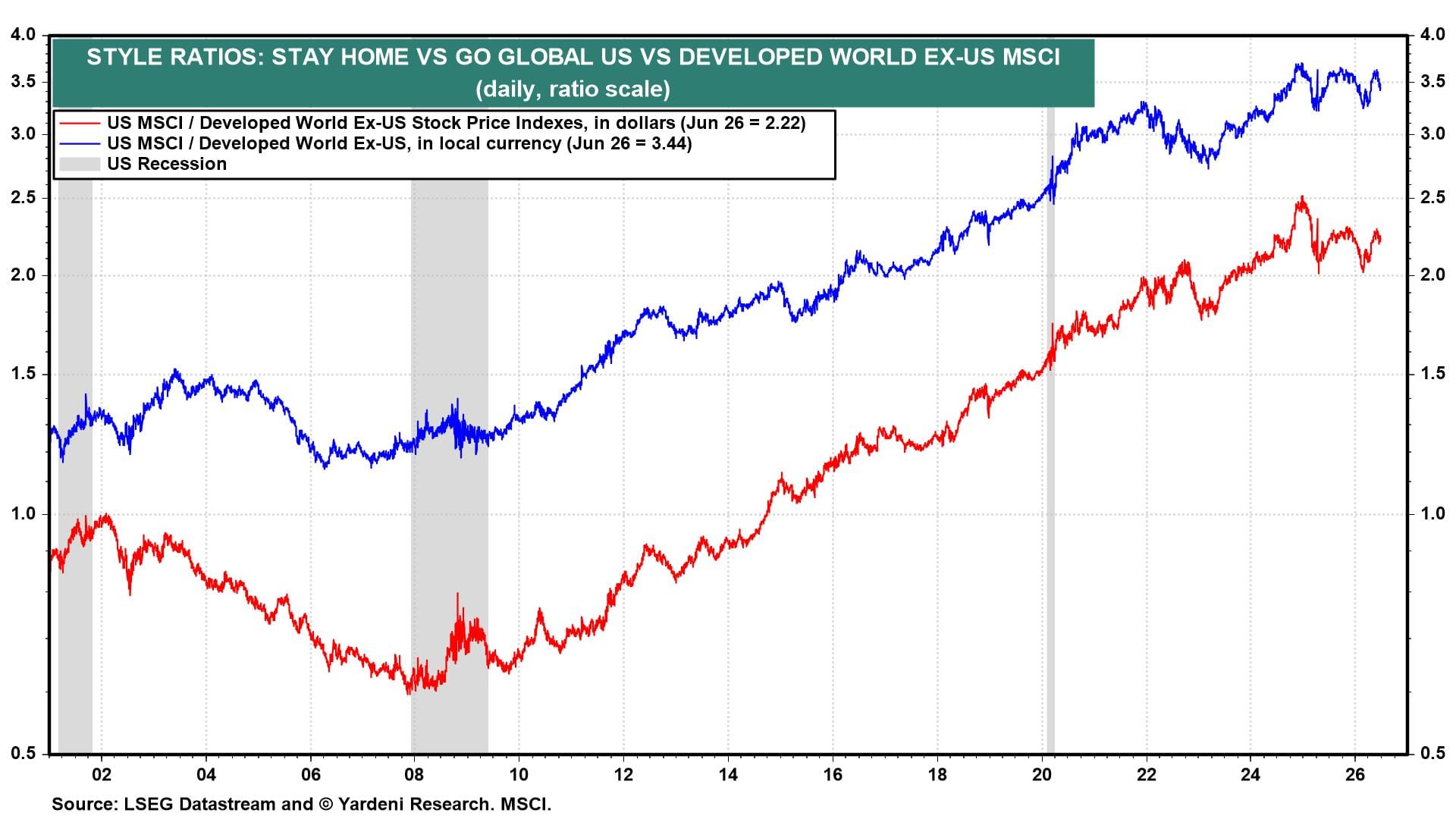
(2) Stay Home vs Go Global. The ratios of the US MSCI to the Developed World ex-US MSCI edged down last week (chart). They were on steep uptrends from 2010 through 2024. But they have been stalled since early 2025.
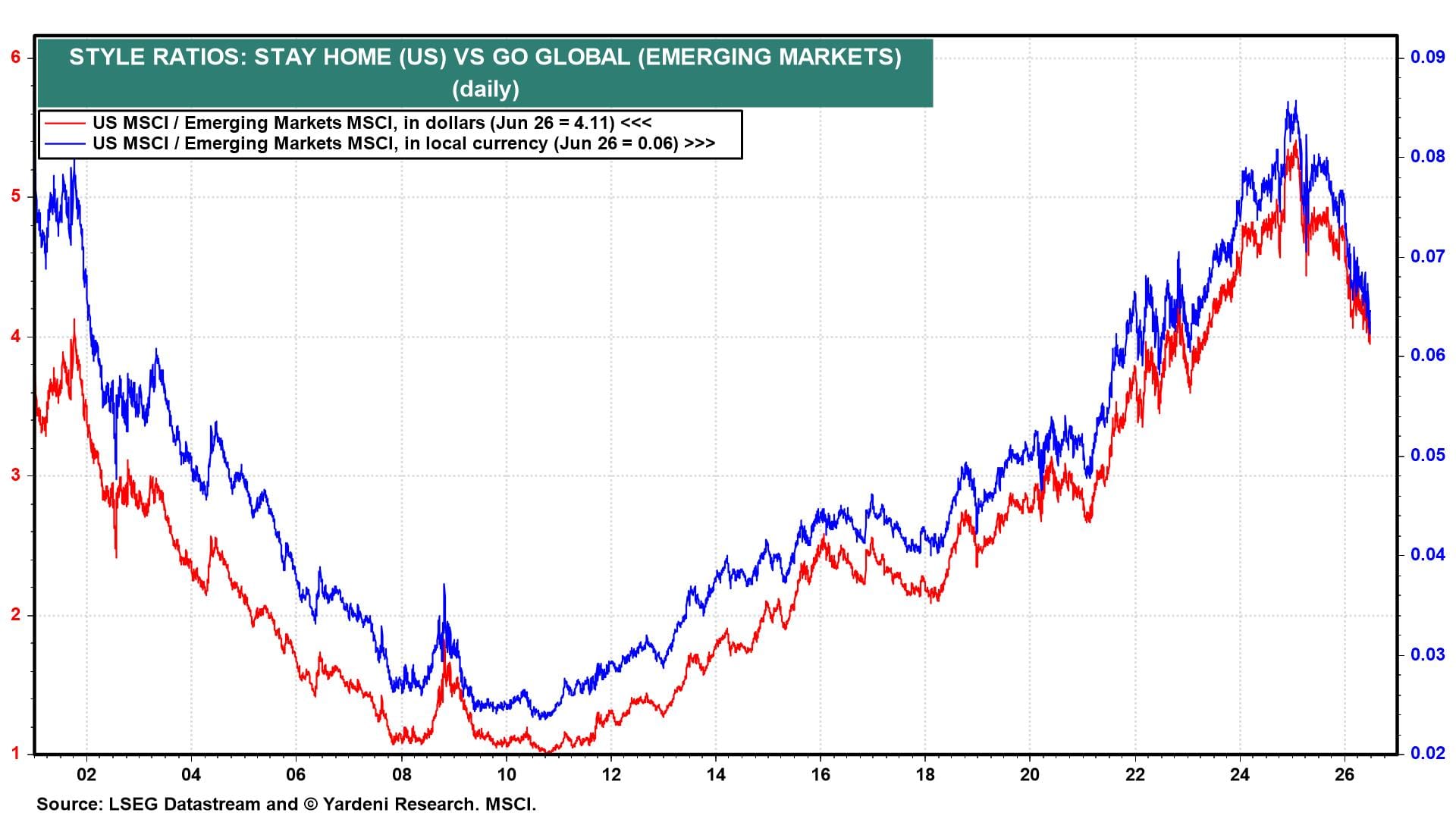
The ratios for the US MSCI to the Emerging Markets MSCI were also on long-term uptrends from 2011 through 2024 (chart). But they have both been falling since then.
(3) Revenues & earnings. The global economy is growing faster this year, according to the ACW MSCI. Its forward revenues rose to a record high last week (chart). The inflationary consequences of the war might have provided a boost to global revenues, which nonetheless appear resilient.
